
Civilization Beyond Earth Guide Single Player
Founding Cities
Don't settle your cities willy-nilly; that only leads to underdevelopment. Put everything too close together, and your cities compete with each other for tiles. Space them too far apart, and you're going to languish with expensive roads, longer travel times, and more danger from aliens and raiders. You really want your borders to expand homogenously; gaps in your territory, even small ones, are going to have rival units wandering around. They won't even need open border agreements, and they can spy on you, look for weak points, etc.
Traits for an Ideal City Location
- Select locations that have basic or strategic resources (both of which are very important).
- Use rivers to increase Energy output.
- Settle on the coast for expanded trade opportunities because aquatic trade routes have higher yields.
- Areas near mountains and canyons are harder to siege because of their limited passable tiles.
- Hills provide defensive bonuses for your city.
- Avoid too many tiles with tundra, desert, or even marshes because these have lower yields and higher development issues.
- Locations that are five or six tiles from your nearest city are in the sweet spot between being too far to support and too close for comfort.
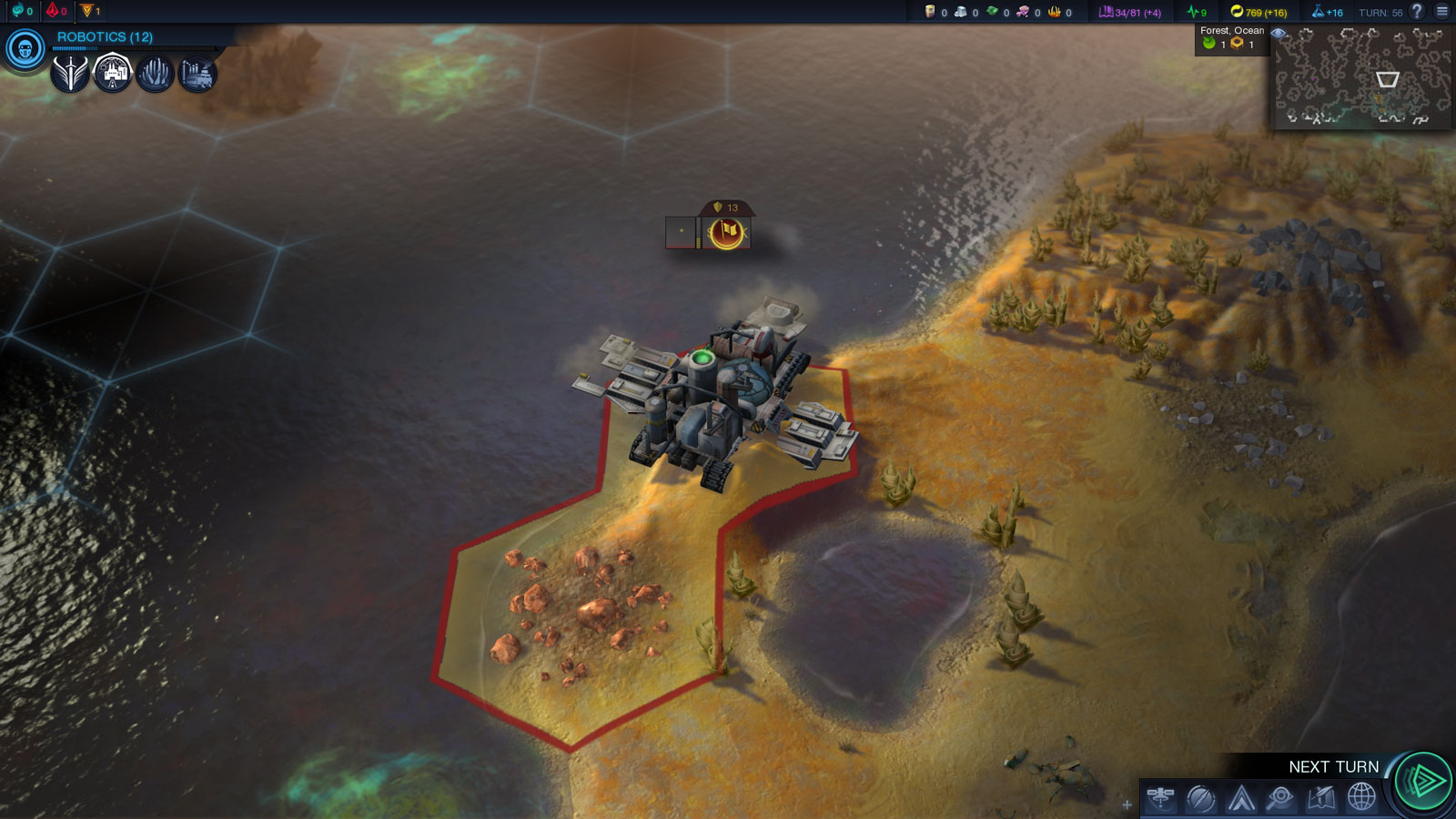
When sending out your colonists, be very cautious. Have a military unit move with them, and try to avoid scouting with this pair. Going into unknown territory can get you surrounded by aliens, ambushed by raiders, or cause wasted time because you discover that the terrain is totally crummy for settling. You won't normally get attacked by the computer at this stage, but this habit will get you slammed in multiplayer games. Early game raiding is entirely possible and effective, so watch out!