Civilization Beyond Earth Guide Research and Technology
Overview
Civilization games are always heavily defined by their progression through the ages of technology. Civilization: Beyond Earth is no different in that, although you're going to be dealing with future tech instead of historical and modern technology. This chapter explains the basics of Research and then goes item by item through the tech web to show you what's possible in this system.
Overview
The biggest change between earlier Civilization games and this release is in the presentation and development of Technology. While the underlying style of Research is still to choose a specific tech and wait for your work to complete on it, there is no longer a semi-linear tree to develop. Instead, there is a web of Technology. You now are going to have many more choices each time you select your next Research goal. That's daunting at first, but it soon leads to a freedom that is very refreshing and exciting.
Take a look at the Technology web, and start to familiarize yourself with the items it lists. Each section of Technology is divided into three pieces. Up top, you get a branch. These are the core principles that you research as you head out from the center of the web. They grant buildings, wonders, and units so that your society becomes more advanced. However, you can develop them further by researching the two leaf techs that are underneath them. Leaf Technologies can't be researched until you have mastered the branch above them. Think of them as focused, applied Research, while the branches are more theoretical in nature.
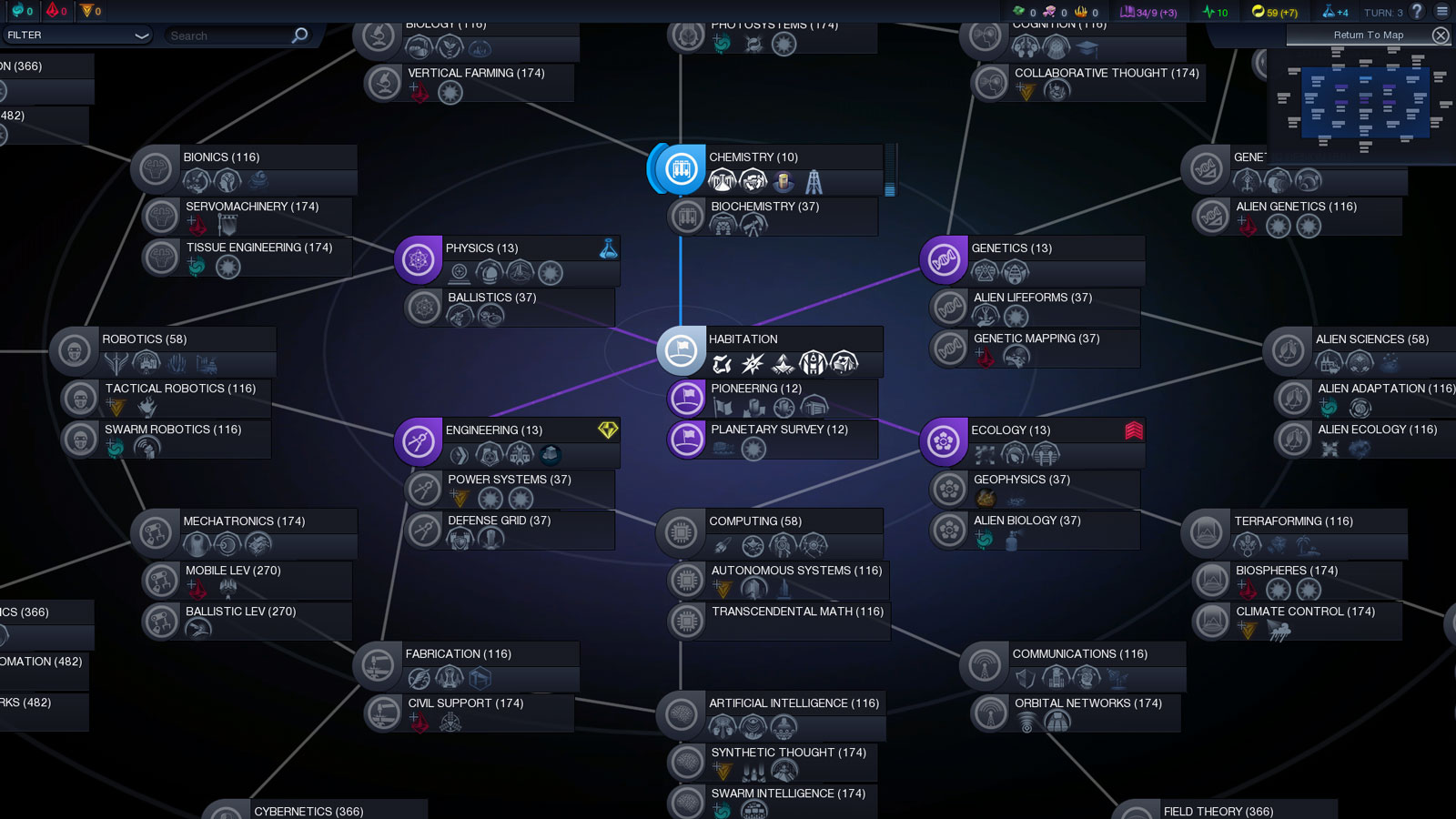
Each time you unlock a new branch, you can either start Research on the leaves beneath it or begin looking into any branches that are connected to it. This allows players to focus on specific areas of the web and prioritize the Research that they're doing. You can look for Technology that gives you the bonuses and items you need the most, and race after them instead of getting everything researched throughout the entire web.
Research takes time. Every item that you want to research has a specific cost. The more Science your nation gains per turn, the sooner you can get each Research item completed. Buildings that yield beakers contribute to your nation's Science tally. The more of them you have, the better off you are when it comes to Research.
Investing in Your Science
To get more beakers (often referred to simply as "Science"), you must construct laboratories, clinics, and other Science-generating buildings. Have workers add academies to your tiles once you gain access to them, and staff scientist specialists into buildings once you have a larger city and can spare the citizens.
International trade is another great way to earn Science. Trade routes with other players' nations yield Energy and Science. Naval routes are the best for this, but heavy use of international land routes can still earn you a massive bonus to your Science income.
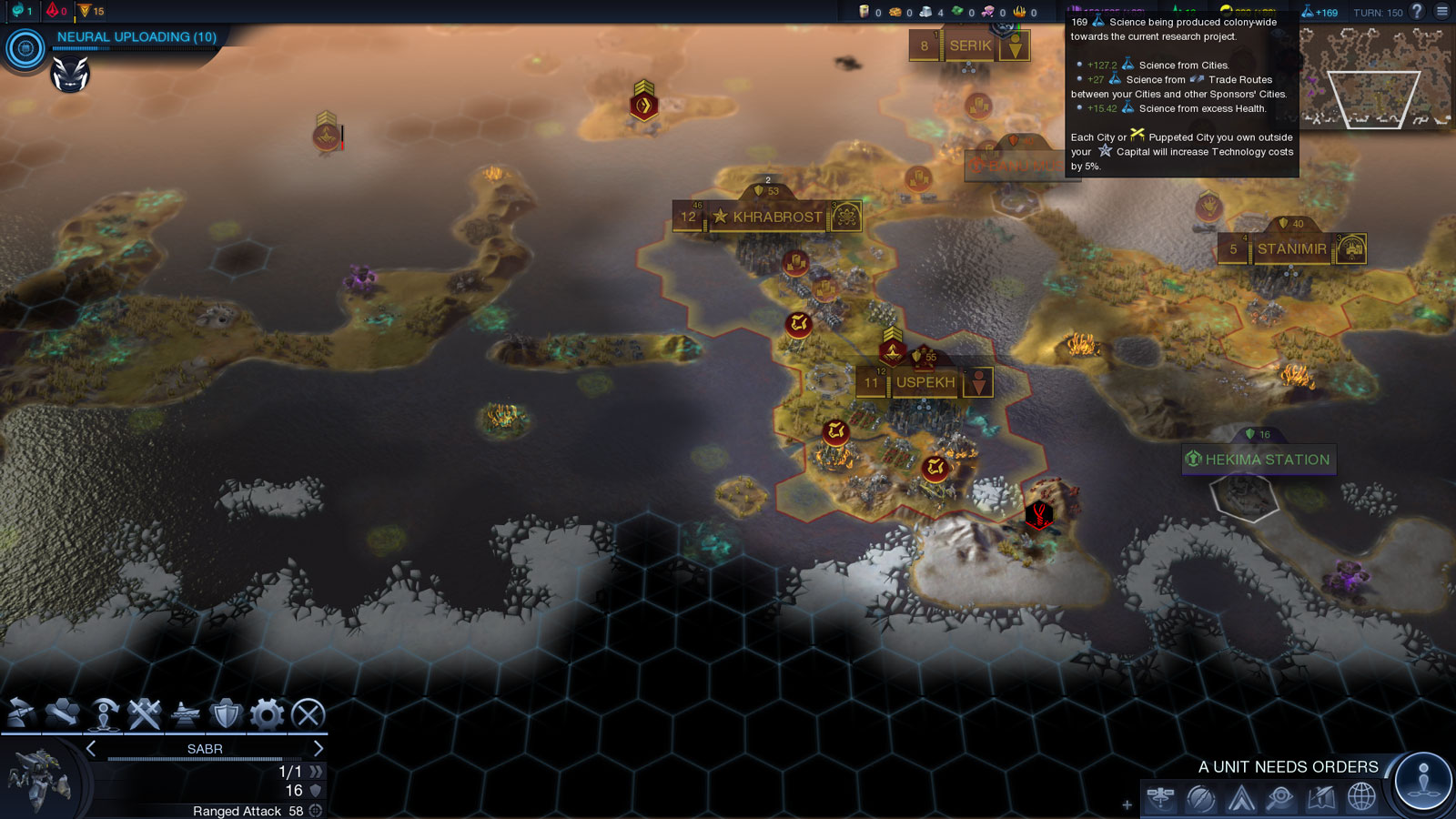
Knowledge virtues are another great way to earn Science for your nation. These traits let you research Technology at an impressive rate, and they're good for your Culture, as well. There aren't many other pro-Science virtues in any of the other lines.
Virtues That Aid Science
- Scavenging (Might): You earn Science from killing aliens and destroying alien nests.
- Foresight (Knowledge): +10% Science when your nation is healthy.
- Field Research (Knowledge): Raises Science when you complete each expedition.
- Laboratory Apprenticeship (Knowledge): Generates Science from every citizen in your cities.
- Networked Datalinks (Knowledge): Reduces the Science penalty from the number of cities in your nation.
- Metaresearch Methods (Knowledge): Reduces the cost of leaf Technologies.
- Learning Centers (Knowledge): +2 Science from academies.
- Technoartisans (Knowledge): Earn extra Science from your Culture output.
Choosing Your Goals
This is going to take a few games to master, so stay calm, and don't worry about getting things just right the first time you play. You have so many choices that it's tricky to know what you need next. You have access to all of the leaves from branches that you already know and to all of the branches that are connected to your existing Technology. Whew; that's a lot of good stuff!
Go into the Technology web, and highlight all of the available items that are shown in purple. These are Technologies that are ready for Research. When you highlight the icon next to the piece of tech, it gives you a quick summary of that item (and what it gives you). The icons underneath the Technology are specific buildings or bonuses that you gain from researching that tech. Highlight those to get more involved details.
Select the piece of Technology that seems best for your current situation. Do you need more Health? Find Technology that has buildings with bonus Health. Looking for martial power? Scan around for specific units, or grab leaf Technology that raises your affinity. Higher affinity leads to more powerful military units, so raising affinity (especially whichever one you are going to use the most) is a great way to strengthen your forces.
What Colors Mean in the Tech Web
- White: Technology that has already been researched
- Purple: Technology that can be researched as soon as you want
- Blue: Technology that is being researched currently
- Grey: Technology that cannot be accessed yet
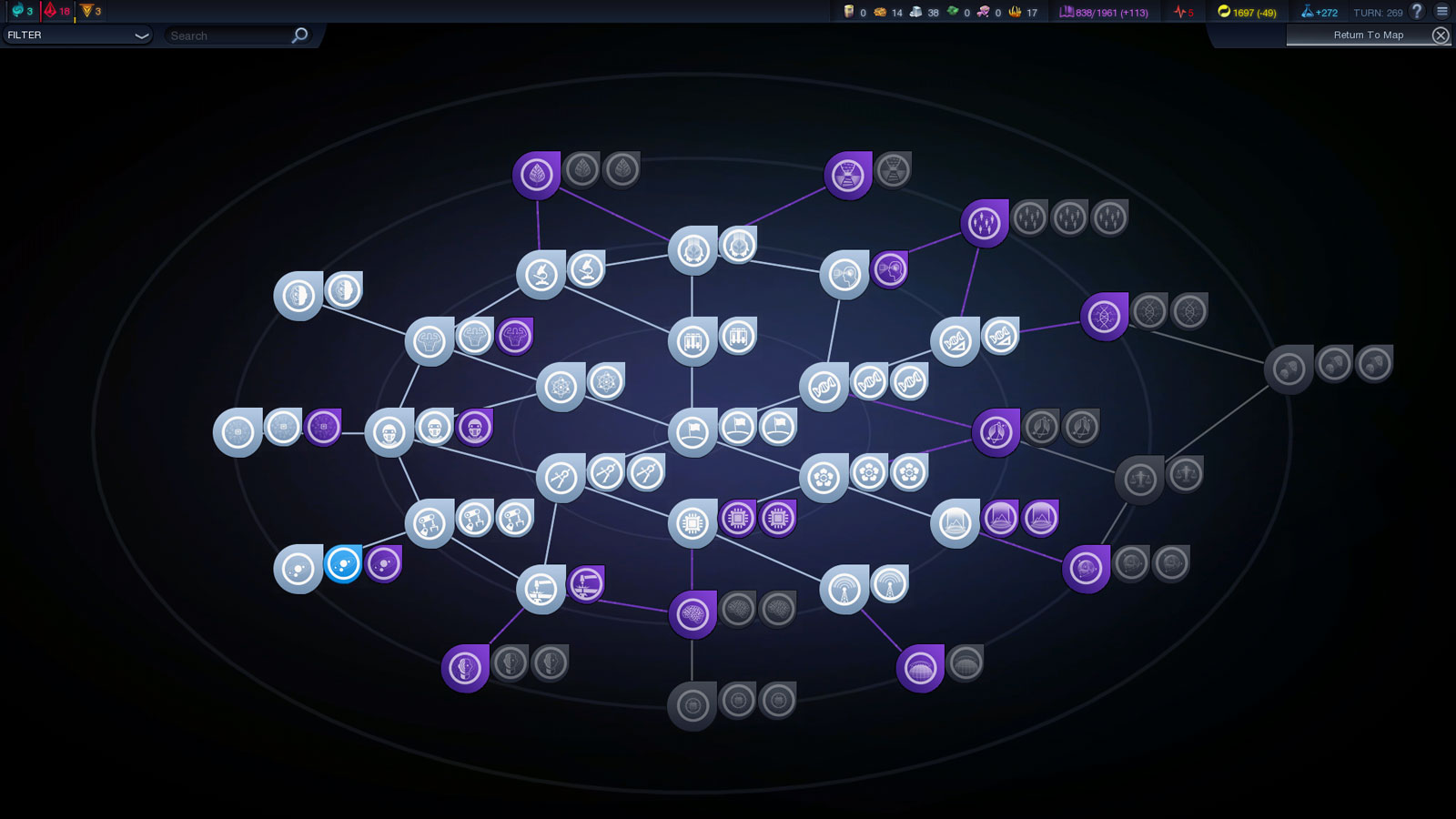
You can change Research goals at any time. Go into the Technology web, and click on a new item to shift Research toward that goal. This delays your progress if you do it after already investing in another item (because your Research on one item doesn't transfer to your new goal). Unless something shifts your priorities very suddenly, it's better to pick your targets and stick with them until they're done.
Shifting away from existing Research doesn't destroy your progress on the item in question. You can return to it later and resume your work. Think of this as a delay instead of a cancellation. The scientists don't delete everything on their hard drives just because you cut their funding.
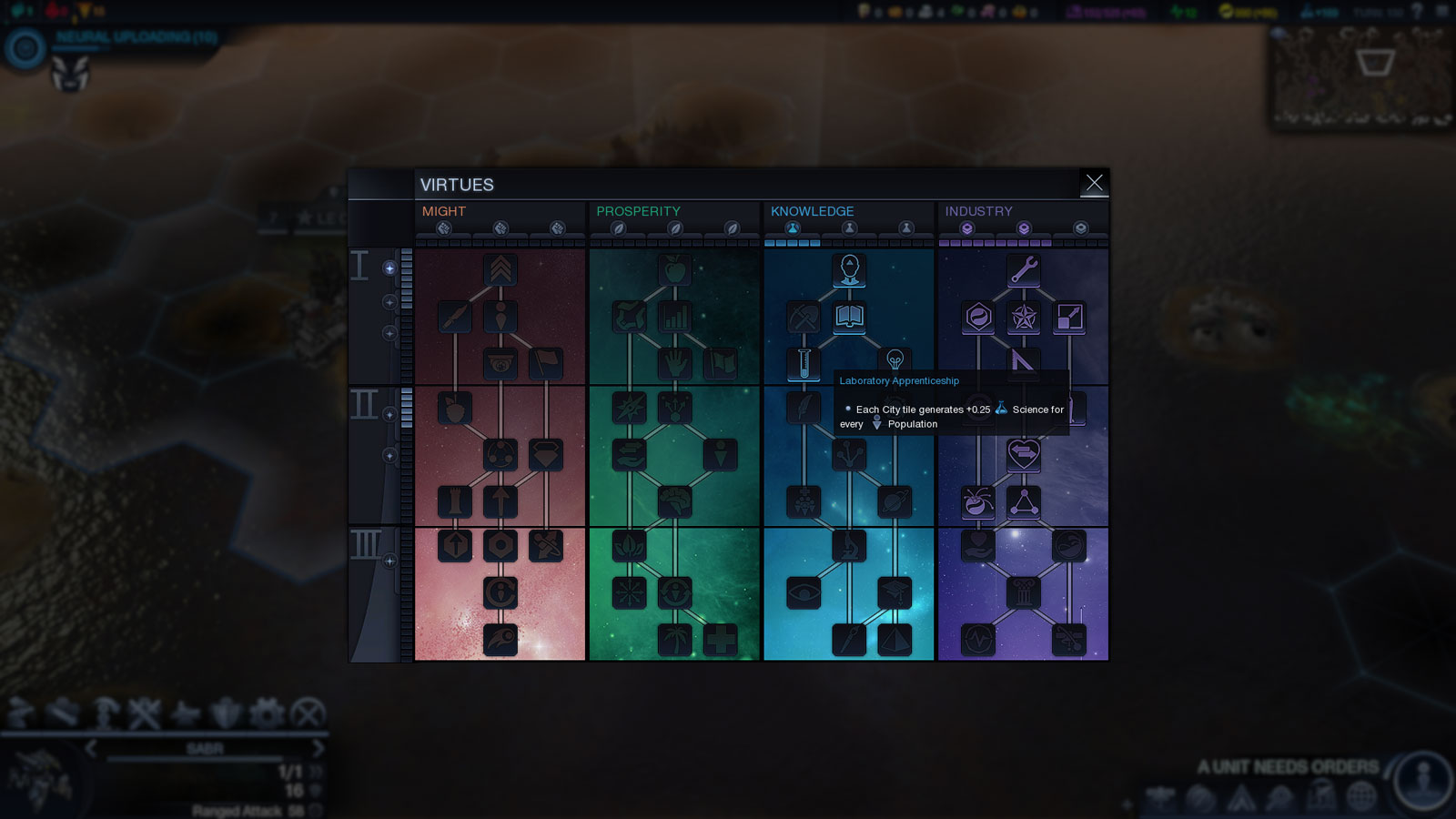
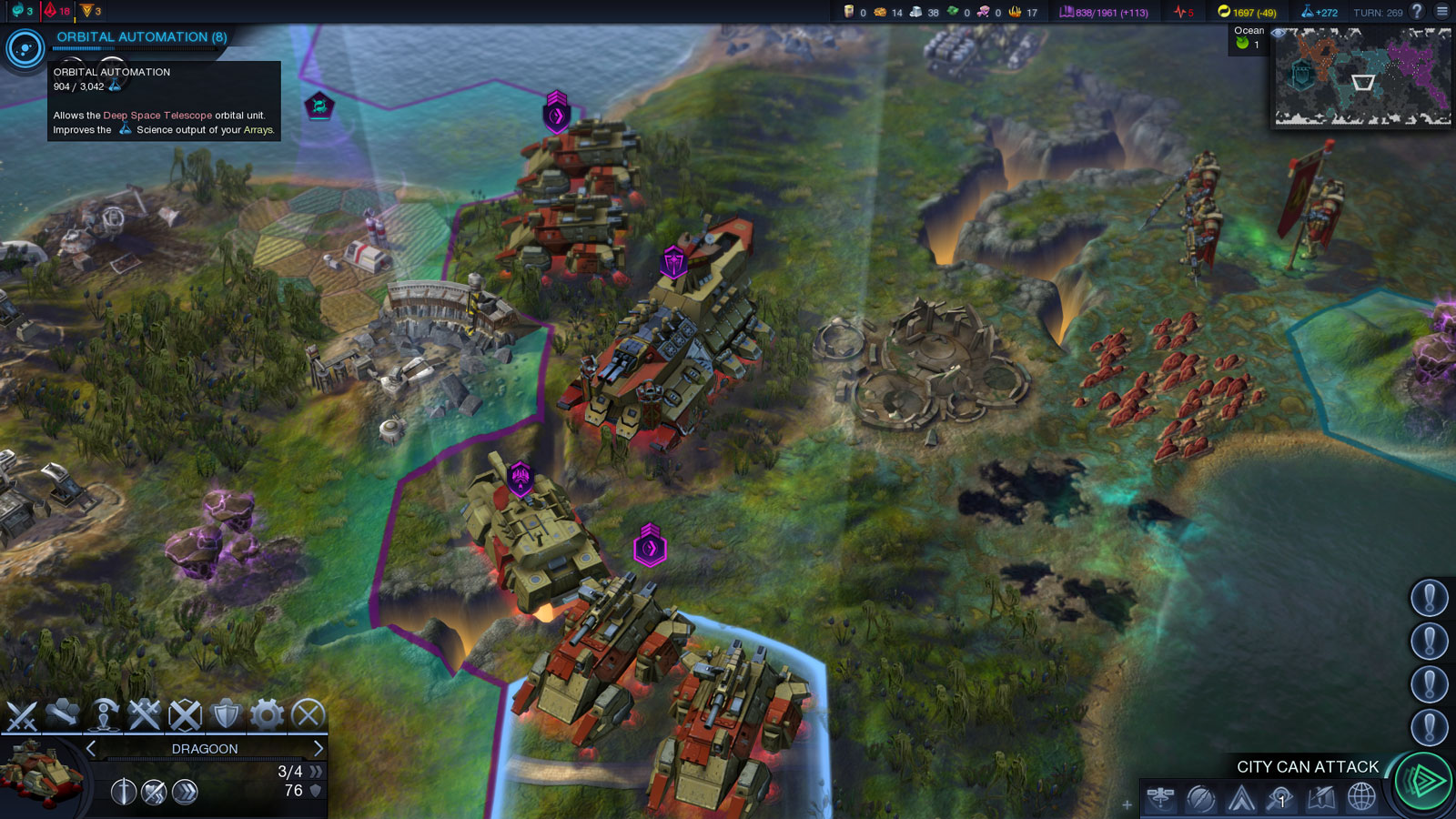
When you're back in the main screen, the icons in the upper-left area show you the goal of your Research, the number of turns until it completes, and the rewards you're going to get. Track these while you're playing so that you can time things well. "I'm going to get a tech with more affinity in five turns; I'll get my military close to my enemy's border because I know that I'm going to get some good upgrades this time."
Patterns in the Web
There is absolutely a method to the layout of the web. Take some time scanning the Technologies, and you'll start to see this. Sure, more expensive Technologies are on the outer circles, with the inner circle costing far less Science. That's obvious, but there is much more to the pattern than that.
Look at the number of Purity units and affinity on the left side of the web. That is clearly intentional. The Purity victory condition is on the left, their unique units are there, and there's 40% more Experience for them (compared with the right side).
The difference is even more pronounced for Harmony. Their victory condition is on the right side, and the gap in Harmony affinity Experience is even greater.
Supremacy is along the bottom of the web.
The top has many buildings that are useful to a wide variety of players.
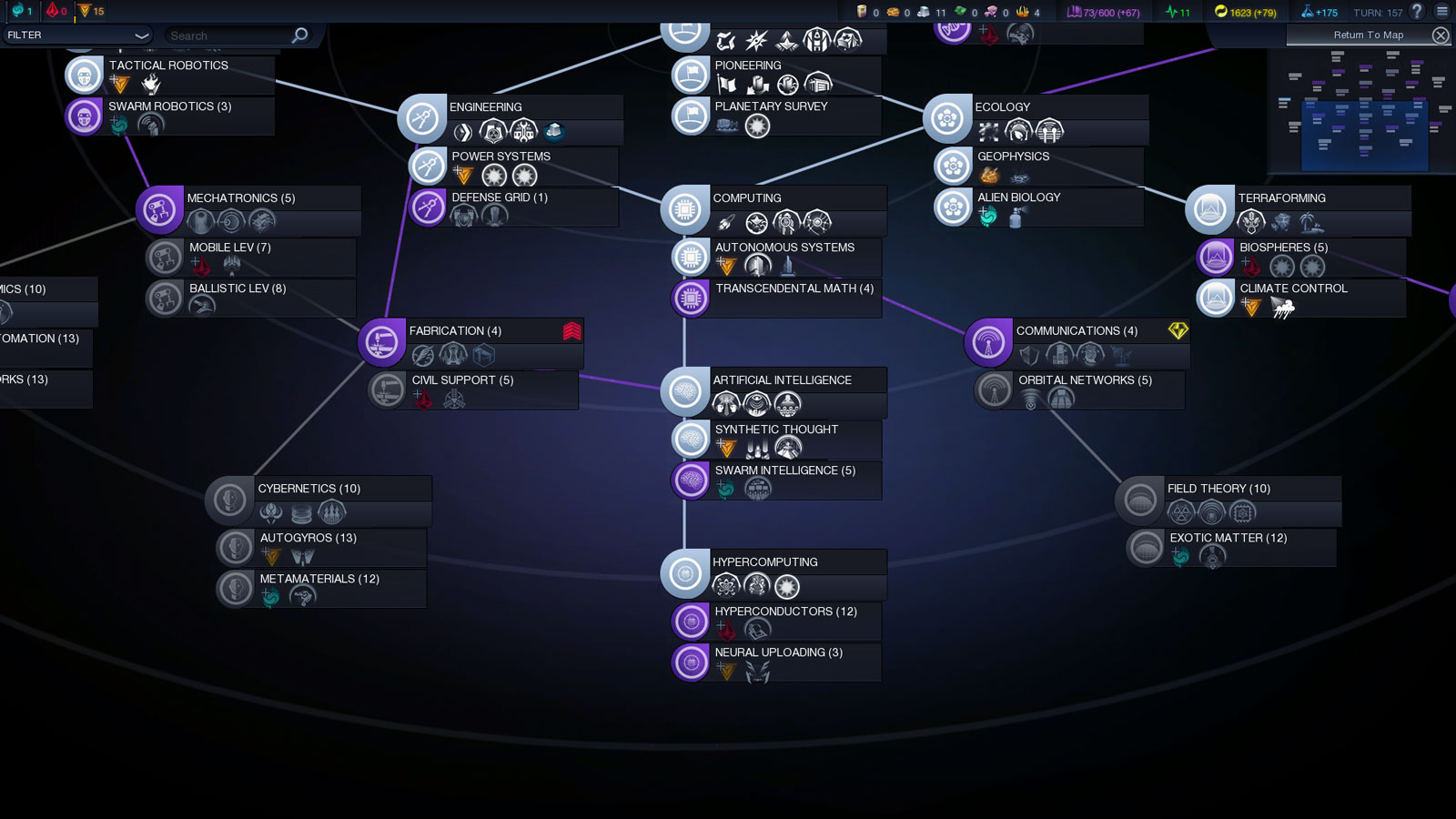
Before you play, you might assume that this means all players are going to beeline in the direction of their chosen affinity. That's not entirely true. The increased cost of branches on the middle and outer circles encourages players to invest in multiple branches and leaves before pushing out to the outer circles. Because of this, you're likely to gain some Technologies that are all over the place. Beyond that, the buildings and bonuses you gain all over the web are useful. Some might be locked if you don't have enough of a given affinity, but most are available to all players.
It's best that you focus your strongest efforts in the direction of your chosen affinity but backfill other Technologies whenever the cost of moving forward gets too high. "27 turns just to get Mechatronics?!?! I think I'll finally get Alien Sciences."
In times of peace, direct your efforts toward additional buildings, wonders, and tile improvements. When you're planning a war (or worrying that one might come to you), change your goals, and get new units and affinity Experience. If you go after affinity Experience exclusively, you won't end up with big, strong cities. If you only go after cool buildings and infrastructure, someone is going to come in and conquer all of your nice land!