
The Sims 3 Guide Essentials Relationships and Aging
Family and Aging
Few bonds in this world are more powerful than family—and family is a strong force inside The Sims 3, too. The family unit that lives under one roof is a close unit that is always on the lookout for each other’s best interests, both socially and with the tending of moods and needs.
But families are not finite things. Families take on many different definitions and are affected by a number of outside factors, like chance, luck, and time.
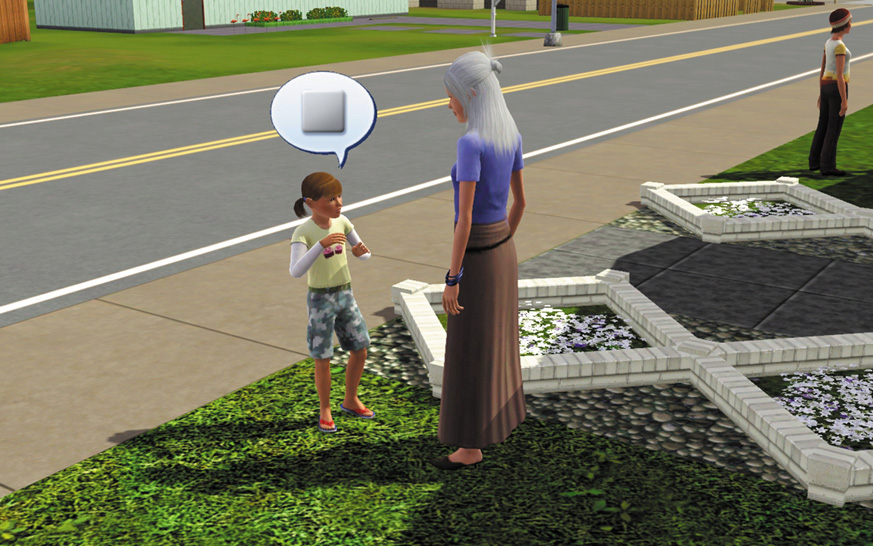
Time is a constant that cannot be avoided in The Sims 3. It is a steady drumbeat in the back of every day, sometimes barely audible above the din of career, socialization, and the little joys of life. Over time, Sims age. They transition between the stages of life, from toddler to child, from adult to elderly. And at the end of the strange, fascinating trip that is life, Sims will die.
There are seven stages of life in The Sims 3: baby, toddler, child, teen, young adult, adult, and elder. Each stage has a different number of days that completes an age. At the end of the age, the Sim transitions into the next age. Here are the number of days in each age:
Baby : 2 days
Toddler: 7 days
Child: 7 days
Teen : 14 Days
Young Adult : 21 days
Adult: 21 days
Elderly: 16 days (minimum)
Age Transitions
When a Sim closes in on the transition date, you are given a two-day warning. If the Sim about to age up is younger than a young adult, this transition period is extremely important.
When a toddler transitions to a child and a child transitions to a teen, the Sim picks up an additional trait. If the Sim is doing well in life by specific metrics at the point of transition, you get to pick that new trait. If the Sim is struggling, then the trait is either randomly chosen or is chosen from a list of negative traits.
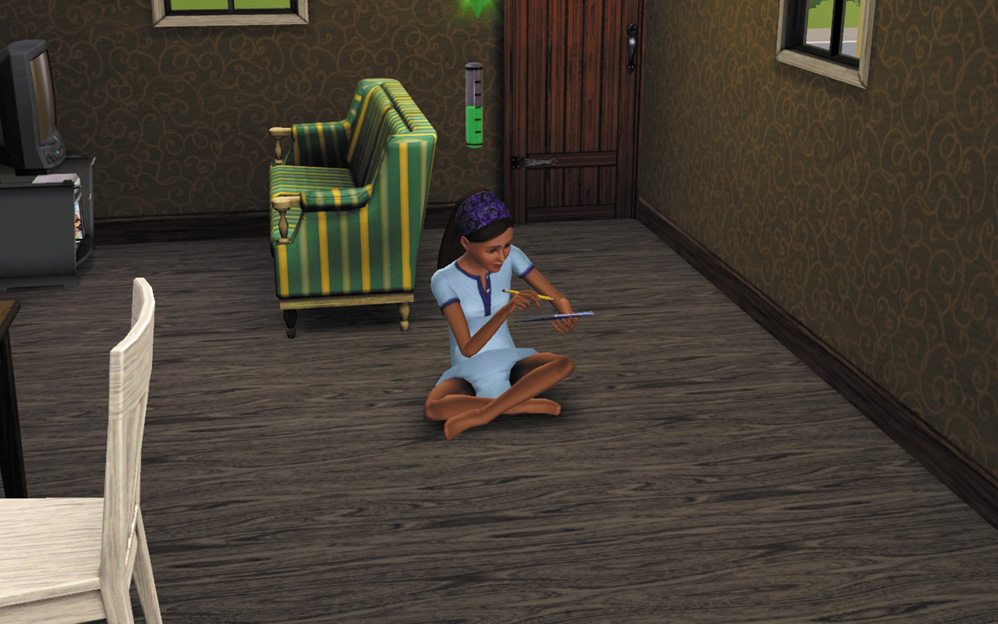
For example, as explained in the Simology chapter, teens in school are graded on their performance and get an A through F mark. An A student at the time of transition gets a selectable trait.
Here’s another example, a toddler who has been potty trained, taught to talk, and taught to walk before the transition gets a selectable trait.
If these Sims were neglected in any way and their performance suffered, the risk is that the trait automatically assigned to the Sim will be negative and cause trouble later in life.
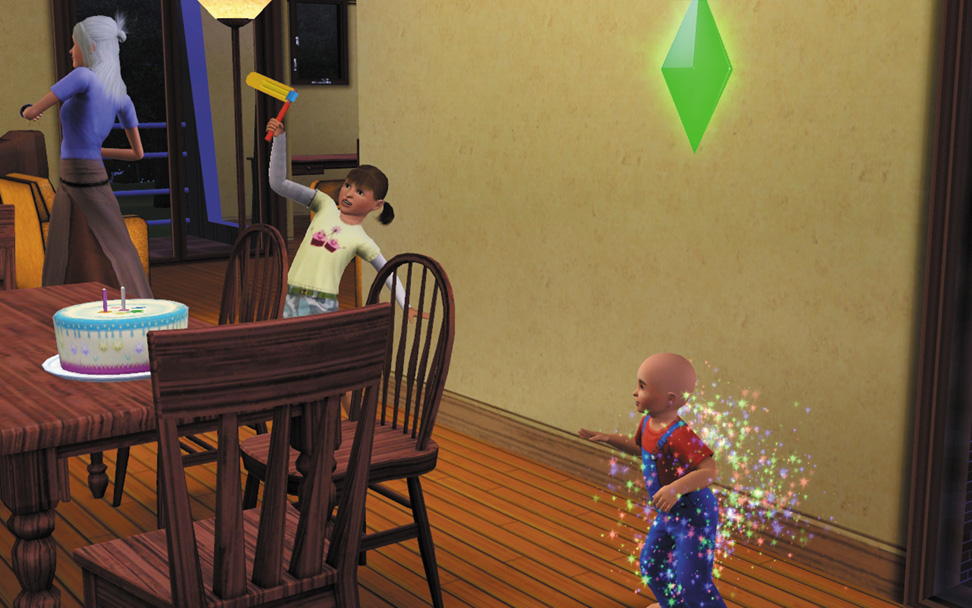
While the transition is natural (it occurs at 7 PM on the designated day), you actually have some control of the exact moment of the aging process. You can advance the transition through the use of a birthday cake. We covered birthday parties earlier in this chapter, but just the presence of a birthday cake on its own is good enough to advance the age.
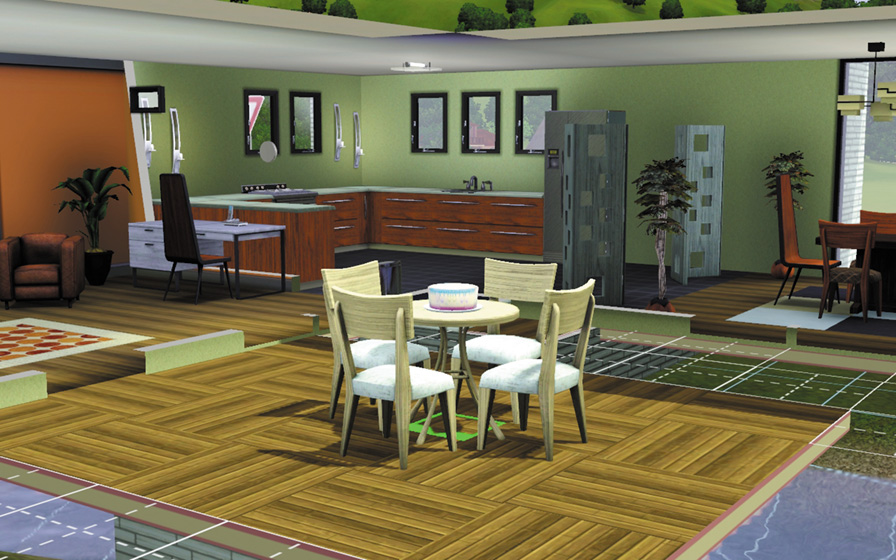
Just buy a birthday cake from Buy Mode or the supermarket and place it on a flat surface on the lot. Left-click on the cake and choose Blow Out Candles. You then get to choose
which Sim you want to blow out the candles and advance into the next age.
If you have a child or teen who is doing exceptionally well in school, advancing the aging process can be quite beneficial. If a child blows out the candles when they have an A, then you get to choose the trait.
Baby
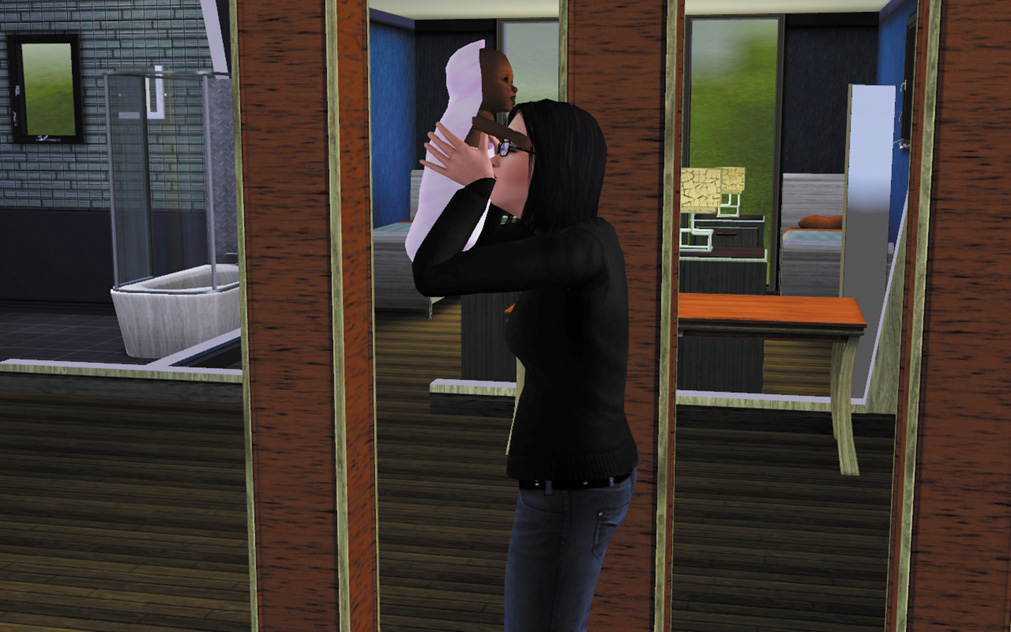
The most helpless of all Sims, the baby requires a lot of care. Fortunately, this age lasts only a couple days and parents are given the time off from their careers to tend to the baby.
Babies are typically carried around by their parents (or adult/elder Sims). While carrying a baby, Sims must limit their interactions to sitting (not in front of a table), using the phone, and any socialization that does not require touching. Babies have fewer needs than other Sims, but the needs they do have are critical. Here is what you need to monitor on a baby:
Energy: Babies tend to get tired much faster than other ages. When a baby gets tired, it can fall asleep, as long as it is not in the middle of an activity.
Babies typically sleep in a crib, though, so make sure you buy one if your household has a baby in it. It’s important to note that babies do not operate on the same night-day sleep cycle as older Sims.
Don’t count on getting a lot sleep with a baby. When the baby starts crying, you better get up and see what’s wrong, even if it’s 4 AM.
Hygiene: Babies need to relieve themselves like every other Sim, but they do so in their diapers.
This makes the baby Smelly, which can cause a negative moodlet on other Sims if the Change Diaper interaction is not selected after the baby alerts you of its stinky predicament.
Babies who are not changed soon after they make a number one will cry, which can wake up other Sims in a house.
Hunger: Babies need a lot of feeding, but not the kind of food you prepare in the kitchen. Babies need bottles. To feed a baby when it needs it, select the Feed Baby interaction on the baby.
Social: Babies need interaction and entertainment, so be sure to regularly play with your new baby.
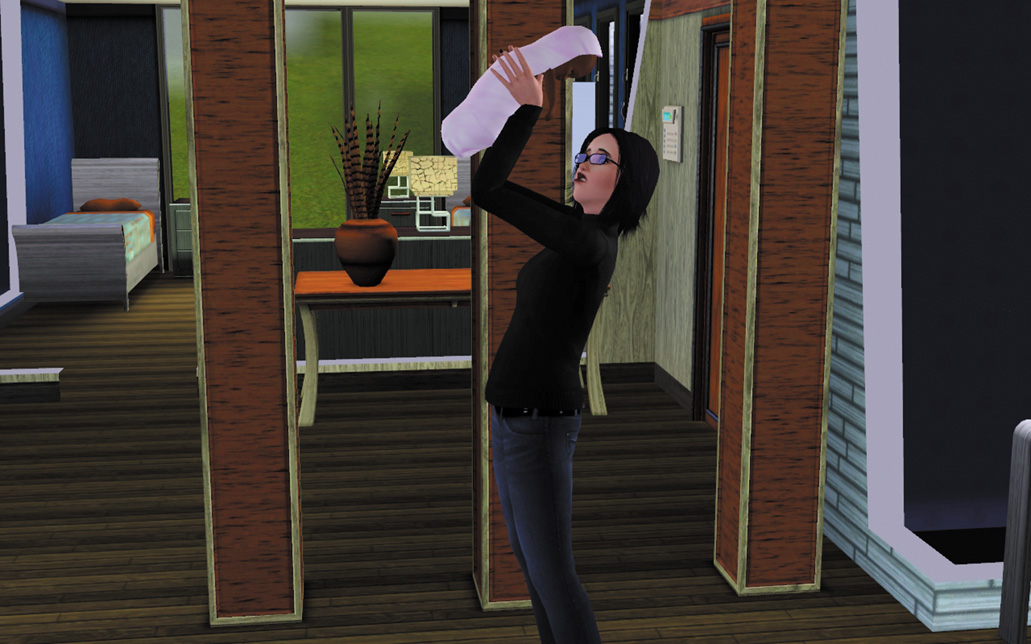
Play with the baby so it has Fun and you can start building your LTR.
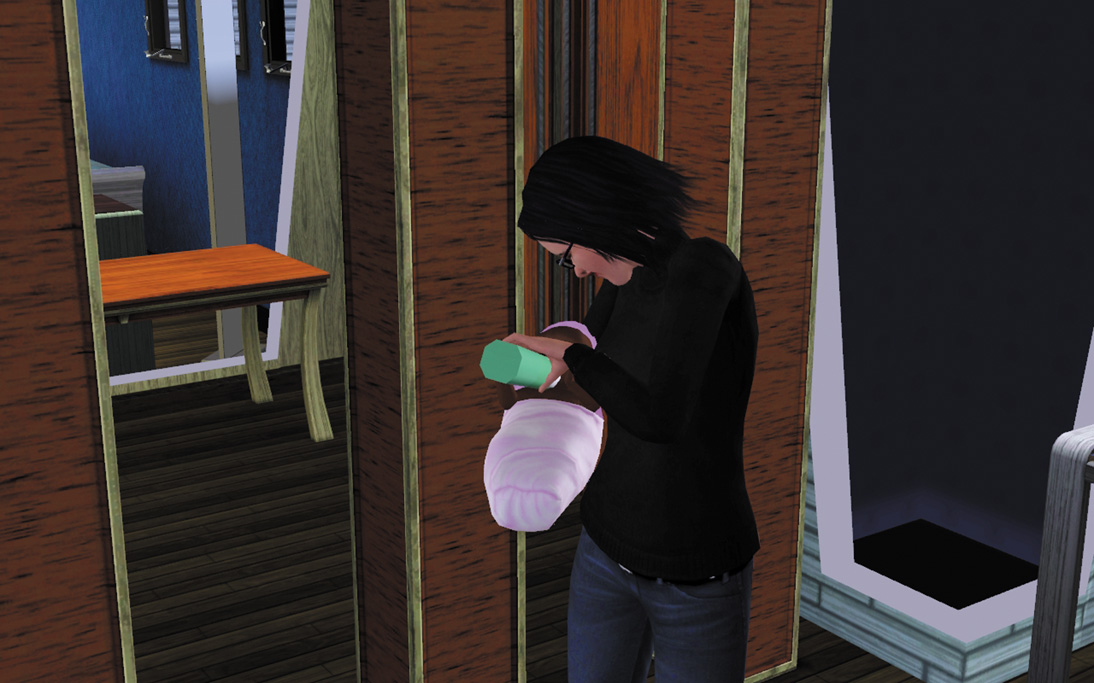
Feed the baby regularly so it doesn’t cry from Hunger.
Here is the list of baby interactions:
Change Diaper: When a baby smells due to an accident, use this interaction to ward off the stink and restore the baby’s Hygiene.
Feed Baby : Baby hungry? Select this interaction to give the baby a bottle and take care of its Hunger needs.
Put to Bed/Crib : When a baby is sleepy, you can put it down in a crib for a nap or even lay it on the floor. Obviously, the crib is a better solution.
Hold: Babies need help getting around and parents love contact with their babies, so use Hold to pick up a baby and cart it around.
Here is the list of baby socials:
Play With : Socialize with your baby! Get right up in its face and make silly noises, much to the baby’s entertainment. Unless, of course, the baby needs feeding or change, and then no amount of goofy eyes will help.
Snuggle: Awwww. Snuggle-time! Snuggle up with your baby via this social.
Toddler
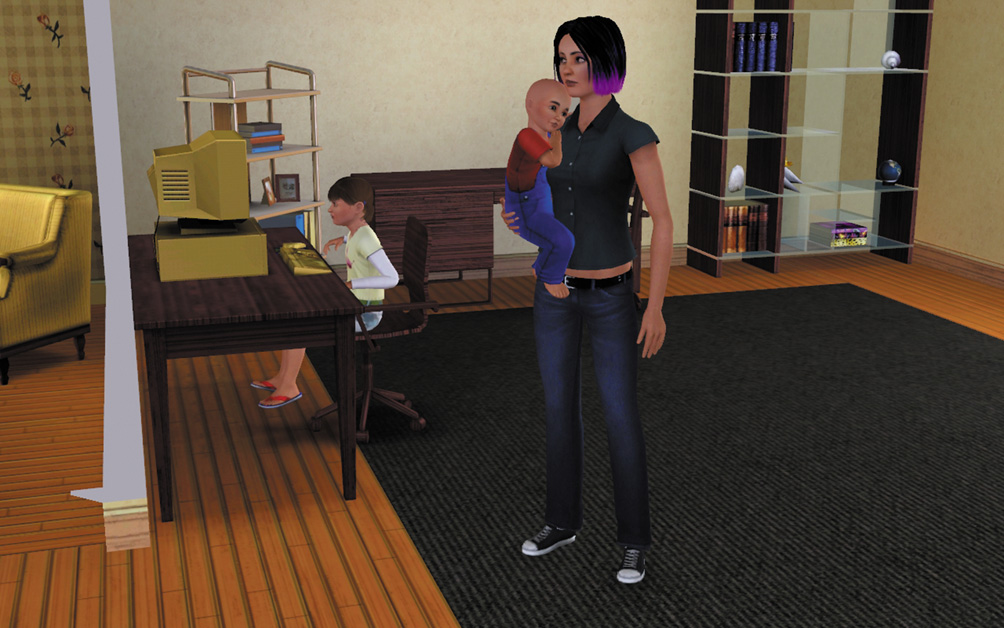
Babies age up into toddlers. Toddlers cannot take much better care of themselves than babies, but at least they are somewhat mobile on their own, thanks to the ability to crawl, and they can amuse themselves via toys.
Toddlers can be taught how to walk via a special interaction with an teen or older Sim. In fact, teaching a toddler to walk is one of three critical lessons you need to teach a toddler before it ages up into a child.
The other necessary lessons are Teach to Talk and Potty Train. Toddlers need attention like babies, so if a toddler starts to fuss, you should definitely pick it up and socialize with it.
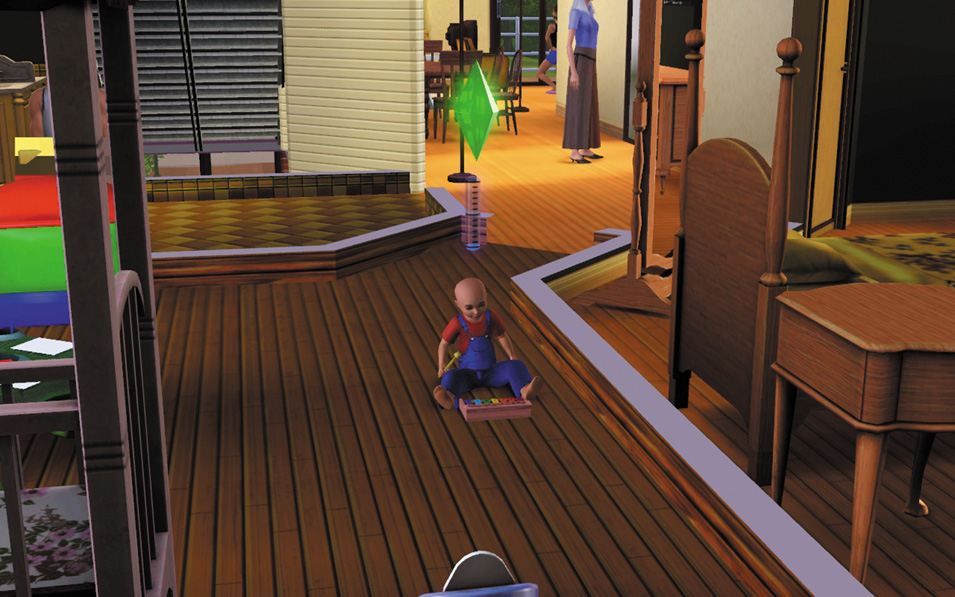
Toddlers love toys. You can keep them busy for hours by giving them a few toys to play with, like the baby xylophone.
Toddlers have four needs that must be attended to:
Energy: Toddlers need to sleep a little less than babies, but they still get sleepy on a much more regular basis than older Sims.
Fun: To keep toddlers in a good mood, you need to either play with them or direct their attention to some toys. You can purchase several toys in Buy Mode from the Kids Room catalog.
Hunger: Toddlers need to eat. You can either go the bottle route or feed a toddler in a high chair, which can also be purchased from the Kids Room. To feed a toddler actual food, you need the food processor to puree the meal. Toddlers get the same moodlets from eating food as older Sims.
Hygiene: Toddlers use diapers—and fill them with a stink that’s even more potent than a baby’s. If not potty trained, a toddler will fill its diapers and demand immediate changing. If a toddler has been taught to use the potty, it can use the training potty.
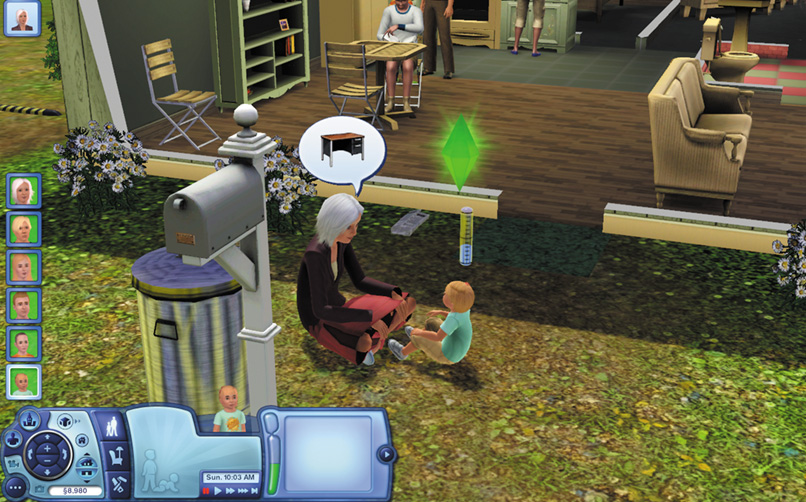
As mentioned, you need to teach the toddler in order for it to properly age up. If you have not taught the toddler all three skills before it ages, you cannot choose the third trait it receives during the transition. To teach the toddler how to walk, talk, and use the potty, select those interactions/socials by left-clicking on the baby.
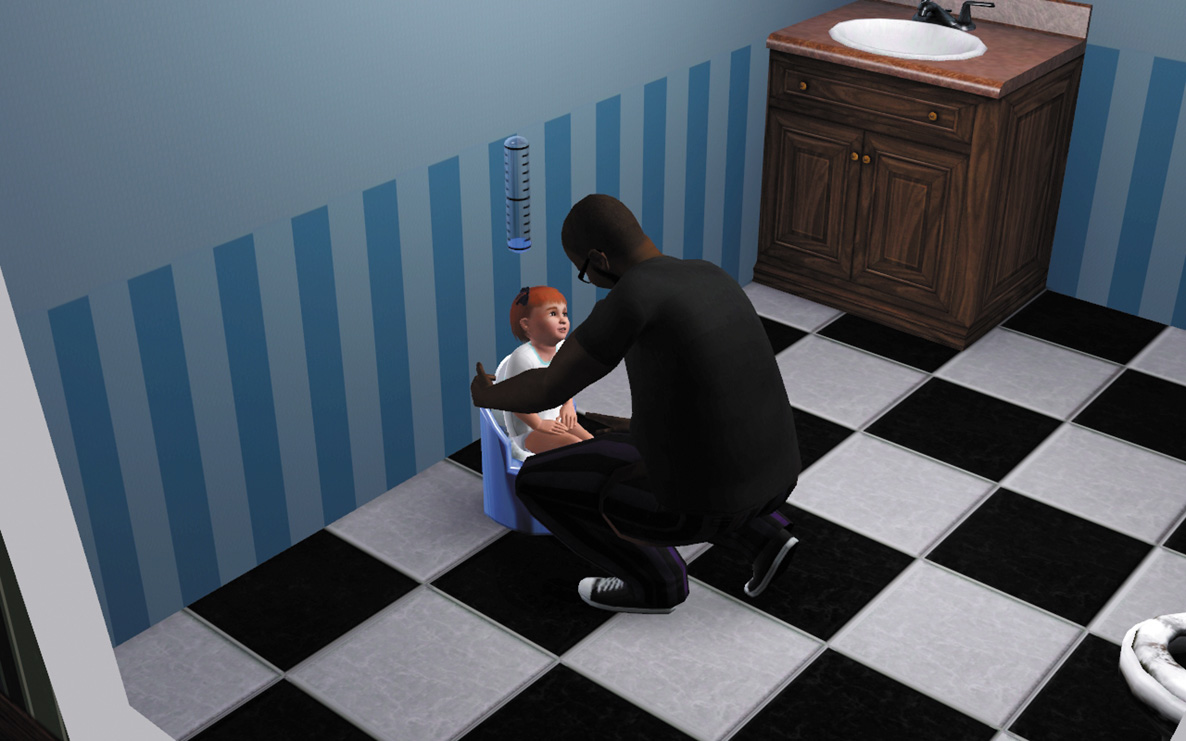
Potty Train is a critical skill to impart to a toddler.
Teach to Walk and Teach to Talk are selectable when you left-click on the toddler. The older Sim sits down next to the toddler and starts the lesson.
Lesson progress is viewable just like learning a skill in adulthood. A blue bar appears over the toddler’s head and fills over the course of the lesson.
When the bar fills to the max, the skill has been taught. To handle potty training, you need to buy the small training toilet from Buy Mode. As soon as the toddler has learned any of these skills, that skill vanishes from the interaction menu.
In addition to these important lessons, you can goof off with a toddler by choosing the Tickle or Toss in Air socials on the toddler.The toddler loves to be played with, which has a positive effect on both the player and the playee. Playing gives the toddler a positive moodlet. Toddlers in a good mood learn very fast.
Child
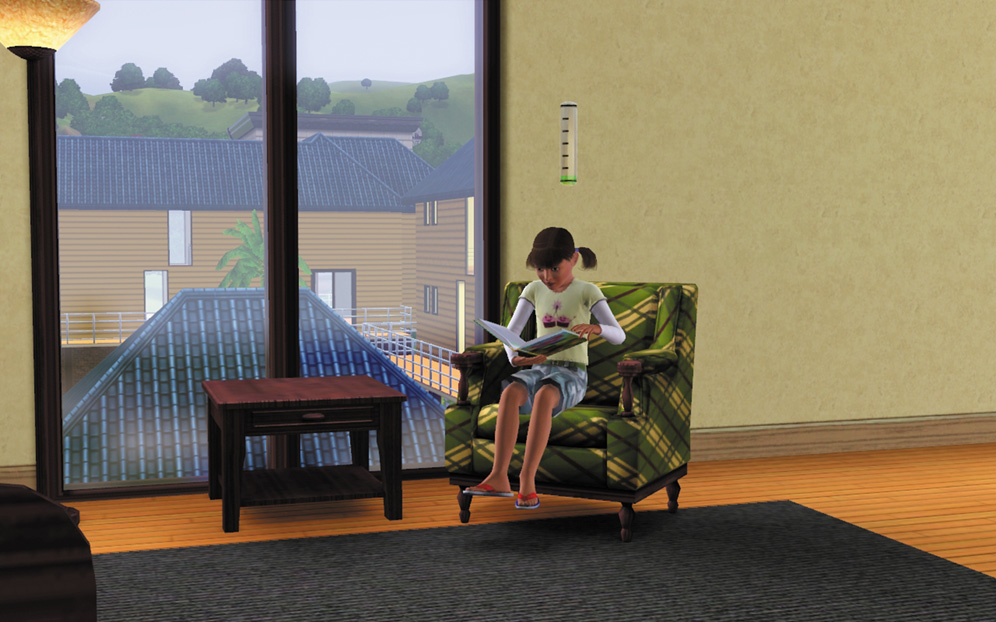
Child Sims have survived being a toddler and are ready to take on a little responsibility of their own: school. Child Sims can socialize and make friends with other children, feed themselves with quick snacks from the fridge,
and even learn a few of the skills that will give them a leg up on teen and adult life. Children still like to play, so let them have little fun with toys and games when not working on homework for school and socializing with the family.
Because children can leave the house and do a little exploring, it’s important for children to have curfews. Children get curfew warnings letting them know it is time to get home unless they are staying with a friend at a lot/house they were invited to.
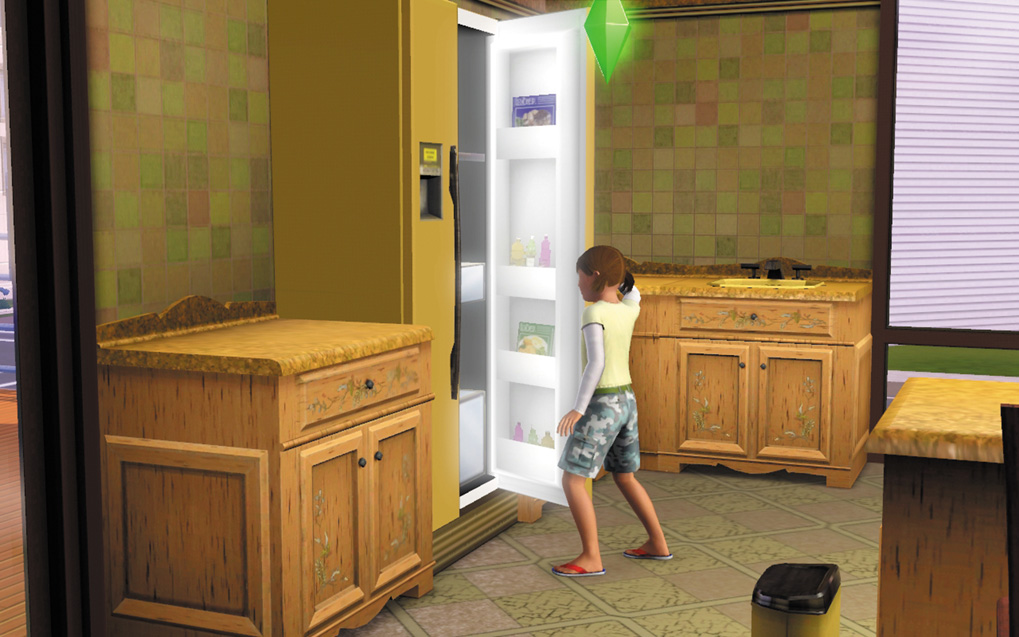
Children can grab snacks from the fridge, but they cannot yet cook full meals.
Check out the school section in the Simology chapter for a full briefing on how to achieve success in school. A child who gets regular good grades and has an A at the time of the age transition gets to choose the next trait. Anything less and the trait is either random or purposefully negative. However, in addition going to school, children can learn a few skills, such as Cooking. The Simology chapter also has a complete list of the skills a child can learn.
Teen
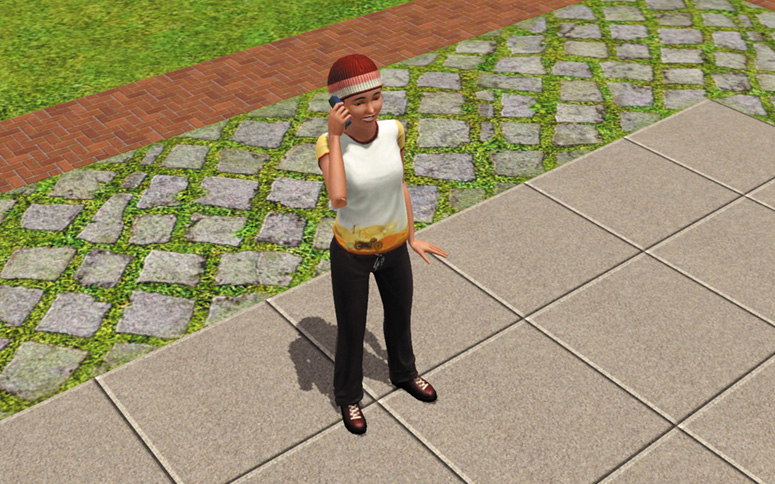
Teen Sims graduate to high school and are impressed with a whole new level of responsibility. Teen Sims can get part-time jobs to help contribute to the household worth, although doing so leaves them less time to get homework done or be social, both of which are important activities for the teen. Teen Sims must pay attention in school and get homework done so when they graduate to adulthood, they can select the fifth and final trait.
Teen Sims share a lot with adult Sims. They can perform most socials at this point, save for marriage and WooHoo. Romance is a big part of the teen experience, as teens want to have relationships and go steady with another teen. (Teens cannot be romantic outside of their age level.) Use the STC, LTR, and social tables in this chapter to help teens navigate the social waters and develop relationships and young love.
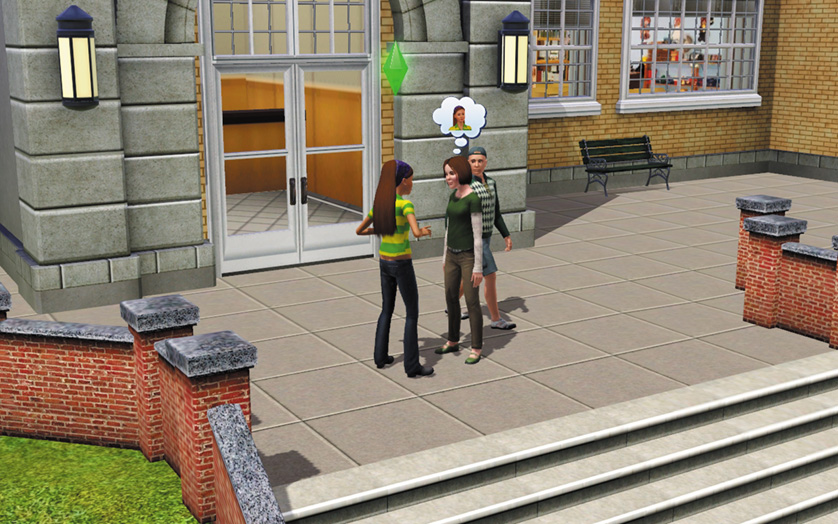
School is a great place for teens to make friends. Make sure that they are a little social here. Life cannot be all work.
Teens have a special LTR: Best Friends Forever. This is the teen version of Best Friends. To designate this special friend, use the BFF social on a fellow teen with a high relationship. BFFs long to hang out together. Teens can only have one BFF at a time. If a teen chooses a new BFF, the relationship with the previous BFF takes a significant hit and has an insulting STC.
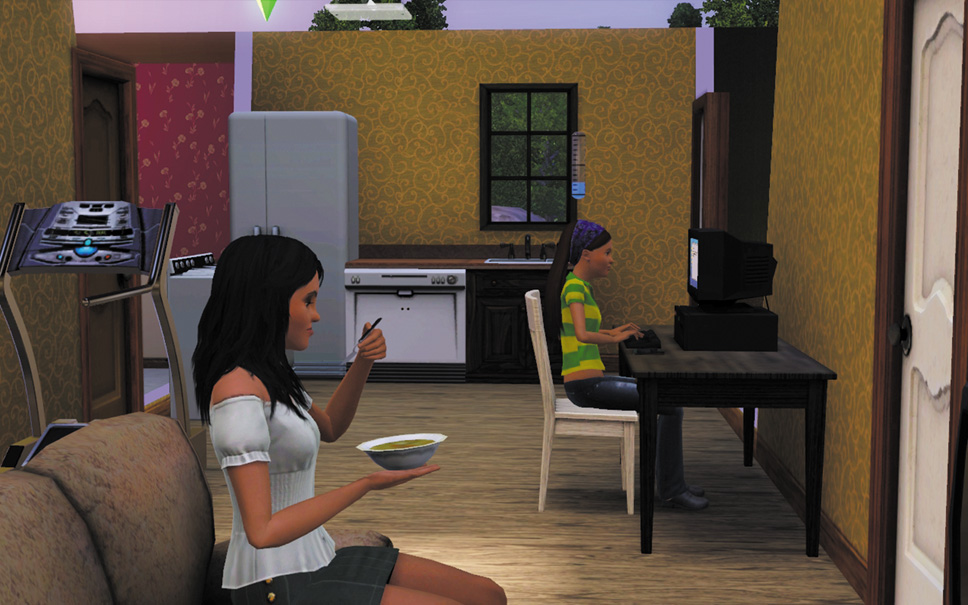
Pick a skill and practice it with your teen so the Sim has a jump on that skill in adulthood.
Whereas children must obey curfew, teens can actually flirt with trouble here. In fact, disobeying curfew gives the teen the Out After Curfew! moodlet.
Curfew is typically between 11 PM and 6 AM. Curfew violation occurs at 11:01 PM if the teen is not at home or on the lot of a friend who invited them over. (If the teen has the Coward, Good, or Neurotic trait, they automatically try to go home when curfew strikes.
You must manually cancel it.) While violating curfew, teens risk getting caught by the police. If the police appear and summon a teen over, the teen must obey. The teen is then taken directly home in the cop car and earns the Caught After Curfew negative moodlet.
Young Adult/Adult
The lives of adult Sims, both young adult and regular adult, are covered quite extensively in the entirety of this guide. Adult Sims have great responsibilities to take care of their charges and maintain a positive household, all while juggling career, skills, and socializations.
It’s not an easy task. There are thousands of choices to make, from sitting down to write a book to going into the military to looking for butterflies up at SimHenge. But it’s the stage and all of its freedoms that makes The Sims 3 such a wonderful experience.
Elder
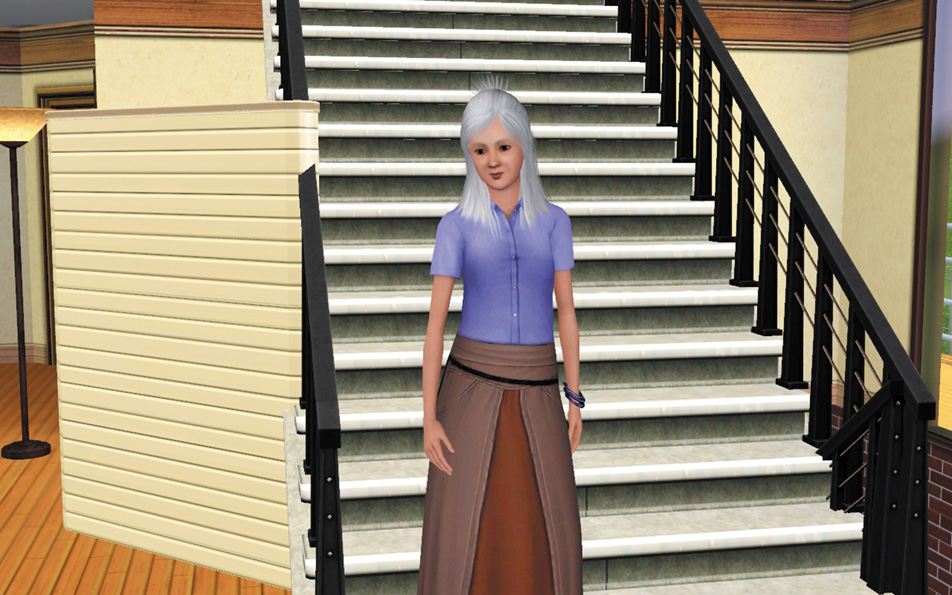
Elder Sims are not that different from adult Sims. They learn skills, have careers, like to socialize, and still have Lifetime Wishes.
However, they are nearing the end of the great arc of life. But they still deserve to live this final age with grace and poise. Keep elder Sims active even if they retire from work (and enjoy a nice pension) by continuing to develop skills and relationships.
That way, when death finally does knock on your front door, there are zero regrets and the family that the elder Sim leaves behind has a wealth of memories, lessons, and Simoleons.