
The Sims 3 Guide Essentials Careers
School
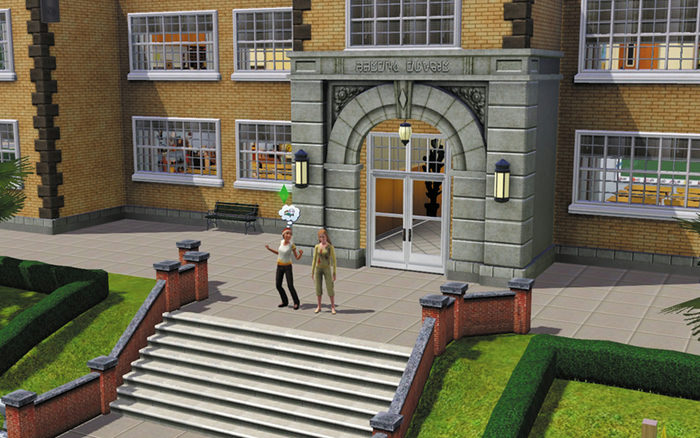
Children and teens have a different set of obligations from adult Sims—they must regularly attend school. Just showing up isn’t enough, though.
Students must complete homework to improve grades. Good grades are more than just a point of pride, too. Good grades lead to improved mood and the chance to select a new trait when the student ages up.
School Schedule
Always Monday through Friday, but hours vary slightly depending on age. Children are in elementary school from 9 AM to 3 PM. Teens are in high school from 9 AM to 2 PM.
Much like a career, school has specific requirements for getting ahead and metrics for judging performance. For school, grades are the rating.
Tones you use at school guide behavior and have a deep effect on performance. Here are the tones for school:
Normal Effort
This tone puts in an average amount of work at school and does not add too much stress.
Work Hard
Working Hard is a good way to increase performance, but it adds a lot of stress, which often results in the Stressed Out moodlet. After school, you need to relax and reverse the negative moodlet.
Slack Off
Stressed students can reverse the effect by choosing this tone. Very little work gets done, so performance does not increase by much.
Meet New Friends
This is a great way to socialize in school and develop budding relationships with new students.
If you successfully meet another student, there is a good chance that you will either bring that new friend home or be invited to the friend’s home. (See Friends After School below.)
Talk to Friends
Talking to Friends at school is a good way to potentially
increase your Sim’s friendship rating of with another of the same age. This increases the chance you will be invited to a friend’s house or invite a friend back to yours.
Sleep in Class
If a student reports to school sleepy, then this tone becomes available to combat the effects of being tired. If the student is Exhausted, this tone happens automatically at random times. There is a risk of being caught while sleeping, though. If caught, the student is given detention.
Work Late on Homework
If the student comes to school with incomplete homework, they can use this tone to try and finish it while at school. Overall performance will not rise as much as a Normal Effort, though.
Homework
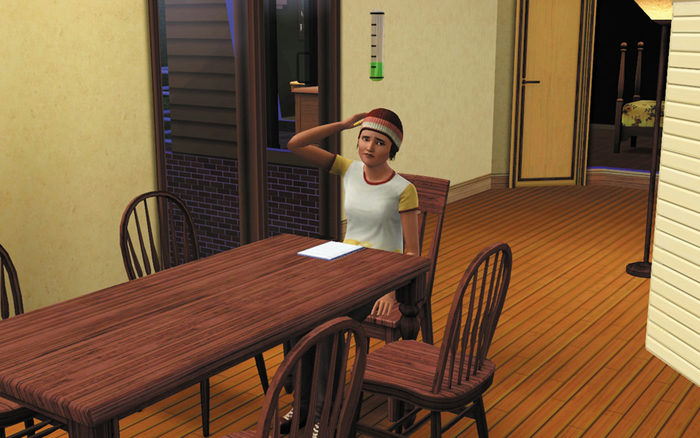
The first time students go to school, they receive a small homework booklet. This booklet is placed in the student’s personal inventory and can be used via the new Do Homework interaction.
Completing homework is essential for raising grades at school, so make sure to allot extra time in the afternoons and evenings for homework.
When you choose to Do Homework, the student finds a seat somewhere on the lot and starts scribbling in the booklet. A meter appears over the student’s head, just like a Sim trying to complete any task.
If the student finishes their homework before the next school day, their performance goes up, Coupled with being in a good mood, this can raise a grade.
If the homework is only partially done, the performance boost is only modest.
If the student does no homework and does not work on it at all in school the next day, their performance takes a significant hit and grades can potentially fall.
Detention
A student caught sleeping in class or copying homework is punished with detention. Detention keeps the student after school for a few hours, which can interfere with a part-time job.
While staying late, the student cannot choose their tone and they will not see any improvement in grades or performance. When detention is over, the schoolbus takes the student home.
Grades
All students start school the first day with a C. Doing well in school raises that to a B and then an A. Doing poorly drops it down to an F. Grades are the culmination of mood and homework completion. If you keep reporting to school with a good mood and complete homework, you will get an A.
If the student finishes their homework before the next school day, their performance goes up, Coupled with being in a good mood, this can raise a grade.
If the homework is only partially done, the performance boost is only modest. If the student does no homework and does not work on it at all in school the next day, their performance takes a significant hit and grades can potentially fall.
Detention
A student caught sleeping in class or copying homework is punished with detention.
Detention keeps the student after school for a few hours, wich can interfere with a part-time job. While staying late, the student cannot choose their tone and will not see any improvement in their grades or performance. When detention is over, the schoolbus takes the student home.
Grades
All students start school the first day with a C. Doing well in school raises that to a B and then an A. Doing poorly drops it down to an F. Grades are the culmination of mood and homework completion.
If you keep reporting to school with a good mood and complete homework, you will get an A.
Keep that A up for three days in a row to get the Honor Roll moodlet. Every day after getting the Honor Roll moodlet that you maintain the A, you keep the moodlet.
If you drop back down to a C, though, you must maintain an A for three straight days to get the Honor Roll award back.
If you do not do homework, get caught cheating repeatedly, or go to school in a poor mood, your grade will slip down to an F.
The first time you get an F, you are warned that unless measures are taken, there will be consequences. The next F results in the Failing moodlet.
Grades are very important during age transitions, so pay attention to the age of the student and try to have an A when the student moves into the next phase of life.
If you have an A when the child becomes a teen or the teen becomes a young adult, then you get to select the trait awarded during the age transition.
If the student has a F, then the student is assigned a bad trait. If the student has a C at the time of transition, then the trait is random—could be positive, could be negative.
Friends After School
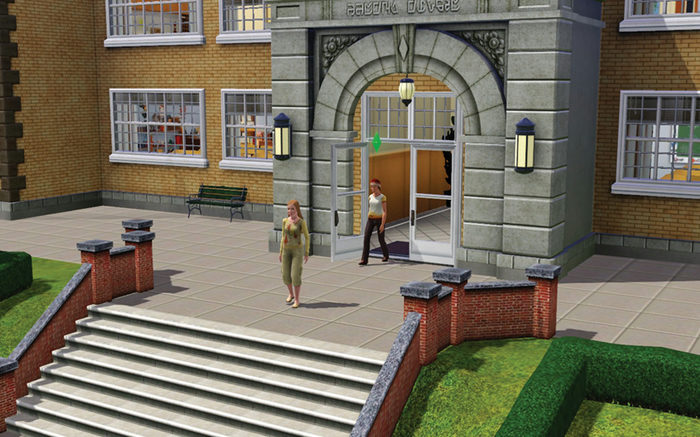
Making friends at school satisfies the student’s Social need. Students sometimes bring another student home from school with them or are invited to another student’s house to play.
You choose whether or not to go home with another student for a couple hours. Doing so and then engaging in socials at the friend’s house is a good way to improve a relationship.
One factor that determines the chance of this happening in the distance between the homes of the students.
Students who go to each other’s houses will live within a reasonable distance from each other. The closer the other student, the more likely an invitation is.