The Witcher 2: Assassins of Kings Guide Extras
Developer Q&A
Porting a game the size of The Witcher 2: Assassins of Kings can be an enormous task. Despite that, some key members of the Witcher 2 production staff found a little time to answer a few questions about the game and its development. Staffers who participated in the Q&A include lead gameplay designer Mateusz Kanik, writer Artur Sliwinski, lead concept artist Bartłomiej Gaweł, designer Malgorzata Napiontek, senior writer Borys Pugacz-Muraszkiewicz, lead quest designer Konrad Tomaszkiewicz, and executive producer John Mamais. We hope this brief interview with various members of the team gives you a little more insight into what makes The Witcher 2 such a unique, memorable game.
What’s your history as a gamer? Were there any RPGs that were particularly big influences on you as a game designer?
The first real PC RPG I played was Betrayal at Krondor. Krondor had a great open world, a great combat system—and in those days was a really impressive game. At that time, I also started to play with friends in pen and paper RPGs like D&D, Warhammer, and Cyberpunk 2020. Fascination and interest in RPGs continues to this day.
If I had to list the RPGs that changed me as a game designer then I would mention Diablo (although this is not strictly an RPG—but there was a great randomization and itemization system), Fallout (for its non-linearity and character development), Baldur’s Gate (for the translation of paper mechanics to a computer game), and Morrowind (for its open world and freedom).
—Mateusz Kanik, Lead Gameplay Designer
What games influenced the game design of The Witcher 2 ? In particular, what influenced its approach to combat?
In terms of the combat system, our inspirations were actually two games: Batman Arkham Asylum and Demon’s Souls. From the very beginning of work on The Witcher 2, we knew that we wanted to create a dynamic combat system that gives a very broad spectrum of tactical possibilities. Dynamics and the flow of combat come from Batman, and the tactical layer comes from Demon’s Souls. Overall I can say that about 30 percent of the combat is inspired from other games and 70 percent is based on original ideas. We wanted to create something unique, our own, only slightly based on the best elements of the other games. I believe—in spite of some shortcomings arising from the fact that this system is created from scratch—that we have succeeded. And now we have worked out a very strong basis for development on future games.
—Mateusz Kanik, Lead Gameplay Designer
Did you consider altering or adding to Geralt’s range of powers at any point during this game?
Yes, of course. But our main issue is that Geralt is a well-known character—both from Sapkowski’s prose as well as from The Witcher. We did not want to “reset” Geralt as compared to the first part of the game, nor depart too much from the lore. Therefore, we decided to add a few elements, expanding the player capabilities, for example the addition of the Heliotrope sign.
—Mateusz Kanik, Lead Gameplay Designer
What was the inspiration for the main storyline? Is it based on anything that happens in the Witcher stories?
We always follow previous novels and stories closely and treat them as canonical. What happens to Geralt in-game is usually a logical result of some of the previous events depicted in novels. He meets old friends and enemies, visits places of importance in his world, and many people are aware of him and his previous adventures. In fact, for some, he is a walking legend.
—Artur Sliwinski, Writer
What considerations or compromises were made in translating the Witcher stories into a video game?
Our decision was simple—as little compromise as possible. Video games are a wonderful medium, and being flexible they allow for a sort of a “pioneer approach.” We wanted to focus on cinema-like storytelling and provide vivid, interesting events that would be appealing for both fans of Sapkowski’s prose who want to enjoy a good story and modern avid gamers who expect the best quality for their money.
—Artur Sliwinski, Writer
What parts of the game reference the original Witcher short stories and novels? Are there parts of the game that reference other fantasy series? (We caught a lot of references to The Lord of the Rings .)
The whole Witcher saga is an enormous homage and tongue-in-cheek reference to the fantasy genre—we just follow the original style and vision of the world with our ideas and stories. Observant players should spot those references immediately and we will not spoil the surprise here. Just keep your eyes wide open and expect the unexpected…
—Artur Sliwinski, Writer
Is the political situation depicted in The Witcher 2 ’s plot based on any sort of real world counterpart?
We try to make political plots in our game seem plausible and we wanted to depict strong, real characters who participate fully in the events of this fictional world. That’s why we always look at our real world history and try to find interesting people or periods. We based political situations in The Witcher 2 on many individual counterparts from medieval Europe, exactly as Sapkowski did in his novels, and it would be really hard to list all of them here. We can just point at the peasant rebellion that happens in our game as being based on many similar uprisings that were typical for late Middle Ages.
—Artur Sliwinski, Writer
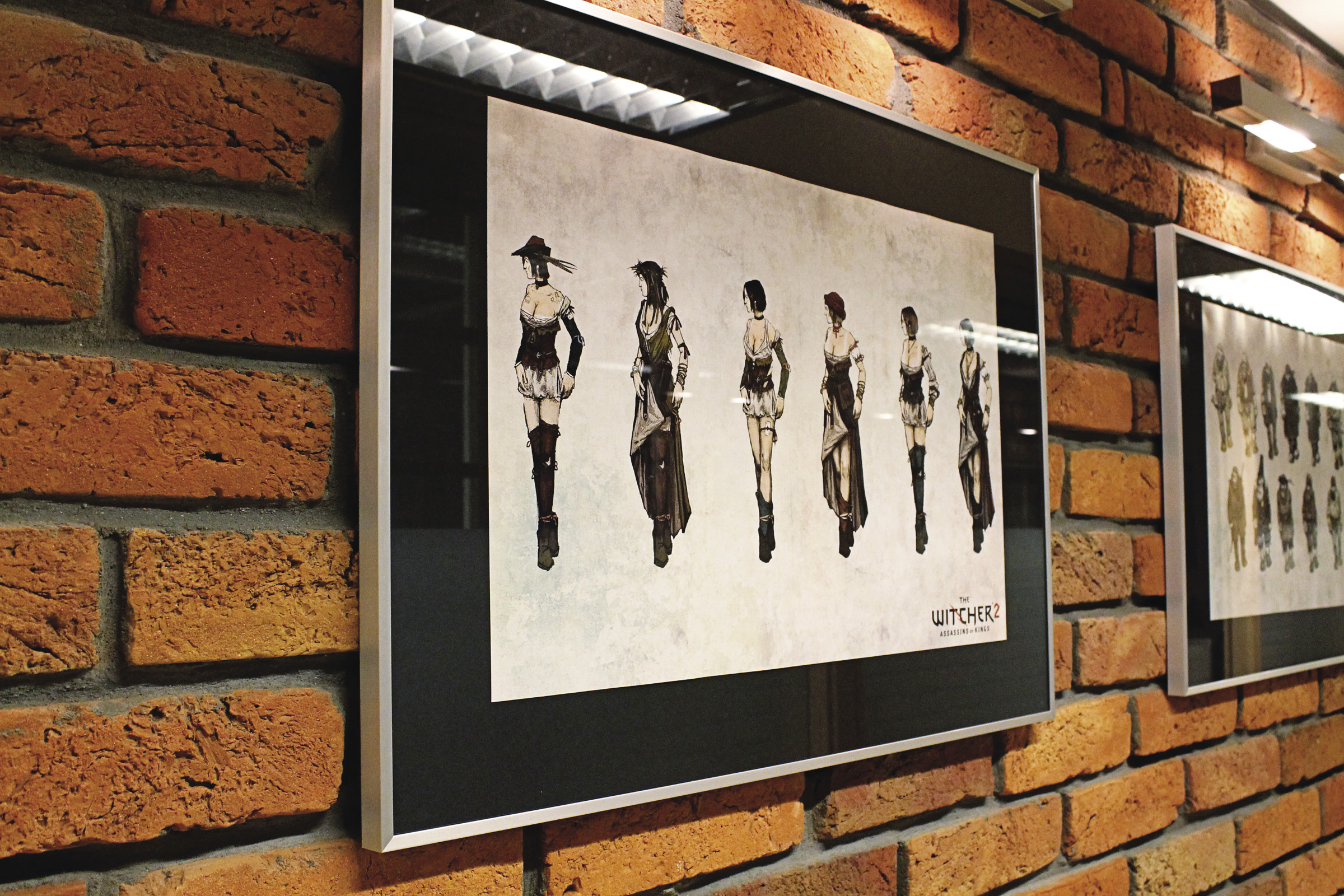
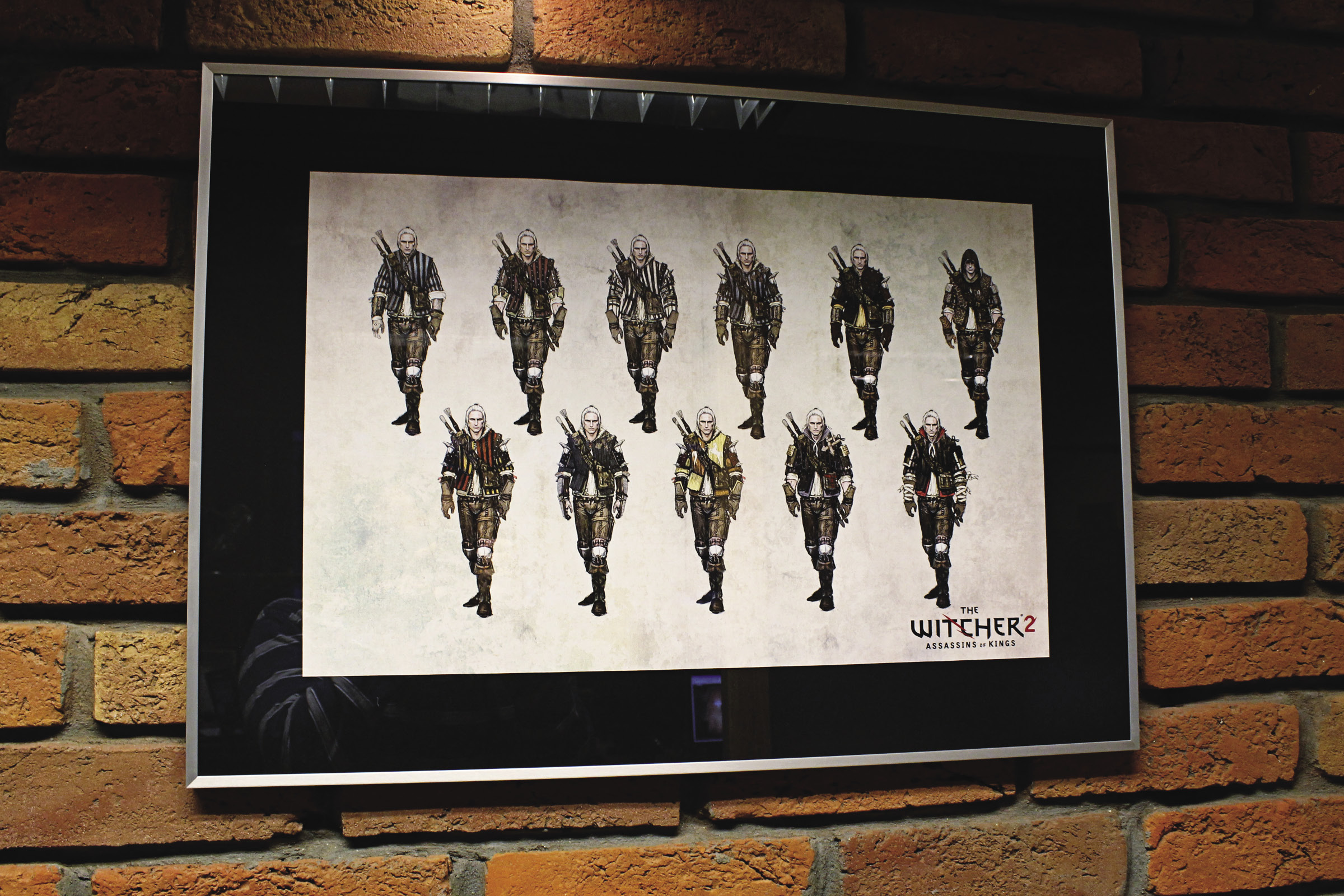
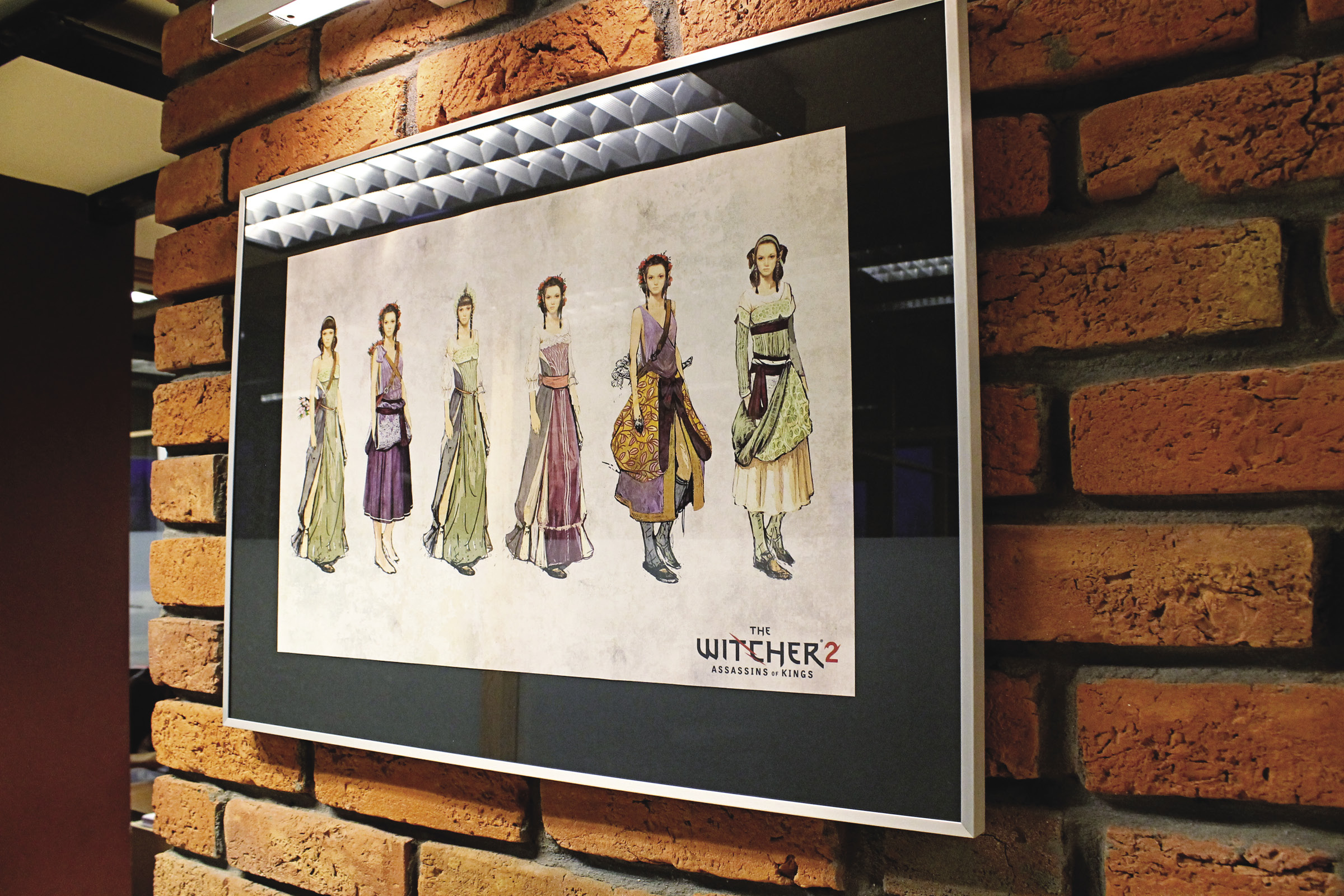
The character designs for The Witcher 2 are really striking. What sorts of things influenced the game’s look, particularly how the characters dress?
When we created the characters for The Witcher 2 we wanted to give an impression of a coherent world. Therefore, we started work on the characters from the careful studies on the aesthetics of the Middle Ages and Renaissance. We particularly focused on the costumes worn in Europe in those days. We went through thousands of paintings, sculptures, and photos done at events organized by people from historical reconstruction groups.
During this research attention to detail was crucial to us. We wanted to reproduce each armor and clothing piece in such a manner that we could see in the game how materials are stitched together and how armor pieces are attached to characters. Our primary aim was to create only such outfits as could exist and work in real world.
Not only design was important for us, but also the functionality resulting from specific construction of those clothes. Most of them were multipurpose. For example, leggings—the medieval equivalent of trousers, worn on cold days—were actually separate legs attached to the doublet. In warmer weather, or near a bonfire, the wearer could roll both legs down exposing bare legs. It was practical.
We also took some inspiration from modern times. For example, soldiers from Roche’s special unit wear their knives attached high on their chests, and their lamellar armor resembles modern bulletproof vests.
Component characters that were built up from separate pieces in the engine were a difficult issue. Their appearance had to be consistent within their own communities and the whole world. This problem was solved by using schemes. Mages were built by combining armor pieces with jewelry, and Scoia’tael elves were mostly dressed in the remains found on battlefields, sometimes wearing something that reminds them of Dol Blathanna.
—Bartłomiej Gaweł, Lead Concept Artist
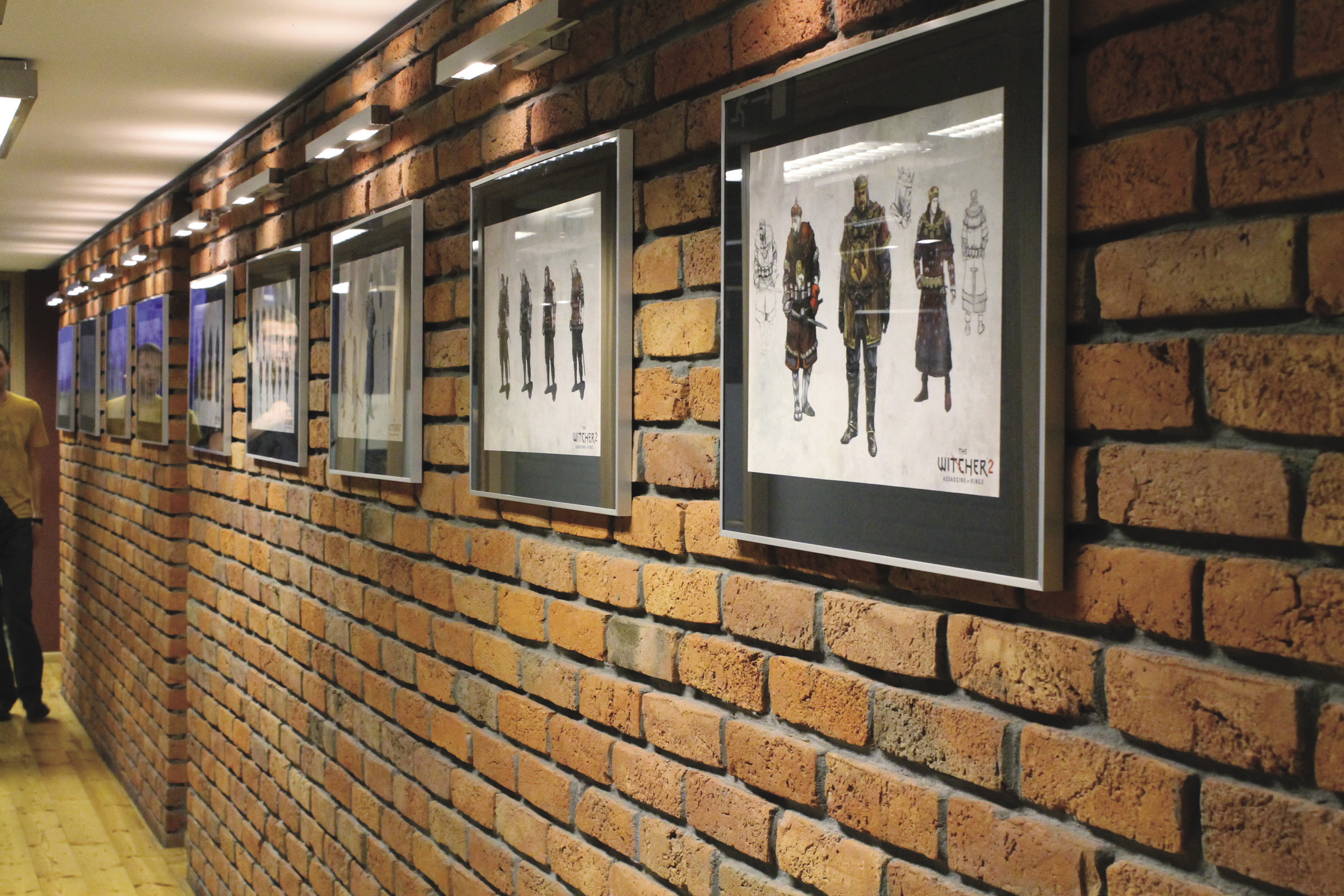
The NPCs in this game are very lively and feel more like actual people than most game NPCs, even the ones who only get to say a line or two to Geralt as he passes by. How did you approach designing the NPCs that appear in different parts of the game? How did you settle on things like the way they move and speak? How much did you consider things like historical accuracy when designing the NPCs and their world?
Communities were considered an important feature of the game. We wanted to make the player stop for a while and just watch what’s happening around Geralt, so we put a lot of effort into designing the living in-game worlds. Of course, we didn’t want to spoil the immersion and undermine the credibility of the world, so we paid a lot of attention to the way the NPCs look, speak, and act. We made it as coherent and believable as possible. It had to be interesting and engaging at the same time. The game is set in a fantasy world, so although the Middle Ages influence some of the designs, NPCs are purely imaginary and original but still believable, we think.
Malgorzata Napiontek, Designer
Are Iorveth and Roche characters from The Witcher novels, or are they modeled on any particular characters?
Sapkowski only mentions Iorveth in passing in the Witcher saga. Namely, in Baptism of Fire we see an elf by the name of Echel Traighlethan, a member of Iorveth’s recently shattered Scoia’tael unit. Imprisoned at Drakenborg, the infamous Redanian prison-fortress, Echel was tortured and beaten by Redanian agents attempting to extract information from him. We join him on death row, awaiting execution by hanging. While the other condemned elves, half-elves, dwarves, and halflings in his cell drink watered-down wine and laugh in the face of impending death, he remains serious and calm, scratching “Freedom or death” in a wooden beam embedded in one of the cell walls.
When prison guards enter the cell at dawn (which can only mean one thing), they call Echel’s name among a handful of others. They pronounce it incorrectly, and the elf calmly corrects them, stands, and lets them guide him out into the execution yard. Once outside he shakes loose of the guards’ grips, and without further ado mounts the tree stump beneath his noose and tacitly lets them place the rope around his neck. “Long li--!”—his cry is cut short when a guard kicks the stump out from under him. We imagined that this kind of racial pride and devotion to a cause could only come from a highly charismatic, inspirational, and passionate leader. We saw Iorveth as someone with a deeply instilled hatred that would come through in battle as ferocity, yet out of battle would be channeled into a pragmatism that would drive him to rebuild his unit and continue the fight. By the time we meet him in The Witcher 2, he is battled-hardened and scarred. He also wears the badges of the commanders of nearly all the special forces of the Northern Kingdoms, having claimed their lives in battle. The one badge he lacks is that of Vernon Roche, commander of the Blue Stripes, the elf hunters of Temeria.
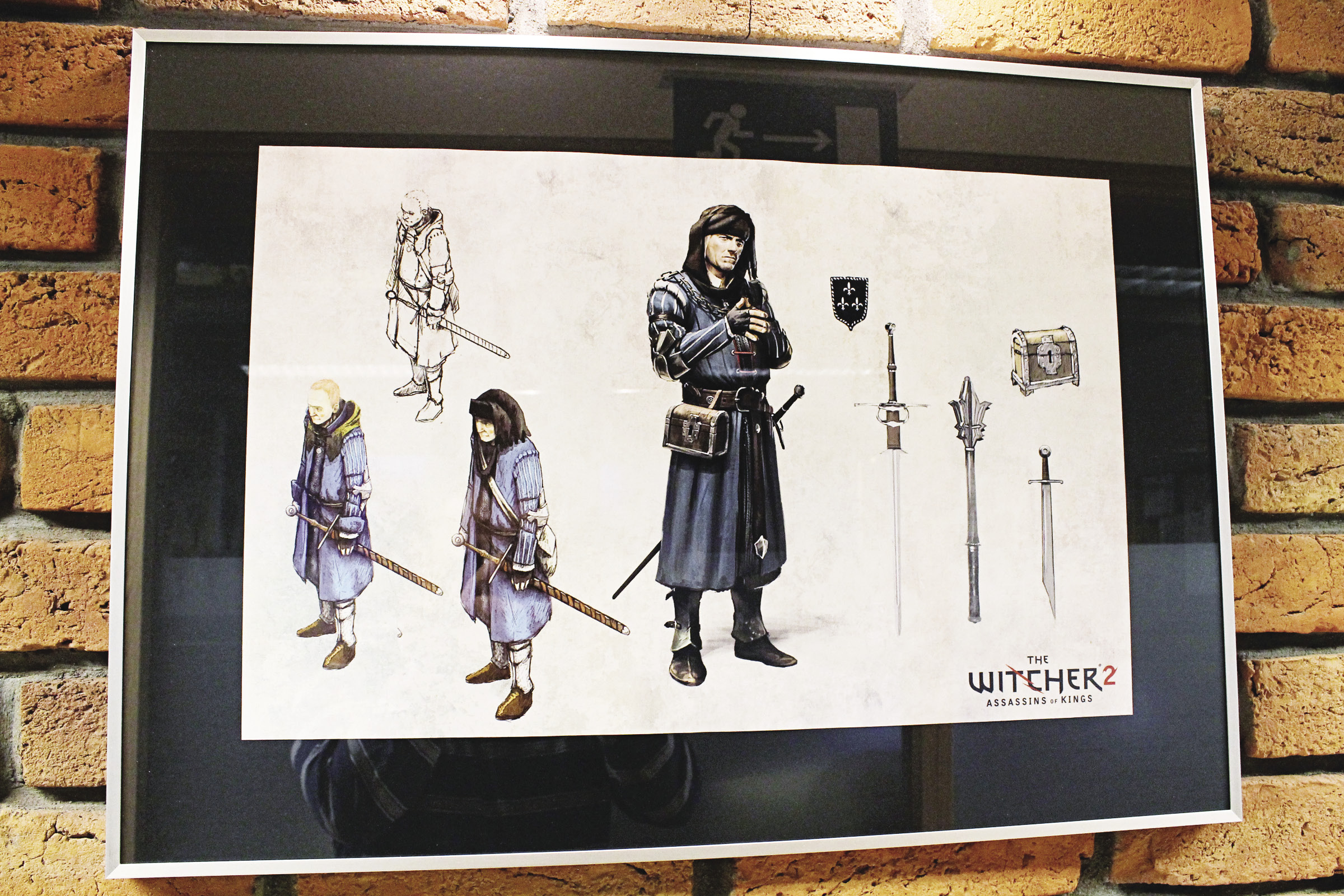
Roche is not mentioned in the Witcher saga, but we retroactively placed him there by making the Blue Stripes under his command responsible for shattering Iorveth’s unit in the past. The rivalry between Roche and the elf began back then and continues into The Witcher 2. The son of a prostitute, Roche never knew his father, finding a substitute in King Foltest of Temeria. When the king is murdered, as it turns out with Scoia’tael elves aiding the assassin, Roche resolves to hunt down all involved. As commander of the Blue Stripes, he resembles Major Reisman of Dirty Dozen fame, who proved capable of assembling a ragtag group of military rejects and bunglers, turning them into a crack fighting force. Without a doubt, he is also a father figure to these rough-hewn men. The very image of resolve and accomplishment, he also has a softer side as demonstrated in his attitude toward Ves. So there’s a general sense that this is a “good guy,” someone whose moral compass is well calibrated. At the same time, he has a darker side. Much like Lieutenant Colonel Kilgore, he feels most at home on the battlefield, and if there were napalm in The Witcher 2, Roche would love the smell of it in the morning. But this joy of battle is tainted by racial hatred, and there’s an unmistakable sense that Roche is a fallen man in more ways than one.
—Borys Pugacz-Muraszkiewicz, Senior Writer
Where did the idea of having the game change dramatically based on whom Geralt allied with come from? Did implementing this make the game more challenging to design or complete in any way?
Our most important goal is to make the most immersive, story-driven RPG games in the world. We believe that one of the most important factors for this is non-linearity. That’s why we decided in The Witcher 2 to give the player many difficult choices that have real consequences. The choice between Iorveth and Roche is the most pivotal choice in the game, and creates a major branch in the story and the player experience.
Development of non-linear games is very challenging in terms of maintaining continuity and especially testing all the possible combinations of paths through the game. It also multiplies development time and effort needed to complete the game. But we wouldn’t have it any other way and will continue down this non-linear path for future titles.
—Konrad Tomaszkiewicz, Lead Quest Designer
The Red Engine that The Witcher 2 runs on is very interesting game technology. Do you plan to license it out to other companies? Or develop some other game series with it?
Red Engine is a first-generation tech developed by CD Projekt Red specifically for The Witcher 2. We will certainly continue to develop it for future games at CD Projekt. We are considering licensing it, but preparing and supporting an engine as licensable middleware is a major commitment, and at the moment we are only focused on developing games.
—John Mamais, Executive Producer
Was there anything interesting you had to cut from The Witcher 2 due to production constraints? If so, could you tell us about it?
As is always the case in game dev unless you have unlimited time and cash, you have to make some compromises, and the list is long and the decisions were difficult on The Witcher 2. For instance, we were developing a more robust dismemberment system and a decrafting system. Both were very cool ideas, but the risk was greater than the reward in the end. The story scope, including locations and additional characters, was also greater at the beginning, but given the non-linearity priority, we had to cut down in order to tell a more effective story.
—John Mamais, Executive Producer
Not many Xbox 360 games contain as much mature content as The Witcher 2 . Were there concerns that content would have to be changed/deleted/altered for it to be ported to the Xbox 360?
This wasn’t a concern because the ratings boards apply the same standards across platforms and we had no intent of changing the content for the console market despite the possible variances in the demographic from PC to console.
—John Mamais, Executive Producer
The Witcher franchise seems to be wildly popular throughout Europe. Do you hope to see the Witcher franchise garner this kind of popularity in the United States with the release of the Xbox 360 version of The Witcher 2 ?
Sure, Xbox as a platform is arguably more popular in the States now than PC, so The Witcher 2 should perform better on this platform there and as a result become a more recognizable brand. The quality of the title should bring the gamers in, and the uniqueness and depth of the Witcher universe and characters should, we hope, establish the brand in American popular culture.
—John Mamais, Executive Producer