
The Witcher 2: Assassins of Kings Guide Basics
Cast of Characters
Geralt of Rivia
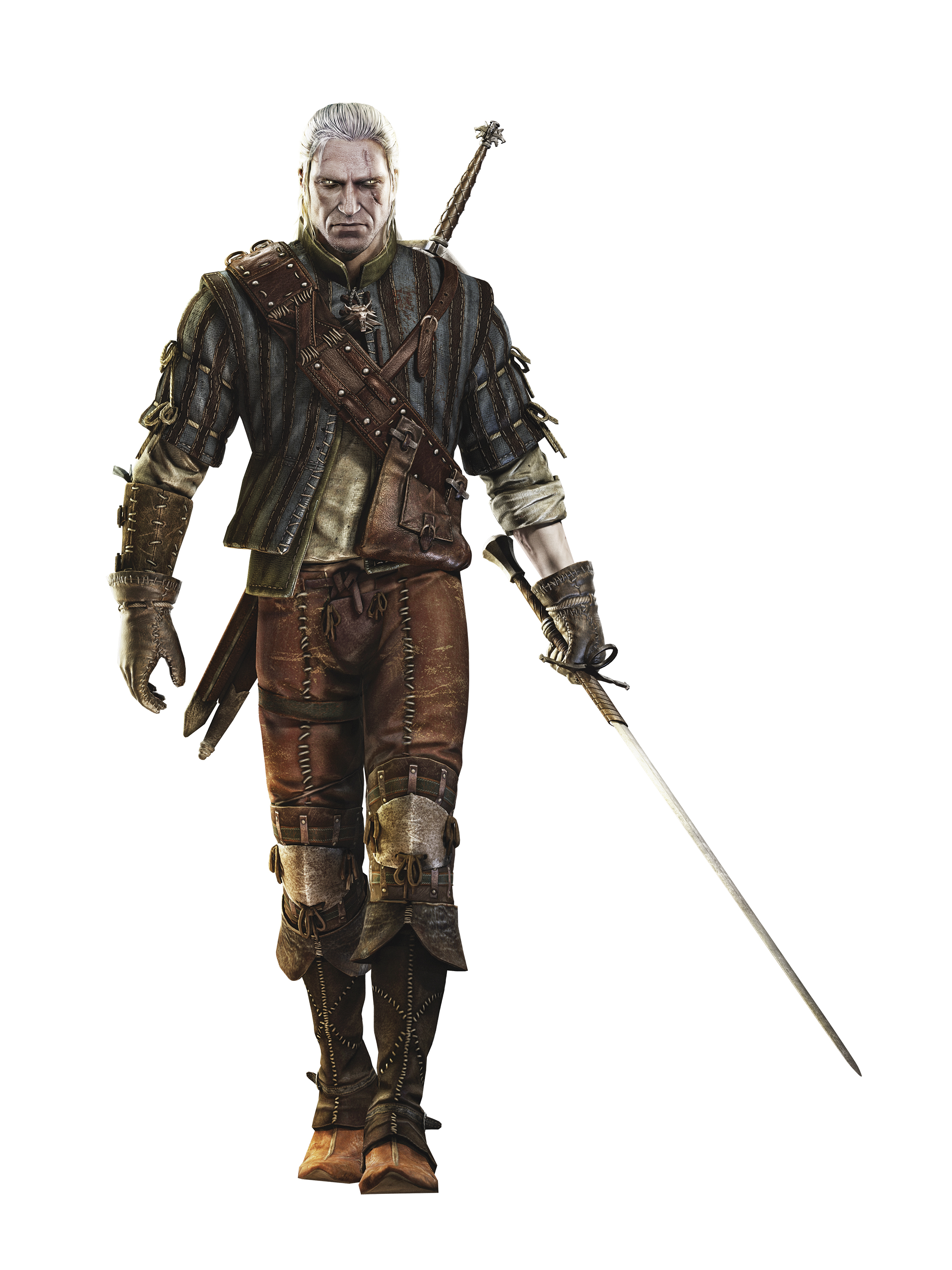
Some might call him the hero of the story, but Geralt would insist that he is a mere protagonist. Geralt would say that a hero must be a good and admirable man, you see, and he is neither. He is a witcher, an orphan exposed to potent magics at a young age and mutated into a being stronger, faster, and more long-lived than an ordinary man. He is an expert with his sword, as are all witchers trained in the School of the Wolf at Kaer Morhen. Geralt survived exposure to some of the strongest mutagenic substances, though the experience turned his hair stark white when he was only a boy. For this reason, he is called the White Wolf by friend and foe alike.
Given the alias “Geralt of Rivia,” once this nameless orphan grew into a man he took to the Path and wandered the world, seeking monsters to slay and curses to break in return for pay. He is hated and feared as a mutant by those he protects, and as a result has a rather hard time making his trade a profitable one. The temptation of money has, more than once, led Geralt into situations that compromise his famed insistence on neutrality. This is how, even though Geralt says he forswears politics, he ended up serving as a bodyguard at the court of King Foltest of Temeria. He wished only to leave and thought he would, after seeing Foltest through the successful siege of La Valette Castle. Fate had other things in mind for him, though.
Geralt suffers amnesia after an event in which, as far as much of the world is concerned, he died. In Rivia, humans fell upon nonhumans in a massacre, and Geralt sought to defend the persecuted against the mob. In the terrible slaughter that ensued, a peasant rammed a pitchfork through the witcher’s chest. His body was placed in a boat and he floated into a mist. He’s not quite sure what happened between that time and when he had a number of adventures concerning the Order of the Flaming Rose, a Scoia’tael uprising, and a certain criminal uprising. That is a tale for another time, though. For now, Geralt is concerned with discovering who framed him for the murder of King Foltest, and why.
Triss Merigold

One of Geralt’s closest friends and allies, though their relationship is at best a very complicated one, Triss Merigold first grew famous for her striking auburn hair, a rare and glorious shade surely enhanced by her magic. She later grew famous as the “Fourteenth One,” or “Fourteenth of the Hill,” for it was mistakenly thought she had died during the Battle of Sodden Hill. She was restored, though much sobered by her experience. With that new maturity she thrived in King Foltest’s court and earned the king’s trust as his advisor. Her relationship with Geralt runs hot and cold, but in Foltest’s court, their old flame had most definitely rekindled.
Triss remains with Geralt after he leaves with Roche to try to hunt down Foltest’s murderer. In practical terms, she had little choice; her relationship with Geralt meant that she, too, was suspected of having a hand in Foltest’s murder. Her power is instrumental in saving Roche and Geralt from the Scoia’tael upon their arrival in Flotsam. She also proved to be an acquaintance of the sorceress Síle de Tansarville, whom Geralt meets in Flotsam. The chill in Triss’s voice during the meeting was unmistakable. If Geralt was a more perceptive man, he might have taken it as the first sign that Síle de Tansarville was a woman to be watched carefully.
Letho
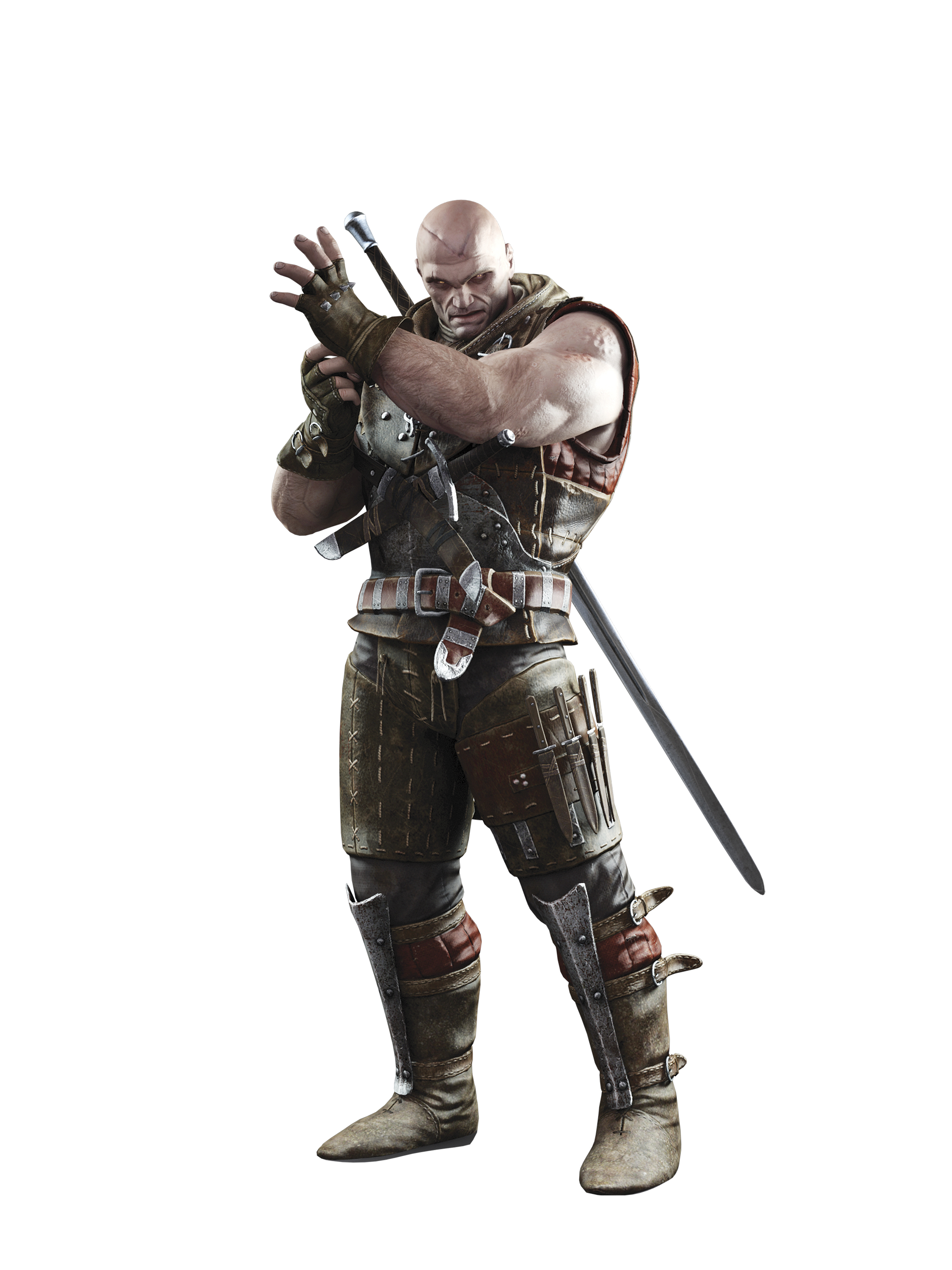
Letho of Gulet first appeared before Geralt in the guise of a blind monk, revealing his true nature for only the seconds required to end Foltest’s life. Then he leapt from a window with uncanny grace, leaving Geralt to be discovered with the body. It seemed to Geralt that this man must be working with the Scoia’tael, and Roche’s information supported this theory. Geralt, Triss, and Roche head to the border with Aedirn and the trading post Flotsam in search of Letho, who all believe is the true kingslayer. In time, Letho proves himself a master manipulator who is using the Scoia’tael purely for his own ends.
He is a difficult opponent for Geralt, for Letho is a fellow witcher. Though he is of the southern School of the Viper rather than Geralt’s School of the Wolf, they walk the same Path and should, in a just world, be friends rather than enemies. Letho, it seems, has abandoned the Path to organize a handful of fellow witchers from the School of the Viper into a force with no purpose beyond assassinating the kings of the north. To what end this regicide might serve a group of witchers is beyond Geralt’s comprehension, and Letho does not seem interested in explaining himself.
Vernon Roche
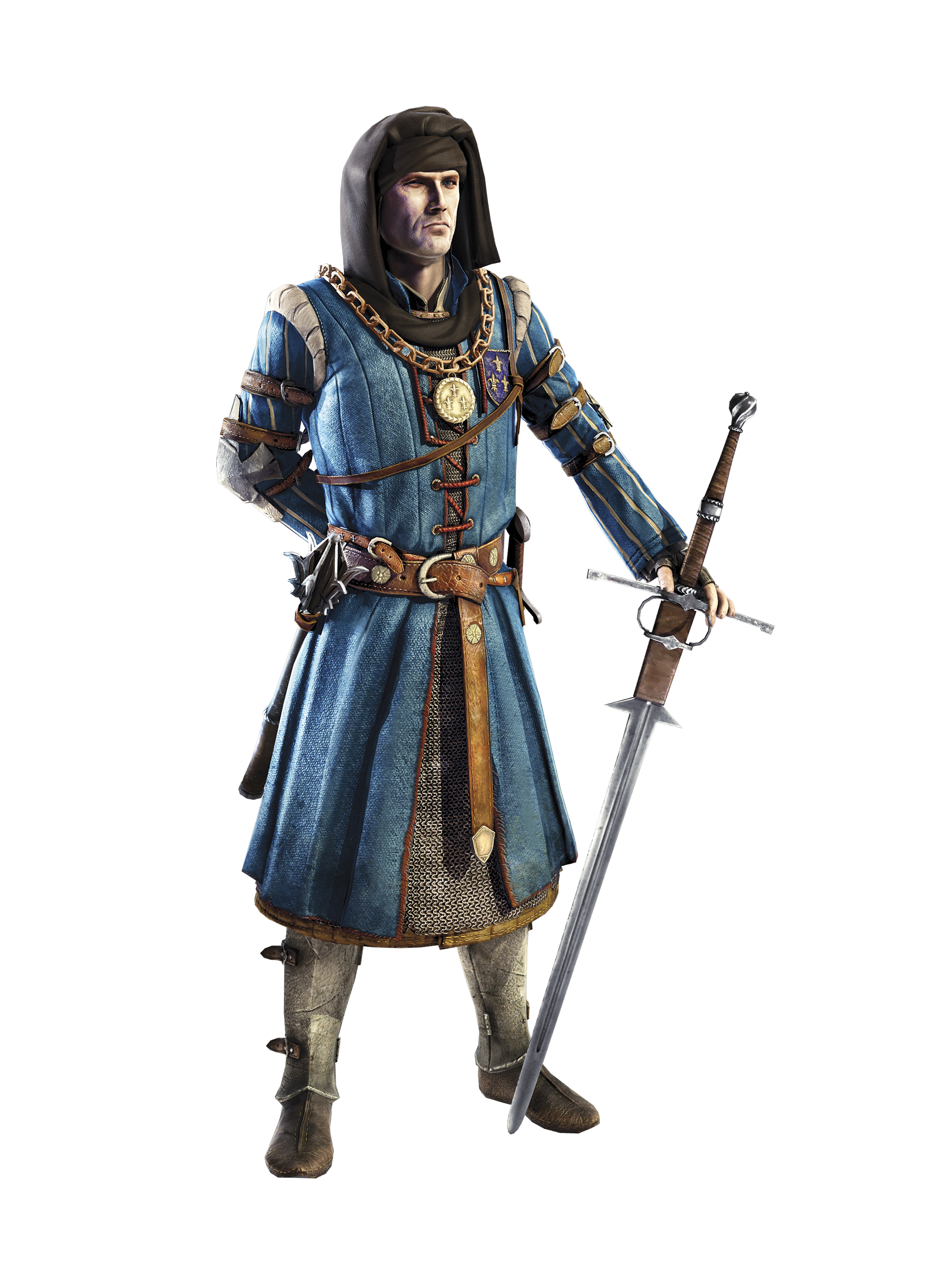
Roche is the head of Temeria’s Special Forces unit, the Blue Stripes. He is indispensable to his king and thoroughly detested by most everyone else. As leader of the Blue Stripes, Roche organized operations against the Scoia’tael and other nonhuman rebellions. He is a slow and methodical man, too. After listening to Geralt’s explanation of what happened at La Valette Castle, he does not believe that Geralt killed King Foltest.
Instead, he decides to cooperate with Geralt to seek out the killer. He helps Geralt track the kingslayer to a group of Scoia’tael active near the borders of Temeria and Aedirn, around a dreary trading post named Flotsam. Roche wishes to find the man who slew his king, but he also wishes to capture the infamous Scoia’tael leader Iorveth, who is reported to be in the vicinity of Flotsam.
Above all else, Roche is a patriot. He lives and breathes for Temeria, since he’s had little else in his life to believe in. He will do whatever he has to, at whatever cost, to keep his country safe and secure its future. This includes doing some dark and terrible things, too. You don’t became a spymaster without getting your hands dirty.
Iorveth
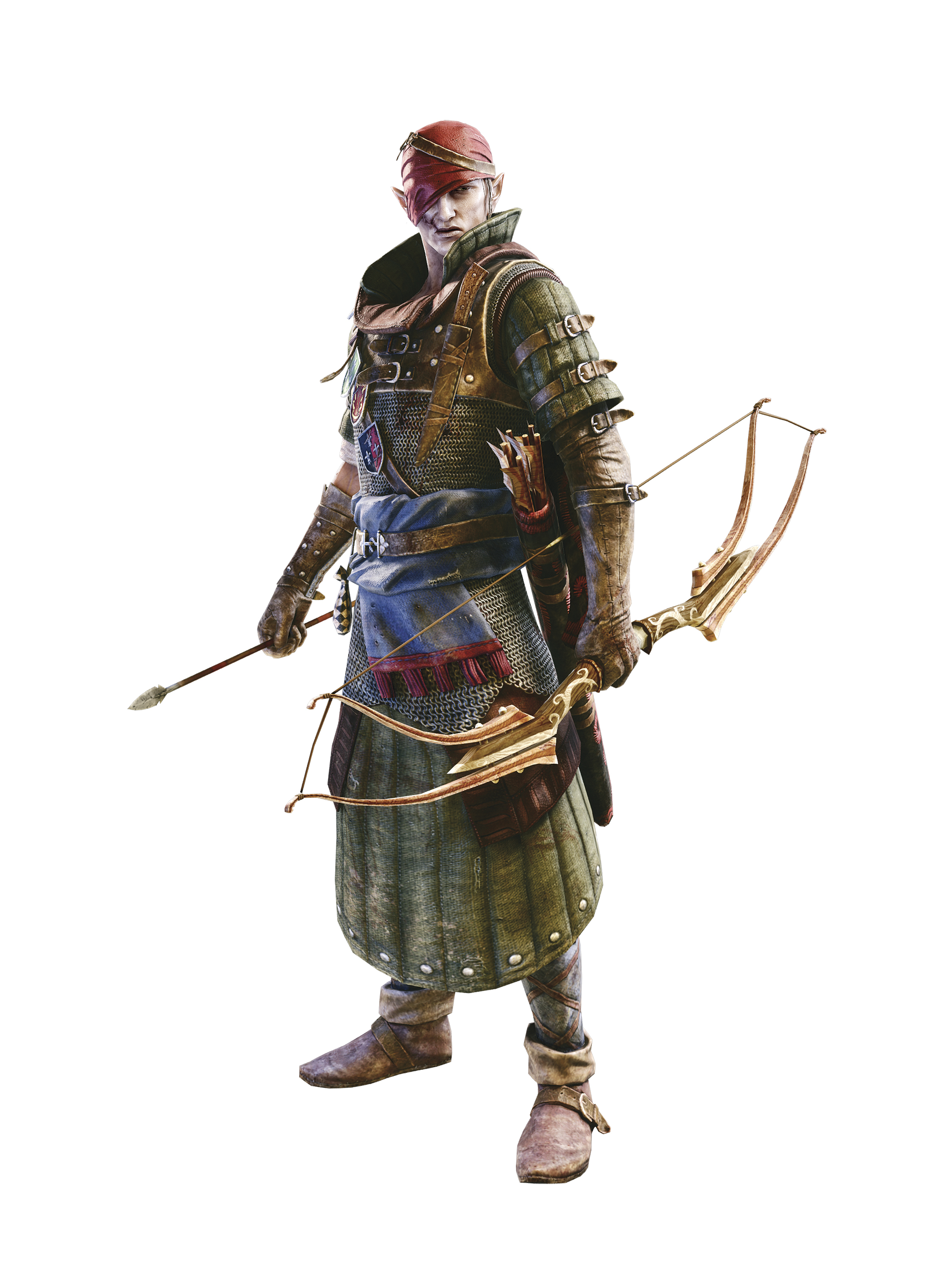
Elves are renowned by humans for their beauty, even as humans take their land, their culture, and ultimately their freedom. In Iorveth’s case, a human succeeded in taking his beauty, too. Beneath the covering on his face is hideous scarring from a wound that only an eternal elf might suffer and live. Iorveth’s foul temper has become as legendary as his scars, as he leads the Scoia’tael commandos in raids and acts of terror against the hated humans. He has become the symbol of the Aen Seidhe’s hatred of the human race, immortalized in story and song as something of an elven boogeyman.
It is not hard to imagine why Iorveth might wish to slay the kings of the north, for they are humans like any others, but it is puzzling why he’d work with a witcher to do it. Iorveth is not a man prone to explaining himself, and his first encounter with Geralt and Roche ends in a barrage of arrows. To men like Roche, Iorveth is and always will be a simple thug who accomplishes little more than slaying humans, without mercy or discernment. It is certainly true that Iorveth is a dangerous man with no love of humans.
The world is too complicated a place for a man like Iorveth to be exactly what he appears to be, though. Few elven freedom fighters are content merely to slay humans all their lives, and Iorveth is no different. He knows the Scoia’tael cannot hide in the forests eating nuts forever. He has a grander plan and a purpose in mind for Letho’s regicides, though it is one that will inevitably put him at odds with Letho. It would not be impossible to become Iorveth’s ally in his fight for freedom, though it seems any such alliance would be brief at best.
Shilard Fitz-Oesterlen
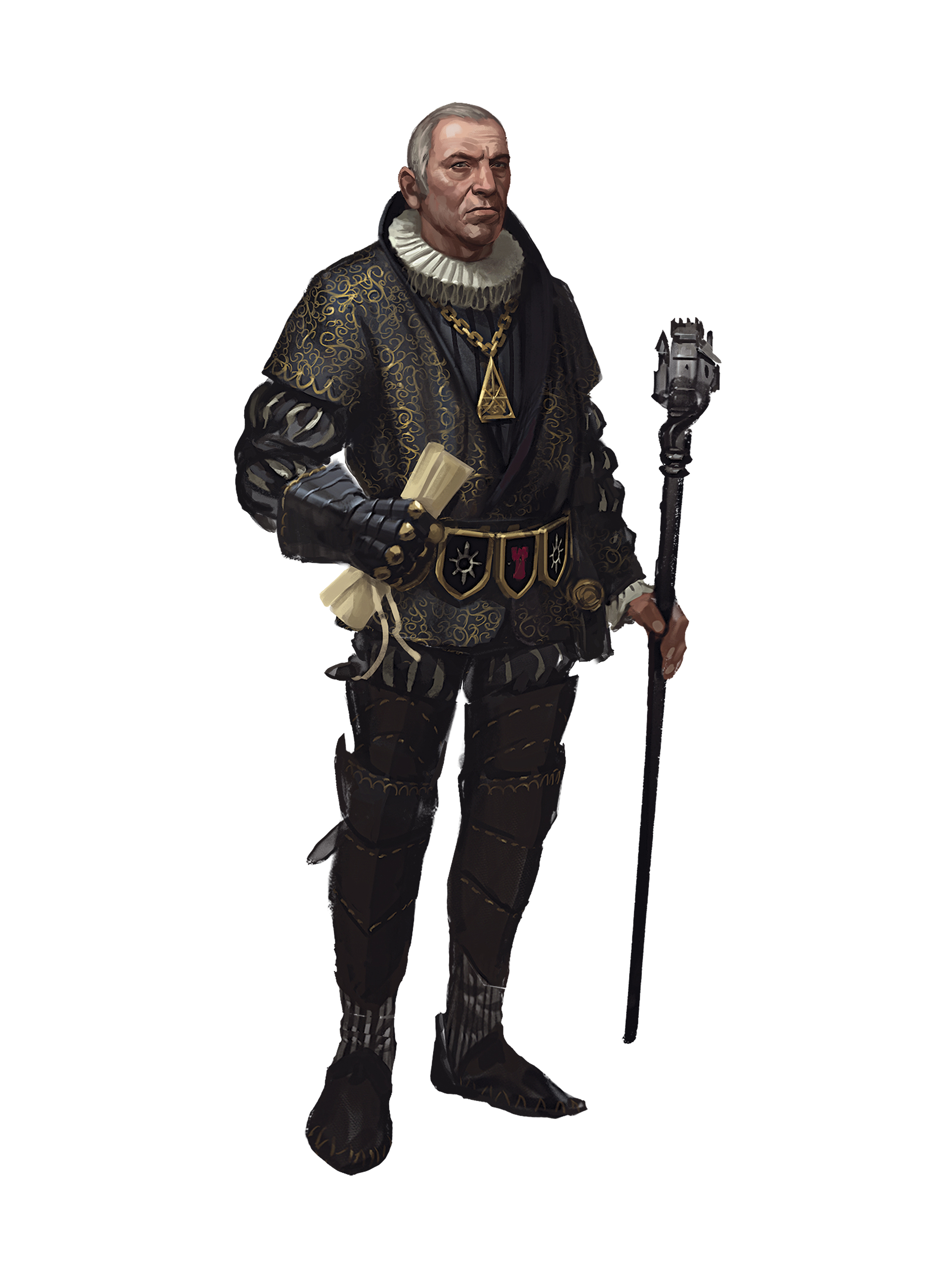
Shilard Fitz-Oesterlen is the emissary chosen to represent the interests of the Emperor of Nilfgaard, also called the “White Flame Dancing on the Graves of His Foes,” to the various kings of the north. Though he always frames his deeds in a way to make them seem to the north’s advantage, rest assured that he truly cares about nothing but the advancement of Nilfgaard’s interests. Fitz-Oesterlen is a consummate diplomat who excels in concealing his true motives from others. Though he says he is on a mission of peace and prosperity, a man like him could easily start a war without appearing to have done anything at all.
Dandelion
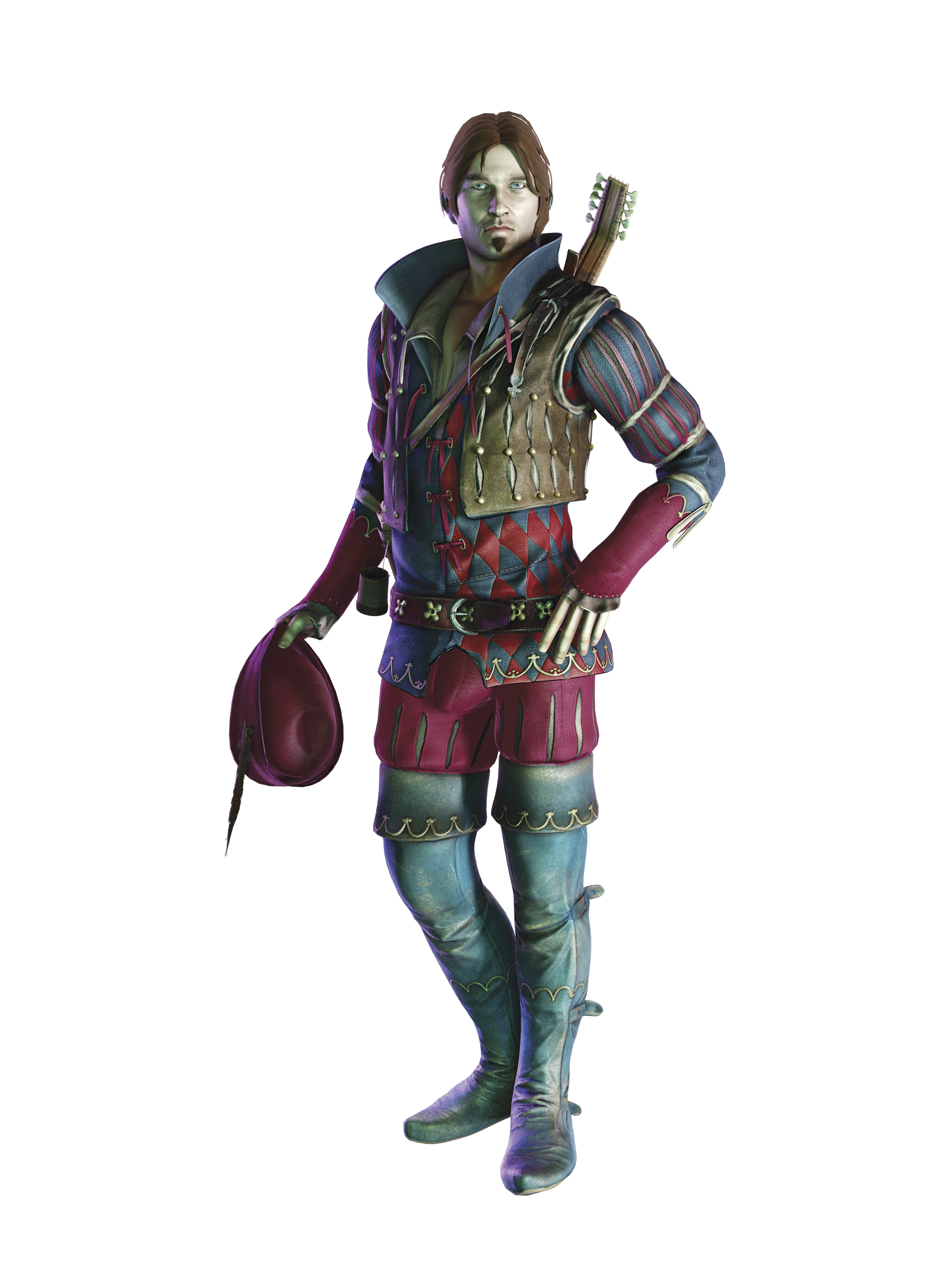
The wandering troubadour called Dandelion was born the Viscount de Lettenhove and forsook his title and aristocratic duties in the pursuit of freedom. Dandelion is famed for his talents as a performer and his ability to compose original ballads, many of them based on the adventures of his friend Geralt of Rivia. Dandelion is famed throughout the kingdoms of the north, so as a result, Geralt has acquired a bit of a reputation, too. It is more than Geralt would tolerate from a friend he valued less than Dandelion. It sometimes seems that Dandelion is Geralt’s best and perhaps only true friend.
Dandelion’s ability to insinuate himself into royal courts throughout the north made him a valuable agent of Vernon Roche, and it is the intention to meet with Dandelion that initially brings Roche and Geralt to Flotsam. Upon entering the town, the witcher and his friends find that Dandelion is on the verge of being executed for debauchery, due to an incident that the bard has been unwilling to elaborate upon involving a pair of twin whores, a town guard, a dog, a cat, and an oil lamp. As usual, Geralt must extract Dandelion from the trouble he’s gotten himself into.
Zoltan Chivay
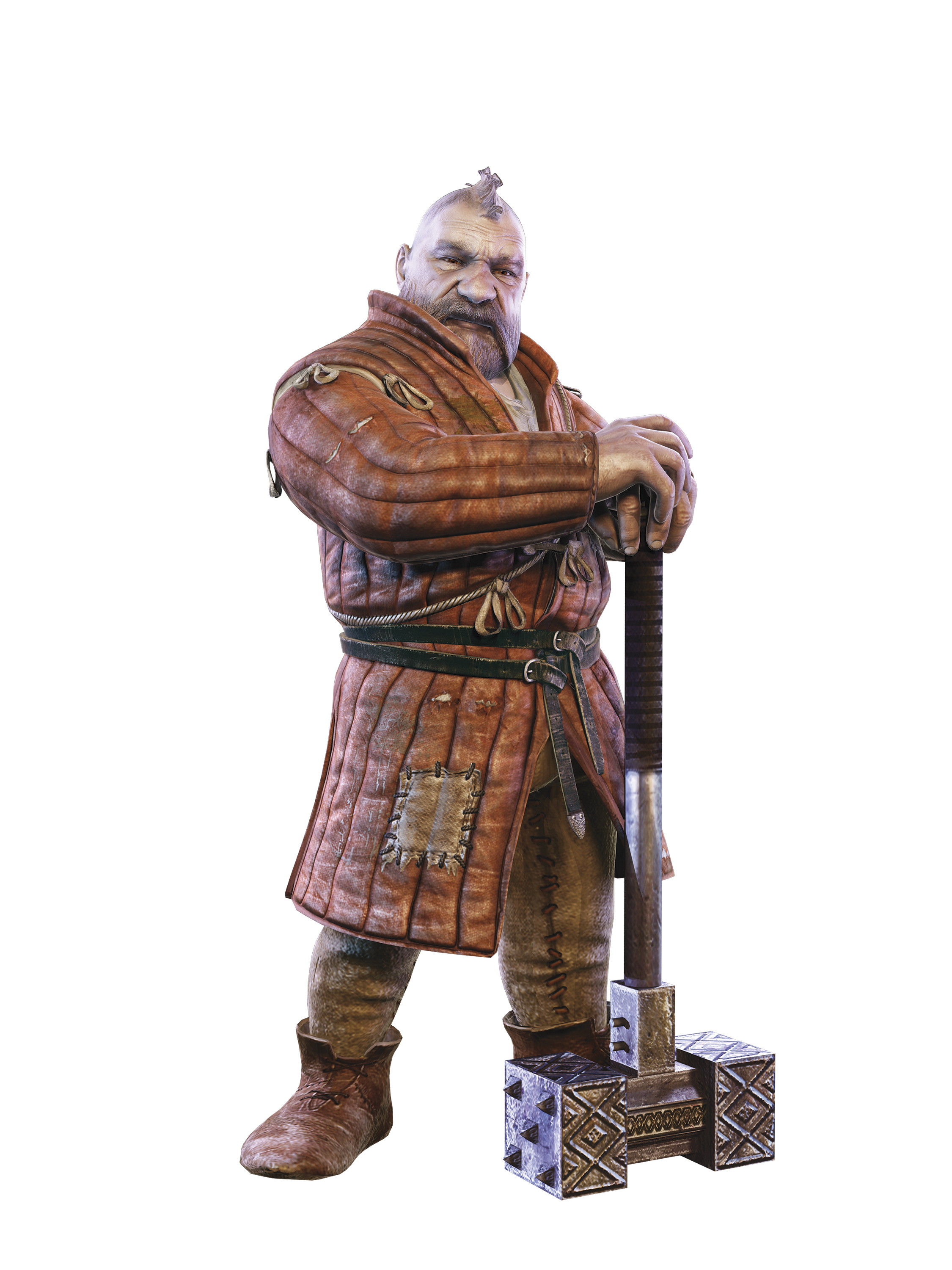
Geralt and Dandelion met Zoltan Chivay three years ago, during the north’s first great war with Nilfgaard. He fought at the great Battle of Brenna, which repelled the invaders, along with a great many other dwarves in the Mahakam Volunteer Detachment. After the war, Zoltan thought he would settle down and go into business, but his engagement soured and with it his business prospects. Geralt is eager and willing to pay back Zoltan’s many favors to him during the war by saving him from being hanged in Flotsam’s town square.
Zoltan was taken to the scaffolds because the local authorities accused him of colluding with the Scoia’tael, a charge Zoltan vehemently denies. Still, he clearly knows something more about the Scoia’tael than a mild-mannered dwarf properly should, and it’s even rumored that he is personally acquainted with the dread Scoia’tael leader Iorveth. It is certainly impossible, given the current fractious state of relations among the races in the north, for any law-abiding dwarf not to feel a certain sympathy for the freedom that the Scoia’tael are trying to win for nonhumans, if misguidedly.
Bernard Loredo
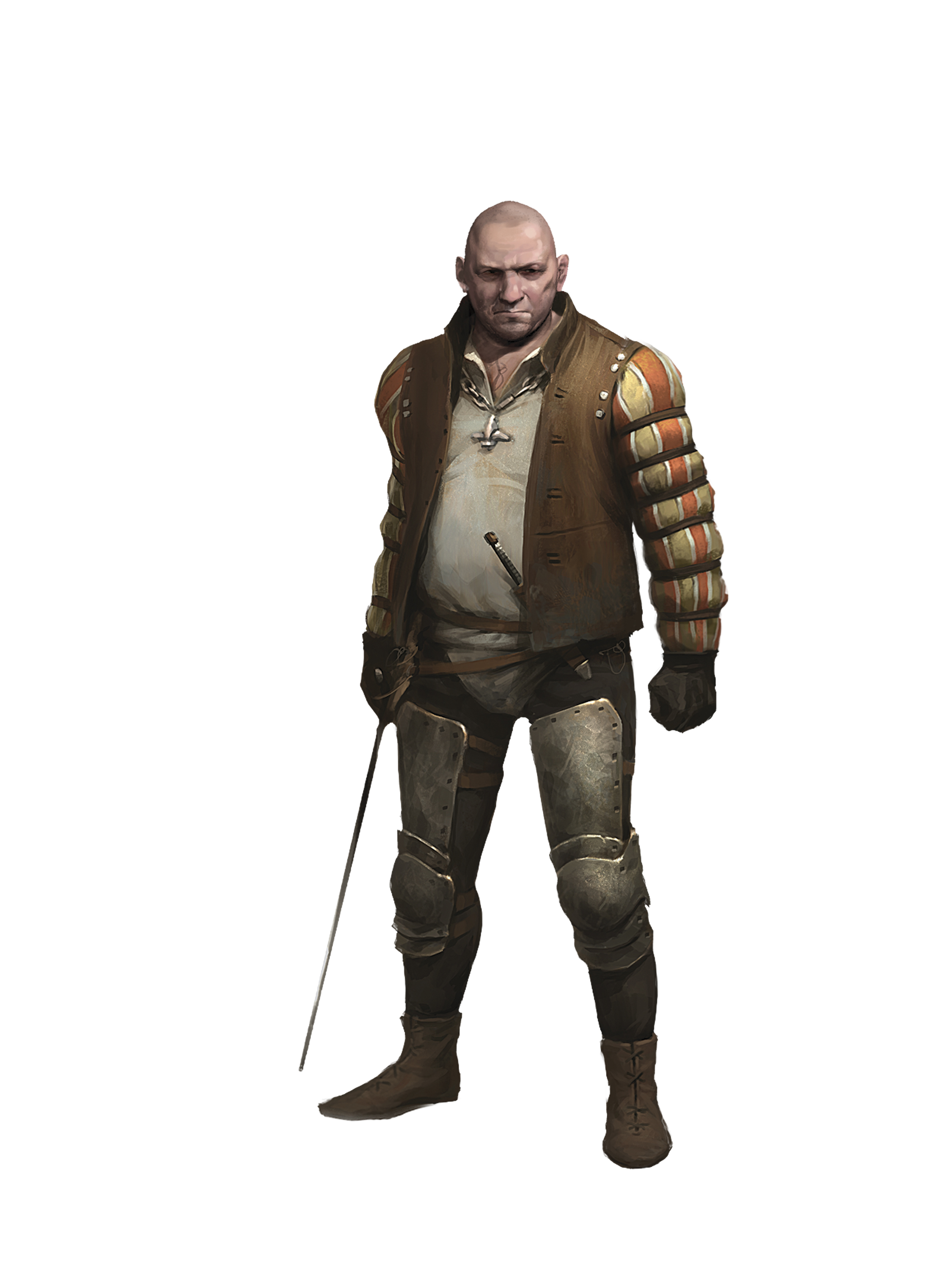
Loredo is the commandant of Flotsam’s town watch and the de facto ruler of the town. He enforces law and order diligently, though with a heavy hand and more than one suggestion of corruption swirling beneath the surface of the small town’s politics. He allows Zoltan and Dandelion to escape the hangman when Geralt and Roche arrive, though clearly not out of any sense of fear or pity. Loredo detests nonhumans and particularly detests the Scoia’tael, who are the main threat to Flotsam’s safety (and his ability to profit from it). Loredo has yet to turn on the nonhumans of Flotsam, but those who live under his watch know that it could happen at any time, for virtually any reason.
Because Flotsam is a trading post, much material wealth passes through it on the way to larger and grander destinations. There can be little doubt that Loredo has been lining his own pockets with bribes and stuffing his compound with misappropriated goods. There also seem to be links between Loredo’s operations and a group of local bandits led by a foul bruiser named Dmitri, though most peasants choose to turn a blind eye to this. Loredo keeps them happy by stuffing the prison barge at the docks with captured Scoia’tael. Capturing Iorveth would make Loredo a local hero and make his stranglehold over the town stronger than ever. He would need a strong ally to pull it off, though—an ally like a witcher.
Dethmold
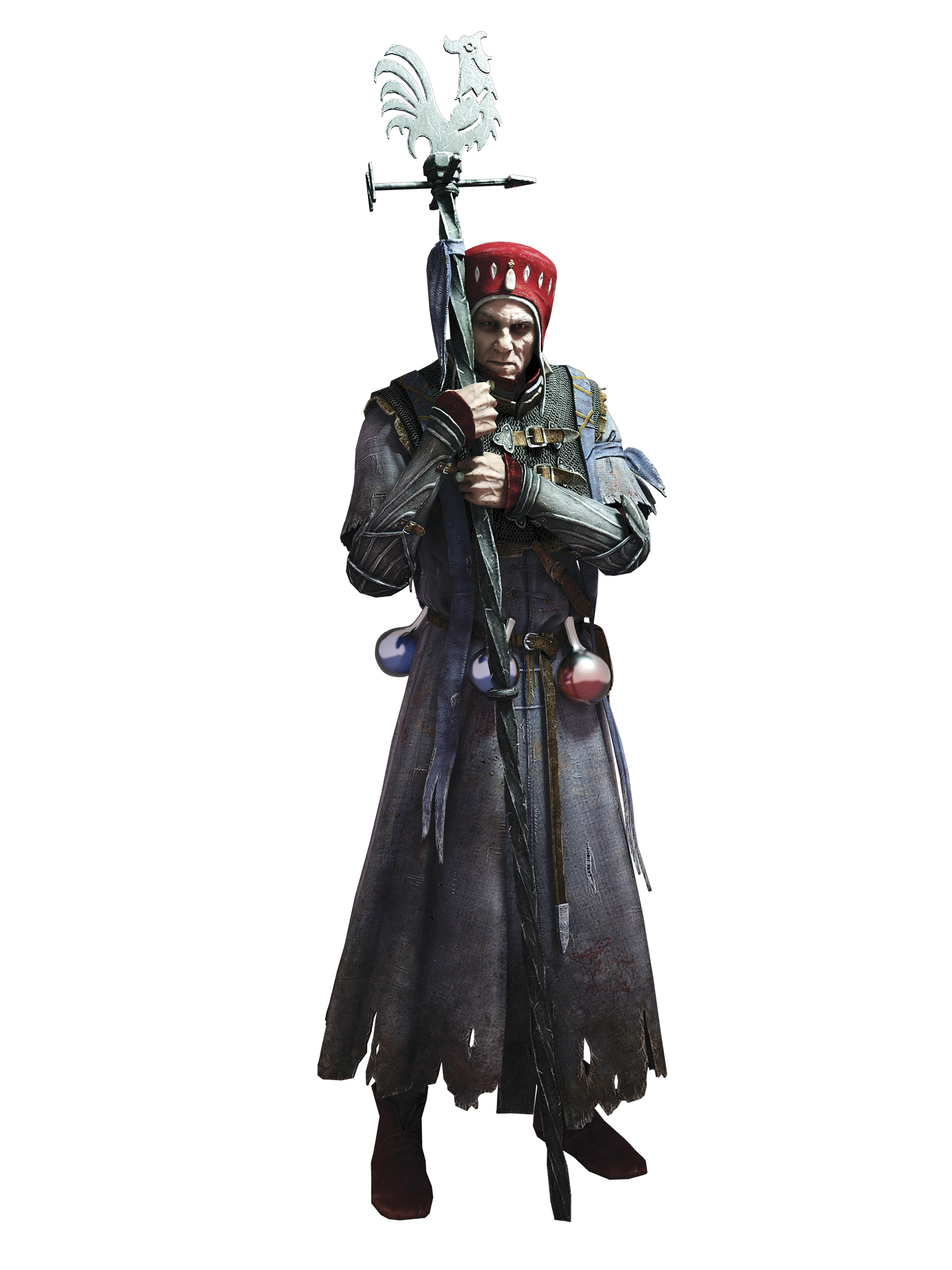
Geralt of Rivia first met the sorcerer Dethmold on Thanedd Island, where the first Council and Conclave that governed the actions of mages fell apart in a bloody coup. At that time Dethmold tried to remain neutral in the events, along with his brother Drithelm, both of whom served King Esterad of Kovir. This effort was futile, and Drithelm was killed as the coup wracked the mage community. Dethmold fled, and since then his feelings of insecurity have escalated into full-blown unscrupulous paranoia.
Dethmold now serves as advisor and court sorcerer to King Henselt of Kaedwen. He is willing to go to any lengths to serve Henselt’s interests and to ignore every rule that once governed the practice of magic, even proving himself willing to practice the dread art of necromancy. Dethmold is fearsome as the de facto leader of Henselt’s secret police and investigator of all secrets. Dethmold takes any threat to Henselt’s power personally, and his wrath has all the flamboyance and cruelty that has made sorcery feared and hated throughout the kingdoms of the north.