
The Witcher 2: Assassins of Kings Guide Basics
How to Think Like a Witcher: Combat Basics
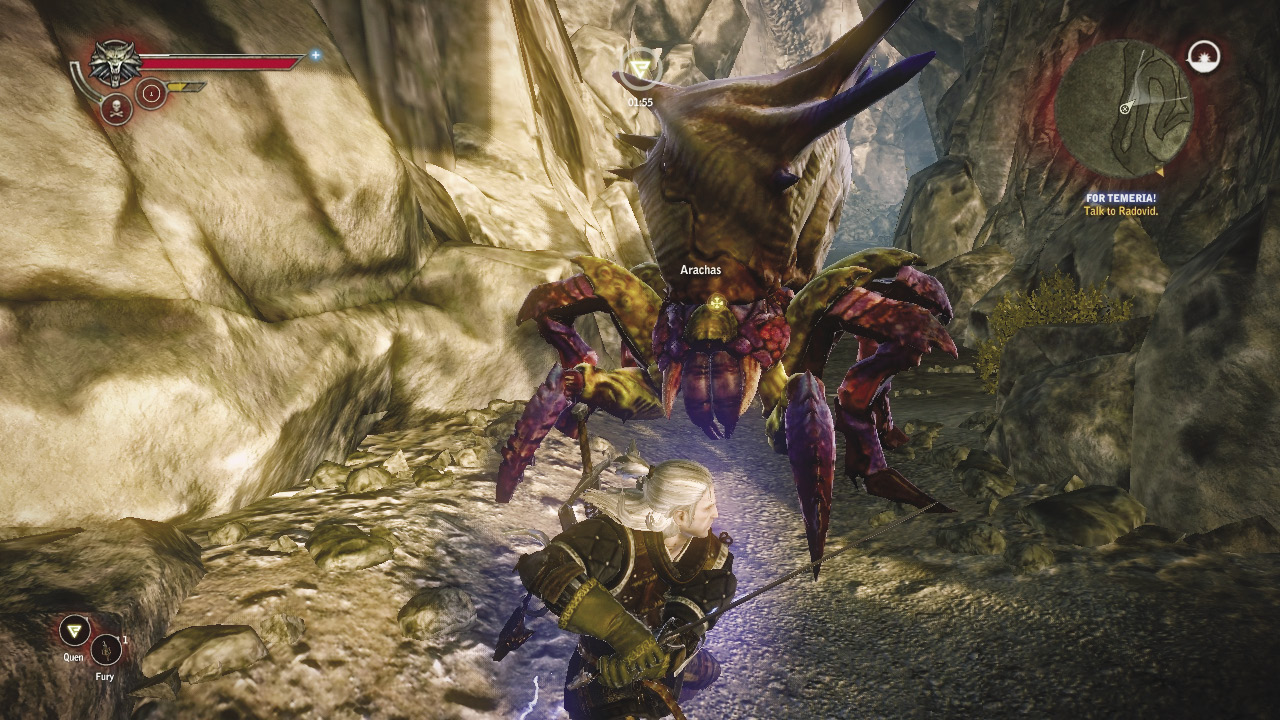
The Witcher 2: Assassins of Kings Enhanced Edition is a mature story-driven game that emphasizes action and character customization. Getting through battles demands sharp reflexes and the ability to quickly assess the dangers presented by a combat situation. That’s not to say better armor and equipment won’t help, but good stats won’t save you from bad decisions. This section outlines how to make good decisions while in combat and to maximize Geralt’s combat potential. At the very least, if something keeps killing you over and over again, reading this section should give you some ideas for how to better approach the battle.
Dodging
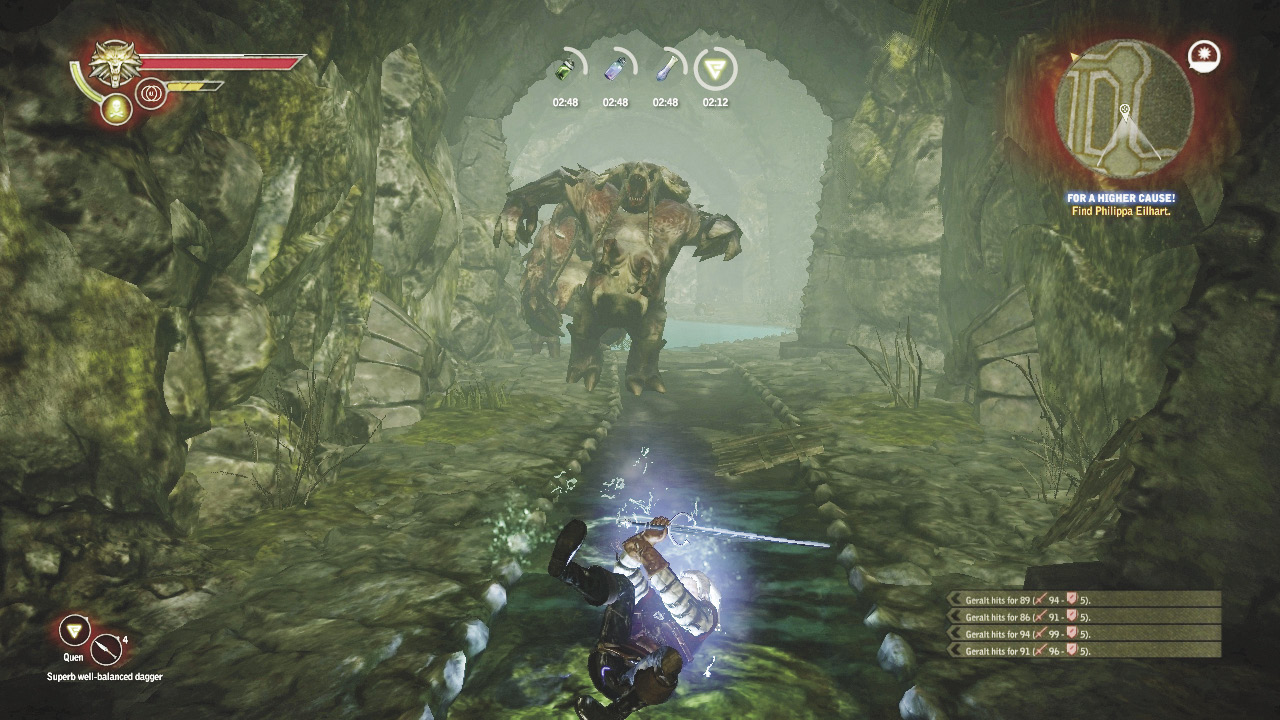
Some games are all about blocking attacks. This game is all about dodging. That’s not to say blocking is totally ineffective, but even on lower difficulties powerful attacks still do a bit of damage to you. Blocking also consumes vigor, and if you block too often, you may simply lose your ability to block. It’s best to start training yourself to dodge in dangerous situations. Once you’re really good at this, you can use dodging both to get out of dangerous situations and to put yourself in the best position for an attack.
If playing with a controller, you dodge in The Witcher 2 by moving the left stick in any direction while holding down the dodge button. If playing on a PC with mouse and keyboard controls, you can dodge forward by tapping the space bar and in any direction by tapping the appropriate movement key twice. You can’t change directions once you begin dodging in a particular direction. Geralt’s dodging animation is a compact roll that can get him far away from enemies in a very short time. Note that Geralt is not invincible while dodging, so if you dodge too late or roll by an attacking enemy, you can take damage. It is possible to use dodge rolls to interrupt attack animations, though. Once you’ve got some practice, you can roll in to hit an enemy, deal damage, then begin rolling back out before the animation has completed.
When dodging, you move exponentially faster than you do when walking or even when in an attacking animation. You can further improve Geralt’s ability to dodge by investing talents in the Feet Work ability as you level up, and this is highly recommended. With levels of Feet Work, Geralt’s dodge rolls move farther and he rolls faster. You move much faster than you do when running over a similar distance and can use constant dodge-rolling to rapidly cover ground while traveling. Once you’ve mastered the dodge roll, you can roll circles around groups of enemies while setting yourself up to attack from the best possible angle.
Sword Types
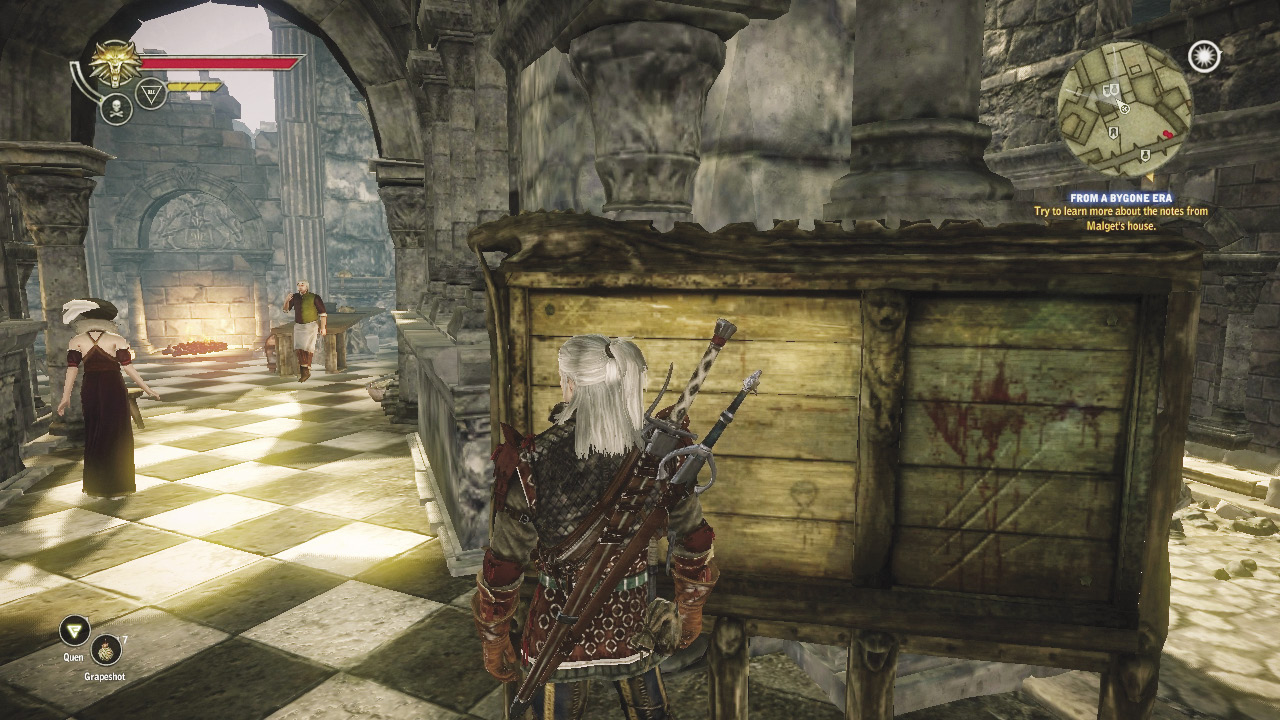
In most games, you equip a weapon and use it to kill things. It doesn’t really matter what you equip, provided its numbers are big enough. The Witcher 2 is not like most games in this regard. By default, Geralt should equip two different swords, each used in a different type of situation. Steel swords damage humans and humanoid races like elves and dwarves. Silver swords damage monsters and monster-like sentient races like trolls, dragons, and succubi.
Usually when you enter combat, Geralt draws the appropriate sword for a situation automatically from his back. Sometimes you fight a mix of humans and monsters, though. These situations get tricky. You must decide which type of enemy you want to go after first and be careful not to end up attacking, say, a monster with a steel sword. Your blows won’t be wholly ineffective, but the damage you inflict is greatly reduced.
After you’ve played the game awhile, you should develop an instinctive feel for pulling out the right sword in the right situation. If you do need to switch swords during combat, make sure you don’t accidentally sheathe your sword instead. When your sword is sheathed, you cannot dodge roll. Losing your ability to dodge while surrounded by enemies can be a death sentence.
So Why the Two Swords?Something that can confuse first-time players of The Witcher 2 is the unusual two-sword mechanic. It can seem like a strange and arbitrary thing if your expectations are more along the lines of a typical fantasy game. There’s a good reason for it, though. The Witcher games are based on the novels of Polish fantasy author Andrzej Sapkowski, who used his tales to examine folklore, mythology, and typical assumptions about fantastical creatures. In the world of The Witcher, monsters are explicitly beings from other universes who entered the world as part of a strange event called the Conjunction (which is detailed in an in-game book you can read, The Conjunction of the Spheres). Since all monsters are native to worlds that aren’t the default world of the main characters, they share a single weakness. Silver is effective against all monsters in The Witcher universe due to their extraplanar nature. Of course, silver is a soft metal and difficult to turn into a good sword without resorting to magic, so you shouldn’t go around dulling the blade trying to stab humans with it. This is where the mundane steel swords come in. |
Blocking and Countering
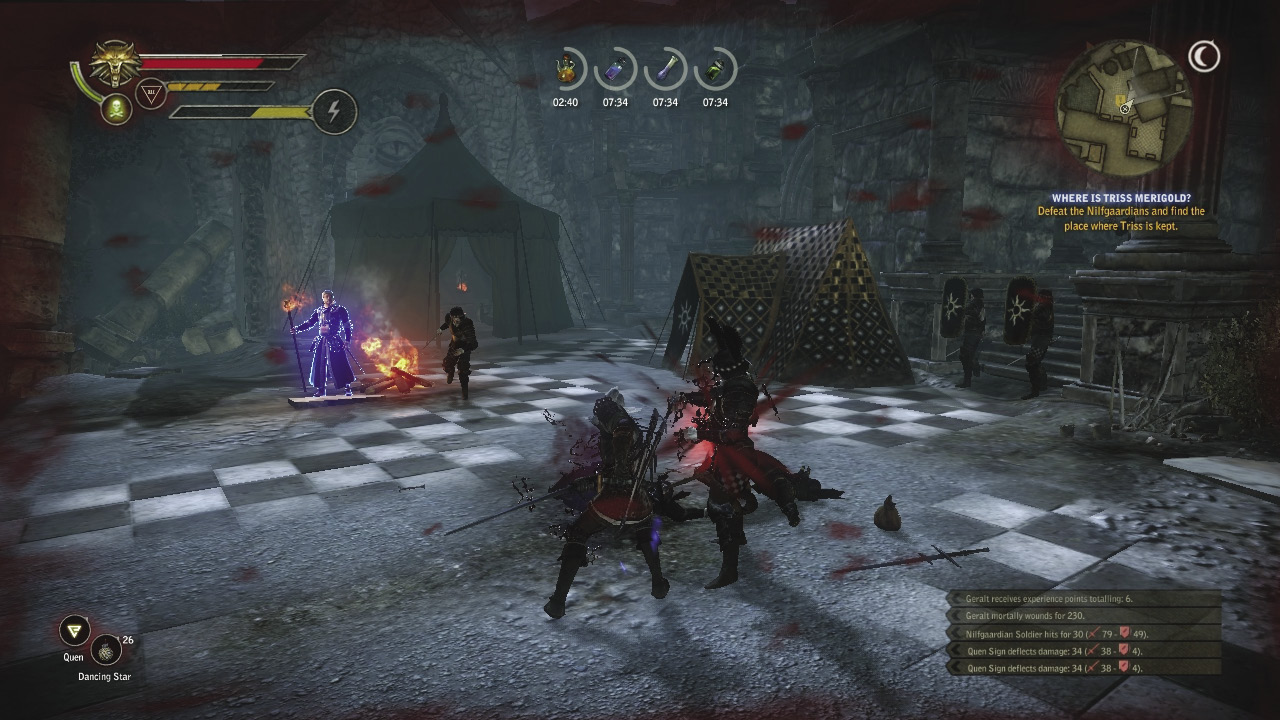
While it’s best to get used to dodging instead of blocking, there’s still a definite role in the game for blocking. Generally, the best time to block attacks and make use of mechanics that stem from blocking is when you’re fighting human opponents. When a human opponent attacks one who is blocking, the attacker staggers from the force the block deflects back. This create a valuable opening for countering with a light attack, which you may be able to extend into a full combo.
While the game’s default block is not especially good, you can improve this ability tremendously by investing in appropriate skills like Parry and Riposte. Taking all skills that affect blocking lets Geralt block in ways that nullify damage from all but the most powerful attackers and counter instantly by simply tapping an attack button. This latter ability, Riposte, can be incredibly powerful once you learn the timing involved. Still, even when it’s buffed to its highest levels, don’t get in the habit of blocking a lot when fighting monsters.
Using Signs
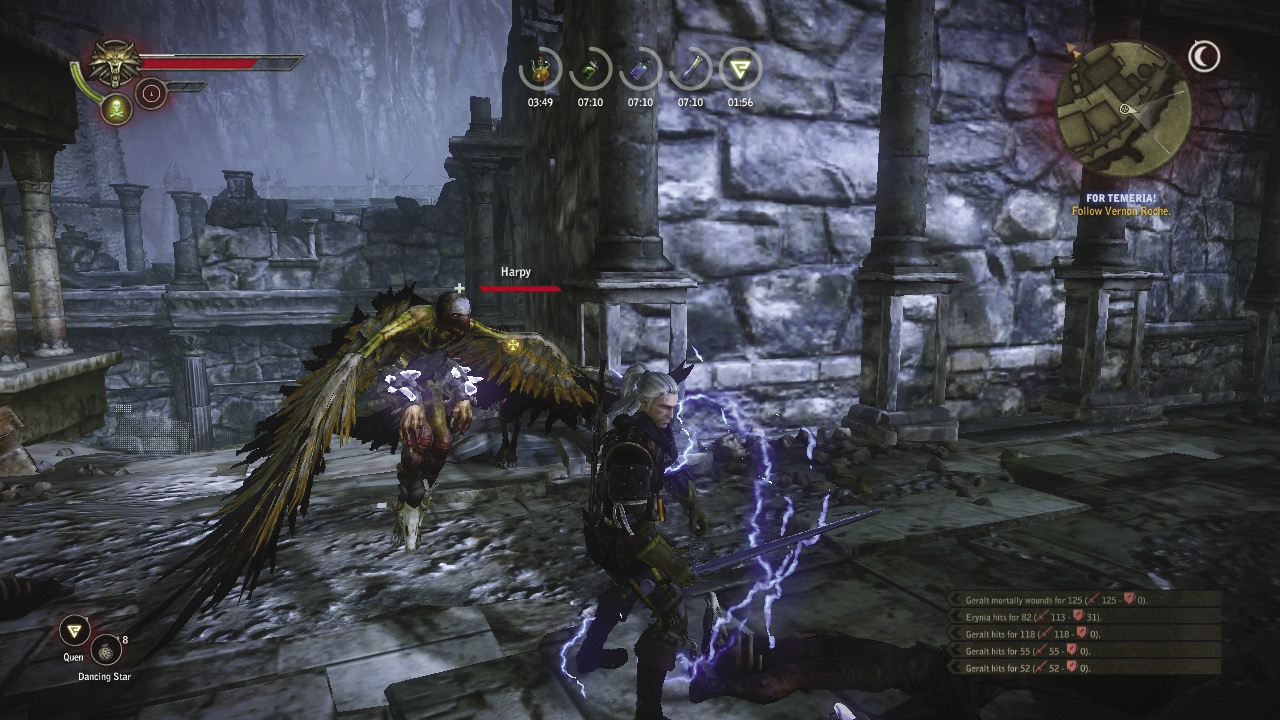
The Polish term that is translated as “witcher” in these games, wiedźmin, can also be translated as “hexer.” This gets at the core of what makes Geralt an unusual figure in his universe. He is one of that world’s few spell-slinging swordsmen, not quite warrior or mage. While Geralt doesn’t command the world-shaping power of a pure sorcerer, he can use his signs to dramatically alter the course of his battles.
That means you, the player, should become familiar with the basic signs and their combat roles. Geralt’s witcher signs give him an unusual range of abilities, and it may take you some time to get comfortable with them.
Aard
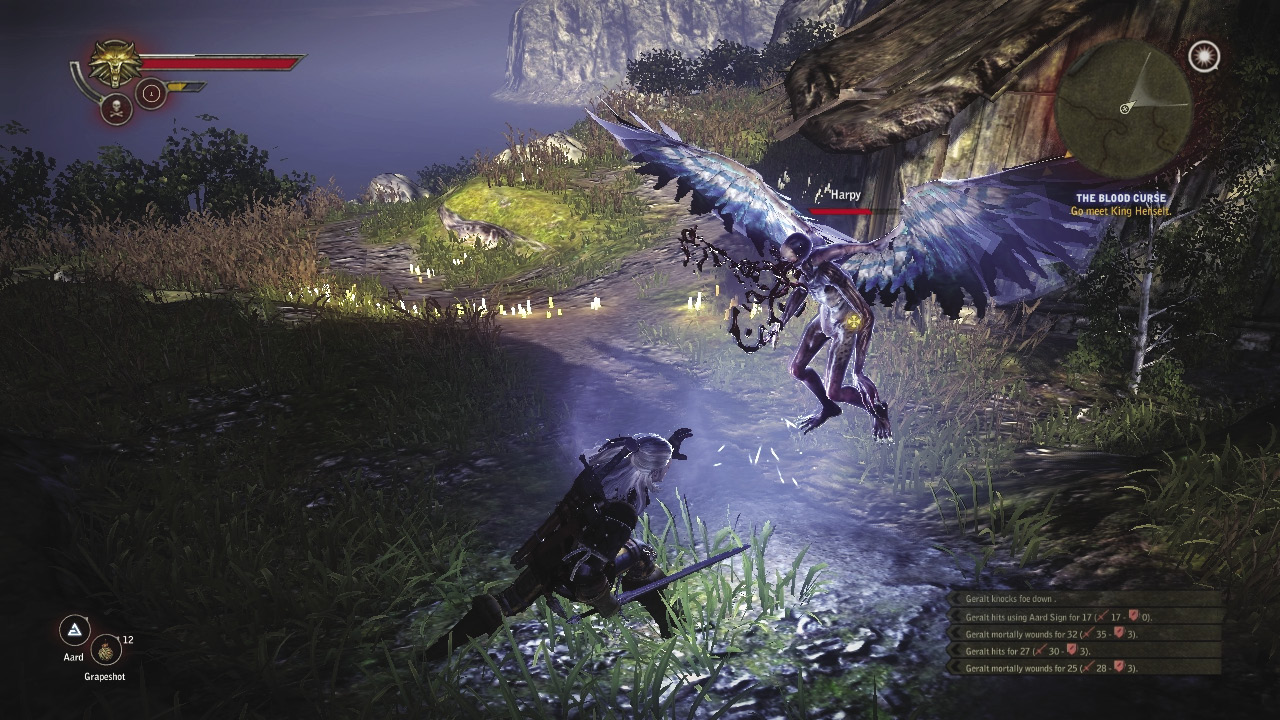
The sign of Aard is a single-target spell that emerges as a sphere of telekinetic force. Upon contact with a foe, it has a high chance of stunning and/or knocking it down. A stunned opponent may grow so dazed that you can finish the target off with a single attack. A knocked down opponent cannot attack you while getting back up, giving you a perfect opportunity for pouring on the damage. Knocked down opponents are also vulnerable to instant kills.
Aard is best used against enemies with strong defensive abilities that you’re fighting either solo or in small groups. It is particularly useful against mages, especially when leveled up. If fighting half a dozen enemies or more, Aard is less effective. Even if it connects with your target and has a strong effect, you tend to have a hard time getting through the crush of opponents to finish off your target.
If you invest talents in leveling up Aard, you gain the ability to shoot it farther and to intensify its stunning and knockdown properties. You can also slot range mutagens to make your Aard projectiles fly farther. Aard III is so powerful that it can make many enemies in the game dramatically easier to defeat, simply by setting them up for instant kills and long combos.
Yrden
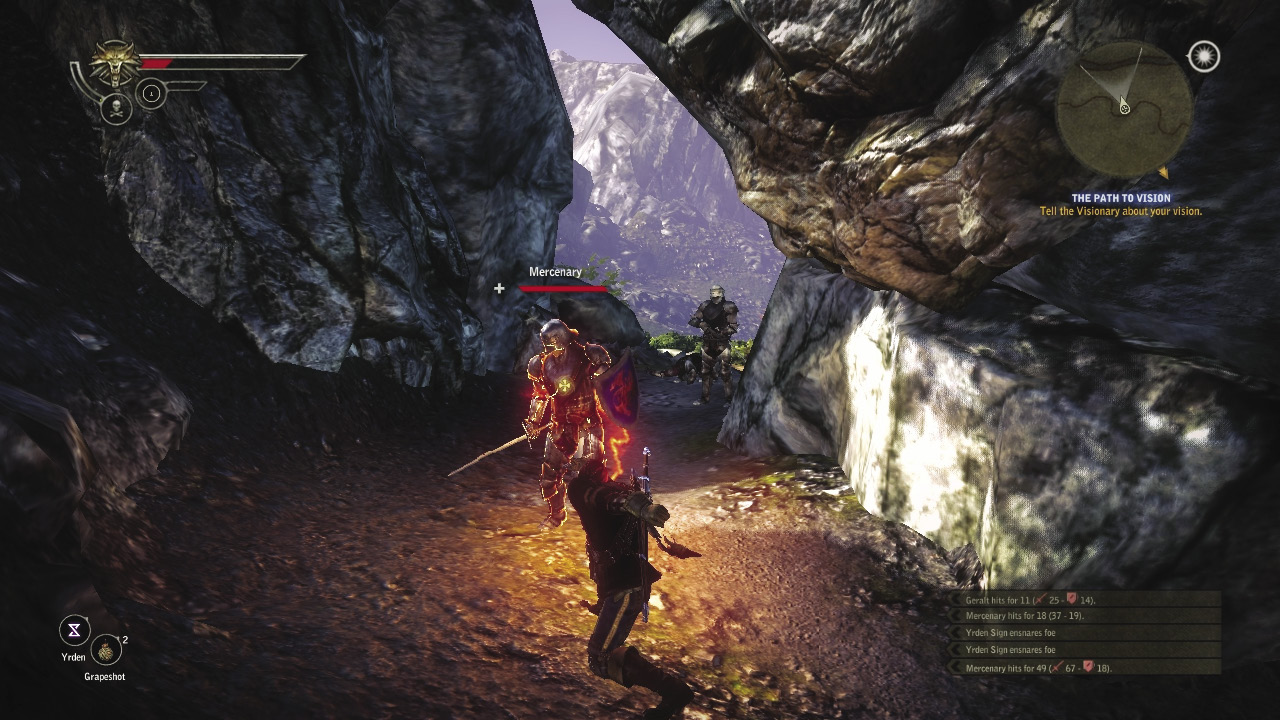
Yrden is somewhat similar to Aard in terms of function, since its main effect is stunning enemies. In addition to the stun affect, Yrden affects an enemy’s movement and may hold your foe trapped in place for a few moments. What’s tricky about Yrden is how you use it against opponents. You must place it on the ground and lure enemies into it, then quickly dart back and begin pummeling the foe before the effect wears off.
There are a handful of powerful enemies in the game who are essentially vulnerable only to Yrden. How Yrden is best used depends on how much you’ve invested in it. You can buy skills as Geralt levels up that allow him to plant multiple Yrden sigils on the ground, essentially letting him build stunning walls. This can be a powerful method of crowd control, allowing Geralt to pick the stunned enemies off at his leisure.
The weakness of Yrden is that it must be carefully placed on the ground like a trap. If you put down an Yrden sigil and can’t lure an enemy onto it, the sigil is basically wasted. You can get around this by obtaining the skills necessary to put down multiple sigils, but you still need to be careful. The animation for placing a sigil is long and leaves you vulnerable to attack.
Igni
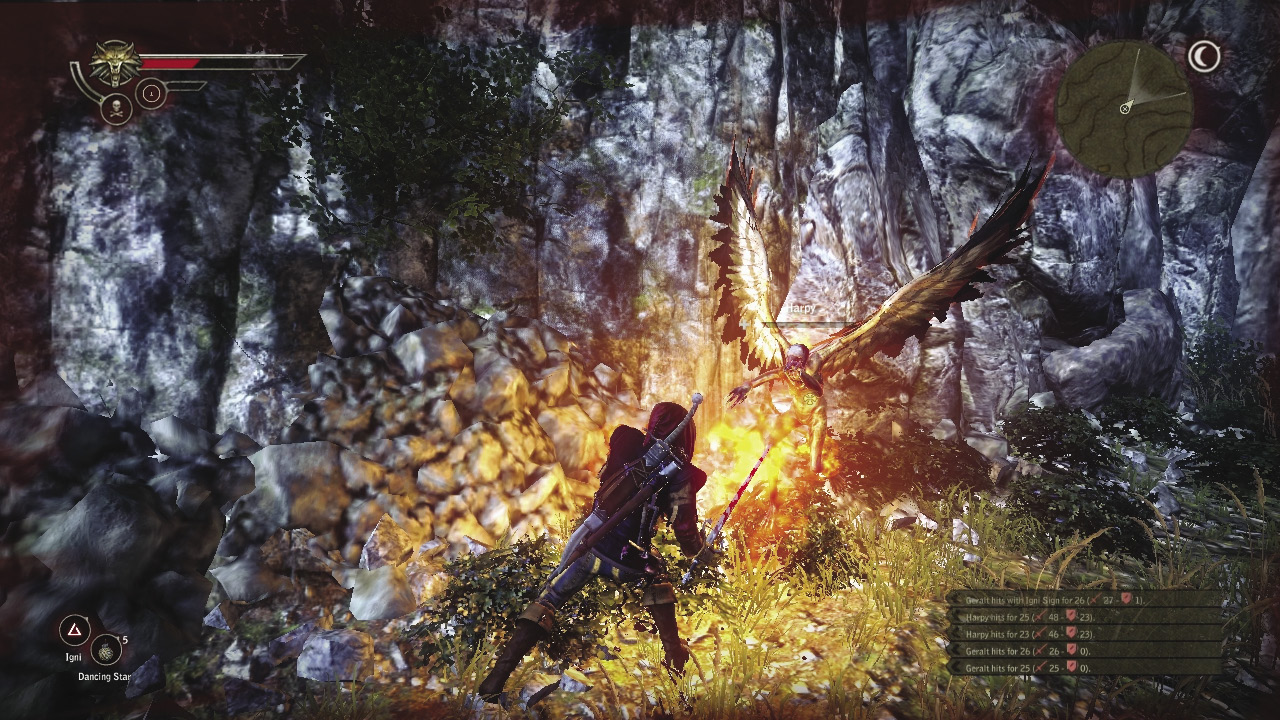
The sign of Igni launches a fireball at opponents. At its most basic level, Igni is simply a way to damage opponents from a distance. If you invest talents in enhancing Igni, then it does more damage and gains the ability to set opponents aflame. This is a critical effect called incineration that slowly deals extra damage over time.
In addition, human opponents who are incinerated jerk about in pain and become incapable of defending themselves. So in addition to inflicting ongoing damage, you can use the incineration as an opportunity to pour on extra damage with your own attack combos. You can also upgrade Igni to have a greater area of effect than a single target, which can incapacitate crowds of human foes.
Igni’s main weakness is that its usefulness is limited when battling monsters. While many types of monsters are vulnerable to incineration, this critical effect doesn’t disable a monster the way it disables a human. So while you can use Igni to grind out extra damage against a monster, you can’t use it to set up openings for your own attacks.
Quen
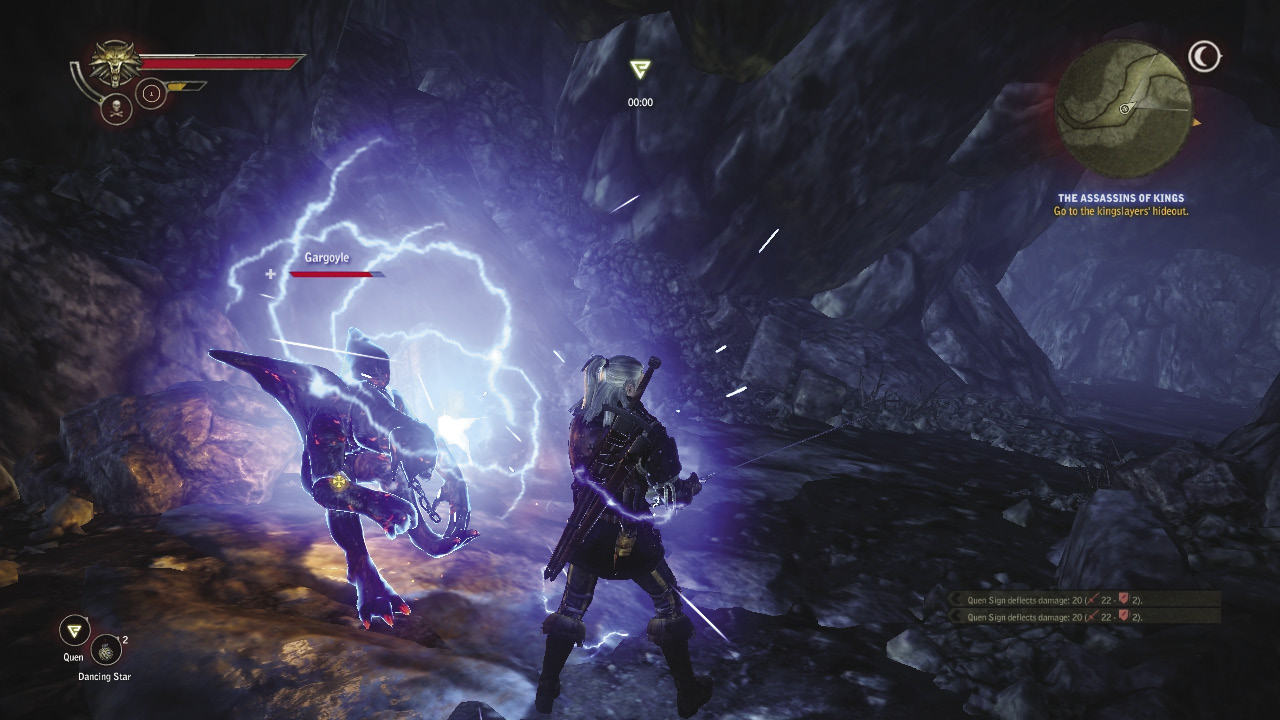
Quen begins as a purely defensive spell. In a typical video game, this is an ability you’d ignore in favor of attack-oriented powers like Aard and Igni. This game is very different, though. Quen is one of the most powerful signs in the game. In The Witcher 2, the amount of damage enemies can do to you rapidly outscales how much damage you can soak up by blocking attacks or equipping more powerful armor.
This is where Quen comes in. Quen effectively acts as a protective barrier that absorbs attack damage. Quen lasts until the barrier has absorbed too much damage or until its timer ticks down. Each casting of Quen lasts for a certain amount of real time, a period of time you can extend by investing in the sign as you level up.
Quen won’t let you wade into the middle of a half dozen enemies, but you can combine Quen and dodge rolls to keep enemies from significantly damaging Geralt at all in combat. You can make Quen absorb more damage by leveling it up and can also invest in abilities that make Quen divert damage it absorbs into an energy attack that affects one or more of your enemies, chosen at random.
Axii
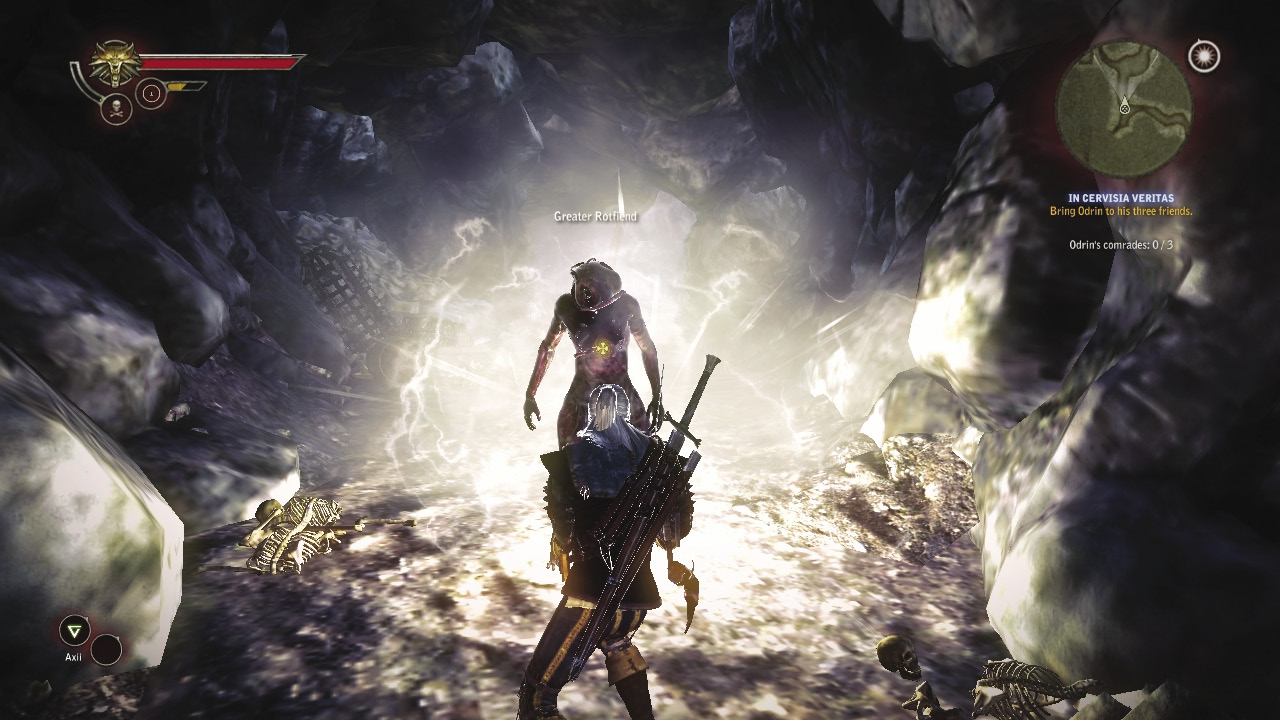
Axii is another sign you might not expect to be useful, given how similar abilities tend to work in typical games. Axii gives you the ability to take control of one of your enemies. This sign is one of the most difficult to cast, requiring you to hold down the sign button until the spell completes. Once an enemy is under your control, it is surrounded by a white halo of light.
Once controlled, your former opponent turns on your other enemies and begins attacking them. While under the influence of Axii, this former opponent will not attack you for any reason. The spell wears out after a certain period of time, or if you attack the enemy yourself to break the spell. If you invest in Axii as Geralt levels up, you can control enemies for longer periods of time, control multiple enemies at once, and use skills to booster the strength of charmed foes for as long as they serve you.
In some games, abilities like this are available but are considered morally objectionable or outright evil. This is not the case in The Witcher 2. Turning a foe who was out for your blood against his or her allies is not in any way a condemnable act. While Axii works equally well against common human and monster enemies, note that it is usually ineffective against elite, unique foes. You may also find you can only use it to control enemies of a certain type only so many times in a single battle.
Witcher’s Tricks
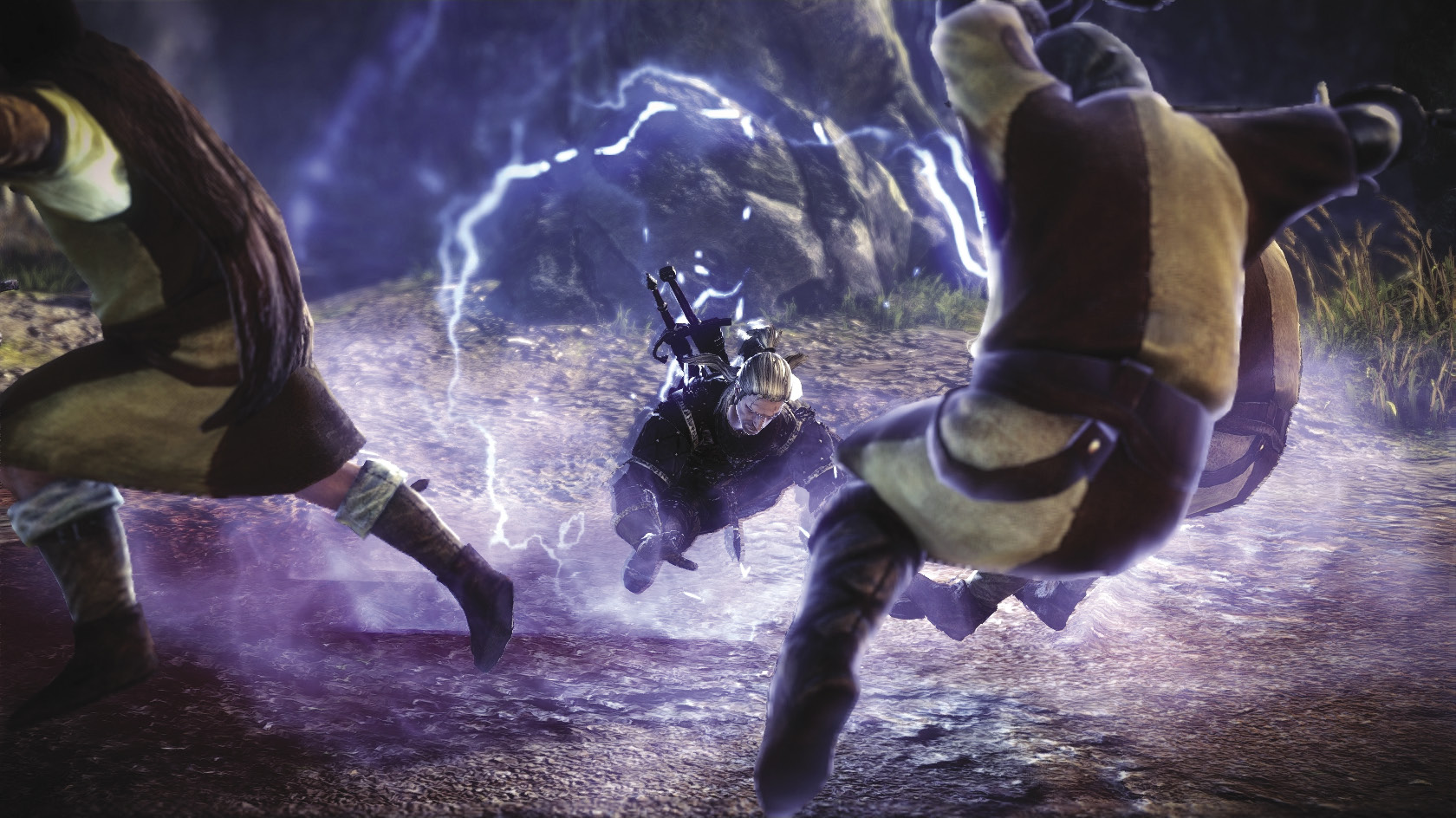
A witcher is both swordsman and mage, but doesn’t rely on those skills exclusively. Witchers were bred to fight monsters, who are ruthless and inhumanly powerful foes. To compensate, witchers are taught to fight dirty and take advantage of every possible edge they can find in a fight. This philosophy is expressed in gameplay through witcher’s tricks, items you can equip in Geralt’s pockets and unleash against opponents in battle.
Items equipped to Geralt’s pocket slots are always consumables you must find, craft, or purchase before you can use them. You have a limited supply of each trick item and may eventually run out. Most witcher’s tricks are situational items that tend to be either overwhelmingly powerful or somewhat useless, depending on how well they fit the situation. A skillful player is one who knows exactly when to deploy a particular witcher’s trick.
Ranged Weapons
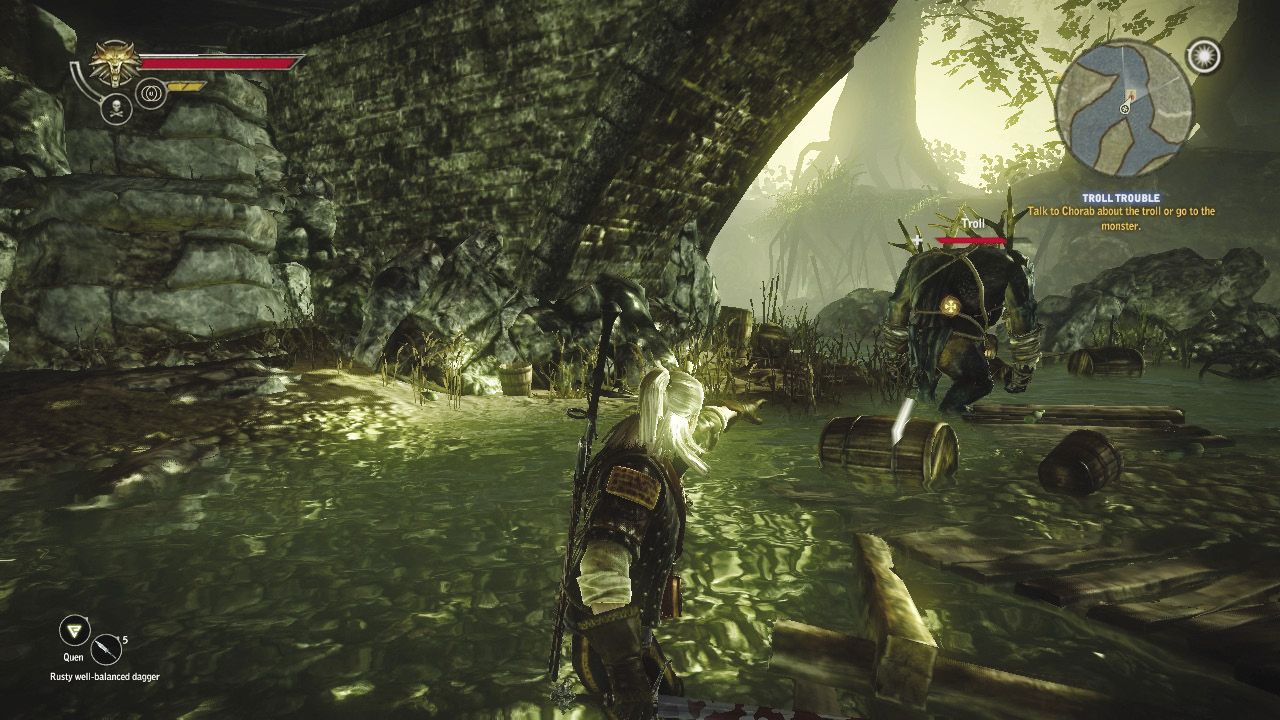
Ranged weapons in The Witcher 2 are different forms of thrown daggers. You don’t need to be a magically enhanced mutant like a witcher to throw a dagger well, but it doesn’t hurt. A thrown dagger works a bit like low-level Igni. It deals a relatively small amount of damage, usually what you might deal with one strong sword blow, to an enemy from a safe distance.
Throwing daggers can be incredibly powerful against single strong opponents, provided you have enough of them. You use steel thrown daggers against human opponents and silver thrown daggers against monster opponents. Some difficult to find and powerful throwing daggers, like stings and poisoned harpy claws, can inflict critical effects on your foes.
You do not have the ability to throw daggers in the game by default. This is a skill from the training tree that you must purchase if you wish to use it. You can invest in it further to get a damage bonus to attacking with thrown daggers. Whether or not you want to invest in this ability is purely a matter of player style. Play the dagger-throwing portion of the game’s tutorial to see if you like the feel of it.
Bombs
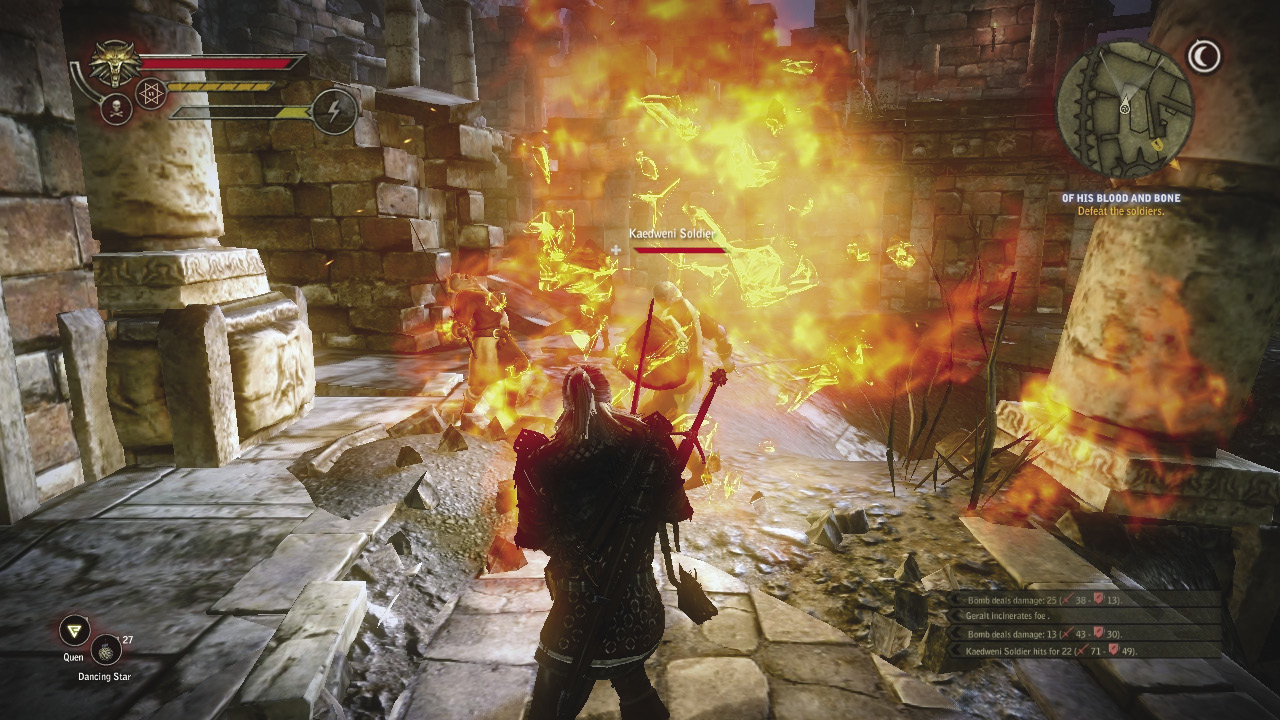
Bombs also let Geralt attack his foes from a safe distance, though there are some major differences between ranged weapons and bombs. Generally, bombs do less pure damage than ranged weapons but can affect multiple targets. Geralt can throw bombs from the beginning of the game. Where ranged weapons often must be found or purchased, bombs can be created on the fly through alchemy.
The ideal situation for bombs is when confronting large groups of enemies. You can effectively soften up a group of foes by dodge-rolling in circles around them, tossing bombs, and then going back to dodge rolls. Certain bombs let you incinerate and stun foes, which can create openings for you to wade into the group and begin eliminating disabled foes with your own sword attacks.
The main disadvantage to bomb use is the relatively low maximum damage, though you can increase this by investing in skills from the alchemy skill tree as Geralt levels up. There’s also a limited number of critical effects you can inflict through bombs. A handful of bombs do negligible damage when thrown but instead enhance the effectiveness of particular signs or increase a monster’s vulnerability to critical effects.
Traps
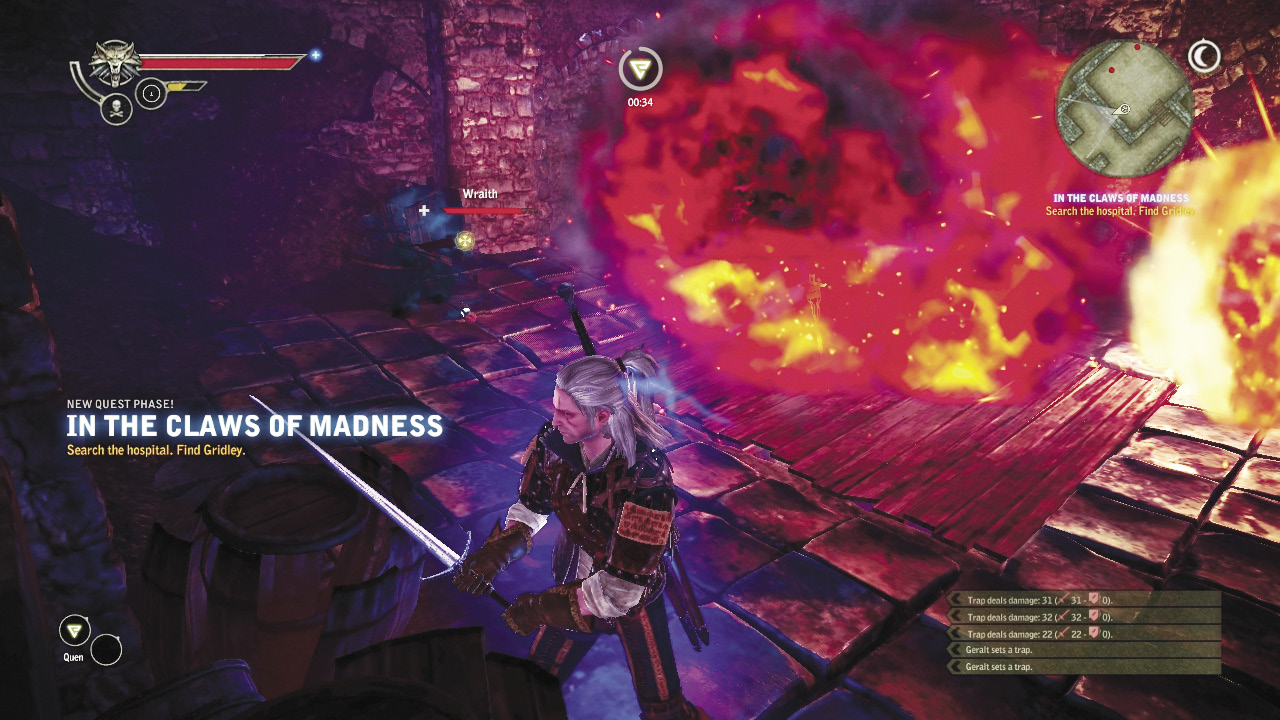
Cross a bomb with Yrden and that gives you a trap. To use a trap, you must place it on the ground and then lure an enemy (or ideally a group of enemies) into stepping on it. Once the trap is triggered, all opponents within range take damage and may suffer from other effects. Traps are best used when you can thoroughly rig an area with traps before any enemies are present in it.
Traps can be used effectively for crowd control or to deal heavy damage to large, slow enemies. In cases like this, you can set several traps on top of each other, so the enemy takes catastrophic damage upon stepping into the trapped area. Be careful trying to place traps when lots of agile enemies are already active in an area, as they may take that opportunity to attack you. You can also be damaged by your own traps if an enemy triggers one before you’ve left its area of effect.
Traps can inflict critical effects as well as pure damage. Most traps you must purchase or craft before you can use them. Some traps let you inflict extremely exotic status effects, like the Talgar winter’s ability to inflict the rare critical effect freeze or the Fury’s ability to cause an Axii-like effect on several enemies at once.
Alchemy Boosts
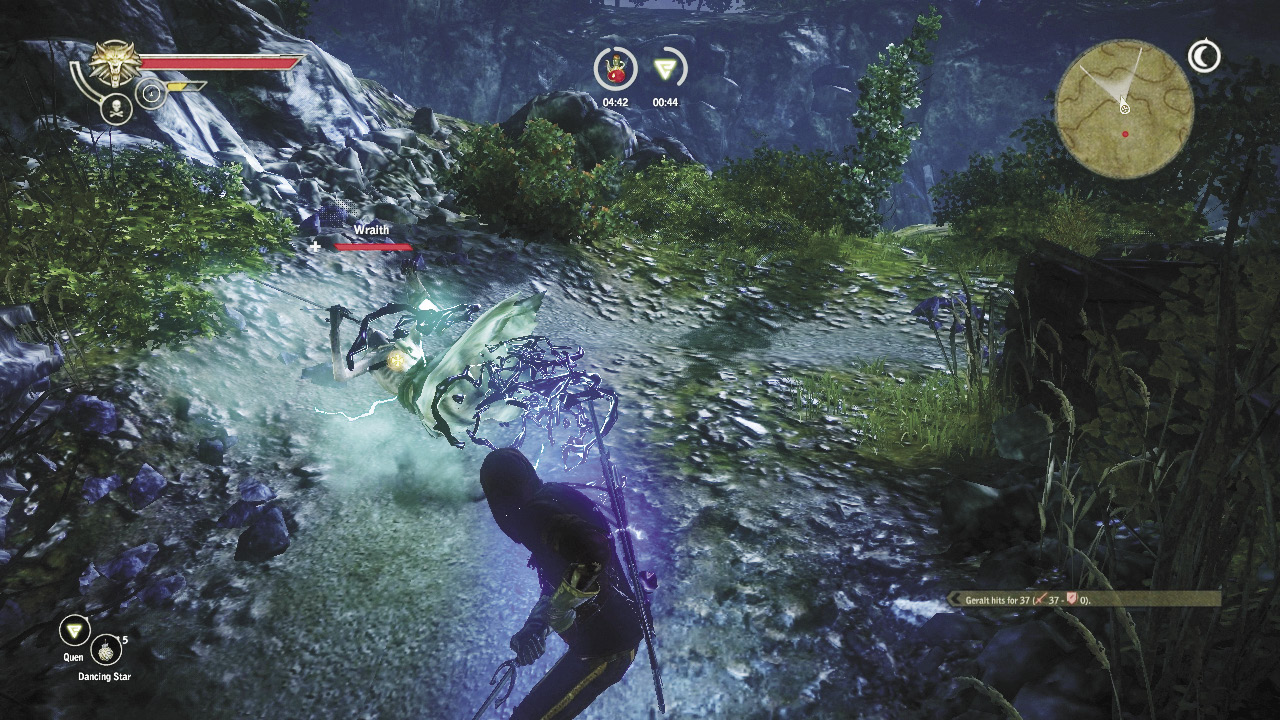
Your average witcher also understands the basic principles of alchemy. His knowledge of these principles lets him blend herbs and other alchemical substances into potions and oils that can have profound effects on his body and equipment. In The Witcher 2, this means that you can use alchemy to create temporary boosts to your stats. Each boost works in a slightly different way.
Potions
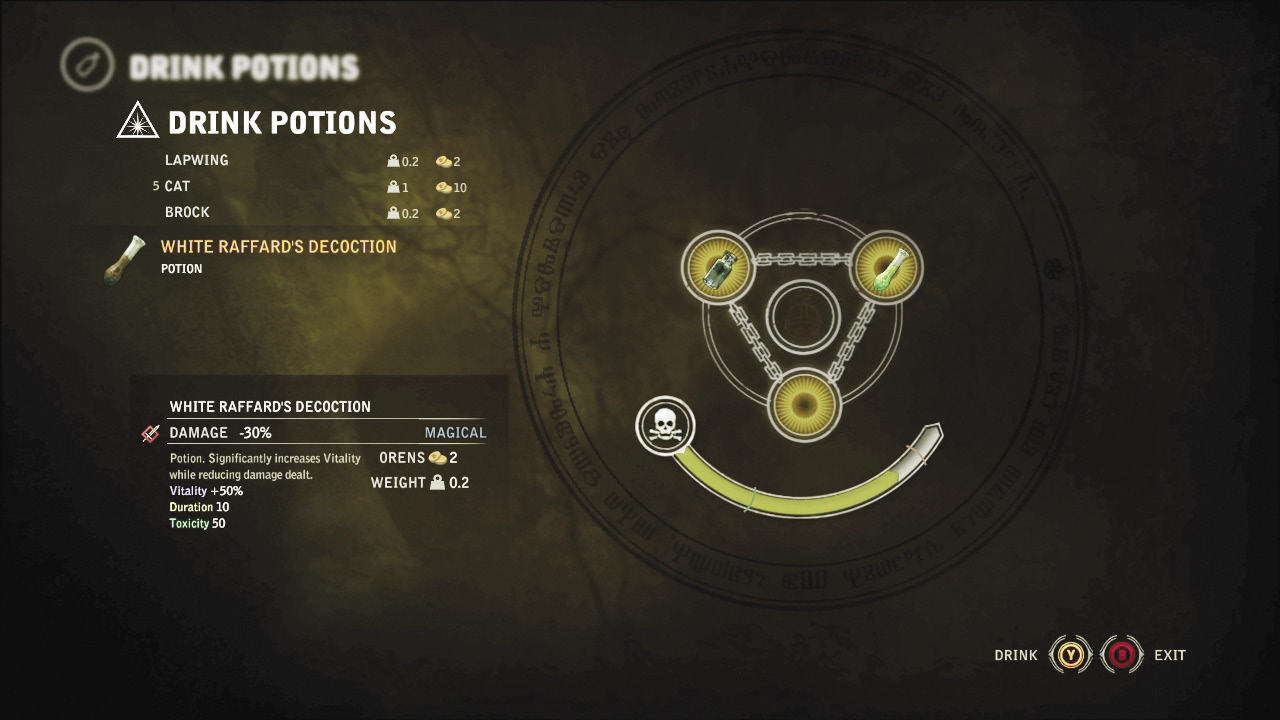
In a typical video game, potions are items you can quaff to instantly restore lost HP, mana, or other resources. In The Witcher 2, you drink potions to fundamentally alter Geralt’s body chemistry for a short period of time. Potions can increase Geralt’s vitality and vigor regeneration, increase his resistances to critical effects, make his signs more powerful, and cause other effects.
Most potions have a standard duration of about 10 minutes. You must meditate to drink a potion, so you need to apply potion buffs before getting into combat. Once monsters are within striking range, it’s too late. Potions are at their most effective in battles where you can pause at the threshold, apply your potions, and then enter battle with a significant edge.
The number of potions you can consume is limited by your total potion slots and also by Geralt’s total toxicity. At the game’s beginning, Geralt can drink only up to three potions at once. Each potion has a toxicity rating that indicates how much it poisons you after you drink it. You cannot drink a potion or combination of potions if doing so would boost Geralt’s total toxicity over 100. You can purchase skills from the alchemy tree that let Geralt drink up to four potions (provided their toxicity combined is not greater than 100) and that also grant Geralt additional stat bonuses while his toxicity level is high.
It is difficult to use potions effectively in battles that are preceded by long story sequences or cutscenes, since potion timers count down in real time. You can invest in certain skills from the alchemy tree to make potions last longer, to increase the strength of potion buffs, and to decrease the drawbacks associated with using certain potions. In general, any player interested in using potions extensively should invest in the related skills from the alchemy tree.
Oils
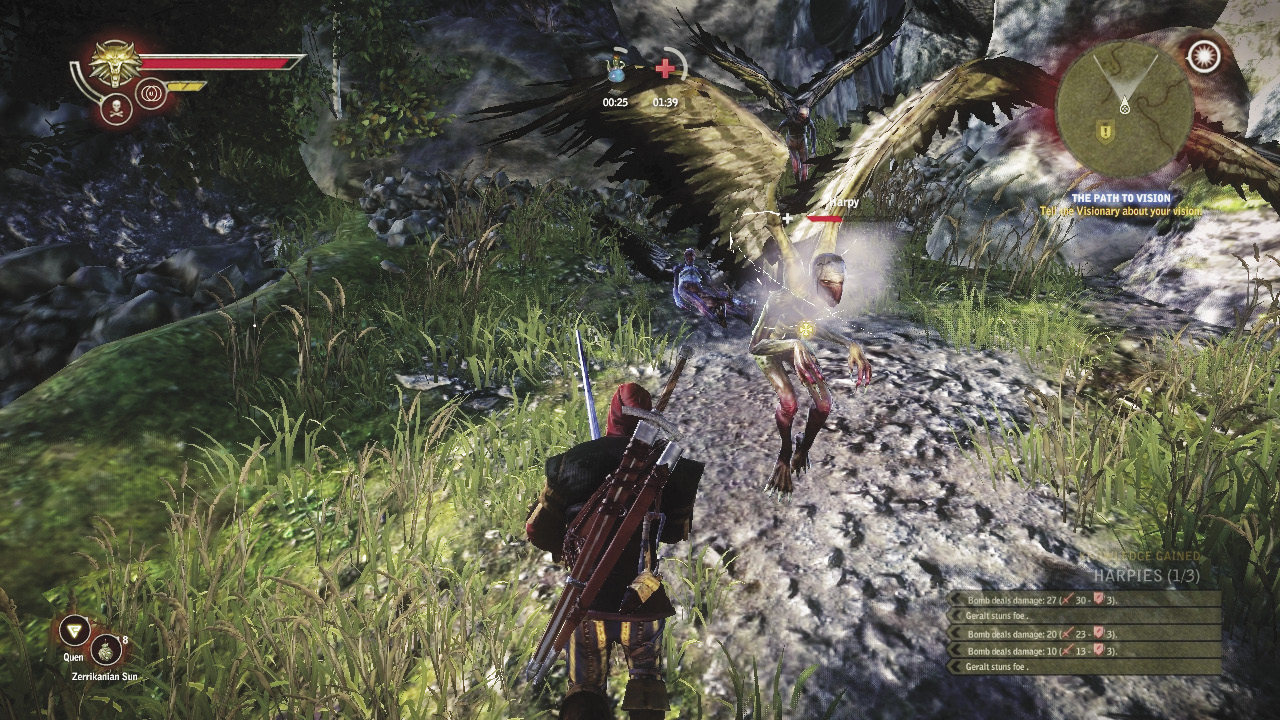
Oils are alchemical substances used to coat a blade. They’re prepared the same way potions are but can be applied to a blade at any time. It’s a good idea to keep a store of oils on hand, in case you stumble into an unexpected battle and need to give yourself a quick edge. Oil effects generally grant you bonuses to damage or to inflicting critical effects.
When applying an oil to a blade, you must choose whether to apply it to your steel or silver sword. Many types of oils grant damage bonuses to specific types of foes, like humans or insectoids, so keep that in mind. Oil effects are dictated by real-time timers, just like potions. Oil timers usually last about five minutes but can be extended by investing in certain alchemy tree skills.
While it’s easier to use oils on the fly than potions, it’s worth noting that combining oils with potions can have extremely powerful effects. For instance, if you oiled your blade to make it have a 30 percent chance of causing the bleeding or poison critical effect, you could also drink potions to further increase your chances of landing these particular critical effects.
Circles
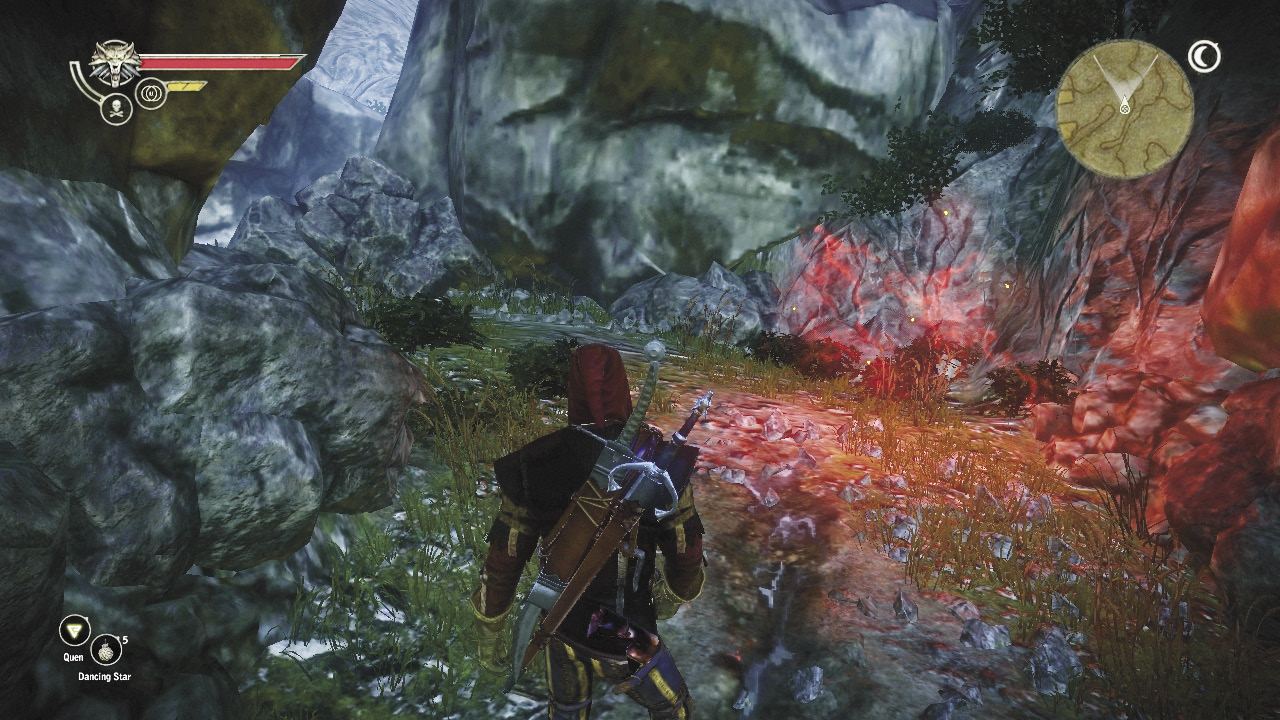
Circles aren’t exactly alchemical boosts, but they work so similarly that they’re worth discussing here. Basically, there are certain small areas scattered throughout the game world that grant stat boosts if you scan them with your medallion. These stat boosts typically last for about five minutes and have no cost. The only limitation on using circles is that you can only take advantage of any individual circle once per day.
Circles of life and vigor grant +2 vitality regeneration and +1 vitality regeneration in combat. Circles of endurance grant an additional 20 percent to armor. Circles of strength grant an additional 20 percent to damage. Circles of power grant an additional 20 percent to sign intensity. You know you’re near a circle when you hear a distinct sound as you pass through an area. You also see a shimmering effect nearby, as if the air were superheated.
Circle effects stack with each other and with other potions and oils you’ve applied. Certain situations and builds can create very powerful synergies this way. You can check the guide’s maps to see where circles are located. If you know you’re going into a battle near a circle, it’s worth your time to take advantage of it.
Critical Effects
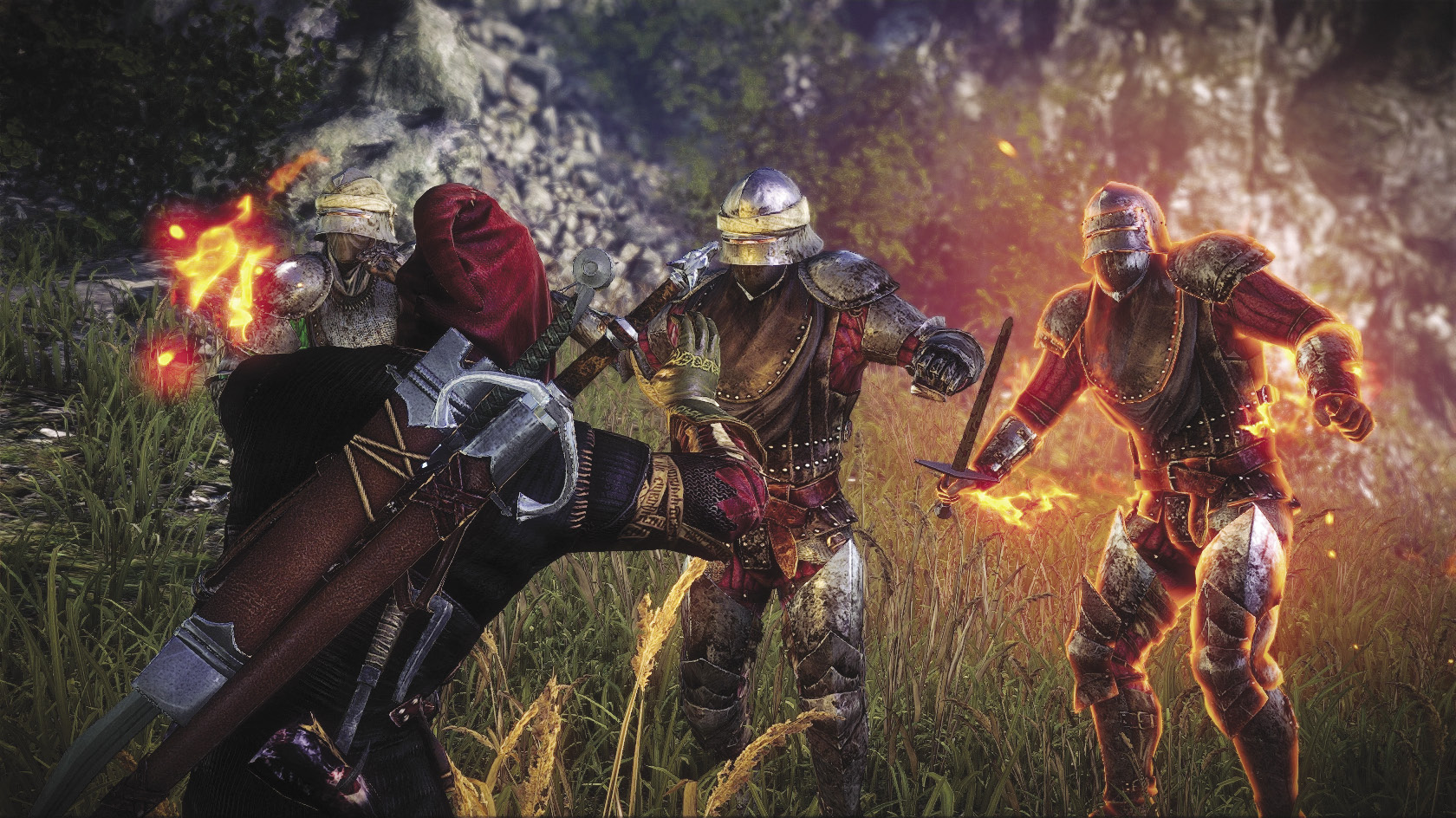
A critical effect is effectively an additional debuff an enemy or Geralt can suffer as a result of a successful attack. Each critical effect can be inflicted by a variety of sources. Most enemies attempt to inflict stun, poison, bleeding, incineration, or knockdown. There is a sixth critical effect, freeze, that only Geralt can use.
Bleeding causes the afflicted target to take additional gradual damage to vitality over the course of five seconds. Enemies affected by bleeding glow red and spurt blood violently until the effect ceases. Bleeding is one of the easier critical effects for Geralt to resist, as several potions and many types of equipment grant bonuses to resisting it. By the same token, this is one of the critical effects to which many monsters have complete immunity.
Poison causes the afflicted target to take additional gradual damage to vitality over the course of five seconds. If Geralt is affected by it, it makes the screen go green and misty, reducing visibility. Enemies affected by poison begin to glow slightly green. You can use the Quen sign to immediately nullify being poisoned. Many different monsters resist or are completely immune to poison, though it is the sole vulnerability of trolls.
Incineration causes the afflicted target to take additional gradual damage to vitality over the course of five seconds. You can use the Quen sign to immediately nullify being incinerated. Human enemies who suffer incineration are often paralyzed by the pain and become vulnerable to further attacks. Many types of monsters are vulnerable to incineration, too. It’s pretty easy to tell when Geralt or an enemy is affected by incineration, as the target bursts conspicuously into flames.
Knockdown is a relatively rare critical effect. It is inflicted by particularly strong attacks from enemies, and Geralt can inflict it through a handful of weapons and the Aard sign. An enemy that is knocked down must stand up again before it can take any other actions. During that time, the enemy is defenseless against attacks and may trigger instant kill animations if attacked. The same applies to Geralt if he is knocked down. Most flying monster types are extremely vulnerable to knockdown.
Stun is another relatively rare critical effect. No enemy in the game can consistently inflict it on Geralt. The sign of Aard, a variety of bombs, and certain weapons can inflict it on Geralt’s enemies. Stun is primarily useful to Geralt for setting up instant kills. It is particularly effective against human opponents, especially mages.
Freeze is an extremely powerful critical effect that only Geralt can inflict, but from a limited number of sources. The ranged weapon sting, the trap Talgar winter, and a handful of swords have a freeze critical affect. An enemy affected by freeze may become frozen solid, which allows Geralt to shatter them with his next attack. An enemy who is not frozen solid is still going to be drastically slowed, as if affected by the adrenaline ability Heliotrope. Freeze is especially powerful because no enemy in the game completely resists it. At the very least, most enemies that suffer from freeze will be slowed.
Adrenaline
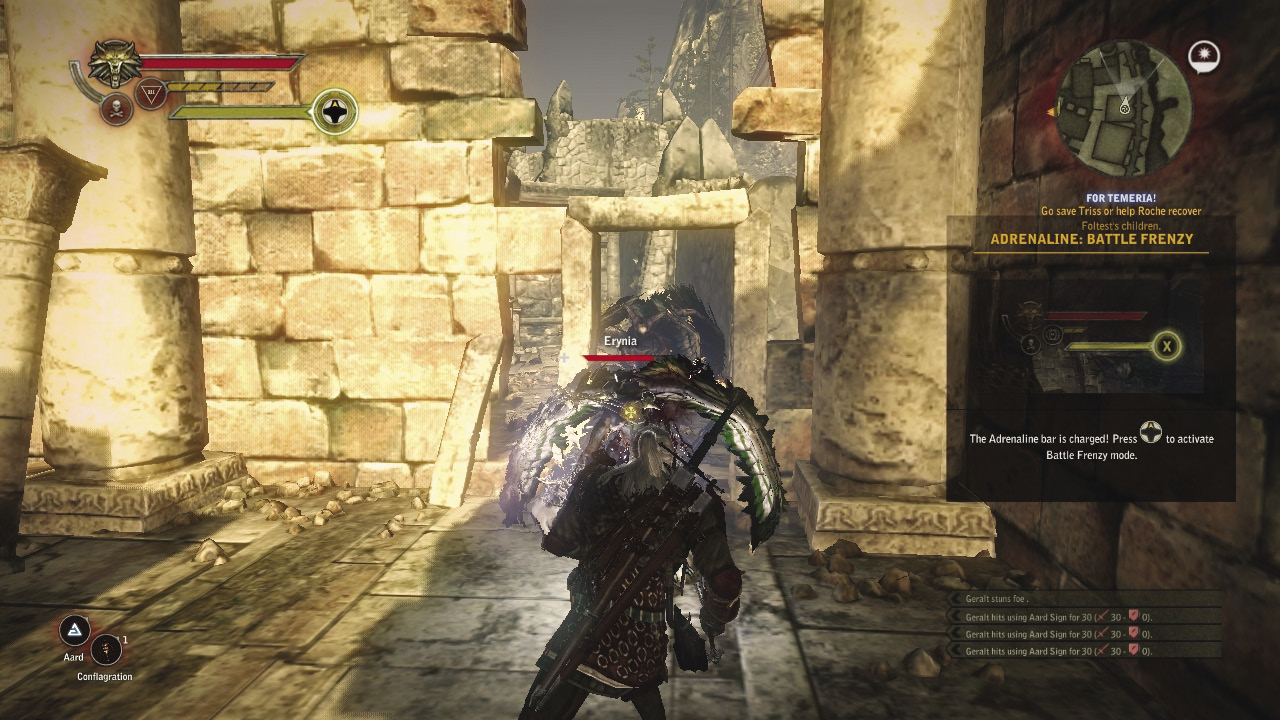
The final major combat mechanic worth discussing is adrenaline. This does not come into play until relatively late in the game, when Geralt has acquired one (or more) of these abilities: Combat Acumen, Heliotrope, or Mutant. Acquiring one of these unlocks an adrenaline meter that slowly fills up as you do something that’s relevant to the ability in question. You charge Combat Acumen by landing sword blows, Heliotrope by casting signs, and Mutant by drinking potions with high toxicity. You can also increase adrenaline generation by equipping items, primarily swords, that grant bonuses to adrenaline generation.
When your adrenaline meter is full, you can tap up on the directional pad if using a controller or X if playing the PC version and using a keyboard to activate your ability. Each ability works in a completely different way, designed to synergize with the other strengths and weaknesses developed by investing in that particular skill tree. Heliotrope, for instance, slows enemies so it’s easier to use signs on them (or just beat them up). Combat Acumen lets you spend your adrenaline bar to either instantly kill an entire group of nearby humans, or to instantly kill a single nearby monster. Mutant lets Geralt go on a brief rampage where he does extremely high damage.
If you never invest in any of the skills listed above, you never unlock Geralt’s adrenaline meter and it does not come into play. Leveling Geralt up this way is not recommended. The game’s final chapter is largely designed presuming your Geralt build has access to at least one of the adrenaline abilities. Note that it’s entirely possible, if tricky, to level Geralt up such that he learns all three of the adrenaline abilities. In this case, spending your adrenaline meter activates all three abilities simultaneously.