Taming the Wilds! Mastering Minecraft 4th Edition Guide You Can Do Anything with a Little Practice
Farming
Once you have a few supplies and the basics squared away, farming is the way to go for food. You can hunt for meat, but eventually all the nearby animals will be gone. So why not spend some time learning how to plant and harvest fruits, grains, and vegetables? They’re easy to grow, can be replanted, and fill up your hunger meter quite well. Some of them can be used later in things like Potions. So let’s play in thedirt!
Setting Up Your Field
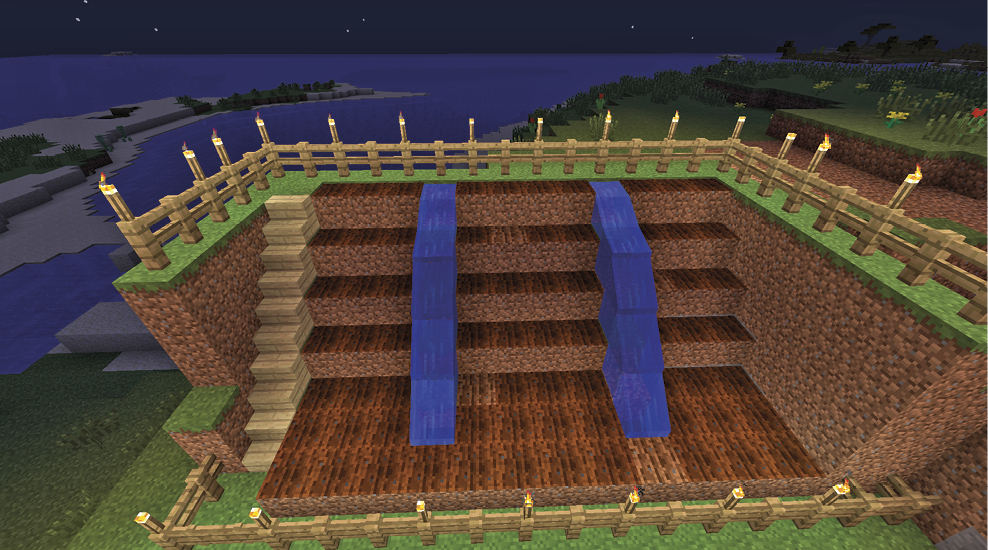
At the most basic level, farming is about planting seeds in wet Dirt with access to lots of light. You can start a farm on the shoreline of a lake, by the sea, or you can get a Bucket and make your own little puddle surrounded by Dirt blocks. One Water block can keep four Dirt blocks in any direction damp, so you can create a trench for the water to flow through with Dirt on either side, or dig a pit in the middle of the field for the water. You can even get fancy and create terraces of Dirt with awaterfall!
Seeds and Edible Plants
- Wheat: the staple of the farm
- Carrots: pointy, orange, delicious
- Potatoes: nutritious, but sometimes produce Poisonous Potatoes
- Watermelons: the long-term crop
- Pumpkins: gourd of many uses
- Sugar Cane: used in making Paper and Sugar
- Cocoa Beans: used in baking and dyes
- Beetroot: used for food and dyes
Wheat
You can get Wheat Seeds from any tall grass, so chop away at nearby patches. Don’t worry too much if you don’t find many, or if you start your game in an area without much in the way of grassy fields. Not every patch of grass drops Seeds, but harvested Wheat usually drops more than one Seed in addition to the Wheat itself, so you can replant and grow your farm from even the smallest beginnings. If you have plains nearby, you’re in Wheat heaven; the large amount of tall grass there helps you gather Seeds by thehandful.
Ripe Wheat is a golden-brown color. When harvested, the crop produces 1 Wheat and 0-3 Seeds. If you harvest too early, you get only Seeds and no Wheat.
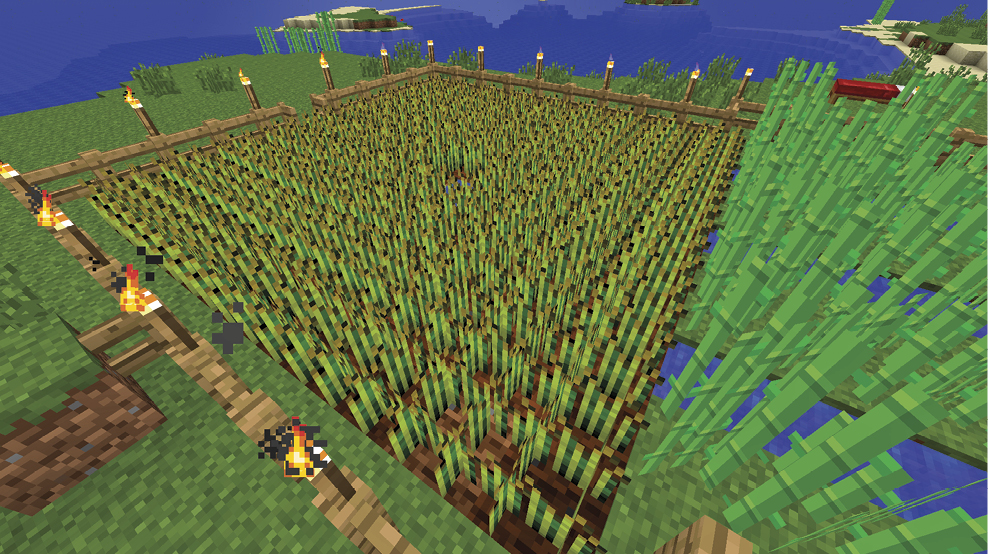
Wheat Seeds can be used to lure Chickens, and the Seeds are fed to them so they will breed. Ripe Wheat lures Cows and Sheep into following you, or it’s fed to a pair of Cows or a pair of Sheep to make them breed. You can pack nine Wheat together to make a Bale of Hay for Horses, or use three of them to make Bread for feeding yourself. Wheat is usefulstuff!
Carrots
You can find Carrots growing in Villager farms, so be sure and dig them up if you get the chance. Zombies also occasionally drop Carrots. Once planted, a single Carrot grows into as many as four more when ripe. You know Carrots are ready to be harvested when you see four of them poking out from theground.
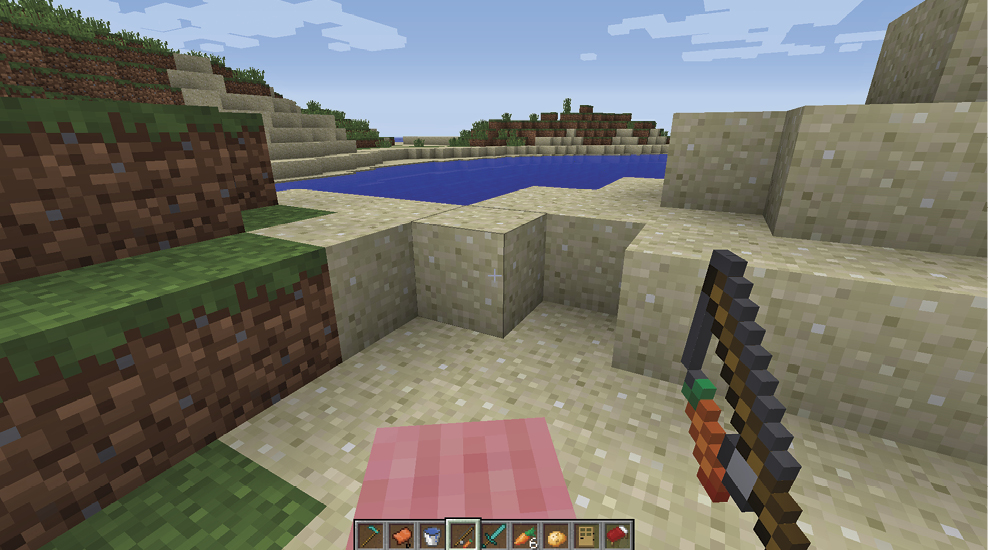
Carrots can be eaten directly out of the ground or replanted. They can also be used to attract Pigs and Rabbits or to make them breed. If you have a Saddle and want to ride a Pig around, make a Carrot on a Stick to get the Pig to go wherever you want!
Potatoes
Like Carrots, you can find Potatoes growing in Villager farms, and you can harvest them. Zombies also rarely drop Potatoes, so it may take a while before you can start enjoying delicious Baked Potatoes. A raw Potato planted in the ground grows into a group of Potatoes. You know they’re ripe when the tops pop out of theground.
Potatoes can be replanted immediately to increase your farm. Once you have enough that you can cook some, stick them in a Furnace to make Baked Potatoes, which are very good for satisfying hunger. You can eat them raw, but they won’t fill you up nearly asmuch.
Watermelons
Watermelons are found growing wild in jungle biomes. Break them into slices and turn those slices into seeds! You can also find Melon Seeds in Chests in Abandoned Mineshafts, or you can trade for them if you find a FarmerVillager.
Once planted, a Melon Seed turns into a stem. Once the stem matures, it tries to grow a Melon next to itself. The Melon will grow only if there’s a free space for it, so don’t crowd them out with other crops. Once the Melon bears fruit, harvest it, but save the stem! If you leave the stem, a new Melon will soon grow, saving you the need to replant. Melons can be broken into numerous slices. Each one fills the hunger meter only a tiny bit, so they’re good for keeping your bar toppedoff.

Pumpkins
Pumpkins grow naturally on grassland and can be crafted into Pumpkin Seeds. Like Melons, Pumpkin Seeds require some space as they grow into a stem. Once the stem matures, it needs an adjacent free block to grow a Pumpkin. Ripe Pumpkins can be harvested whole, leaving the stem behind to continue the cycle ofgrowth.
If you’re hungry, use some Eggs and Sugar with a Pumpkin to make a tasty PumpkinPie!
Sugar Cane
Sugar Cane can’t be eaten by itself, but it’s still a useful crop. Search river areas and deserts for this tall plant, and chop it down. A full-sized plant of Sugar Cane is three blocks tall and thus gets you three pieces of Sugar Cane toplant.
Create a full line of Sand or regular Dirt, and then dig a ditch beside it to fill with water. Sugar Cane is very thirsty and needs to have immediate access to water just to take root.
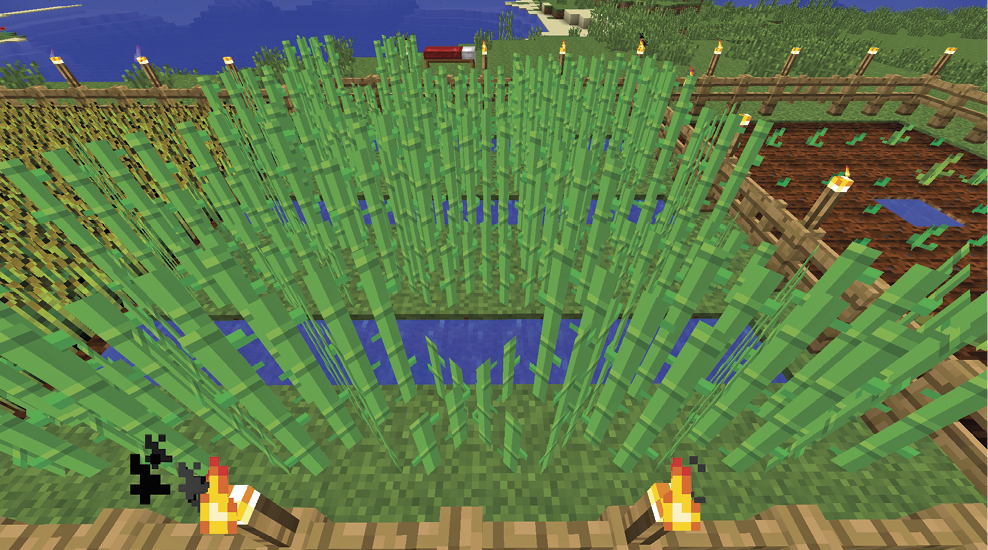
Give Sugar Cane time to grow. Harvest it by cutting down the upper two blocks of each plant. Leave the base of the Sugar Cane untouched so it can continue to grow for as long as you like. In this way, you can get a huge amount of Sugar Cane without much effort after the initialplanting.
Cocoa Beans
Cocoa Beans are found only in jungle biomes, where they grow as pods on the sides of small jungle trees. Unripe pods are green, but they turn a golden-brown when they are ready to harvest.
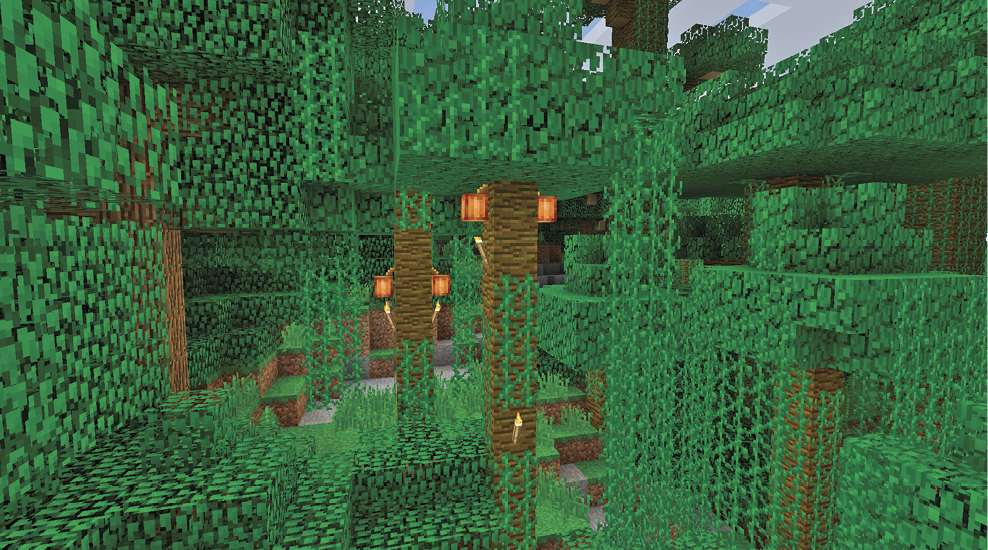
Making a Cocoa Bean farm is slightly more challenging than some other types of farms. It’s more of an orchard. Cocoa Beans don’t require water, but they do need Wood, and only Wood from jungle trees will do. As you go through the jungle gathering Cocoa pods, chop down a few jungle trees. Take the Wood from the trees back to your farm, set it down where you want your orchard, and put the pods on the Wood. A fully harvested Cocoa pod gives 2-3 CocoaBeans.
Two pieces of Wheat and one Cocoa Bean make eight Cookies. Delicious! Cocoa Beans can also be used to dye items brown, which is an extrabenefit.
Beetroots
Search Villages to find Beetroots. Once you get some of their seeds, you can start a fairly standard garden with these items. Once harvested, turn six Beetroots and a Bowl into Beetroot Soup, or turn individual Beetroots into Rose RedDye.
Time to Dig in the Dirt!
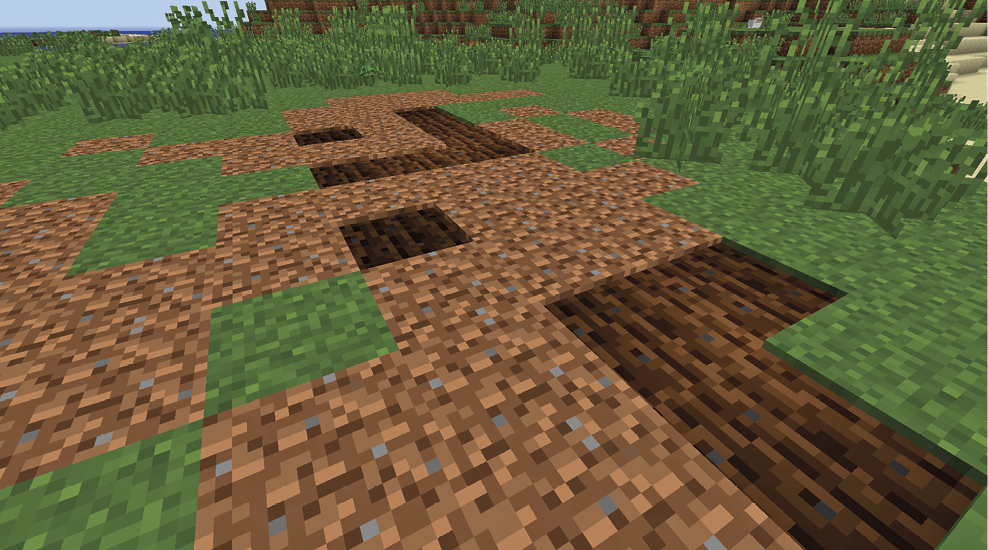
You’ve got Dirt, Seeds, and Water. Now you need to prepare the ground for planting. This is the job for the Hoe. A Wood or Stone one will work just fine, so you don’t have to use any of your precious Iron, Gold, or Diamonds unless you really want to dig instyle.
Use the Hoe on the ground to change the Dirt into tilled land (a Farmland block), ready for planting. If you look closely, you can see the blocks of tilled land nearest the water start to get darker, which means they’re getting nice and damp. You might also see them going back to normal Dirt, which means they are too far away from the water and are drying out. This also happens if you jump on your tilled land, so don’t hop around in yourgarden.
Planting
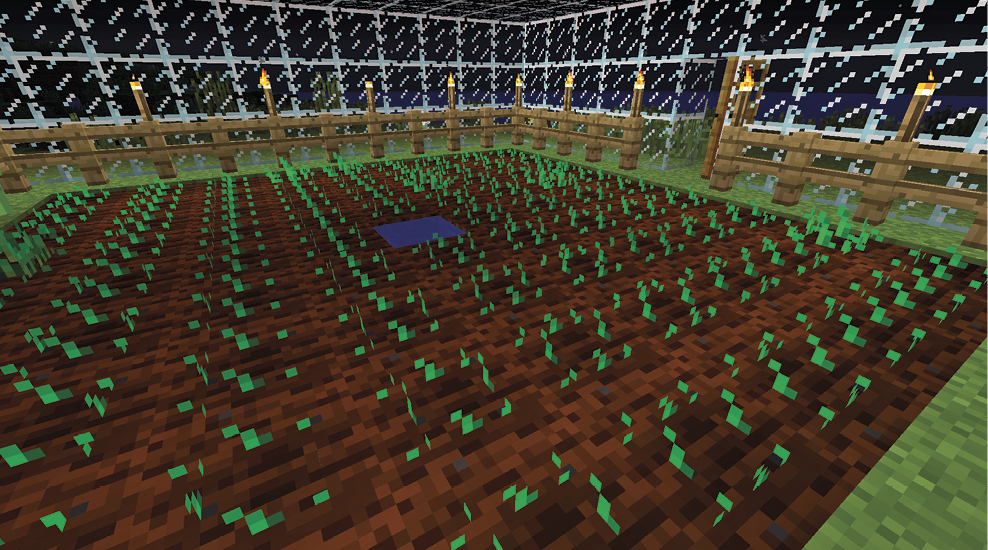
Now that the ground is prepared, use your Seeds (Potatoes, Carrots, and so forth) on the Farmland. Look! Tiny green shoots appear. That lets you know the plants are growing. Give them time and light, and soon they’ll be ready forharvest.
Light makes your plants grow and ripen. Sunlight works fine, but Torches are a great addition because they keep monsters from spawning in your garden. They also let the plants keep growing at night. You can even make an underground farm using Torches! If you don’t have any Torches handy, be sure to sleep as soon as it starts getting dark. The plants don’t grow if there is no light, and sleeping prevents monsters from spawning and trampling your nicefarm.
Protecting Your Crop
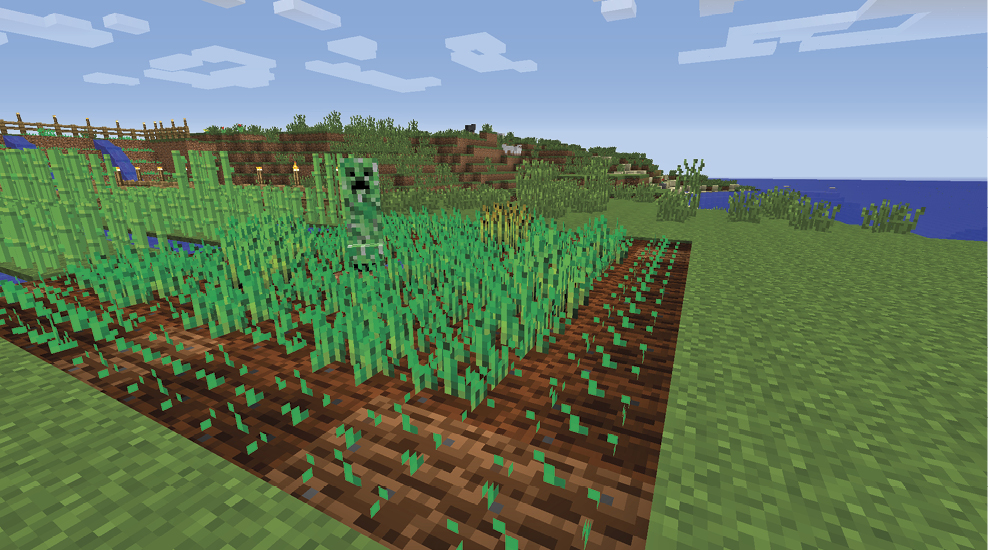
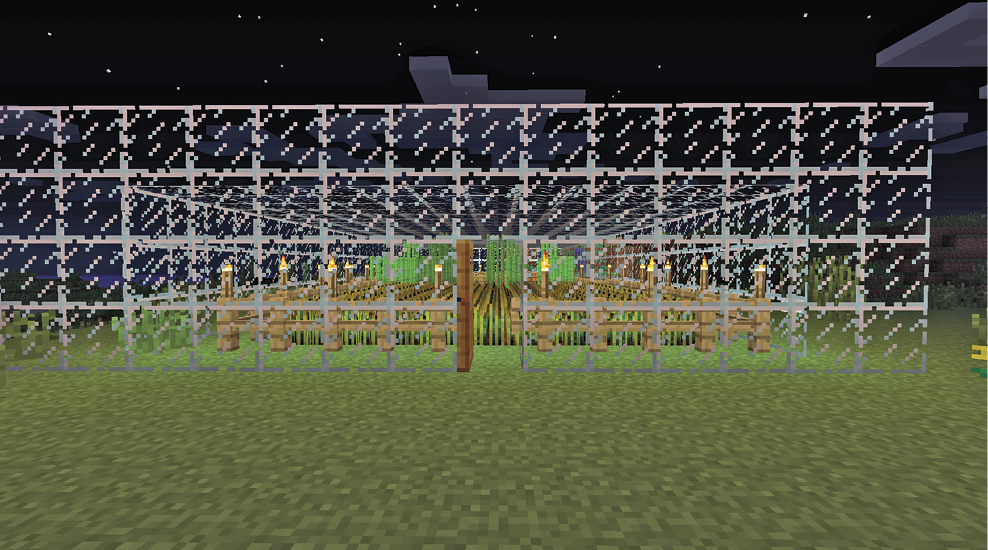
Creepers are a big threat to growing plants. If they explode, they’ll blow up hours of hard work in a single moment, destroying lots of Seeds in the process. Torches help keep Creepers from spawning in the middle of the garden, but they can still wander in at night unless you protect your Farmland. Fences or Stone Walls are a great way to keep the plants safe, but you can also make a complete building with a nice Glass roof to let in the light. If you want to work in the garden at night, a building can be used to protect yourself from Spiders and Skeletons. That way, you don’t have to watch your backconstantly.
Harvesting
Finally, it’s time to reap the benefits of farming. You know that Wheat is ready when it turns brown. Potatoes and Carrots poke out of the ground. Pumpkins and Melons grow fruit. Hit ripe crops to pop them out of the ground. Walk over them to collect these goodies. Use an Axe to break Pumpkins and Melons, because they’re tougher tosmash.
Often, ripe Wheat gets you more Seeds than it took to plant, but there is no guarantee. Potatoes and Carrots get you anywhere from one to four plants when harvested, and you can choose whether to eat or replant them. It’s generally a good idea to plant a new crop as you harvest the old one, so you can keep the cycle going without accidentally eating all your futureproduce.
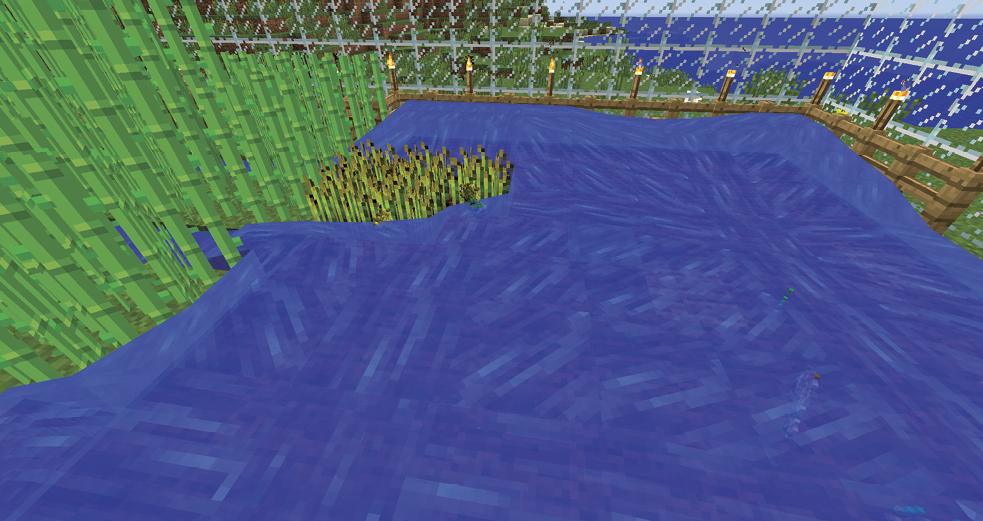
If you’ve enclosed your farm with walls, a fun trick when harvesting is to take a Bucket of Water and flood your field. Then use the Bucket to pick up the Water source block. The ripple of water uproots all your crops at once and pushes them to the walls. This makes it super easy to pick up everything at once. Flooding a field will always uproot Seeds, so it’s useful when everything is ripe at the same time. However, it can be annoying if some of your crops aren’t ready yet (once they get uprooted, they lose any progress they made). Make sure to let everything fully ripen to get the greatest benefit from this method. If only half your field is ready, either wait longer or pick the ripened crops by hand.