
The Sims 4 Guide Living the Sim Life
Introduction
The previous two chapters covered getting started with The Sims 4. Finally, after creating a Sim and then a household, you are ready to let your Sim start living his or her life—with your guidance of course. A lot of factors affect Sims. Your mission is to help your Sims achieve their goals and live their life to pursue happiness—or whatever they may desire. This is complicated, but don’t worry. This chapter has been organized to help you understand what your Sims need and how to help them get it.
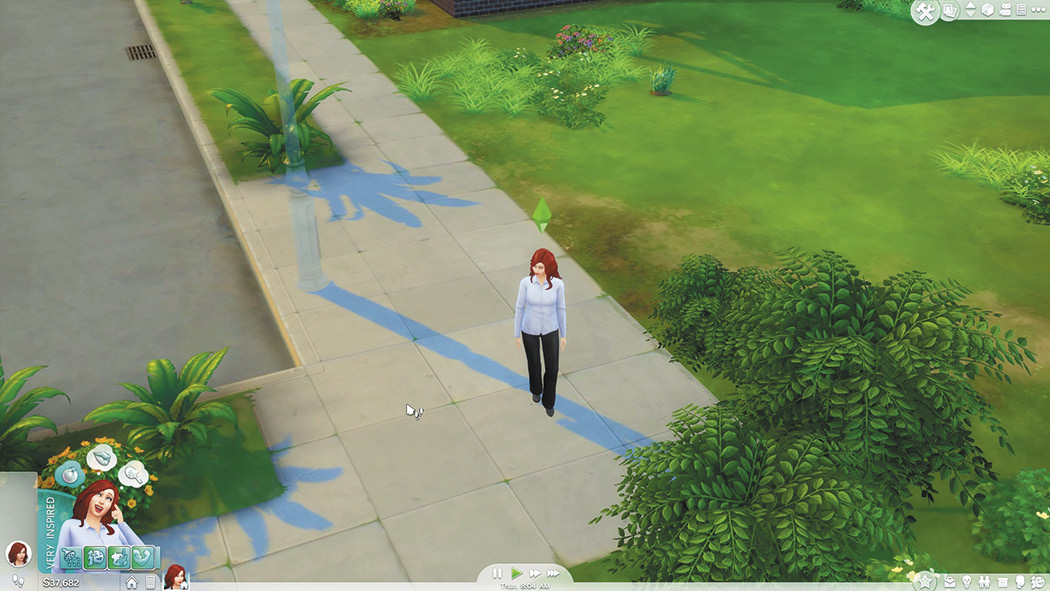
Living their lives is what Sims live for.
Learning the Lingo
The Sims 4 has a lot of terms that may be unfamiliar to new players. Veteran players of previous The Sims games will need to learn some new ones as well. This section will bring you up to speed on terms used in the game and in the guide.
- Aspirations: If you have played previous The Sims games, this is similar to a Lifetime Wish. However, Aspirations are so much more. Think of an Aspiration as a long-term goal. Each Sim can have one Aspiration at a time and they provide a series of steps or requirements to achieve the Aspiration and receive a reward. You can change Aspirations for your Sims at any time.
- Traits: Traits were discussed in greater detail already in Make a New You. You select these attributes for your Sim during the creation process. These do not change during a Sim’s life. However, as Sims age and complete Aspirations and then choose new Aspirations, they can gain additional traits. New traits can also be purchased at the Rewards Store. Traits affect how Sims interact with other Sims and their environment and can also affect a Sim’s needs.
- Whims: If you played earlier versions of The Sims, you might remember wishes. Whims have replaced wishes in The Sims 4. Whims are short-term goals. A Sim can have up to three whims at a time. As you complete a whim, your Sim is rewarded with Satisfaction Points. Whims also serve as a guide. They prompt you to do things that will help your Sim. Whims are based on your Sim’s traits, current emotional state, skills, and the Sim’s situation.
- Satisfaction Points: As you complete whims, Aspirations, and other activities, your Sim receives Satisfaction Points. Spend these at the Rewards Store for potions and additional traits for your Sim.
- Moodlets: Moodlets are factors that affect your Sim’s emotional state. They can be positive, negative, or neutral. Most moodlets have a timer showing how long they will affect your Sim. Moodlets are caused by interactions with other Sims, your Sim’s actions, the environment, and the state of your Sim’s needs. Each moodlet is associated with an emotion and some, such as Good Moodlets, will bolster moodlets of other emotions.
- Emotions: In the past, Sims had basic emotions or moods and the player’s goal to was keep Sims happy. The Sims 4 added emotions. These reflect the cumulative assortment of moodlets your Sim has collected recently. So while you may have a variety of different moodlets, your Sim’s current emotion is based on the stronger moodlets or the combination of similar moodlets. It is important to monitor your Sim’s emotions because they affect a Sim’s abilities. Emotions can even allow your Sim to do specific actions that are only available when in a related emotional state.
- Needs: As in the past, Sims have individual needs: Bladder, Hunger, Hygiene, Social, Fun, and Energy. These needs are affected by environment, activities, and relationships. While emotions and moodlets usually take center stage for your Sim, don’t neglect your Sim’s needs. If you don’t take care of their needs, your Sims will get negative moodlets that then affect their emotions, which further affects their abilities and actions.
- Socials: Socials are the interactions that take place between Sims. There are literally hundreds of socials. Not all socials are available right away and at all times. Some are unlocked by developing skills or by being in a specific emotional state. Others are activated by the traits you give your Sim. Use socials to direct a conversation and engage other Sims, paying attention to their likes and dislikes so you can build better relationships. Socials are an important way to get to know other Sims, make friends, and even find the love of your Sim’s life. It is also the way you can find out about other Sims and learn their story.
- Skills: Sims can learn a variety of talents such as Programming, Cooking, and Fitness. These skills are often related to careers or hobbies. Certain activities increase your skill ranking. As you develop skills, new actions and abilities become available.
- Careers: Maintaining a household costs money. Your Sims need an income so they can pay the bills, buy food, and purchase items for their household. Careers provide such an income. Your Sims can choose from a variety of careers, and each career has 10 levels. A Sim can be an entertainer, a cook, a criminal, or even a secret agent or an astronaut. Sims can also make money by using their skills—entertaining other Sims, writing books, and so forth.