
Civilization V: Brave New World Guide Single Player
Pursuit of Victory
The New Age of War
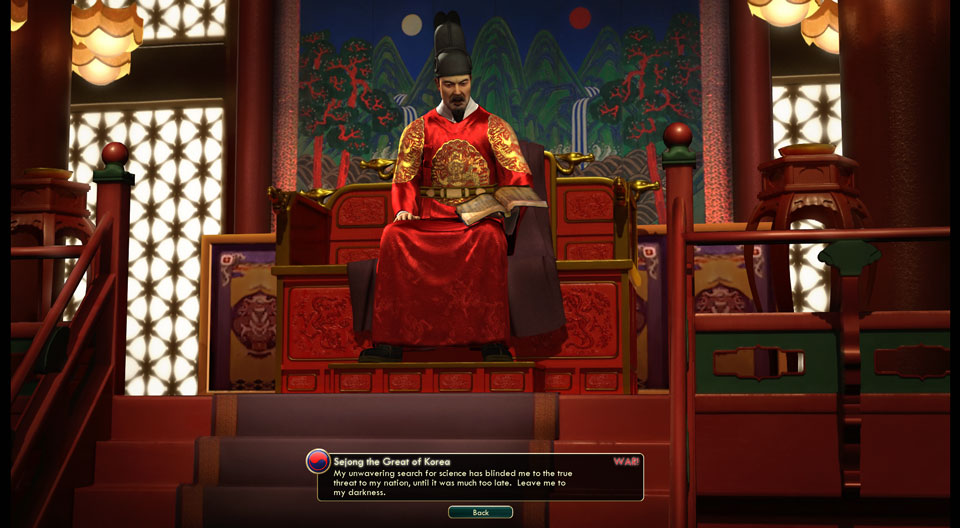
Domination Victories aren't like they used to be. Your competitors have more tools to use against you outside of warfare, and victory itself has a new win condition. Instead of knocking people out of their Capitals in the short term, you now have to take and hold all Capitals to secure Domination. That's a tougher task, but it's still doable.
Because this forces militaristic players to take and hold more of their territory, it's sensible to keep a higher number of skilled garrison units around. Instead of grabbing the best cities and ending the war, it's now somewhat safer to eradicate each foe. You spend more time taking out the last of their cities, but it prevents that faction from having continued political power. It also removes their chance of returning to reclaim their Capital city.
When you're being an aggressive power, you need to shut down every one's opportunities for Trade. That's their key to wealth, and rich empires can field more units, buy defenses, and be a royal pain to squash.
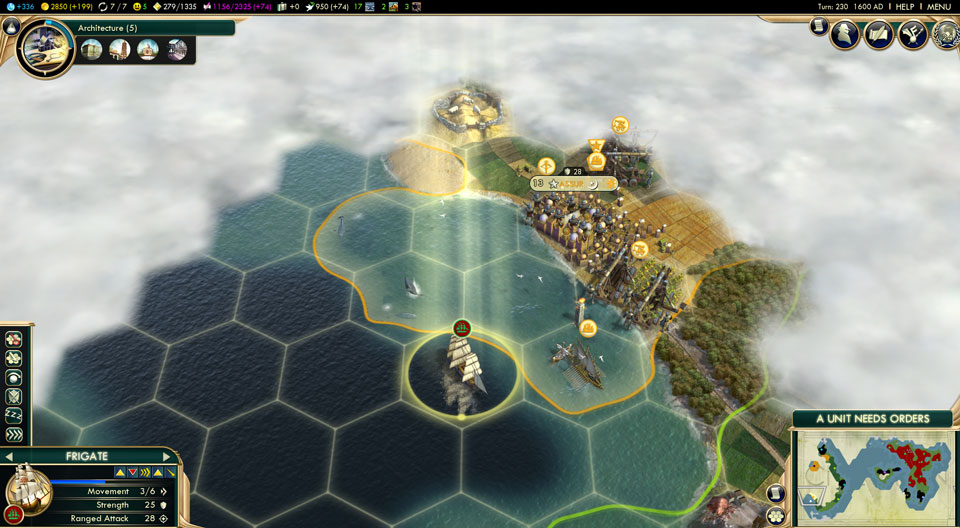
Keep your enemies poor by attacking trade units and sieging important trade cities as soon as possible. During times of peace, look around the world until your units find Caravans or Cargo Ships. See where they're traveling so that you know the routes and their destinations. This tells you where to raid and where to siege to hurt your enemies the most. Trade cities are often quite wealthy because traders get extra value from buildings like Markets and Banks. The Gold output from trade cities is high enough that you dramatically hurt an opponent's bottom line by stealing their trade city. If you're lucky, you can push the other empire into the red with one fell swoop, limiting their ability to sustain this war and any future wars as well.
Indeed, they'll be left deciding whether to retrain their trade units or pump out a larger military. Either way, you've hurt them! If they hold off on trade units, they're losing money every turn. If they prioritize trade, you have fewer units to fight off. Maybe they'll buy their replacements, but now their coffers are bleeding and you didn't even have to attack anything new.
Besides preying on traders, you don't have to learn too many new tricks. Steal Great Works and Artifacts from your enemies to boost your Culture; bring those back to your Capital, or to another safe city where you can get the most Culture possible. Have that be the primary city for buildings that add percentages to your Culture so you get the most Culture possible.
Becoming a Financial Empire
Gold itself has the same function that it always had in Civilization V, but the rate at which you gain wealth is different. Nations that ignore Trade Routes may find themselves poorer than before (even though there were no International Trade Routes initially). The diminished Happiness potential for certain buildings requires more of them to be constructed, and military support costs are high unless you take Policies to combat that.
On the flipside, nations that engage in heavy trade will find themselves rich beyond their wildest dreams. You reach a point where cities can purchase many of the buildings that they need, and it feels inexpensive to do so. This frees you to work on Projects, Wonders, and units.
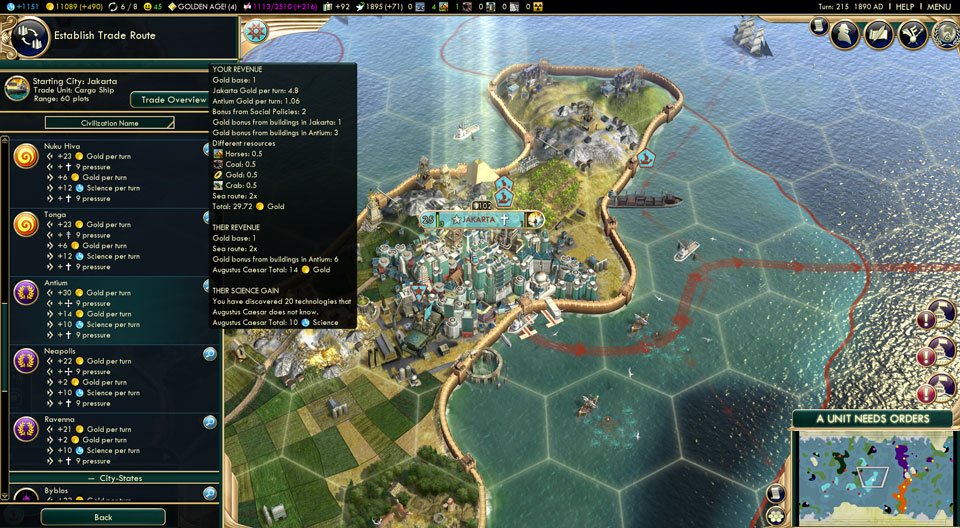
Connect your empire via water or land for a baseline amount of money per turn. Then decide if your goal is to trade for maximum value or whether you're willing to lose some money so that your rivals don't benefit. Trading with City-States is harmless. You won't make them more powerful, but you rarely get as much benefit from those Trade Routes.
For maximum profit, send International Trade Routes into major foreign cities. For safer profit, deal with City-States. For infrastructure, use your routes internally, though this makes you no money at all.
If you're on the fence, let Science decide for you. A nation that's on top of the research game won't get any bonus Science from their Trade Routes. Instead, other people are likely to get a moderate bump in their Science by trading with the knowledgeable civilization. By the same token, it's wise to trade with the most scientific nations so that your routes generate Gold and Science.
Hordes of Great People
Great People were always a large part of the game, and now there are even more of them to work with. The inclusion of Great Musicians and Great Writers is important even for non-Culture players. Great Writers don't need to produce Great Works of Writing if you're disinterested in Tourism. Instead, think about having them write Political Treatises for instant Culture (and, thus, more Policies for your nation).
Do not ignore the various guilds even if you are trying to win outside of the Culture game. For very little investment of time and money, your city can create powerful people. Great Artists are amazing too, and they still can be used for instant Golden Ages.
Only Great Musicians are somewhat locked into the Culture war. They're good for long-term Tourism or for sudden bursts of Tourism against a specific nation. If you're not a Culture player, this has only tepid value: Use them to push your Ideology against another civilization because the Influence system and Ideologies are tied together.
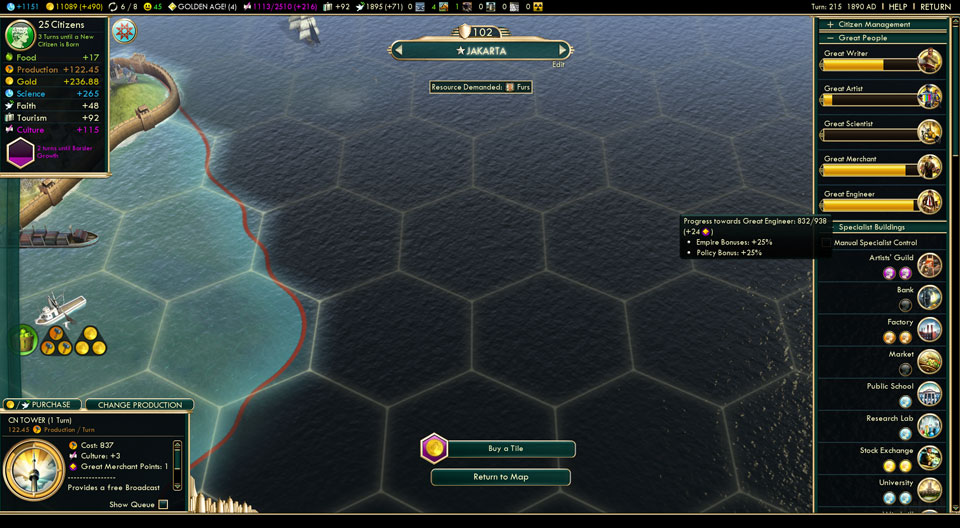
You should focus on Great Artists and Great Writers in non-Culture games, but make sure to produce all three of them when Tourism is a major goal. In fact, Great Musicians are perhaps the most powerful Culture unit of the three because they can be used for short-term gains. This ensures that they're still quite important in the end stages of the game, when individual Great Artists/Writers start to be only slightly useful.