
Assassin's Creed: Brotherhood Guide Essentials Extras (Spoiler Alert)
Plot Analysis
The main storyline of the Assassin's Creed series tells of an ancient struggle between two opposing forces: the Templars, who seek to control the world, and the Assassins, who endeavor to preserve its freedoms. Both factions have chosen to operate in secret, wrestling – both in the past and in the present – for possession of archaic artifacts and futuristic technologies that would advance their cause. Indeed, by exploiting the capacity to relive moments in history, our protagonists gain insights into events that affect the present; and so the two threads of the narrative weave together.
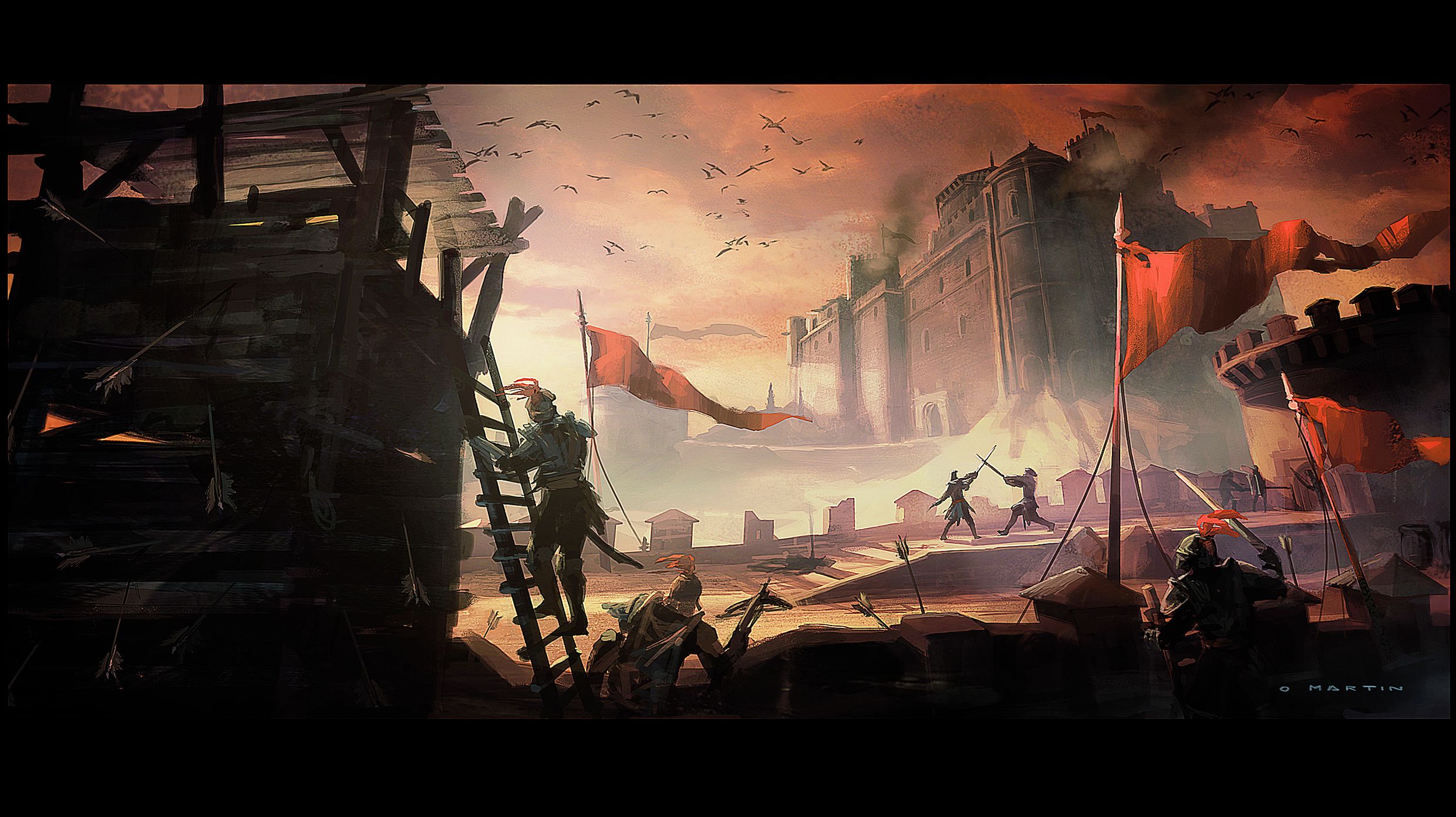
The first Assassin's Creed opened with the events of 2012, finding the dominant Templars on the brink of realizing their dream of a New World Order (to refresh your memory of previous episodes, we've prepared an extensive glossary that starts overleaf). But as each chapter fills in another piece of the jigsaw puzzle, adding new depths and revelations to the common backstory, new questions arise.
Brotherhood: Key Events
The story of Assassin's Creed Brotherhood continues precisely from the point at which Assassin's Creed II concluded. The Assassins of 2012 are now fugitives, hounded from their warehouse base by Warren Vidic and the Templar spies of Abstergo Industries. Having extracted vital information from hero Desmond Miles, the Assassins are close to finding a Piece of Eden hidden by one of his ancestors. Despite the dangers of the procedure, Desmond consents to spending more time in the Animus machine in search of clues to the artifact's location.
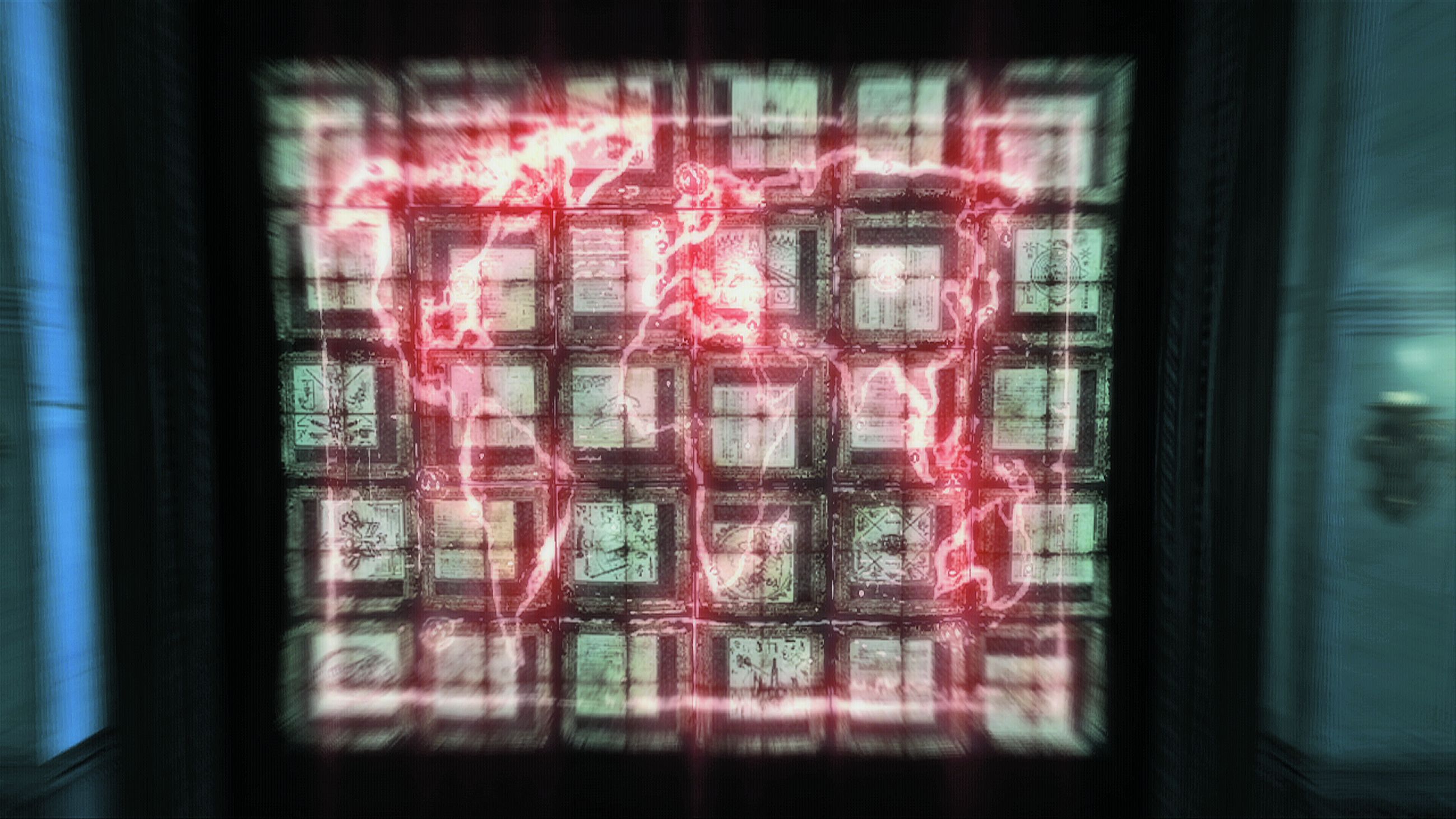
The Animus also picks up the story from the previous Memory Sequence of Renaissance Rome. Still reeling from Minerva's words and visions, Ezio Auditore reclaims the Apple and escapes the Vault under the Sistine Chapel before it seals tight. Rodrigo has vanished and the Staff is irretrievably lost to the ancient mechanisms of the chamber (Fig. 1). Returning to Monteriggioni, Ezio is berated by the other Assassins for sparing the life of the Spaniard. He wonders, wearily, if his work is finally done. His question is answered when artillery fire rains down upon the family villa during a romantic clinch with Caterina Sforza, a belligerent imposition of coitus interruptus courtesy of the armies of the defeated Pope. Cesare Borgia, the son of Rodrigo, exacts his vengeance and razes the citadel despite the best efforts of Ezio and Caterina's mercenaries (Fig. 2). Ezio escapes with his family but Mario is slain; worse, the Apple that Ezio had entrusted to his uncle's safekeeping passes to the Borgia.
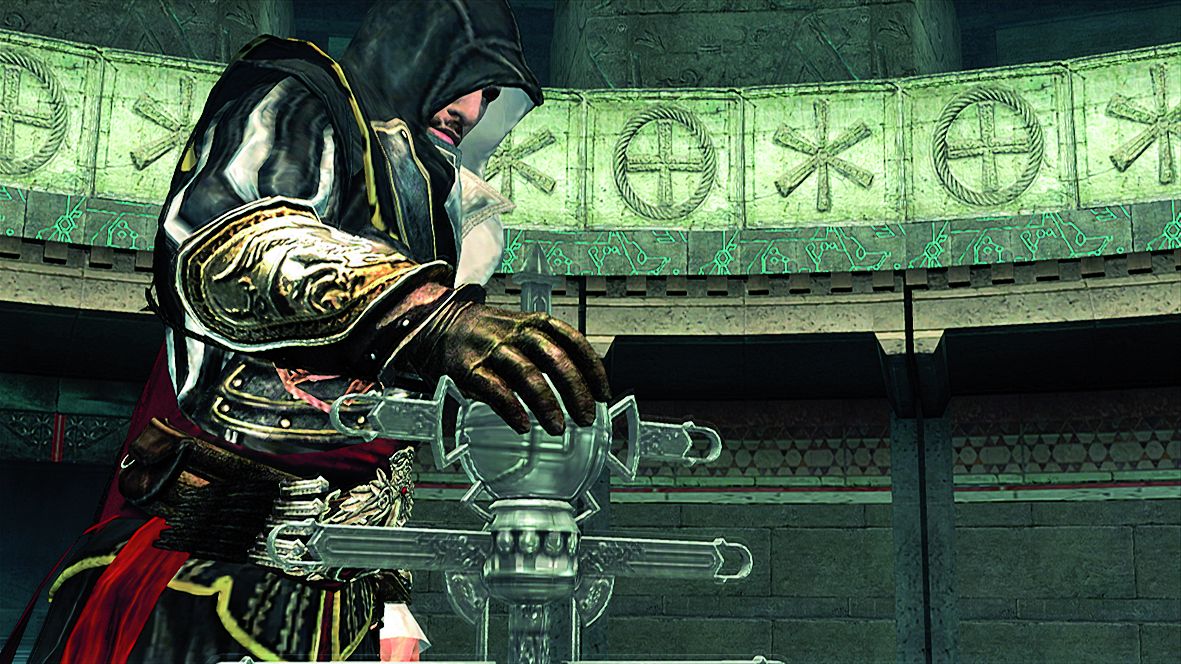
Figure 01
Outside the Animus, the modern day Assassins retrace Ezio's path to what remains of Monteriggioni (Fig. 3). Led by "ghosts" of the Bleeding Effect, Desmond and Lucy work together to uncover the stronghold's old Sanctuary room. Here, they hope, their operation will be shielded from detection by Abstergo's ubiquitous spy network of cell phone towers. Desmond's improving Eagle Vision also reveals a code – 1419, 1420, 1421 – left by Ezio in centuries past. On the assumption that Ezio must have retrieved the Apple stolen by Cesare Borgia (Fig. 4), Desmond returns to his ancestor's life via the Animus with one critical objective: to discover the location of the Piece of Eden.
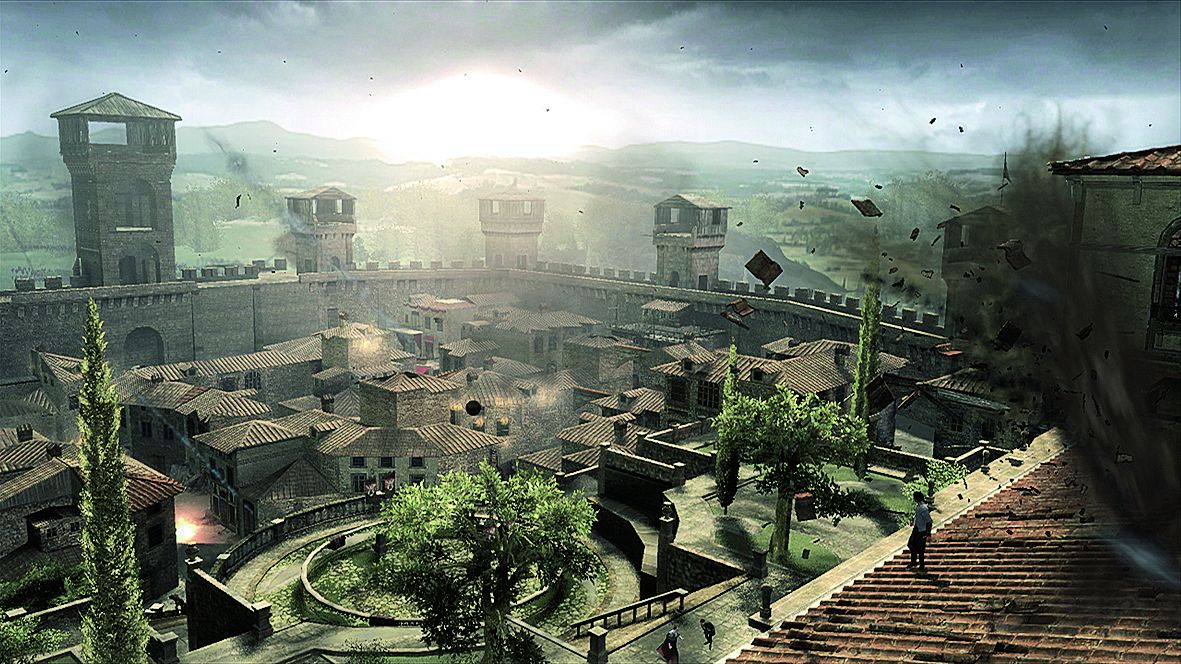
Figure 02
The main events of Assassin's Creed Brotherhood thus follow Ezio's vendetta against the Borgia. Though Rodrigo is weakened, his son Cesare plans to expand the family's influence from Rome to all city states in the nation. Ezio plots against every move, calling in favors from old friends and making new ones with a determination that sees the Apple returned to his hands (Fig. 5). With its powerful aid, he finally defeats Cesare Borgia.
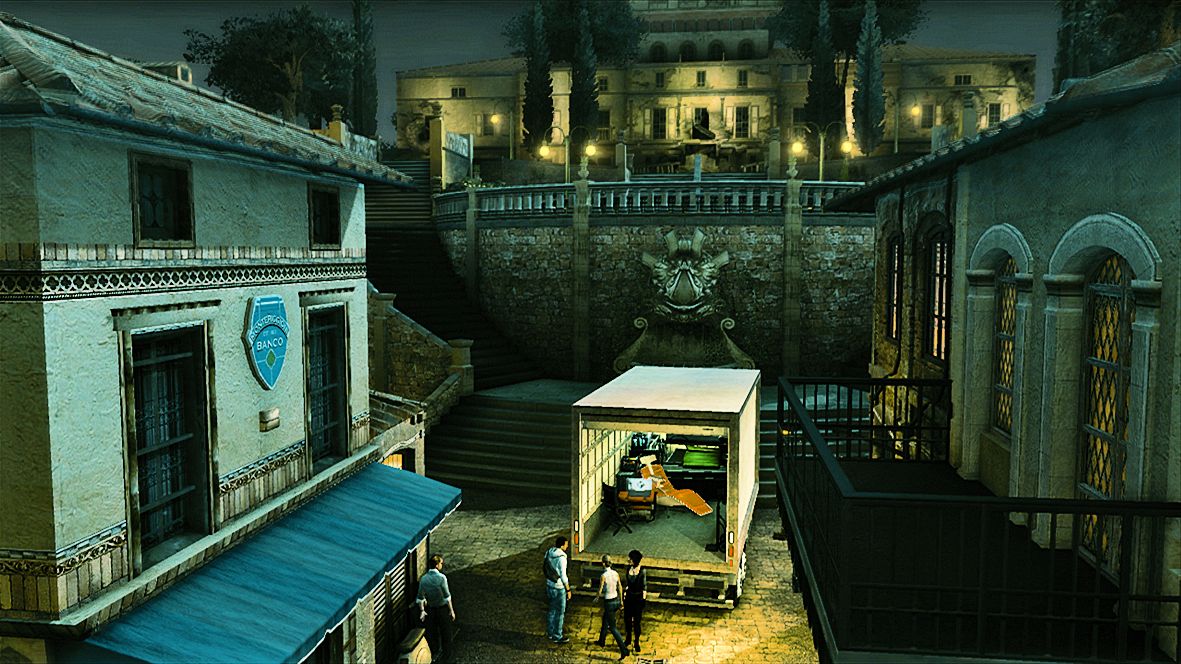
Figure 03
Ezio then hides the Apple in a Vault beneath the Colosseum. It is the final information that Desmond has been seeking, prompting the contemporary Assassins to head there in search of the hidden entrance. What they encounter turns out to be a Temple of Juno (Fig. 6), although only Desmond is able to hear the voices of Those Who Came Before.
On finding the Apple, Desmond accepts the mission entrusted to him by Minerva and Juno by requesting the location of the Temples he is supposed to uncover. The reply is unapologetically cryptic, displaying a Masonic Eye and a Phrygian Cap. But it is enough of an answer for Shaun to think he has the solution...
Before he can reveal it, though, the team suffers an unexpected betrayal. Having activated the Apple, Desmond triggers the next phase of an ancient plan: a program conceived by the First Civilization, vast in scope and ruthless in its determination. Though he fights to resist, the artifact compels Desmond to stab Lucy while the others remain helplessly frozen in time.
Stirring from unconsciousness, Desmond is vaguely aware of being manhandled into the back of a van. Voices argue over returning him to the Animus, and he is barely able to protest before the darkness descends again.
AC Glossary
Recurring themes, characters, symbols and concepts underpin the world of Assassin's Creed, creating an intriguing backdrop to the alternative histories and conspiracy theories. To refresh your memory of previous episodes or check a reference, this section covers some of the currently accepted theories and versions of events in the AC canon. The following may help to throw light on your own questions about what's really going on.
The Two Brotherhoods
Assassins
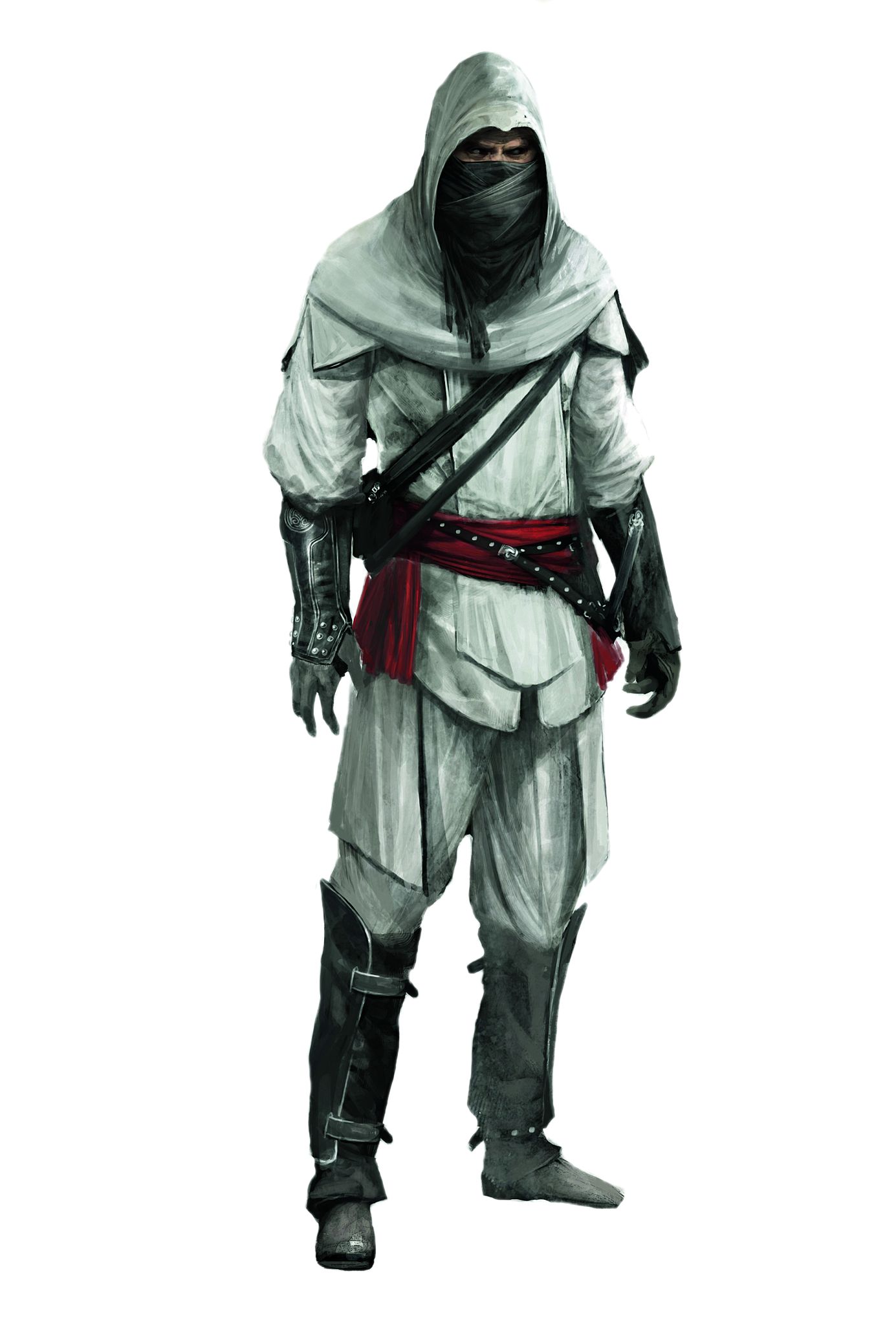
For over 2,000 years, the Assassin Order has been fighting a war. Their weapons are intelligence, stealth and surprise. They will send a lone agent against a legion; and they will halt the march of 10,000 soldiers with the death of one.
Assassins are sworn to preserve free will and to defend the freedom of the individual against abuses of power. The philosophy of the Templars is thus anathema to the Assassins, who see it as a form of enslavement: mankind as cattle, human beings reduced to mindless dependency on their overlords for the sake of stability.
When the Templars survived Altaïr's campaign and retreated to the shadows to regroup, the Assassins were also forced to adopt a more covert mode of operation. By Ezio's time, they had become every bit as secretive and invisible as the Templars. Ritual still bound the Assassin Order, and they declared their loyalty with the famous words of Hassan-i Sabbah: "Nothing is true; everything is permitted". But the modern day finds the organization under even greater pressure, seemingly adopting the cell structure of underground political resistance groups to overcome the superior tracking and surveillance that the Templars can now employ through Abstergo.
Following the revelations of The Truth, it is worth making the distinction between affiliation and bloodline when using the term "Assassin". The Assassin Order has recruited many useful individuals to the cause, all of whom are valued for their contribution. In their respective times, Shaun Hastings and Niccolò Macchiaveli earn the title of Assassin by their loyalty and membership of the faction. But when Subject 16 declares the Assassins to be "children of two worlds", he references the lineage that joins Desmond Miles, Ezio, Altaïr, and others back to Adam and the genetic union with the First Civilization. In this sense, these are the true Assassins and they demonstrate powers that ordinary humans can never hope to gain through training.
Templars
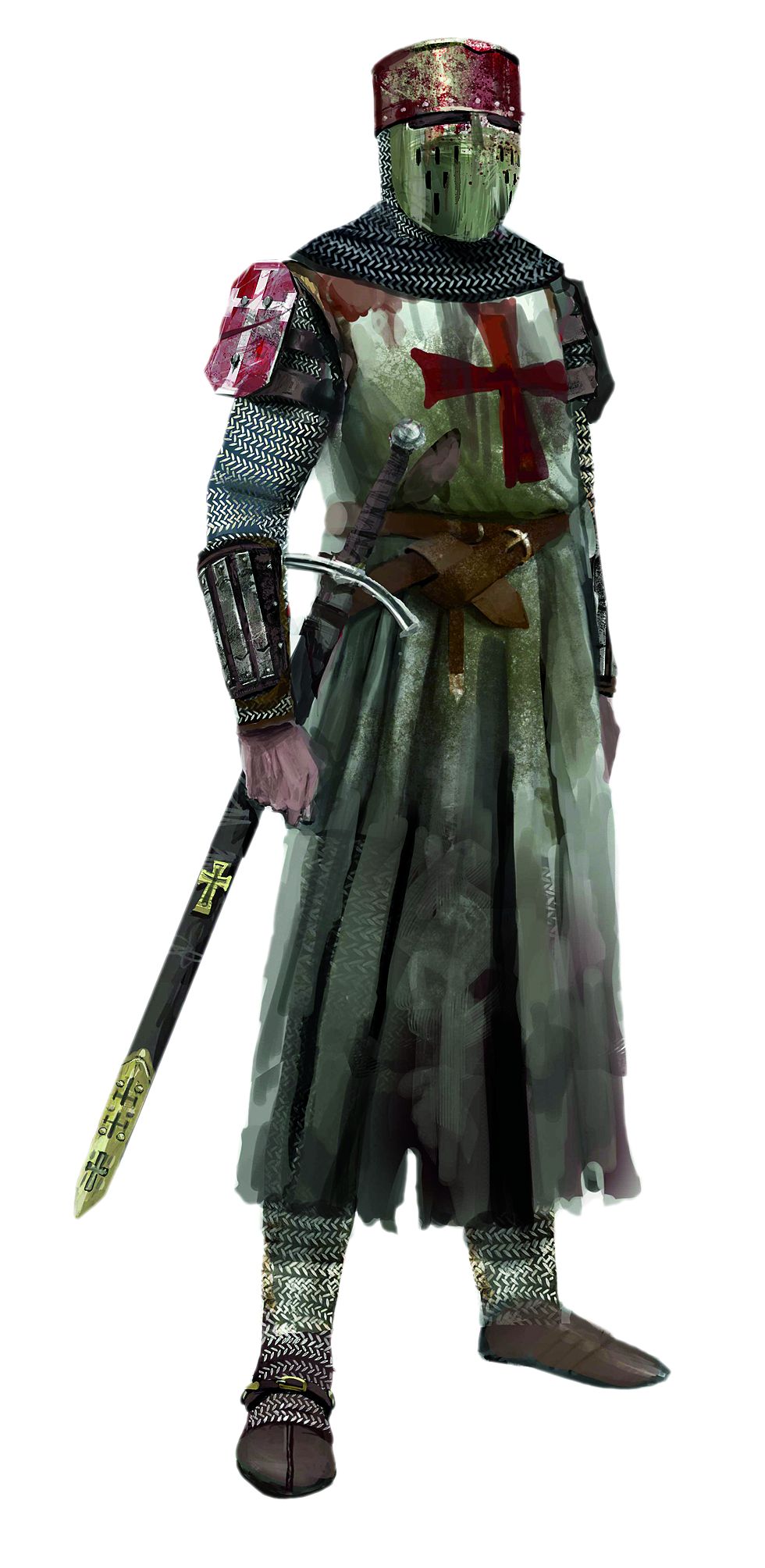
The Templar Order received papal recognition in 1129 and found fame through their military engagements in the Holy Land during the Third Crusade. But the organization is possibly much older, representing a faction that has little to do with the Roman Catholic Church. Although the order was supposedly disbanded in 1312, with rumors of secret initiation ceremonies, their dissolution merely allowed the Templars to vanish from public life and avoid further scrutiny. For centuries they continued to extend their reach from the safety of the shadows, infiltrating institutions of power and establishing others as a front for their activities. With the advantage of First Civilization technology, they have exercised an invisible hand in shaping the key events of world history. The modern Templars operate under the identity of Abstergo Industries.
The Templars share a dream of world peace, even if they intend to achieve it through methods of manipulation and control. Unfettered by religious or moral obligations, their "New World Order" will maintain global stability by crushing disobedience and dissent. They have considerable knowledge of the true path of history, having positioned key operatives throughout much of it: Pope Alexander VI, Joseph Stalin and Lee Harvey Oswald are just a few of the names on a membership list that weaves through the ages like a serpent. Furthermore, their conspiracies are inextricably linked with the covert rediscovery and exploitation of First Civilization technology. The first known attempt to seize control of the Pieces of Eden was dealt a major blow by the efforts of Altaïr, who was able to track down and assassinate several high-ranking figures in the hierarchy. Though the Templars survived, they never again underestimated the threat posed by the Assassins.
Modern day Templars
Abstergo Industries
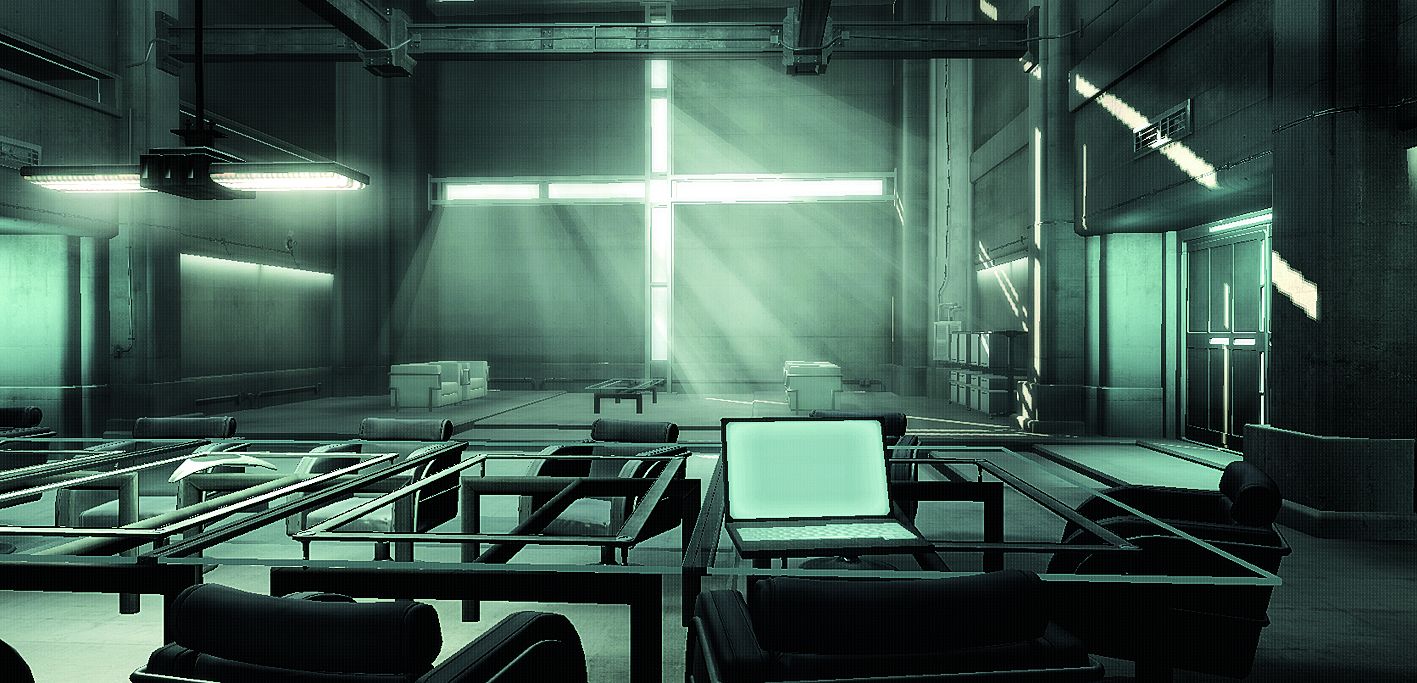
Taking its name from the Latin verb meaning to "cleanse" or "wipe away", Abstergo is the corporate modern identity of the Templar Order. Its public face in the world of commerce serves as a useful cover, facilitating the redirection of money, resources and power around the globe in the furtherance of its aims. Though supposedly concerned with the fields of medicine and pharmaceutical science, the company is active in many other areas of research. Evidence suggests Abstergo funding and support was instrumental in assisting the Manhattan Project to create the first atomic bomb. Of the current staff, Dr. Warren Vidic is known to report to CEO Alan Rikkin.
The company has publically announced that it is expanding its business with what it describes as a low-orbit telecommunications satellite. In private, it is racing to find Piece of Eden No. 3 before Desmond and the Assassins achieve the same goal. If Abstergo succeeds in using the artifact to control Earth's population from space, the planet may indeed be "cleansed". The Eye-Abstergo is set for launch on December 21st, 2012.
Warren Vidic
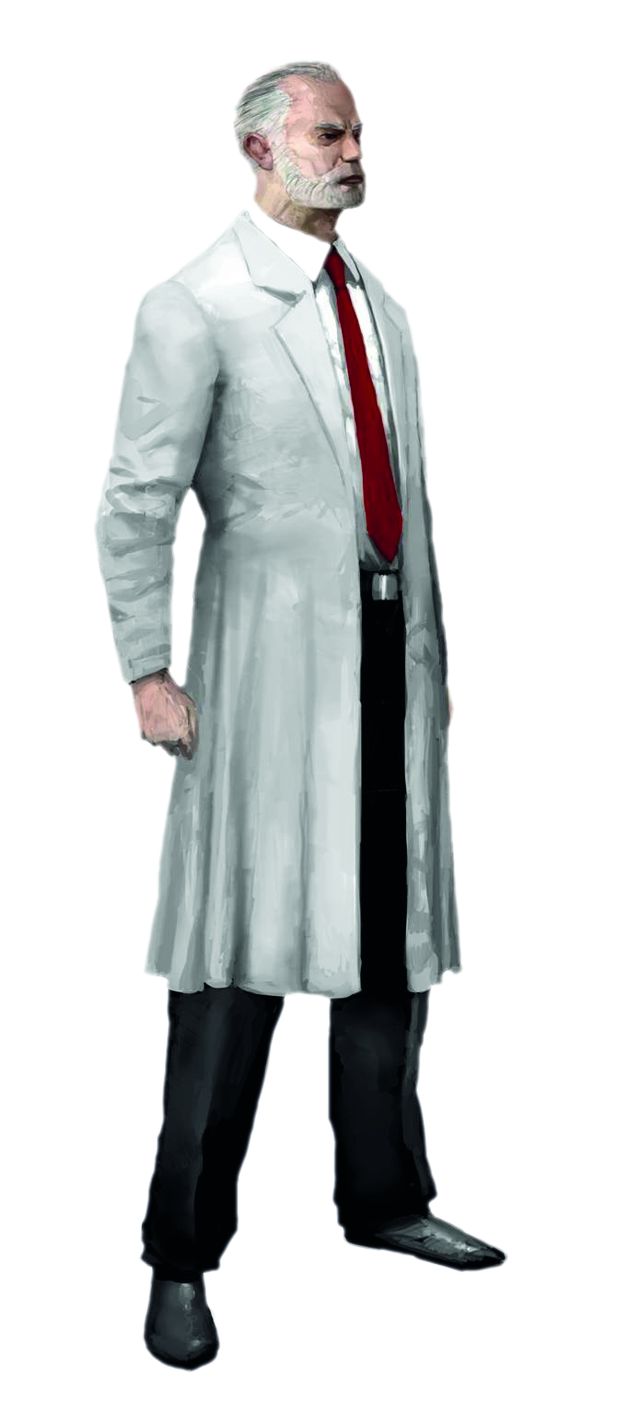
The head of research at Abstergo Industries, Dr. Warren Vidic is the man behind their research into genetic memory. Desmond strongly suspected that Vidic was only keeping him alive for as long as he was useful, and the scientist's behavior indicates an icy pragmatism. When Vidic stepped in to save Lucy from other Templars, it was so that he could employ her proven academic insights on the Animus project.
Although a Templar of some standing, Vidic reveals an irritability and short temper whenever he has to report bad news and delays to his superiors. Desmond gained a glimpse of some of them – three suited executives in the conference room at Abstergo – in a debriefing with Vidic after accessing the final Altaïr memory. But there may be even higher echelons in the organization, powerful individuals who set tasks and determine the strategies of the entire Templar Order.
2012/12/21
Among the many symbols and scrawls that Subject 16 daubed on the walls of his holding cell within Abstergo Laboratories, Desmond is able to discern the numbers "13.0.0.0.0" with his fledgling Eagle Vision. Alas, not being a scholar of ancient Mesoamerican culture, he couldn't hope to recognize this as the conclusion of the Great Cycle of the Mayan Long Count Calendar. Believers of the Mayan Prophecy hold that the completion of the 13th baktun (a unit of 144,000 days) marks the end of the world, a time of transition and possibly even Armageddon. When converted into the Gregorian calendar of Western Europe, the date translates as December 21st, 2012. This happens to be the launch date of the Eye-Abstergo telecommunications satellite, with which the Templars intend to put a Piece of Eden into orbit around the Earth. The ruthless tenacity of Abstergo's hunt for P.O.E. No. 3, or Ezio's Apple of mind control, exposes their plan for enslaving most of mankind.
Assassin's Creed Brotherhood concludes with only 72 days left to launch.
Modern day Assassins
Desmond Miles

In September 2012, a bartender was kidnapped by a pharmaceutical and science research company and subjected to several days of experimentation in a bizarre form of virtual reality. Though appearing to be just a guy off the street, a man of no importance, Desmond Miles was the direct descendent of some very significant figures in history, and it was this which interested his captors. Given the ominously clinical title of Subject 17 by the laboratory staff, Desmond became the unwilling guest of Abstergo Industries.
Abstergo wished to explore specific genetic memories relating to an artifact, a Piece of Eden, and the events that determined its fate. Abstergo's previous test subjects had also been chosen for their DNA, a bloodline that linked them to the past. With the information gleaned from the Animus, supervisor Dr. Warren Vidic hoped to locate and access the artifact in the present day.
In the first Assassin's Creed we discovered that Desmond was actually raised by a group of Assassins, though he rebelled against it. From his point of view it had been more like living in a weird commune, cut off from the world, and he evidently had trouble accepting the choices made by his parents. Running away in his teens, Desmond became a drifter and was working in a bar when the Templars tracked him down.
Desmond finally escaped from the Abstergo laboratory with the help of Lucy Stillman, who introduced him to colleagues in the Assassin Order. Even after learning of the dangers, Desmond agreed to help Lucy fight back against the Templars. If a fraction of what he learned in the Animus is true, the only way to escape them is to defeat them. Nevertheless, the procedure is taking a heavy toll on Desmond's perception of reality. The Bleeding Effect is rapidly turning him into a more capable Assassin, granting powers such as Eagle Vision, but visions of the past are beginning to surface without the aid of the machine. Worse, Desmond appears to be no more than another pawn manipulated by the First Civilization – a mere beast of burden to carry the DNA stock that they stored in him and all his ancestors through hybridization, with the aim of reviving that stock in due course.
The Animus has revealed Altaïr and Ezio Auditore to be among Desmond's ancestors, but how many more Assassins will surrender their memories? How many more minds will attempt to share his consciousness?
Lucy Stillman

Lucy Stillman became involved with Abstergo Industries after her postgraduate research in cognitive neuroscience was dismissed by the mainstream academic community. Just when it seemed her scientific career was over, Abstergo took an interest in her work and she was assigned to the Animus project. Learning more than the Templars intended, she would have been killed for her knowledge if not for the intervention of Dr. Warren Vidic.
According to Lucy, that is. Some of these facts may be just a cover story, because she is also a sleeper agent recruited by the Assassins to infiltrate Abstergo. Lucy first signaled her secret allegiance to Desmond in Assassin's Creed with the hand-sign of folding a finger, a reference to the amputation that identified ancient members of the Assassin Order. From that moment, Desmond believed he could trust Lucy and was ready to follow her in escaping the laboratory. Even so, her efficient dispatching of Vidic's guards revealed an unexpected talent for combat.
Lucy and her colleagues comprise just one of several small teams working in the field. There are other Assassin groups out there, working in collusion and evidently having means of communication, though Lucy admits that their numbers are dwindling. When Vidic tracks them down to their warehouse in AC2, Lucy's team is forced to surrender another Assassin safe-house to the Templars.
On arriving at Monteriggioni, Lucy demonstrates her Assassin training by working with Desmond to find the entrance to the Sanctuary. She also follows him as he penetrates the crumbling defenses of the Colosseum Vault, though she evidently sees and hears nothing of the ancient presences who talk to Desmond throughout.
It is this which seals her fate, though the game ends uncertainly on a cliffhanger. The First Civilization cannot allow Desmond to be sidetracked from his union with Eve, the carrier of the other half of the First Civilization DNA stock and the key that Subject 16 names. Lucy is a distraction they cannot afford. So when Juno mentions the danger of the cross once again (is Lucy a Templar pawn after all, placed to win his cooperation? Or simply a human with whom Desmond is forbidden to "cross"-breed?), the brutal conclusion is delivered by the Assassin who trusted her above everyone else in the world.
Shaun Hastings

The historian of the team, Shaun was a university lecturer whose radical opinions saw him swiftly ejected from the ivory towers of academia. That same intellectual flexibility made him ideal recruiting material for the Assassins, who needed somebody to reconcile accepted historical accounts with the secret wisdom of Templar influence on world events. With his remarkable knowledge of dates, people and culture, Shaun maintains the Database for Animus users and keeps agents informed. His acquaintance with religious mysticism cracks the code of the Colosseum Vault, long before Desmond understands the puzzle. As a field operative, however, being less technical than the others often leaves Shaun with menial tasks such as driving the truck to Monteriggioni, which hasn't improved his mood since AC2.
Rebecca Crane
Rebecca's creation of the Animus 2.0 was vital for the Assassins to keep up with the discoveries of the Templars. Her resourcefulness with stolen and salvaged components has kept the team's equipment functional, and also meant that Subject 16's data cache was imported to the Animus 2.0 after an upgrade with an Abstergo memory core.
A geek and a technophile, Rebecca may occasionally come across as immature but her interest in hacking and her attention to surveillance measures has quietly helped to keep the group hidden from Templar eyes.
Subject 16
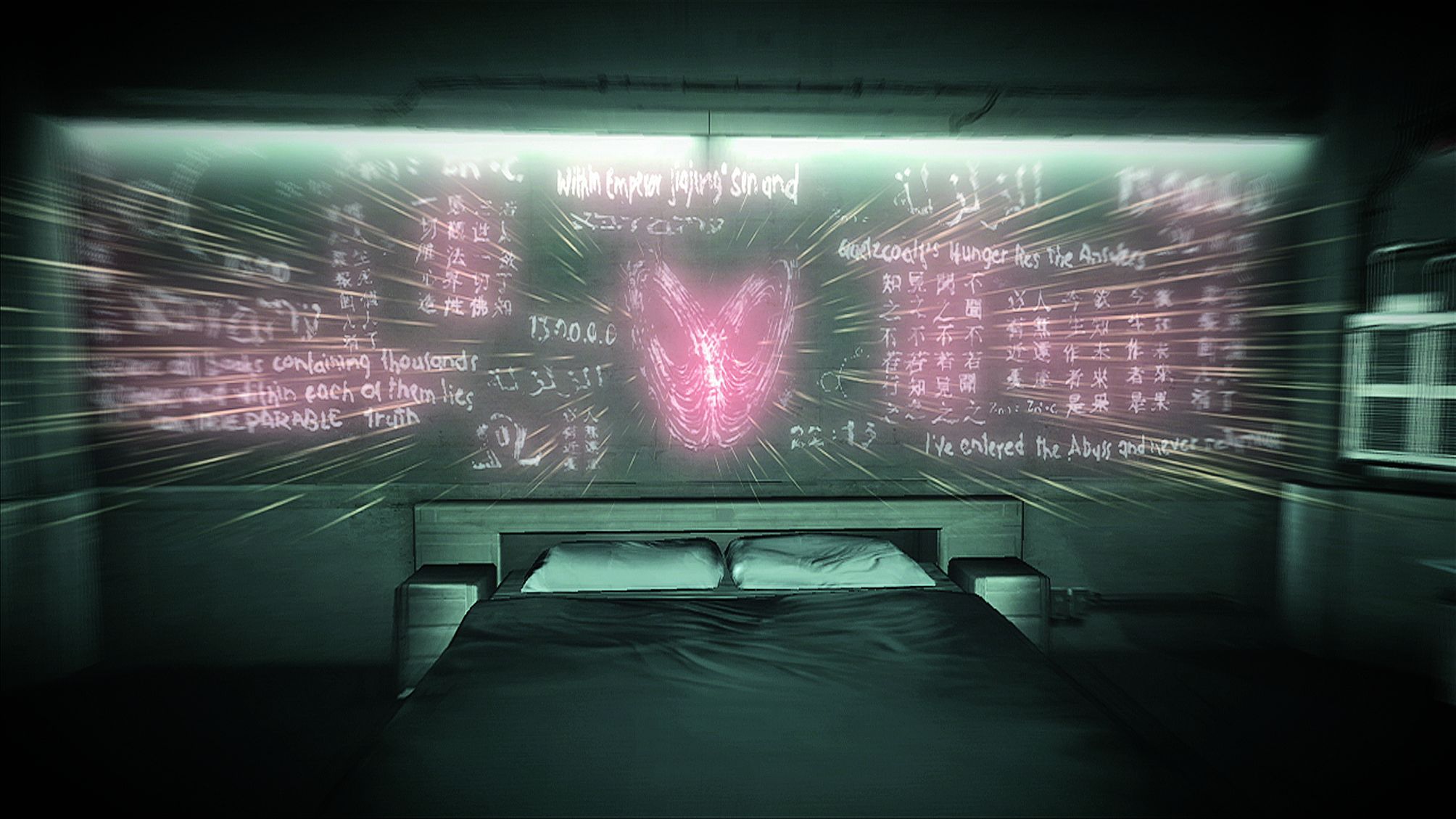
Subject 16 was an Assassin captured by Abstergo Industries and preceded Desmond Miles as their Animus test subject. This is why Desmond is also referred to by Warren Vidic as Subject 17.
The fate of Subject 16 is a stark warning of the dangers of prolonged exposure to the Animus. Having acquired the memories of many different ancestors, he began to glimpse the threads of history from many different perspectives. Briefly, this meta-consciousness enabled him to grasp the emerging patterns from a superior perspective.
But his own personality was consumed by it, lost amid the clamor of voices, and he anticipated the loss of his sanity as a result of the Bleeding Effect. Working against his captors, Subject 16 hacked into the Animus to leave clues for subsequent Assassins in the form of Glyphs. Even in committing suicide, he used his own blood to daub symbols on the walls of the Abstergo laboratory – symbols whose traces would be evident to another Assassin with Eagle Vision.
The trail of clues eventually leads Desmond to an encounter with Subject 16 himself – or what remains of him, a ghost in the machine. He has seemingly transferred some imprint of his consciousness to the Animus, an encoded intelligence that now hides in the spaces between its virtual realms. Subject 16 cryptically tells Desmond that he must find Eve in Eden, as her DNA is the key that complements Desmond's own DNA. And the fruit of their union will be a son – a savior reviving the gene stock that has long remained dormant in Desmond's hybrid lineage? Though they are related in some fashion, Desmond shows no recognition of the burnt-out fugitive, however, and fails to grasp his predictions.
Renaissance Assassins
Ezio Auditore da Firenze
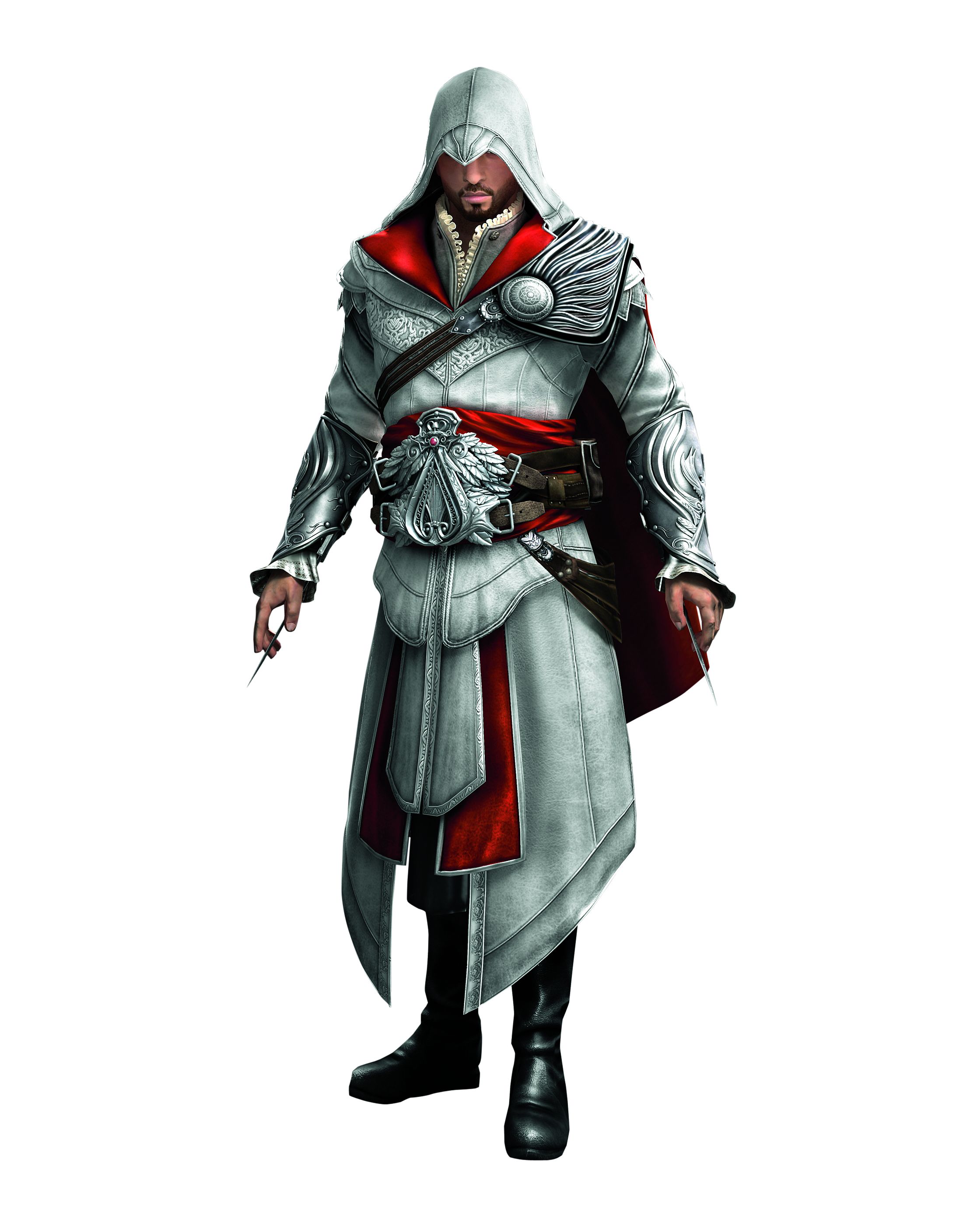
A freewheeling, insouciant 17-year-old, the young Ezio sees his father and brothers wrongly executed during the opening chapters of Assassin's Creed II. What at first seems an act of mere political corruption soon suggests something far greater at work. Ezio's father belonged to the Assassin Brotherhood, making the Auditore family natural enemies of the secretive Templar Order.
After intense training from his uncle Mario, Ezio chooses to accept his destiny and fight the Templars. He collects the scattered pages of a mysterious Codex – a book that, once restored to completion, will lead to a powerful secret. Ezio is helped in his quest by several unexpected figures who are also, it transpires, members of the Brotherhood. These include his uncle Mario, but also Leonardo da Vinci, La Volpe and Niccolò Machiavelli.
Assembled and interpreted, the Codex leads Ezio to a Vault hidden under the Vatican. It is the very same place sought by Rodrigo Borgia, sworn enemy and leader of the Templars, in his bid to secure dominion over mankind. The two men fight, each using their respective Piece of Eden: the Apple Ezio stole from Borgia, and the Papal Staff Borgia owes to his office. After beating Rodrigo to the ground, Ezio, though wounded, opts to spare his opponent's life.
Entering the Vault's chamber, Ezio meets with a holographic projection of a woman who introduces herself as Minerva. Ezio is dazzled by her visions but doesn't understand the message she delivers to him.
This is where Assassin's Creed II ends, and where Assassin's Creed Brotherhood begins. After the sacking of Monterrigioni, in which the Auditore are robbed of both the Apple and Mario's life, Ezio begins to undo the Borgia hold over Rome with the help of the Assassins.
Taking advantage of the Borgia's departure on business, Ezio swiftly exploits their absence to rescue and recruit the victims and enemies that the family had made in Rome. Each victory earns him a little more influence in the city. With the political authority of the Borgias resting on their capacity to buy friends and favors in every situation, the Auditore contrive to assassinate Cesare's primary financier. This severs a vital economic artery to the Borgia estate.
Appointed head and Mentor of the Assassins faction for his efforts, Ezio seizes the moment to enter Castel Sant'Angelo through a lightly guarded secret entrance. Inside, Cesare and Rodrigo Borgia argue over the Piece of Eden. The Pope is slain and the forsaken Lucrezia tells Ezio how to reach the Apple's hiding place first. Using just a fraction of the Apple's potential, Ezio is able to have the Borgia arrested. Nevertheless, his reluctance to exploit the artifact's power is overcome by his suspicion. Premonitions from the Apple reveal to Ezio that Cesare will flee prison and make for Viana in a bid for the recuperative safety of Spain. The Assassin acts on the information to penetrate the Navarrese defenses and complete his deadly assignment, vanquishing his Borgia nemesis.
Finally Ezio hides the Apple in a Vault somewhere beneath the Colosseum, using the "72" code of the Tetragrammaton. Making his clues to the puzzle visible through Eagle Vision, Ezio knows that only one of his kind – which will turn out to be Desmond – will be able to see it, and decipher it.
Mario Auditore
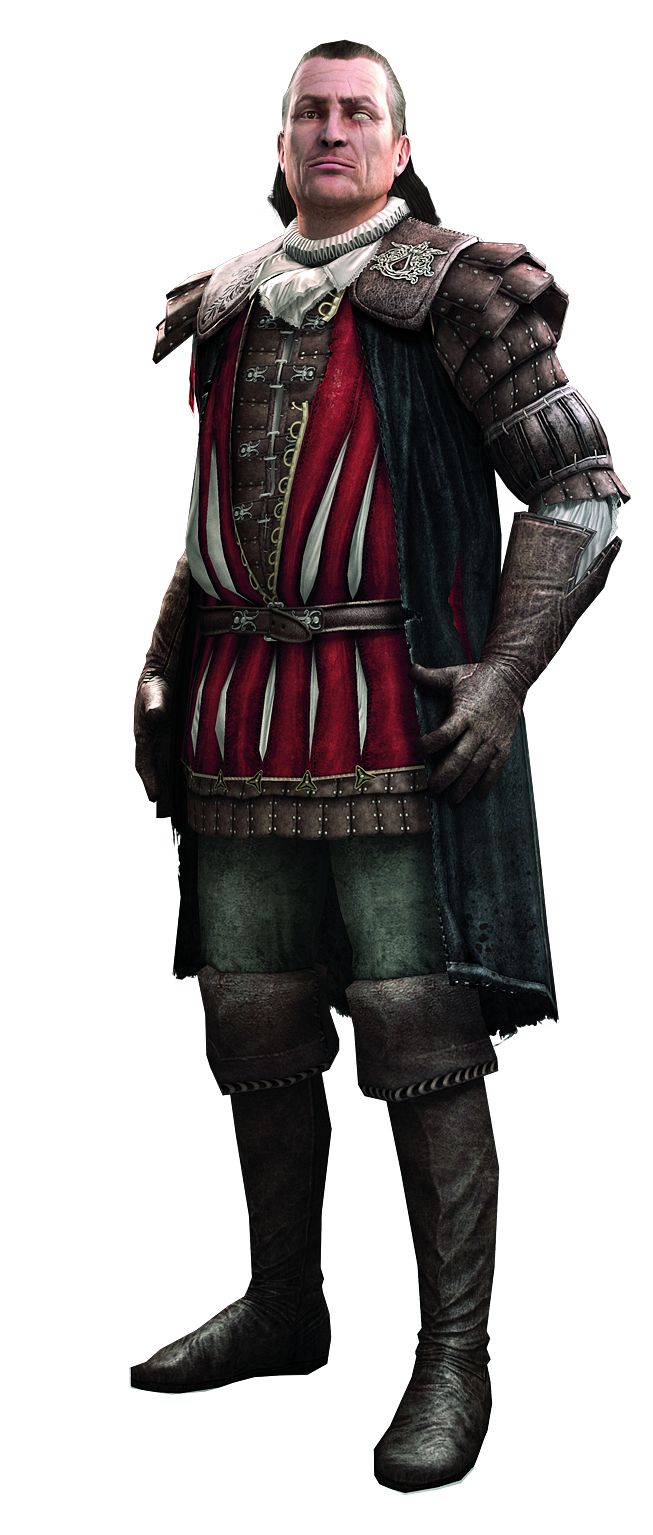
After his brother Giovanni was murdered, Mario took personal charge of Ezio's development at the beginning of AC2, teasing and coercing his last surviving nephew into an intense training regime.
Though stern and chiding at times, that steadfast avuncular nature prompted Ezio to feel confident when placing the Piece of Eden in Mario's care. Regrettably, it was too desirable a prize for even a seasoned Assassin to defend. Breaching the walls of Monteriggioni, the Borgia prove unstoppable and the Apple falls into their hands. Cesare himself delivers immediate and ruthless retribution, shooting Mario in the back as he lays wounded on the ground.
Claudia Auditore

While Ezio disappeared for months in Assassin's Creed II, avenging his father and enjoying a taste of the world, his sister Claudia stayed in Monteriggioni to care for their mother and administer the running of her uncle's estate. If Ezio had inherited their father Giovanni's blade, it seemed that Claudia had inherited his bookkeeping.
So when Cesare Borgia destroys the family retreat, Claudia decides that she will no longer be sent into hiding. She disobeys Ezio's instruction and brings her mother to Rome, where she argues for their usefulness in managing the Courtesan's Guild. Having learned about the trade while under the protection of a brothel in Florence, Claudia is perfectly placed to run the business in the interests of the Assassins.
Claudia's lineage truly demonstrates its influence after she is forced to use a blade, disposing of some unwelcome guests. When the Assassins reconvene, Claudia is offered her rightful place in the Assassin Order and takes the Oath.
Maria & Giovanni Auditore

Like his brother Mario, Giovanni was a skilled Assassin and active member of the Assassin Order but kept it hidden from his son Ezio. Working as a banker for the Medici provided a suitably dull cover profession, though Ezio later heard of the heroic service his father had once performed for them. As revealed in the Assassin's Creed: Lineage movies, Giovanni was engaged in uncovering a Templar conspiracy, not realizing he had stumbled onto the Borgia's bid for the Papacy, when Rodrigo had him executed. Ezio's mother Maria never truly recovered from the loss, retreating into silent grief for many years.
Monteriggioni
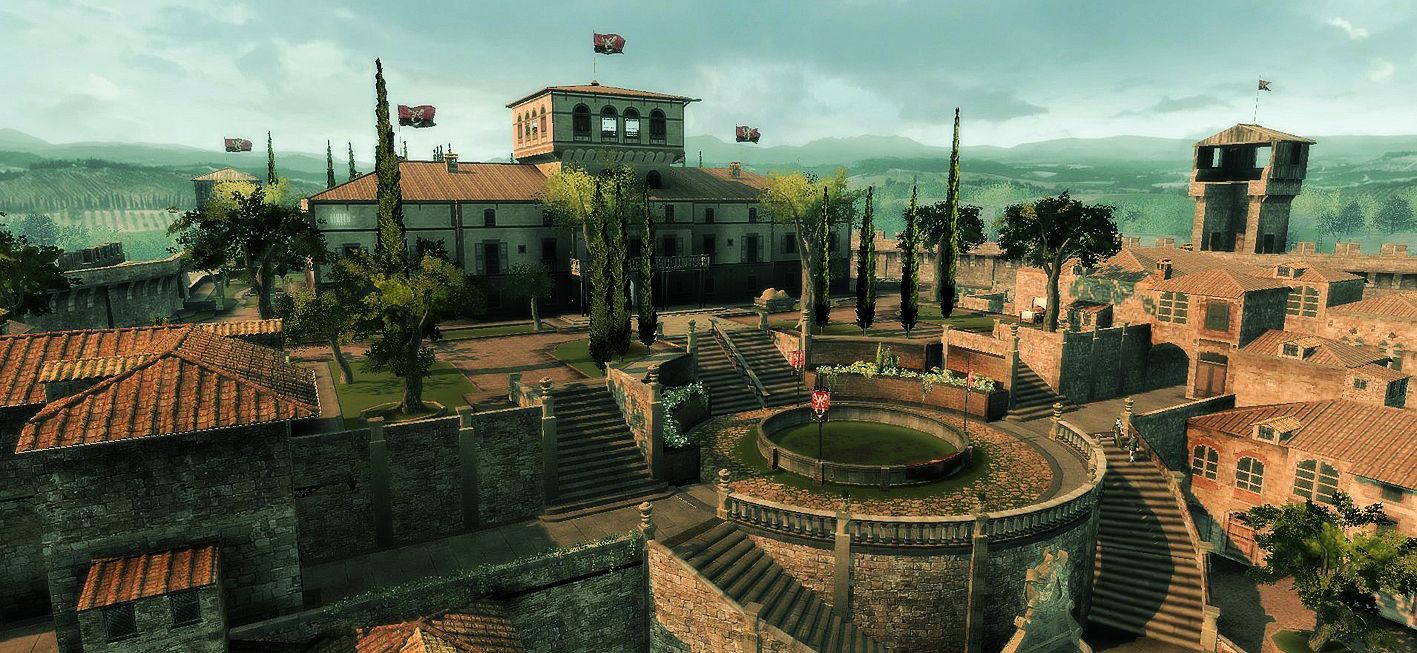
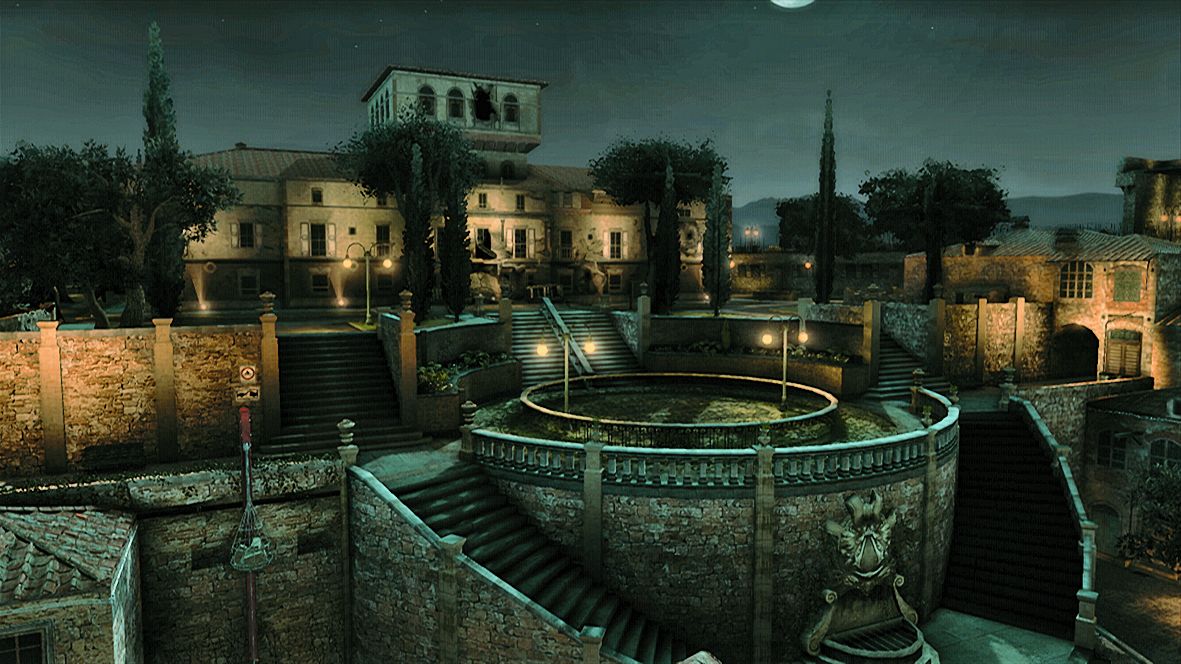
Built in 1290 and later purchased by Domenico Auditore, this fortified Tuscan retreat would serve as a base of operations for Domenico's great-grandson Ezio during the events of AC2. At the center of the town is the Auditore family villa. Mario shared with his nephew the secret of Domenico's Sanctuary room, deep below the villa, in which Ezio inherited treasures passed down from Altaïr. It is a natural choice of location when Ezio himself must bequeath a legacy to future generations of Assassins. The treasure in this instance is information, a secret message for his present-time descendent Desmond that will lead him to where the incalculably valuable Piece of Eden is hidden.
Leonardo Da Vinci
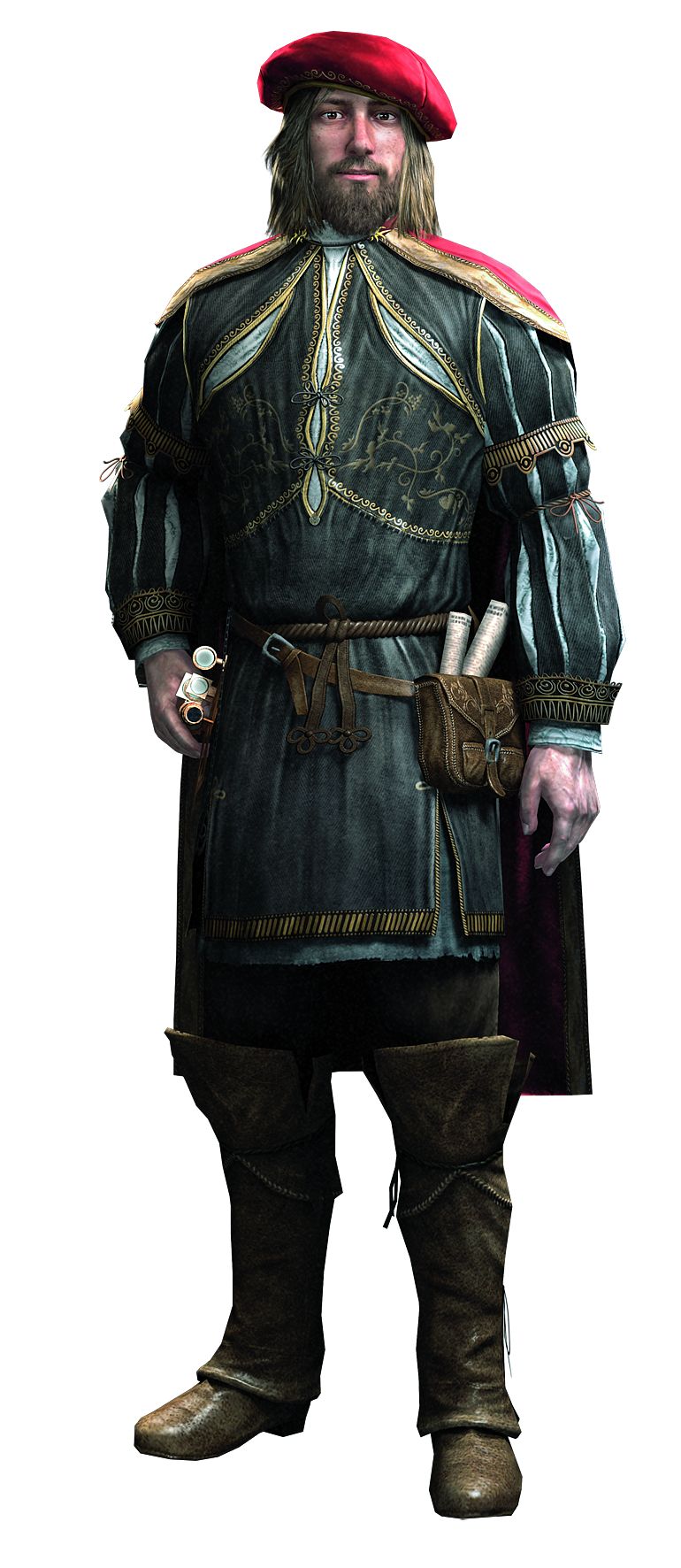
As a patron of the arts, Maria Auditore first introduces Leonardo to her son by describing the artist as a painter. Over the next few years, while Leonardo worked on his flying machine, Ezio struggled to find any other art or science in which the renowned polymath and genius could not excel. Leonardo aids Ezio by deciphering the pages of the Codex, sometimes adapting the blueprint with specifications of his own.
Ezio is eventually reunited with Leonardo after a concerted attempt to remove the Borgia stranglehold on Rome. The inventor's life had only been spared in past years so that he might construct devastating war machines for Cesare's armies. Leonardo also reveals that he can, purely from memory, reconstruct and improve the Codex inventions destroyed at Monteriggioni.
Niccolò Machiavelli
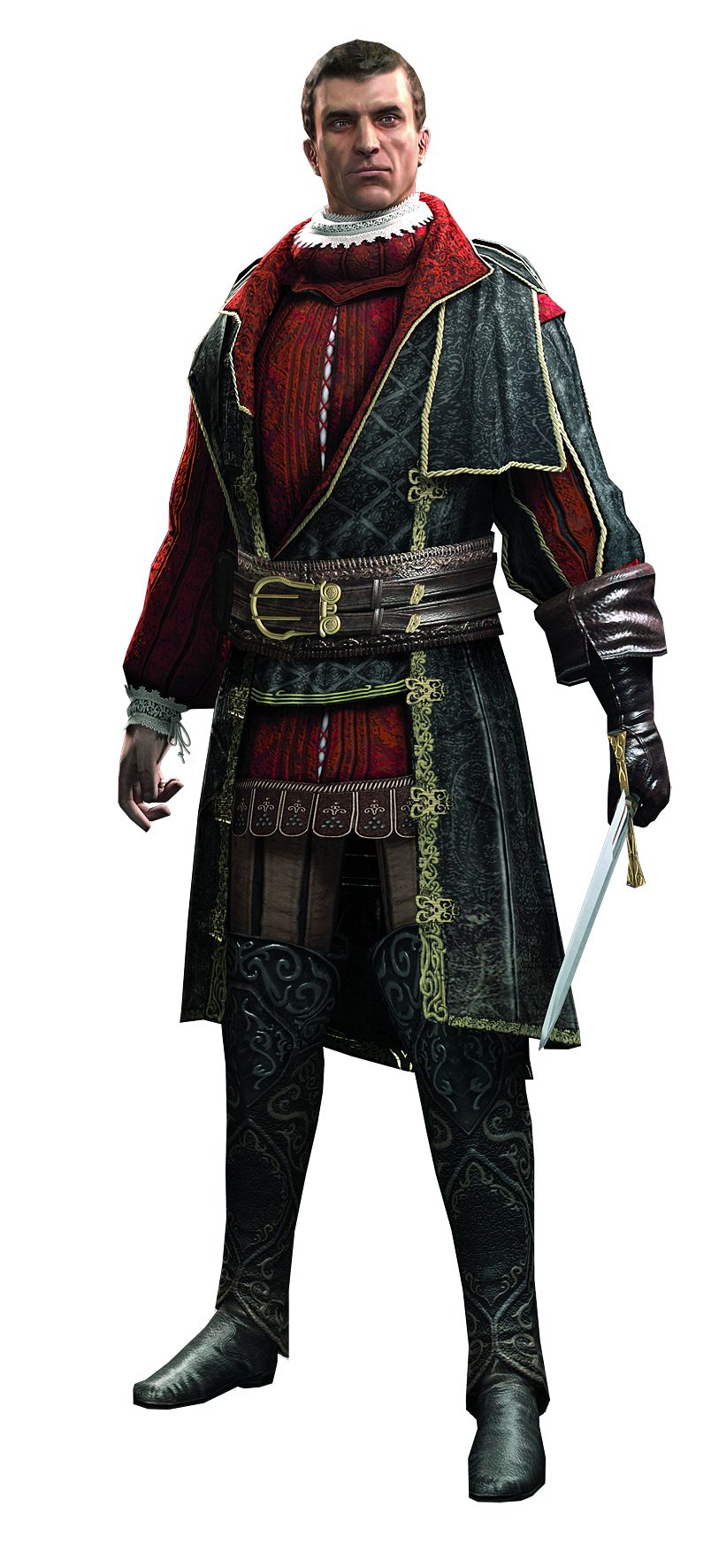
Born to a celebrated Florentine family, Niccolò was destined for a role in politics from an early age. The Machiavelli had already done much to further the cause of the Assassins in Italy, always striving towards a free and fair society by maintaining a vigilant watch over those who made and enforced the laws.
Machiavelli teaches Ezio the value of distancing oneself from emotions at a time when Auditore is greatly burdened by them. Frequently challenging the Assassin's observations and assumptions, Machiavelli draws attention to small details that prompt Ezio to consider a different perspective.
When Ezio is elected head and Mentor of the Assassin Order, he uses the opportunity to affirm his faith in Machiavelli. In turn, Machiavelli pledges to write a book about Ezio.
La Volpe
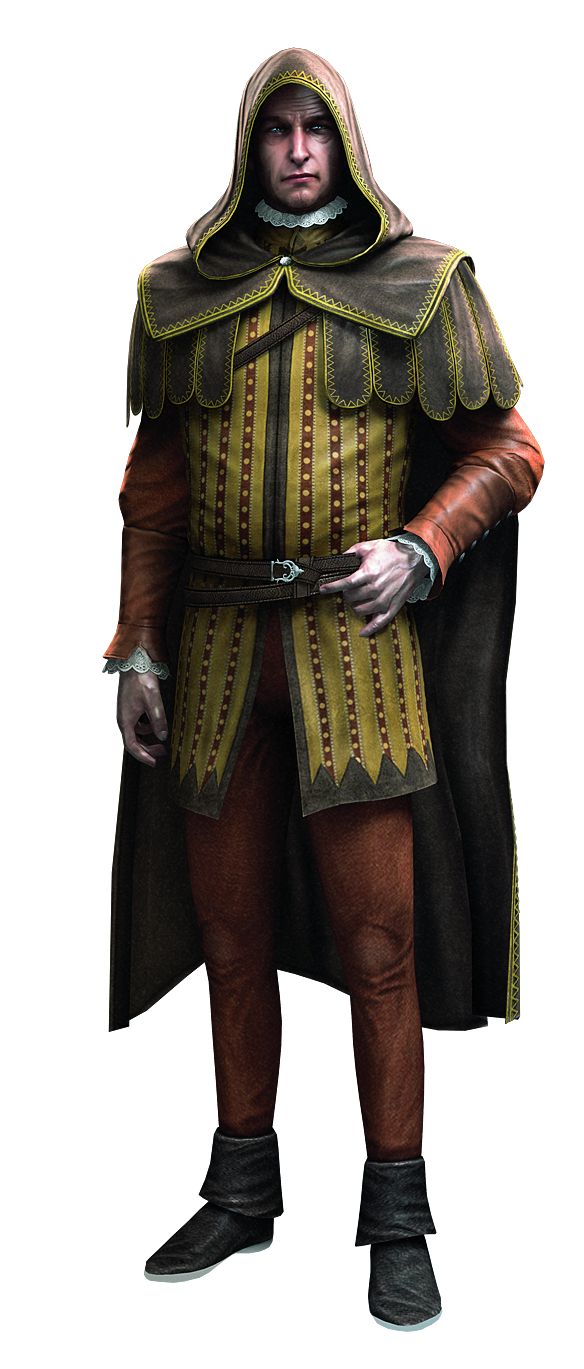
Few know La Volpe by his real name, Gilberto, and fewer still would recognize him in a crowd or hear him running over the rooftops above. But those who live on the streets often believe they have glimpsed him, embellishing the myths of his speed and daring. The head of the Florentine Thieves' Guild in AC2, "The Fox" tested the younger Ezio's free-running against one of his own pickpockets and then revealed to him the mechanism for entering secret passageways around the city.
Acknowledging his other position on the council of Assassins, La Volpe was among those who accepted Ezio as the Prophet and served witness to his swearing of the Oath. He later commends Auditore as a Mentor of the Assassin Order.
Bartolomeo D'Alviano
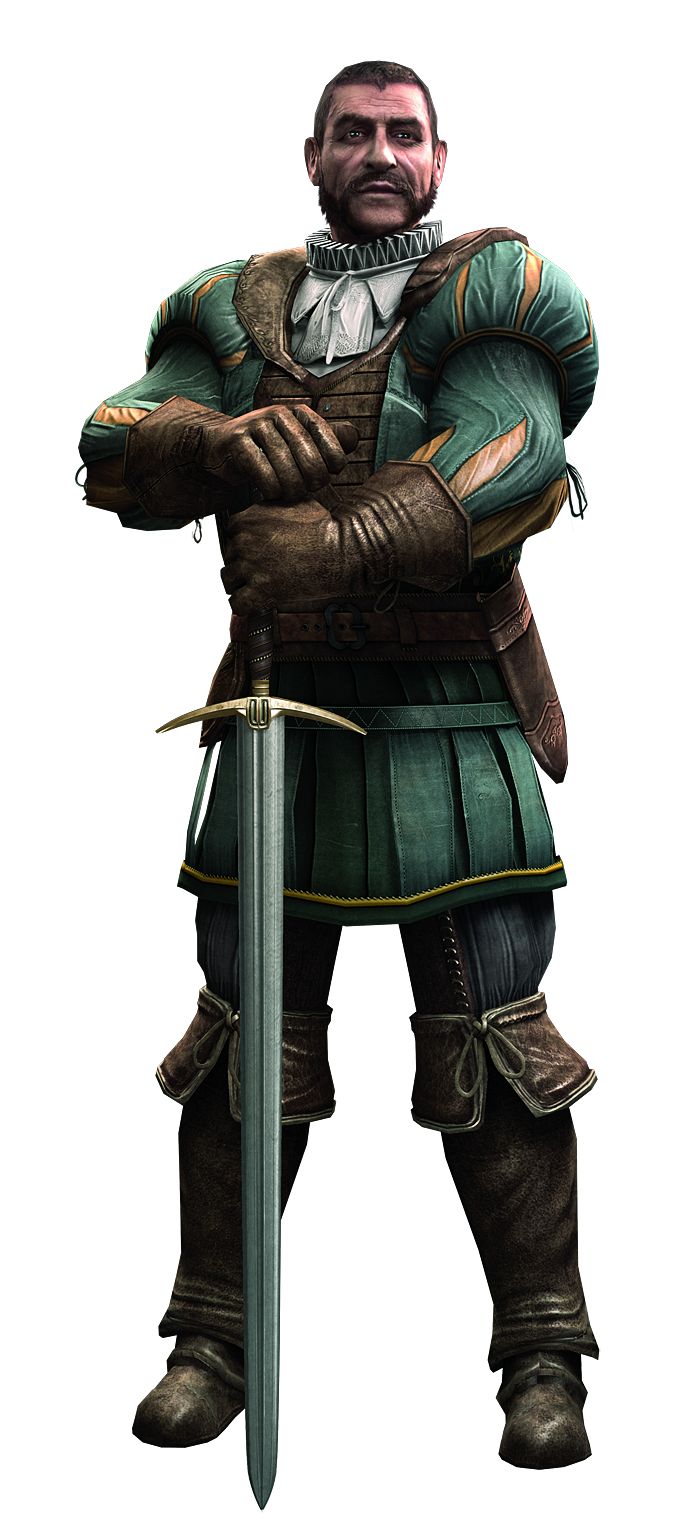
Liberated from his prison cell by Ezio during the events of AC2, Bartolomeo D'Alviano repaid the favor by lending soldiers for an assault on a Templar conspirator. But a condottiero must go wherever the pay takes him, so Ezio now finds the mercenary captain fighting to defend Rome. Bartolomeo helps Ezio defeat the Baron de Valois, the leader of the French army threatening the city.
Caterina Sforza

When the young Ezio saved an attractive woman stranded by the ocean tides in AC2, he had no idea she was the Contessa of Forlì. We can only assume that higher motivations spurred him on. She granted him passage to Venice in gratitude, though Leonardo's warning of her truculent and fiery nature did little to dampen the enthusiasm of the fledgling Assassin. Caterina's story was explored further in the Battle of Forlì DLC, one of the corrupted Animus Memory Sequences of AC2, after which she became Ezio's occasional lover.
Caterina is captured when she leads her men against the Borgia armies in the defense of Monteriggioni. She is held captive at Castel Sant'Angelo, where Lucrezia Borgia chains and taunts the Contessa. When Ezio first infiltrates the stronghold, it is with the intention of catching the Borgia off-guard. On discovering that Caterina is being held prisoner, he is able to turn a failed assassination bid into a successful rescue.
Pietro
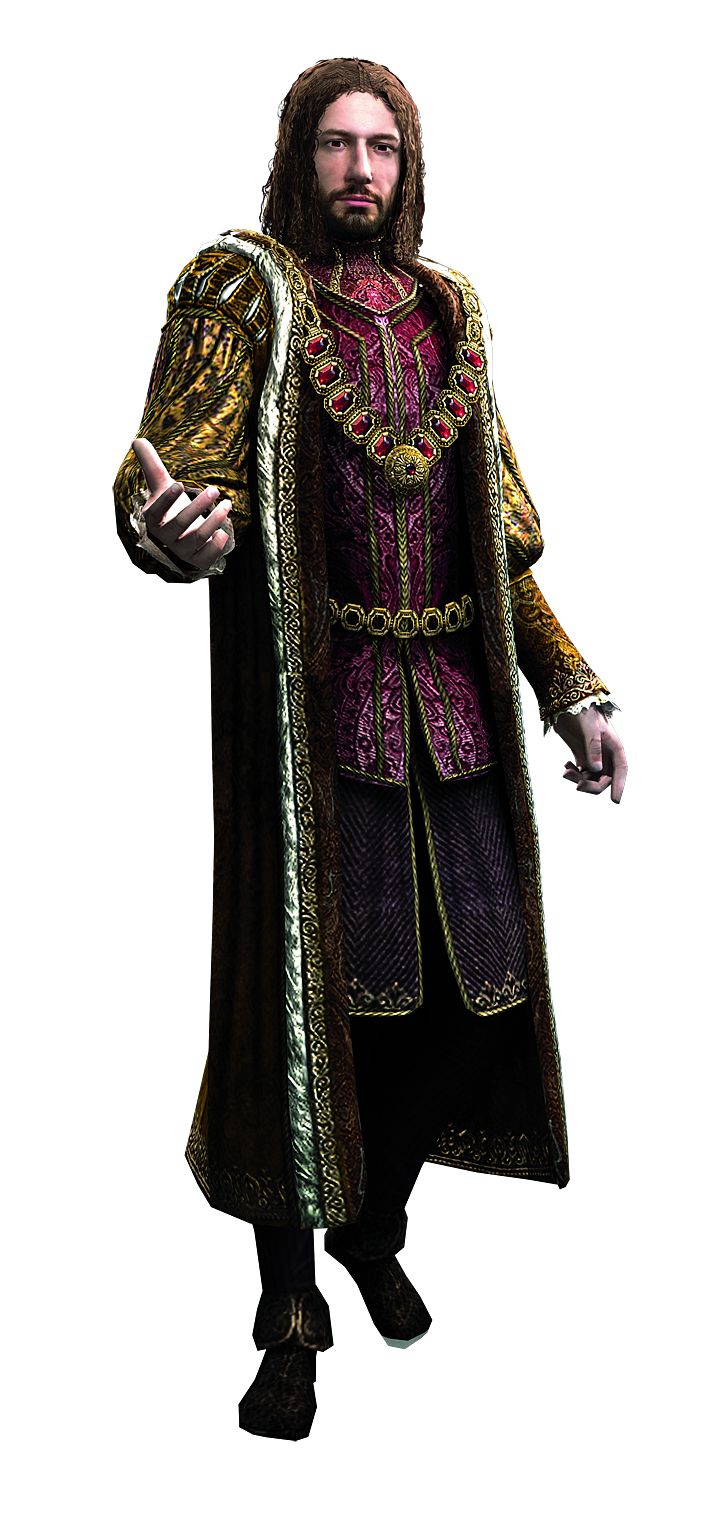
Being an actor, a profession of low social standing, Pietro nevertheless attempts to win the affections of Lucrezia Borgia. When she takes him as a lover, Pietro believes it is down to his gifts and does not realize she is far more experienced at playing dangerous games. Jealously protecting his sister, Cesare Borgia orders Pietro's death; it is only the intervention of Ezio that prevents the actor appearing in his own bold murder on the theatre stage. When Ezio finds Pietro has also been poisoned for safe measure, he delivers him to a doctor for an antidote. Pietro rewards Ezio with a key to a secret entrance at Castel Sant'Angelo, given to him by Lucrezia.
Renaissance Templars
Cesare Borgia
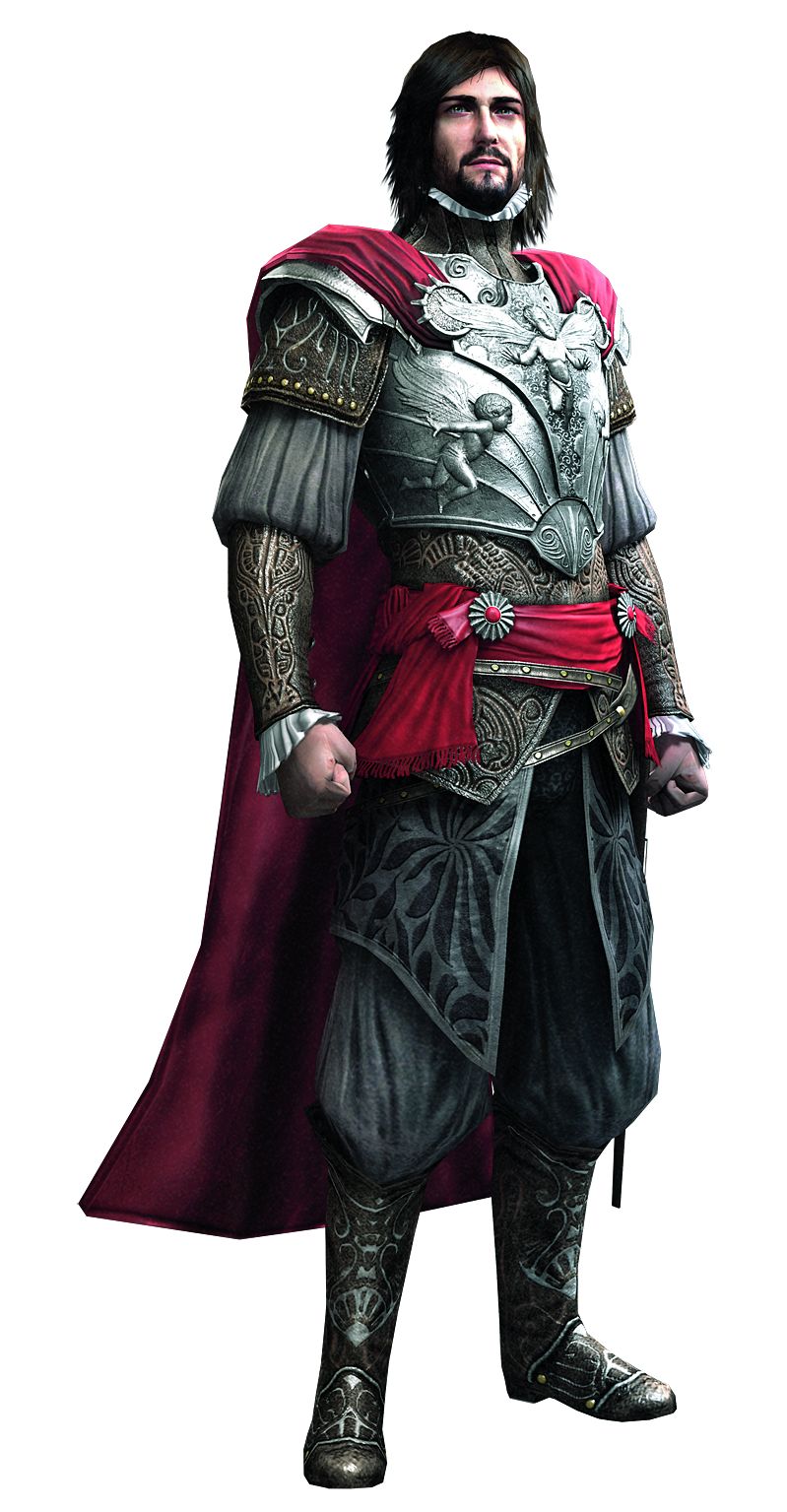
Born to a mistress of the Pope and denied the power granted to his elder siblings, Cesare is only interested in the Templar organization as far as it benefits him. Still swayed by the promises but finding their conspiratorial methods too slow, his grand ideas would overturn the old order completely. He claims the title of Captain General after the "untimely" death of his older brother and takes a royal French bride to secure further military aid from the King of France. It is this army of cannon, tower and pike that besieges Monteriggioni at the beginning of Assassin's Creed Brotherhood, enabling Cesare to reclaim the Apple that his father surrendered.
Although he continuously seeks the favor of Rodrigo as a useful ally, in truth Cesare regards his father as a failure and despises his weakness. It is only when Rodrigo keeps the Apple from him (and, indeed, attempts to poison his son) that Cesare realizes he can no longer tolerate the old man's continued existence. Ezio eventually pursues Cesare to Viana and throws him from the battlements.
Rodrigo Borgia
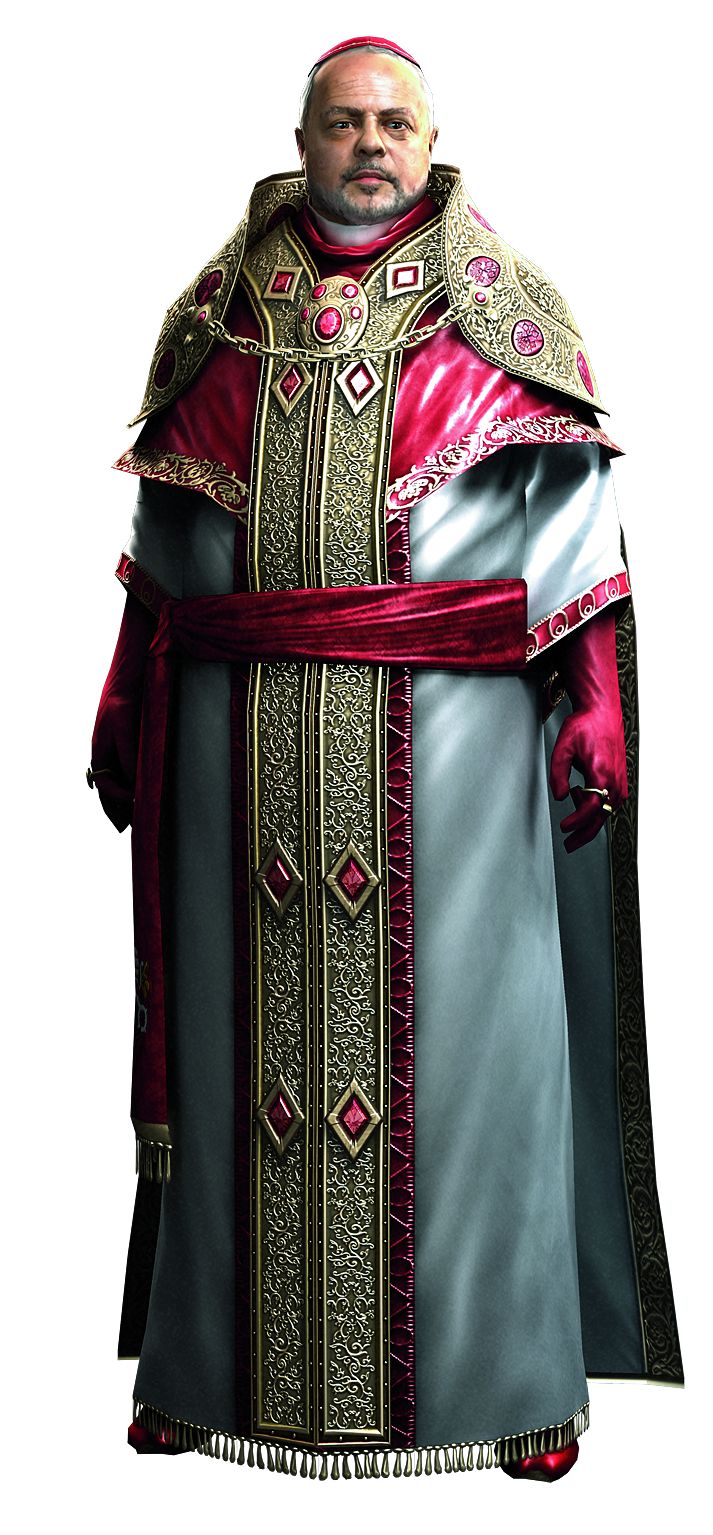
A Templar leader, Rodrigo is also known as The Spaniard for his origins in Assassin's Creed II. Coordinating the Templar's capacity for blackmail, theft, corruption and murder – which included the sham trial and execution of Ezio's father, Giovanni Auditore – Rodrigo was able to influence the politics of the time in order to secure election as the new head of the Roman Church. The Templars had learned of the Prophecy and Rodrigo's further title of Pope Alexander VI would confer both the Papal Staff, actually a Piece of Eden, and access to the Vault beneath Vatican City. The Templars imagined that the Vault held the promise of godlike power, while Rodrigo believed himself to be the Prophet who could unlock it: both turned out to be mistaken. Ezio was the Prophet, and the only power he discovered within the Vault was a bewilderment of information.
Though Rodrigo was spared, he was utterly broken in defeat. Having worked for so long to achieve nothing, Assassin's Creed Brotherhood finds him reduced to a mere figurehead whose moment has passed. Rodrigo is finally killed by his own son, the grasping, power-hungry Cesare, who wants to retrieve at any cost the Apple that his father took from him.
Lucrezia Borgia
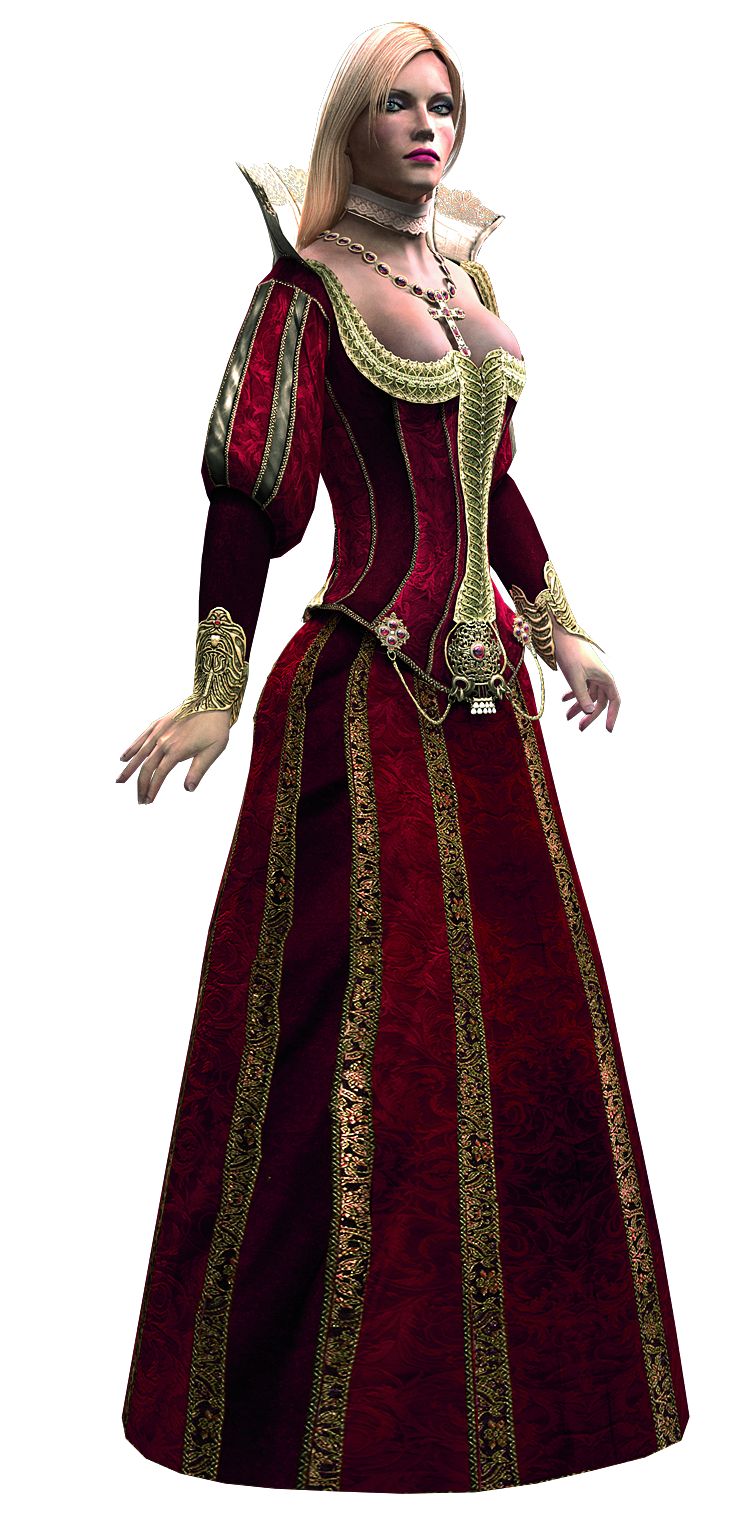
The young Lucrezia had barely blossomed into womanhood when her father Rodrigo saw an opportunity for her in the Templar's plans. Introduced to the Papal court, she was taught to scheme and seduce. But her life was chosen for her, and she came to see her close brother Cesare as the only way of gaining her independence. In exchange for her aid, he promised that she would rule as queen by his side.
When Rodrigo plots to poison his son, Lucrezia instinctively intervenes to save her brother. She succeeds in time but her loyalty is instantly betrayed when Cesare, driven by the lust for power, turns on her and demands the Apple for himself. Ezio finds the girl only after Cesare has beaten the information from her, though she is still able to deliver her revenge. Revealing the exact location of the Apple's hiding place in San Pietro, she sends the Assassin after Cesare.
Baron de Valois
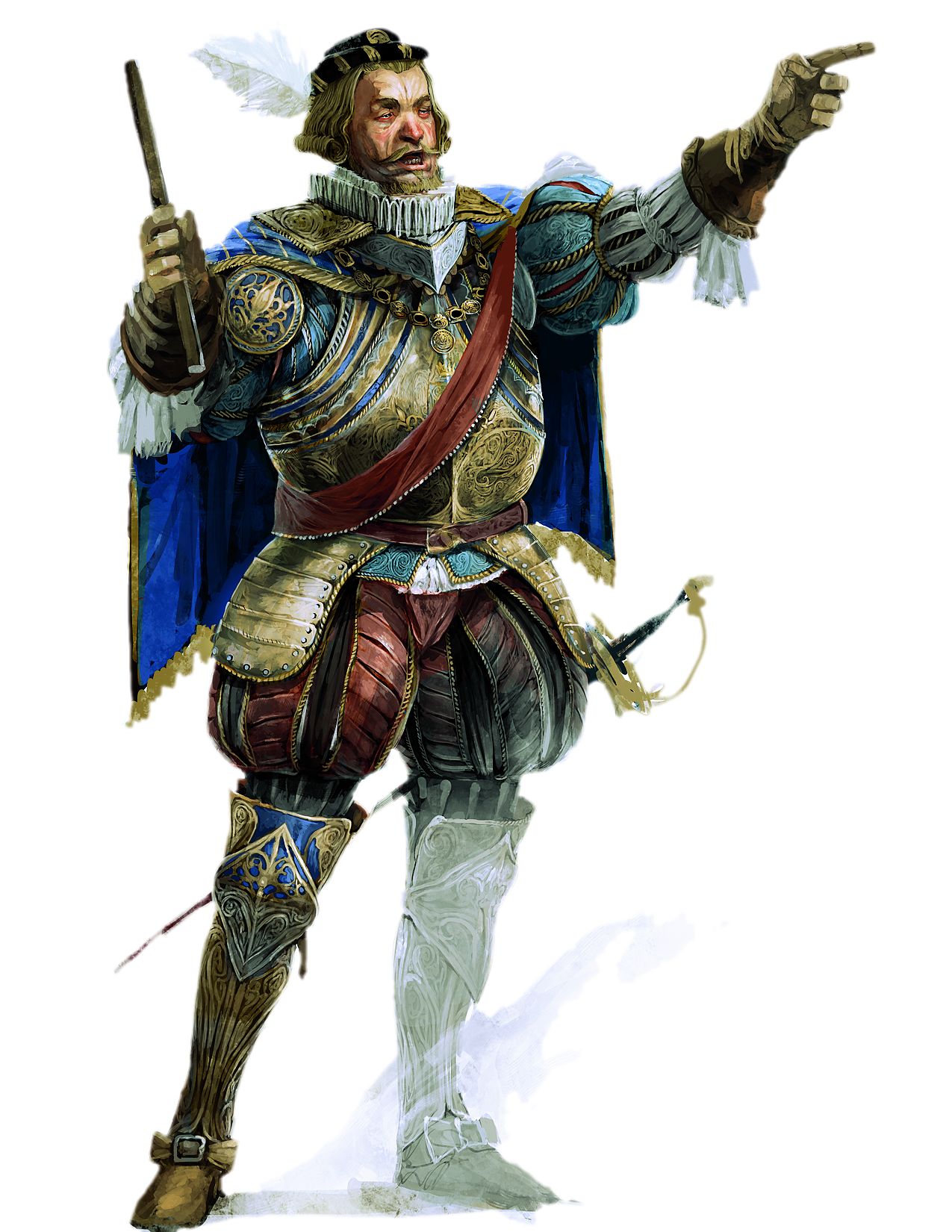
The Baron de Valois is a nobleman from the French court. A treacherous deal between him and the Borgia has brought the French army to the gates of Italy with the blessing of the Papacy. The Baron de Valois even believes that the alliance will ultimately deliver the entire country to noble French rule. When the Baron kidnaps Bartolomeo's wife and demands surrender in exchange for her life, Ezio counters with an underhand trick of his own by obtaining French uniforms, a disguise that enables D'Alviano's soldiers to penetrate the enemy camp. The French are forced to retreat and the victory delivers the bonus of depleting the guard at Castel Sant'Angelo, granting Ezio the opportunity to sneak inside.
Crusade Templars & Assassins
Al Mualim
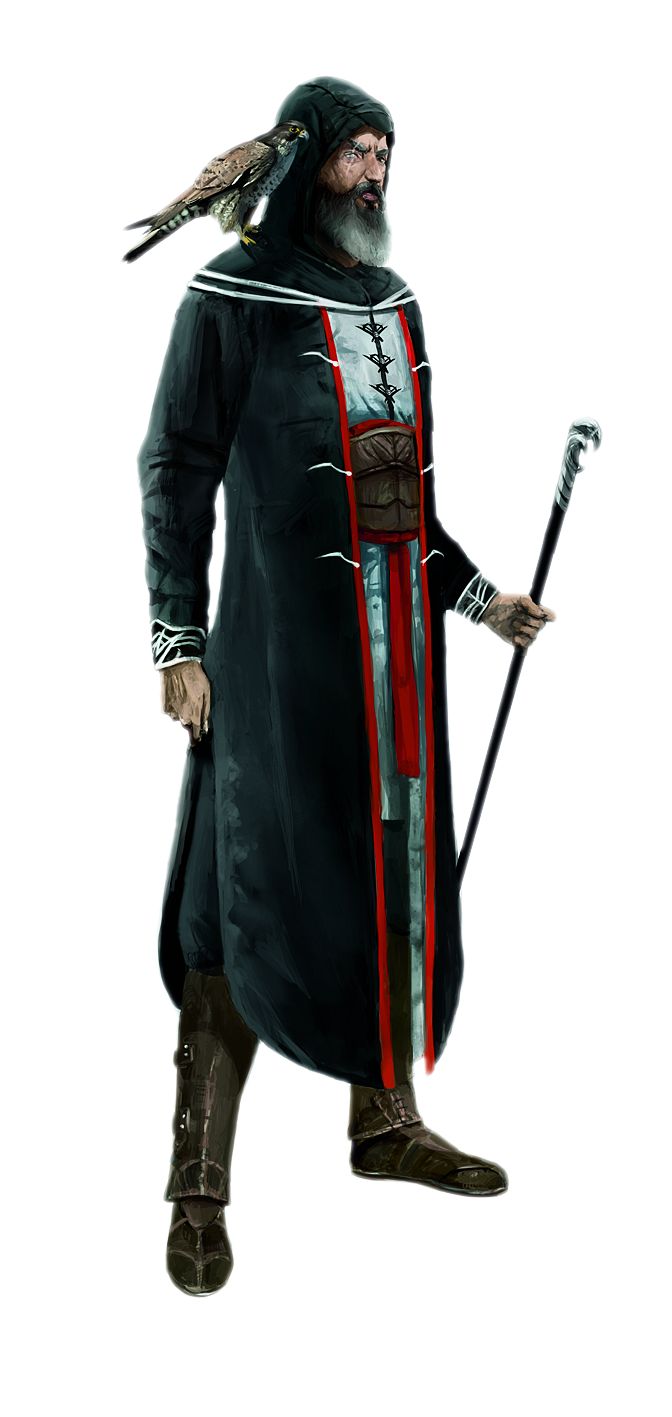
Al Mualim ("The Teacher") is Altaïr's Mentor in the first Assassin's Creed. Apparent leader of the Assassin Brotherhood, he is secretly a Templar infiltrator.
A previous wielder of the Apple, Al Mualim is responsible for much of what is known about the powers and physical characteristics of the artifact – for instance, that it could conjure disguises and create multiple simulacra of the holder. Ezio also discovered this power for himself when facing Rodrigo Borgia. But more interesting to the Templars is the effect that Al Mualim wrought on the stronghold of Masyaf when experimenting with its potential. It subjugated the minds of the entire town, turning civilians into obedient soldiers or causing them to see old friends as threatening enemies. It seems certain that this power is the one the Templars intend to exploit when the Apple is fitted to the Eye-Abstergo satellite.
Altaïr Ibn-La'Ahad
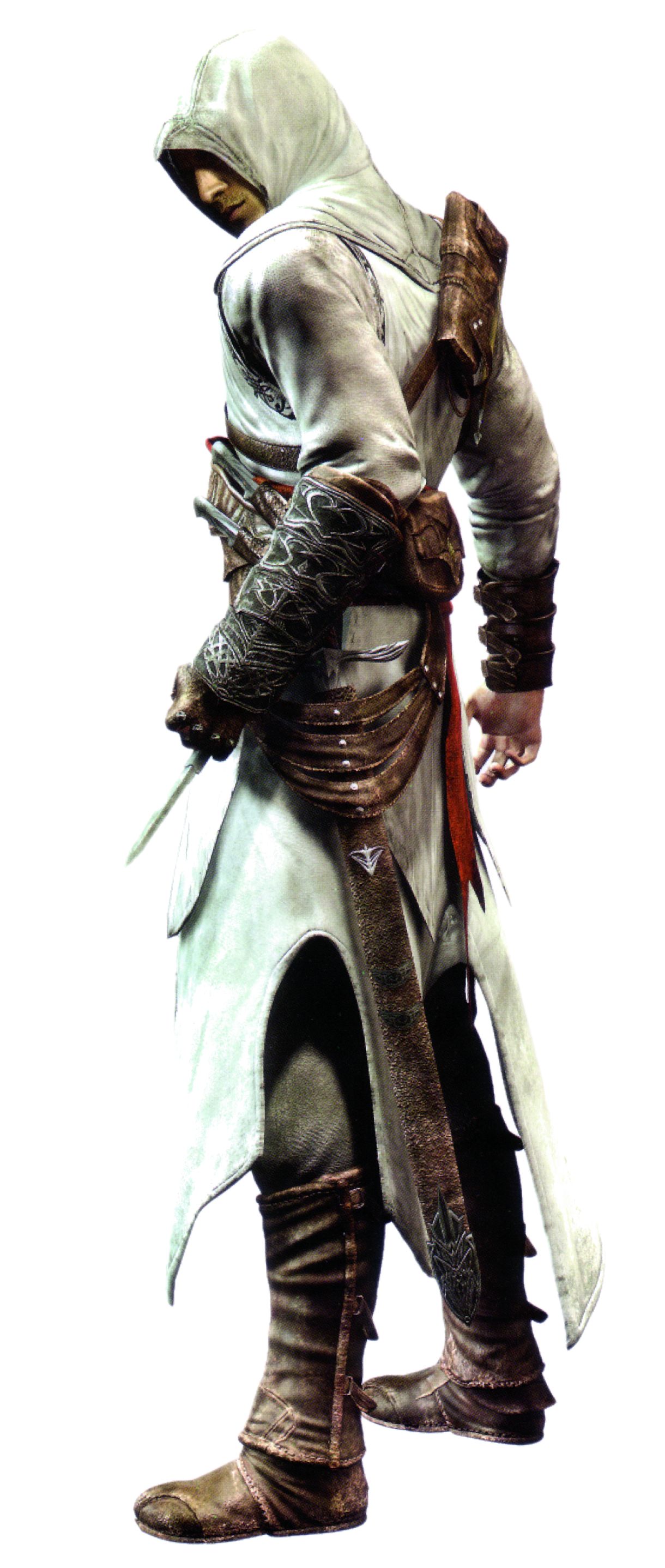
When Desmond is first subjected to the Animus in the events of Assassin's Creed, the memory he explores is that of Altaïr Ibn-La'Ahad ("The Son of None"). Altaïr holds a senior rank in the Assassin Brotherhood, at a time when the order is heavily engaged in protecting the Holy Land against the marauding invaders of the West. Altaïr is entrusted with securing an artifact from the Temple of Solomon, but is stripped of his rank by Al Mualim after botching the mission. As a lesson in humility, the faction Mentor assigns Altaïr to eliminate nine Templar targets.
In taking the life of his final target, Altaïr learns that there were not nine but ten Templars conspiring to possess the golden artifact from the Temple of Solomon. The tenth was Al Mualim, who had used Altaïr to betray his colleagues and gain this "Piece of Eden" for himself.
Returning to Masyaf, Altaïr finds the population has been decimated, driven to crazed violence: those who couldn't flee are either dead or walk the streets as if under a spell. The Apple grants powers of illusion and control, which Al Mualim then turns on his former student in the gardens of the fortress. Despite his Mentor's advantage, Altaïr is able to muster a resistance to the effects of the Apple and defeats the old man with his Hidden Blade.
When Altaïr picks up the Piece of Eden for himself, the device triggers a holographic projection of Earth. Several locations are clearly marked around the globe. Russia. France. Nazca, Peru. Lake Victoria, Africa. Stonehenge in England. The Pyramids of Giza in Egypt. And the Temple of Solomon in Jerusalem, indicating that the Apple may have recorded the original hiding places of other Pieces of Eden.
Technology & Artifacts
Animus
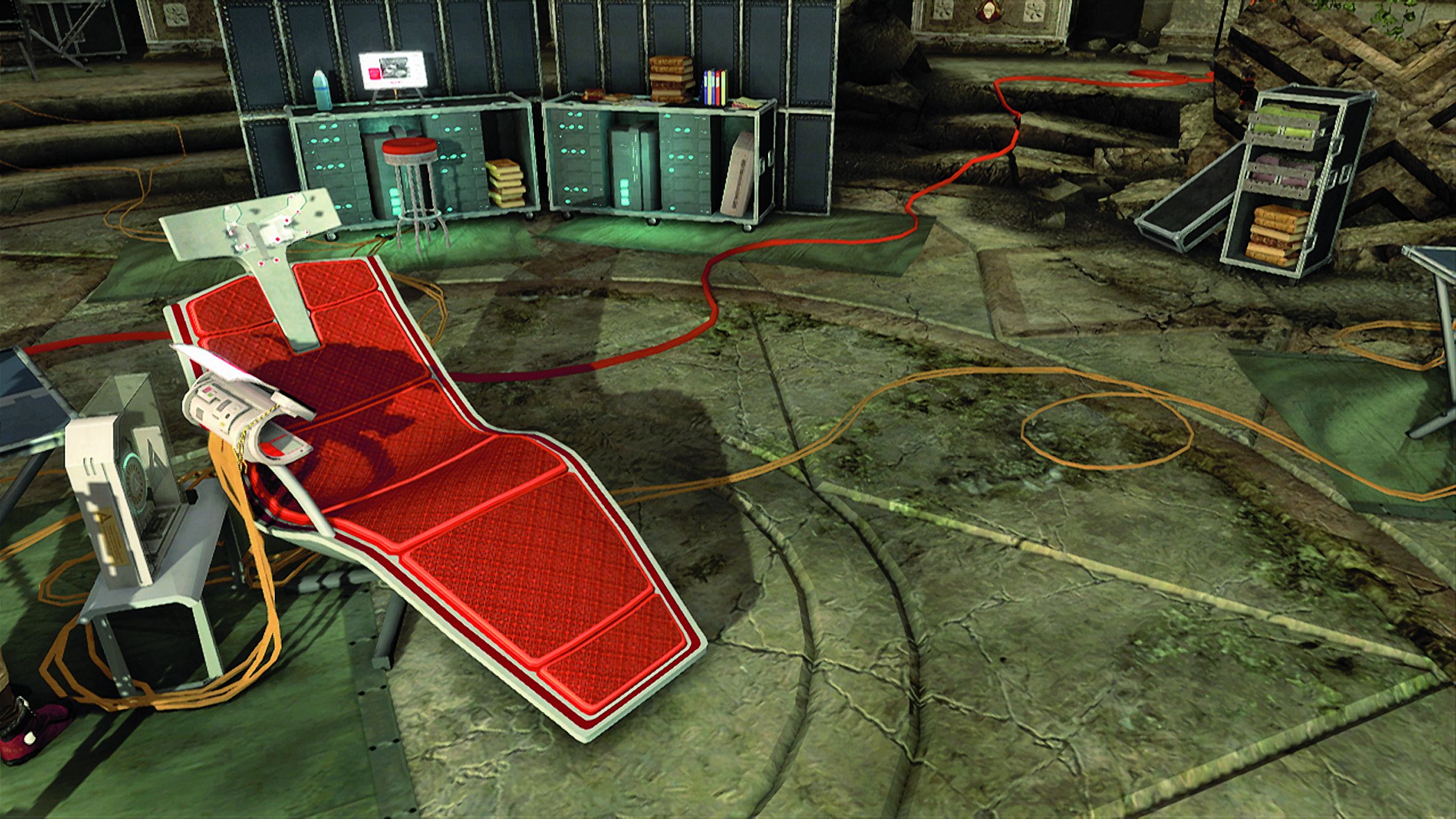
A core concept of Assassin's Creed is the science-fictional capacity of DNA to carry genetic memory. Every time the DNA is passed on, the progenitor's own memory is added and incorporated within the double helix; therefore, each generation is a biological archive containing the sum of all previous generations. Dr. Warren Vidic explains this as the method by which animals are able to migrate huge distances and discover breeding and hunting grounds established by their ancestors. Without any other form of sophisticated communication, how do these animals know where to go unless the information is transferred innately and physically inherited?
These memories remain largely dormant, vestigial, untapped in modern homo sapiens. But with the aid of the Animus, they can be isolated and decoded. The device requires a live human subject to operate, not only as the source of the DNA but as the necessary agent to interpret the memory. Advanced software extrapolates the available information to build a complete simulation, converting the ancestral memory into a full virtual representation. As the subject relives the memory, the Animus then captures and records a projection of their experience that is accessible to others as audiovisual media.
By 2012, Abstergo Industries has created an entire laboratory of such devices and refined the technology in the Animus 1.28 series.
When Desmond escapes from Abstergo with Lucy's aid, he volunteers to help the last remaining Assassins fight back by continuing to explore his genetic memories. The device at his disposal, Rebecca Crane's "baby", is the Animus 2.0, a custom-made and modded version with enhanced features. Although it is clumsier in some respects, particularly its biological interface, improvements include a live monitoring system and historical database resources.
Intensive users of the Animus can experience potentially dangerous side-effects, including the Bleeding Effect. The uncontrolled resurgence of memories outside of the Animus suggests that the technology can unlock a process that continues within the subject, causing hallucinations and leading to mental instability.
Synchronization
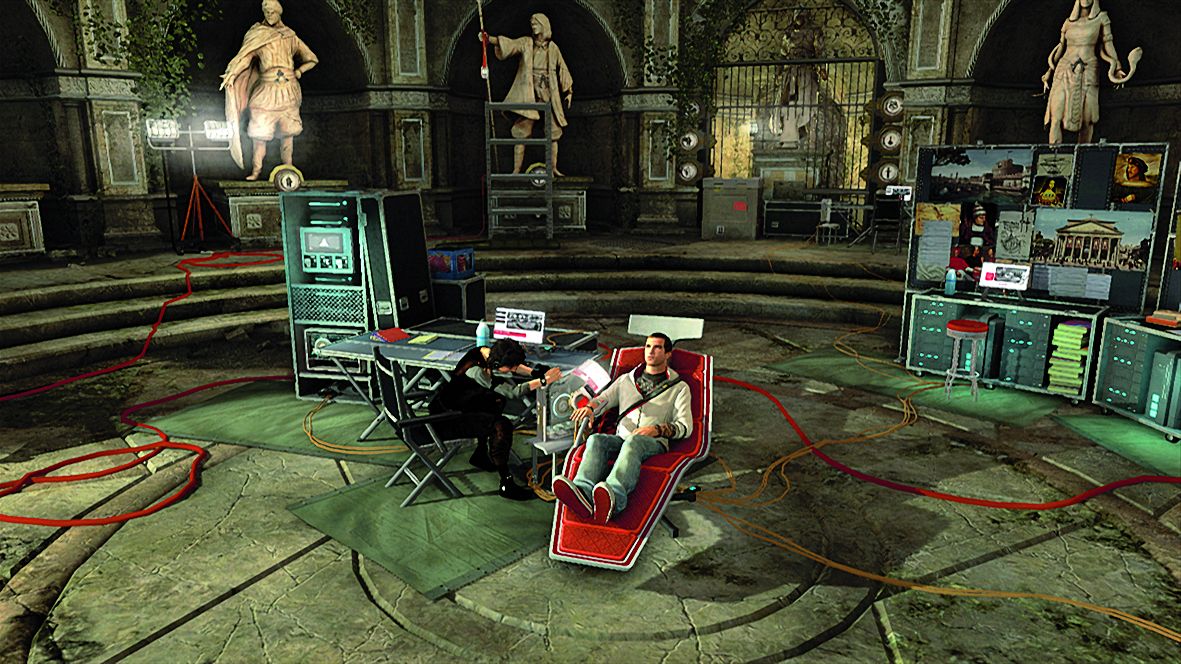
Memories can be unreliable sources of information, open to biased reinterpretation and reworked by the imagination. Those recalled through the Animus are only useful if the human subject remains broadly accurate in the exploration of their genetic memory. Synchronization is thus a measure of truth and accuracy, gauging the extent to which the subject is projecting their own thoughts and fears into the simulation. Whenever their avatar dies prematurely or commits an act that isn't part of the memory, the Synchronization Gauge reflects the error and may result in the session being halted and rewound to an earlier checkpoint.
Pieces of Eden
Secret history holds that the Templars have possessed various Pieces of Eden down the years, using them to influence major events. Familiarity, not to mention a weakness for business jargon, has prompted Abstergo members to start referring to them by the abbreviation P.O.E, a trait that Lucy retains from her period of employment. So why do they need to pursue this particular Apple with such fervor? Why not use one of the others in their possession?
For one thing, the number and condition of artifacts held by the Templars in 2012 is unknown. The war between Templars and Assassins demonstrates that the Pieces of Eden have changed hands on many occasions, serving different masters at different times. Even with the map gained from the Altaïr memories displaying a bewildering choice of leads, Abstergo e-mails only refer to an extraction team that is preparing to acquire P.O.E. "Number 3".
From company e-mail, it is known that this is Abstergo's second attempt to launch or construct a satellite. Piece of Eden "Number 2" was lost or destroyed in an accident at Denver International Airport, with survivors reporting that Abstergo personnel became crazed and murdered each other when the Apple opened.
Another compelling explanation, given the focus of resources, is that each P.O.E. was designed for a specific purpose. It is known that they exhibit different powers, with many incidents and cover-ups involving human efforts to exploit them. A Templar artifact was behind the Philadelphia Experiment, a popular conspiracy theory where a naval vessel is alleged to have traveled forward in time for 18 minutes. Results were sought from the direct descendent of an eyewitness in Subject 12, but attempts to repair the supposedly damaged device have been cancelled indefinitely. Concerns about the danger of paradoxes prompted a company policy of never experimenting with temporal anomalies. As for Ezio's Apple, it has been identified as the type necessary both for mind control and to reveal the location of Minerva's Temples.
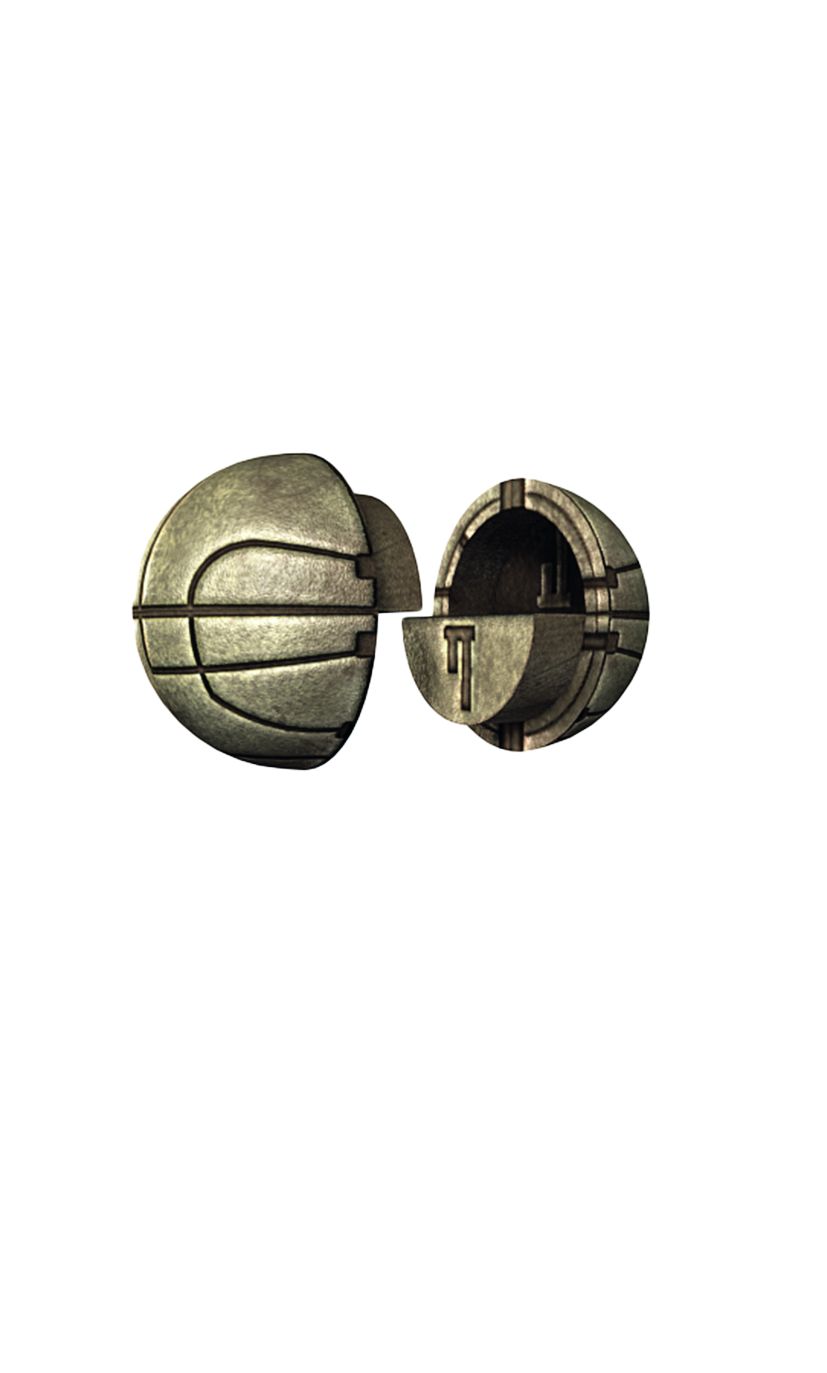
The ending of Assassin's Creed Brotherhood reveals an unexpected feature of the Pieces of Eden. Though they clearly offer certain powers to their wielders, P.O.E.s can also turn them into mere pawns manipulated by the artifacts – as Desmond experiences as he stabs Lucy against his own will.
Eagle Vision
The innate talent of Eagle Vision grants the facility to discern and interpret signs and details that are invisible to others. In one instance, Desmond is able to decipher a combination lock by using this ability to pick out the traces left on the buttons by previous users. The same technique can be applied to the discovery of secret doors, and the code that Ezio leaves to Desmond within the Sanctuary.
The exclusive possession of Eagle Vision is another indication of Subject 16's "children of two worlds", the Assassins who share a common bloodline with Those Who Came Before. We know that Altaïr, Ezio, Subject 16 and Desmond all have Eagle Vision, and all are direct descendents of Adam.
As soon as Desmond can use the power at will, he is also able to distinguish Lucy and Warren Vidic by their Assassin and Templar affiliations. This aspect is surely the most intriguing: is his Eagle Vision simply picking up and distilling much subtler physical signs, such as body language and other tiny telltale details?
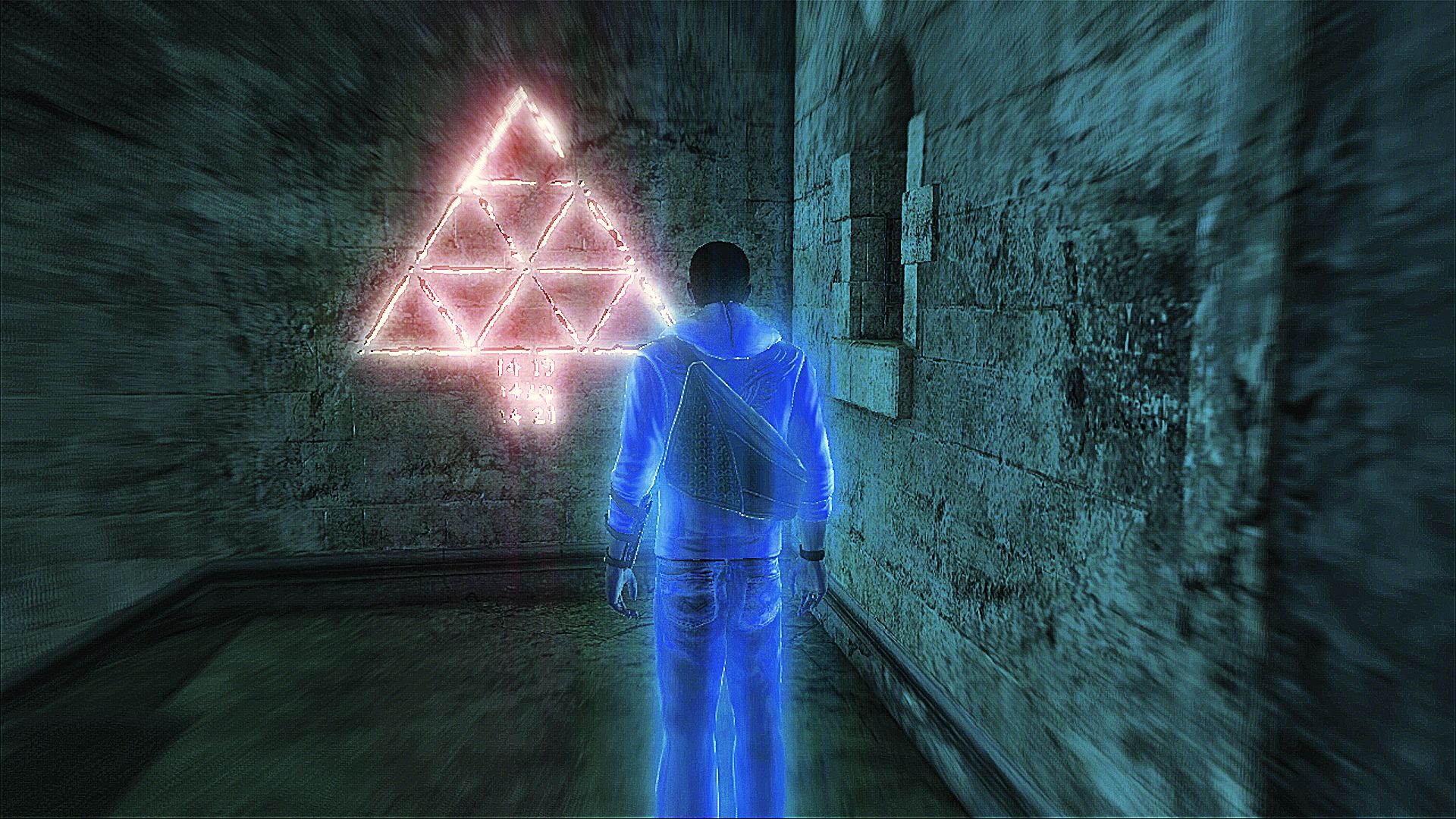
Juno suggests much greater potential when relating Eagle Vision to the sixth sense of her race:
"After, when the world became undone, we tried to pass it through the blood. Tried to join you to us. You see the blue shimmer. You hear the words. But you do not know."
If the First Civilization's advanced interaction with time were to derive from some precognitive ability (at the conclusion of AC2, Minerva reveals that the First Civilization experienced time "differently"), their "knowledge" might also involve some highly developed telepathic perception. Though they can certainly exploit the truths revealed by its ethereal shimmer, the Eagle Vision of the Assassins perhaps offers no more than a diluted expression of the extrasensory insight possessed by Minerva and her ilk. So when Juno exhorts Desmond to "awaken the sixth (sense)", she anticipates the rebirth of her race's innate powers and suggests that it will play a role in connecting his future to her past.
Bleeding Effect
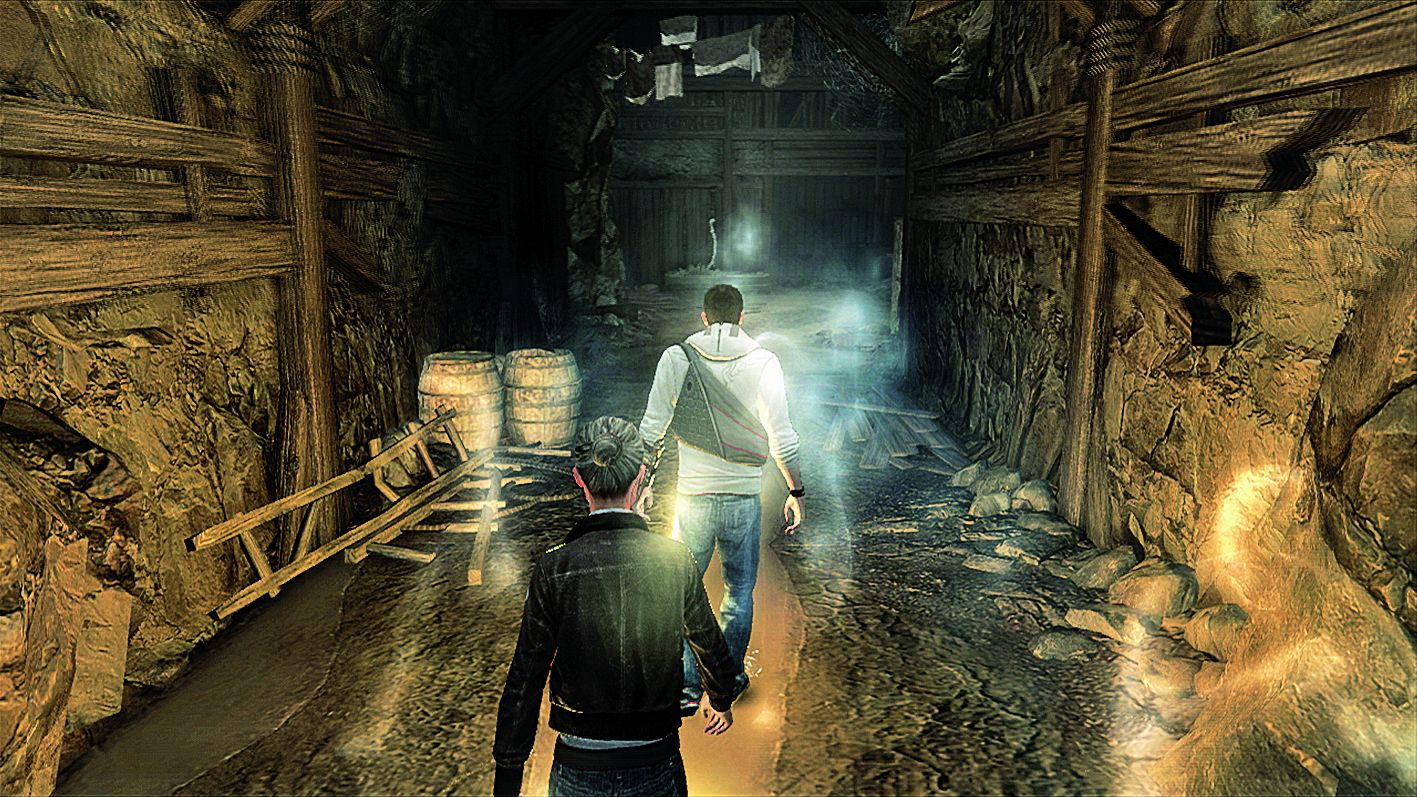
Acquiring the memory of another through the Animus has the initially advantageous consequence of endowing the recipient with their knowledge and training. Even though it cannot suddenly alter the subject's current strength and physical fitness, the process unlocks the latent potential inherited from their ancestors and the result is profound. This Bleeding Effect can confer an acrobat's practiced techniques of balance, acquired over a lifetime; an athlete's willpower in pacing and maximizing stamina; or simply years of practice in aiming a knife. Absorbing any of these can demonstrate immediate improvements in performance. In Desmond's case, it is also the catalyst for developing his Eagle Vision.
On the run from Abstergo, Lucy Stillman exploits the Bleeding Effect to accelerate Desmond's training as an Assassin. It is not without cost, as Desmond begins to experience hallucinations that suggest the process continues after removal from the Animus. And as the Assassin's Creed Brotherhood credits roll, his collapse is directly attributed to the Effect.
Holding the minds of many different beings in a single human brain places a significant stress on the subject, for whom the line between self and ancestor begins to blur. Ultimately, the adoption of multiple personalities will increase the number of hallucinatory episodes and lead to mental collapse. Such was the fate of Subject 16, for whom death became the only way to silence the voices in his head.
Codex
Oblivious to a future of genetic memories, Altaïr took the more customary route of capturing his thoughts by committing them to paper. Even so, the importance of his discoveries regarding the Piece of Eden drove him to encrypt them with unusual sophistication. Blueprints, journals and revelations made it a natural target for Templar possession. And so the Codex went on an adventure of its own, plundered by Genghis Khan and inherited by his grandson before Marco Polo acquired it for his contemporary, Dante Alighieri. Briefly restored to Assassin hands, Dante being one of the Order, the 30 pages of the Codex were then scattered by Ezio's great-grandfather Domenico to prevent them falling to pirates acting for the Templars. Ezio was able to collect and restore the Codex parchments with the aid of Leonardo Da Vinci, who had already explored the science of cryptography for his own precious works.
The hotchpotch nature of the work is likely deliberate, an attempt to distract from the singular hidden message of the Codex. The pages arrange to form a map, drawn with invisible marks that reveal themselves to Eagle Vision. The map itself shows the location of the Vault under the Vatican. These two facts indicate that Altaïr was passing on the means of fulfilling the Prophecy to a descendent.
Vaults & Temples
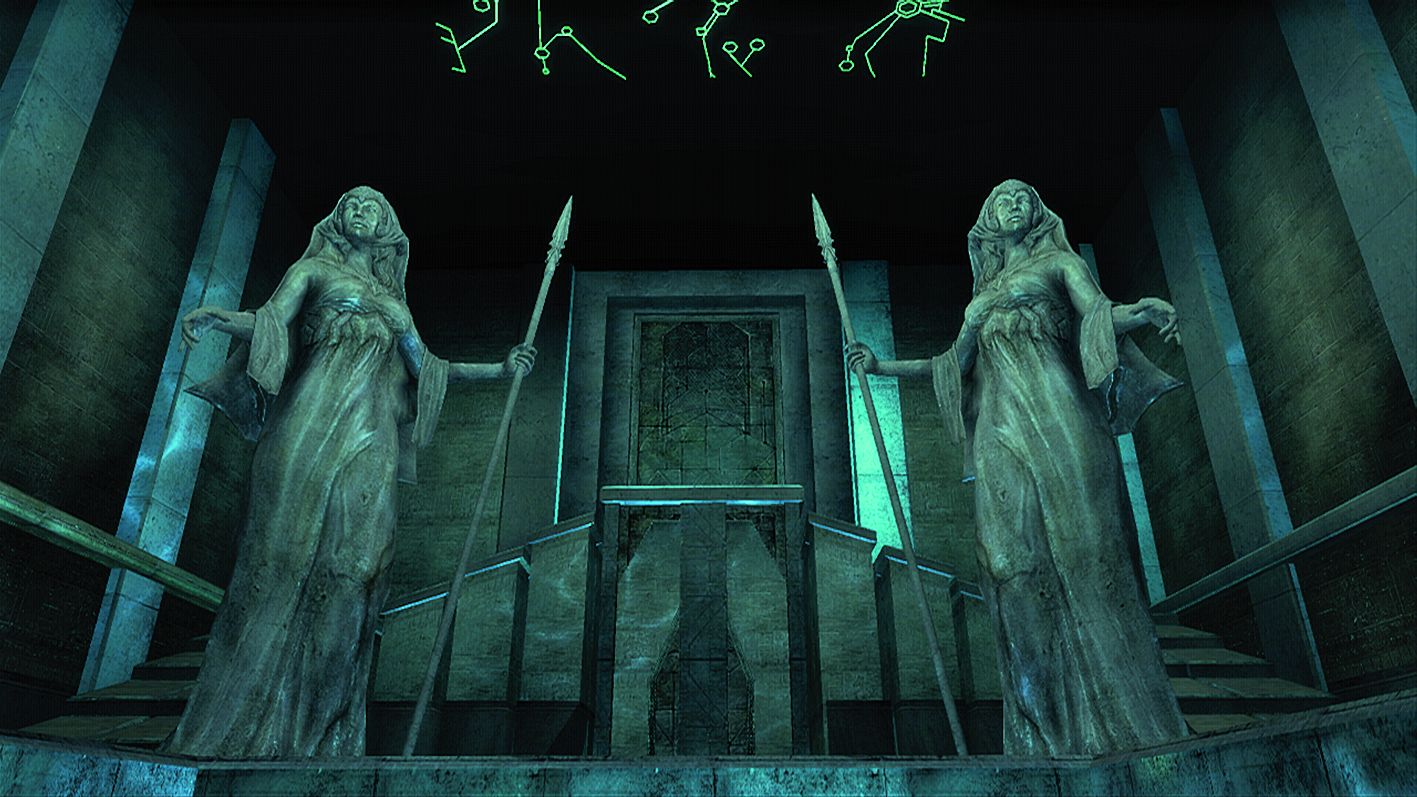
A legacy of the First Civilization, the Vaults and Temples are sealed chambers whose true purpose and potential may yet be revealed. In fulfilling the Prophecy at the end of Assassin's Creed II, Ezio triggered a message from Minerva that directly instructed Desmond to seek out the remaining Vaults and Temples around the world. Thus it is believed that they have something to do with Minerva's warning of an imminent Catastrophe, and may hold a secret of salvation for the inhabitants of Earth.
Vaults and Temples can be unlocked with specific codes, or the appropriate First Civilization technology in the form of Pieces of Eden, but there may be further genetic or individual determinants involved in the security protocols. The Vault beneath the Vatican refused to open for Rodrigo Borgia, even though he held the same Staff and Apple that granted access to Ezio. When the elder Ezio chooses to relinquish the Apple by placing it in the Vault beneath the Colosseum, he uses Eagle Vision to set the code and hide a password so that only a descendant such as Desmond can retrieve it in the future. Of what is known, it seems the First Civilization had only ever intended for Assassins to use the Vaults and Temples. Or more correctly, both the pure and the hybrid bearers of their DNA.
Glyphs
Wishing to leave a message for others within the Animus itself, Subject 16 was able to conceal his efforts from his captors by creating symbols that would only reveal themselves to a brother Assassin's Eagle Vision. In essence, these Glyphs are software hacks that enable the finder to access a hidden data cache from certain points within a Memory Sequence. They are not part of the original memory, and so stand out as breaks in the program.
Truth
"The Truth" is the name given by Subject 16 to the data file that he hid within the Animus software. The file was broken into segments to conceal the true message from unwelcome eyes, and had to be reassembled by Desmond while exploring Ezio's memories in Assassin's Creed II. The recording is of an actual genetic memory of Adam and Eve, dating back to the time of the First Civilization and recovered during Abstergo's investigations. It indicates that Subject 16 – and by extension, Altaïr, Ezio and Desmond too – must be directly descended from Adam's bloodline.

If this revelation were not enough, the codes required to access each fragment also expose the startling degree to which the Templars have influenced world history and instigated many famous and terrible events. There are intimations that Pieces of Eden were exploited by Adolf Hitler in the development of Germany's war machine, and by President Lyndon B. Johnson in the Kennedy Conspiracy. The infamous Russian mystic Grigori Rasputin held Templar office when inveigling himself into the court of Tsar Nicholas II. With this knowledge, the Bleeding Effect clearly wasn't the only burden threatening Subject 16's grasp on reality.
Mythos
First Civilization
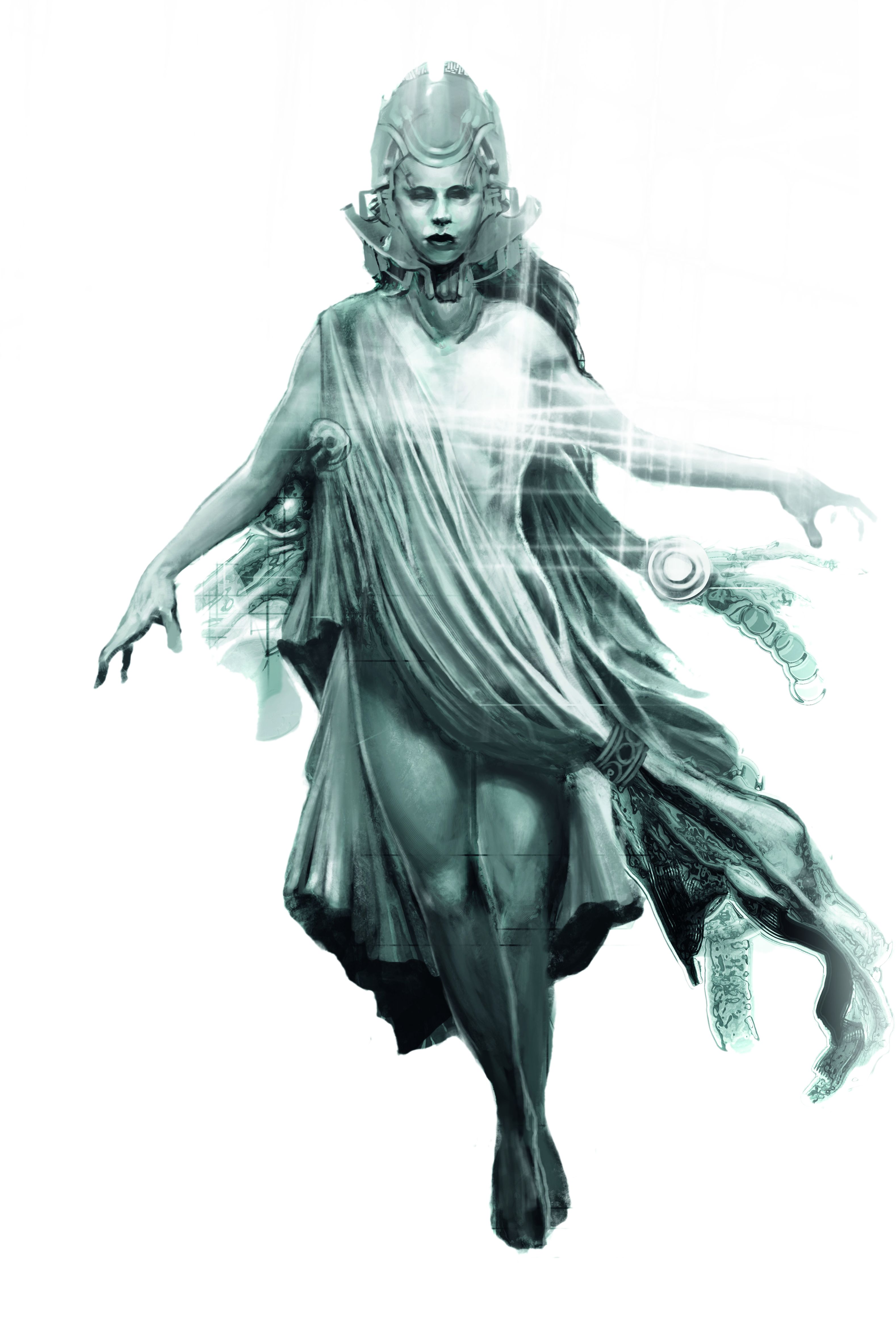
Cryptically referenced by Warren Vidic, who mentions "Those Who Came Before" when mocking Desmond's accepted view of history, the First Civilization is held to be an advanced race that came to inhabit the Earth before mankind. Having remolded a primitive indigenous species into the slaves and workers that would later be known as humans, the First Civilization created some of the Pieces of Eden to control their workforce. Most humans, but not all, are believed to retain the dormant but still receptive neural configuration that rendered their ancestors vulnerable to enslavement by the technology.
To early mankind, the advanced nature of Those Who Came Before made them appear godlike, and they were long worshipped as divine saviors. Far from intangible, these beings walked among us and gave rise to the many different deities and pantheons of the cultures over which they ruled. Nevertheless, a war eventually broke out between the First Civilization and humans eager to win their freedom from eternal servitude. In their weakened state, Earth's overlords were unable to anticipate the great Catastrophe that would deny them existence. To erase them from history altogether? This would take human fallibility. Instead of recording their nature and their achievements, mankind deified them and made them supernatural. Instead of factual accounts, we passed down fairy tales and embellished their myths. The only evidence of the First Civilization now rests in the Temples, Vaults and artifacts so highly prized by those who have grasped the truth.
So why have they taken such efforts to help save their destroyers, here in the future? And why do they appear to be on the side of the Assassins, who (or so it seems) first rebelled against them? Minerva warns of the symbol of the cross: so they know of the Templars and may be opposed to their ideology of control, or its potential for destroying the Earth. But it is also worth remembering that the Assassins may be all that is left of the First Civilization, genetically speaking. If the hybrids are the last chance of preserving and promulgating the gene stock – perhaps even reviving it – this could explain why Desmond Miles is even more important than Abstergo or the Assassins ever realized.
If the Templar satellite succeeds then its influence will immediately turn to the annihilation of the Assassins – and thus the extinction of the DNA stock they carry unbeknownst to themselves. The First Civilization would certainly oppose this to protect their plan. But why should Desmond accept any of his imposed fates, saving the planet from Templars only to return it to the entities who once enslaved us all? Until we know more of his current captors, and the power that the Apple still wields over him, the questions remain.
Minerva
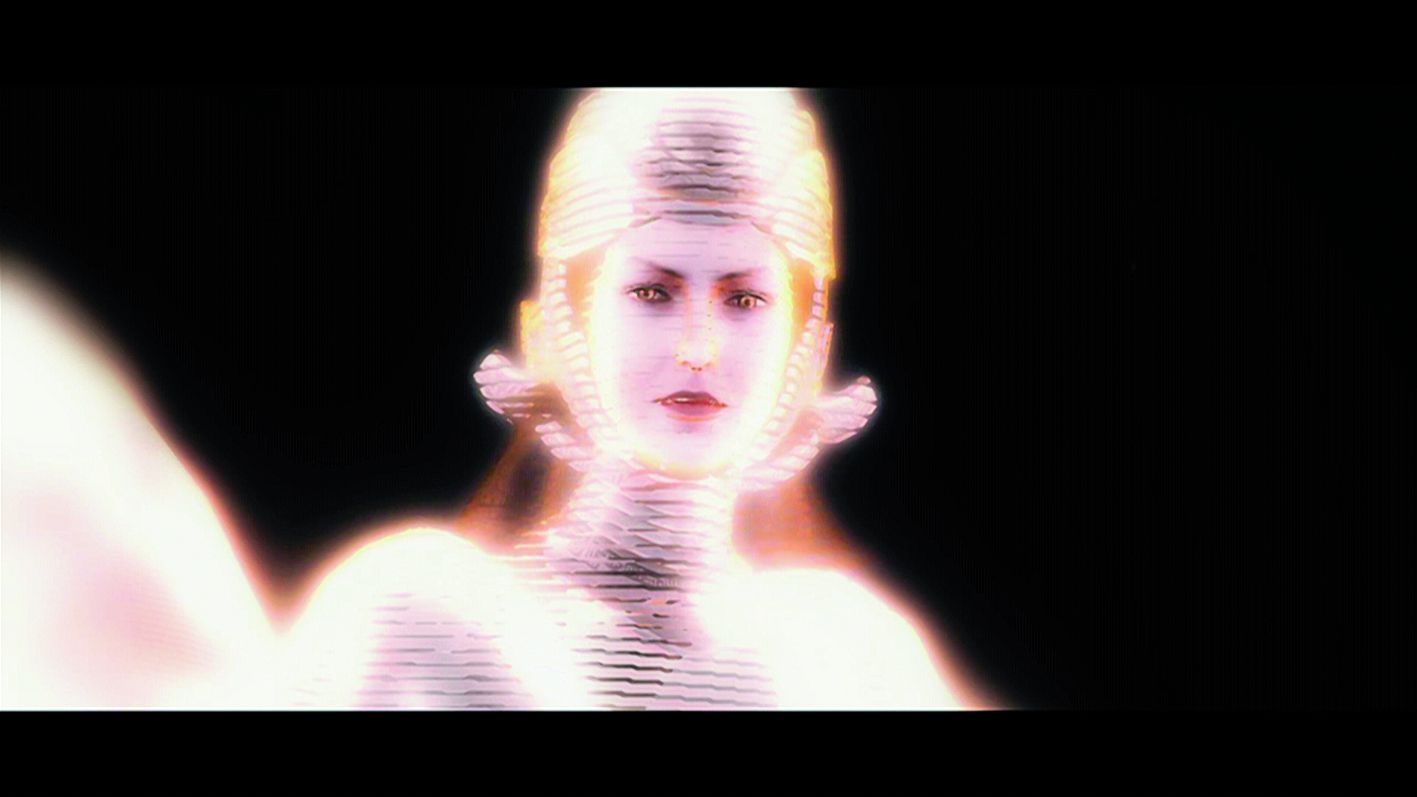
Minerva is the holographic projection of a female entity who speaks to Ezio – or, more accurately, through Ezio – when he enters the Vault beneath the Vatican at the end of Assassin's Creed II. Though long dead now, Minerva was one of the last surviving members of the First Civilization when she recorded her message to the future. She warns of an imminent Catastrophe that could destroy all life on Earth, and explains that this cataclysm occurred once before, annihilating her race many thousands of years ago. She also claims that her kind had been developing a way to prevent it, their labors hidden in other secret locations around the world.
Even though Minerva's message is wildly incomprehensible to him, Ezio still describes the holographic "visions" he was shown as miraculous and magical when recounting them to his fellow Assassins. It is a perfect demonstration of how the First Civilization came to be regarded as gods by less sophisticated humans. In contrast, the modern-day Brotherhood solemnly understand the gravity of Minerva's warning. The Vaults and Temples contain some form of assistance or research which will be useful in staving off a repeat of the Catastrophe, and it will be up to Desmond to visit them.
Juno

A significant figure of the First Civilization, Juno helped the human race to survive in the wake of a global cataclysm. Even so, the bitterness of her words hasn't faded with the passing of millennia. As Desmond penetrates the Vault where Ezio hid the Apple, Juno's voice speaks to Desmond alone. Her message returns to the theme that humans are flawed, unwise, forgetful. Entrusted with information, we twist it, misuse it, and finally lose it altogether. When the First Civilization created Pieces of Eden as useful tools, items that could have taught us more about the universe, mankind found a way to break and misuse those too. Juno ascribes some of this to our lack of a sixth sense that only the First Civilization possessed. The description even relates it to a kind of Eagle Vision, though possibly a far superior apparatus for perceiving reality and true knowledge than the crossbred version we know through the Assassins.
The Catastrophe affected the First Civilization in such a way that the survivors knew they were doomed to extinction. Running out of time to research and counter its effects, they tried more desperate ways to perpetuate their race – such as interbreeding with mankind ("We tried to pass it through the blood. Tried to join you to us."). Subject 16's documents back up a hybridization project that started with Adam and Eve, resulting in Altaïr, Ezio and Desmond.
But there is more. The First Civilization had limited powers over time. Juno's point about looking into the future, but eyes "turning inward" to deal with a rebellious human threat, recalls Minerva's message that they should have been able to avoid the Catastrophe but were distracted. Pieces of Eden were locked away in Vaults for safety, not safekeeping, to secure them from the hands of mankind – and yet Desmond is told to find such a device and activate it. This undoubtedly means that the Apple Desmond looks for and eventually finds is a tool that the First Civilization are using to achieve their grand plan: rebirth.
The timing is important. With 72 days to the launch of Eye-Abstergo, the prescient First Civilization has chosen now as the time for Desmond to open the path to their Awakening – alone. Only "she" remains to be found, and Lucy is not the one. Where is Eden, and is "she" Eve, or a descendent of Eve?
Capitoline Triad
The Capitoline Triad of Jupiter, Juno and Minerva was a select sub-pantheon of supreme deities worshipped in Rome long before the Holy Roman Empire, prior even to the Republic. Ezio's encounter with Minerva confirmed that they were actually members of the First Civilization, their elevated status and reverence potentially corresponding to some hierarchy of leadership among "Those who Came Before".
The only member of the Triad not yet encountered is Jupiter, the king of the gods. Regarded as the chief of the Triad, it seems unthinkable that he would not have had his own Temple from which to rule over others. And yet the prospect of Jupiter making an appearance in a future AC title is all the more ominous when we consider that he is also the god of sky and thunder. The Catastrophe approaches.
Catastrophe
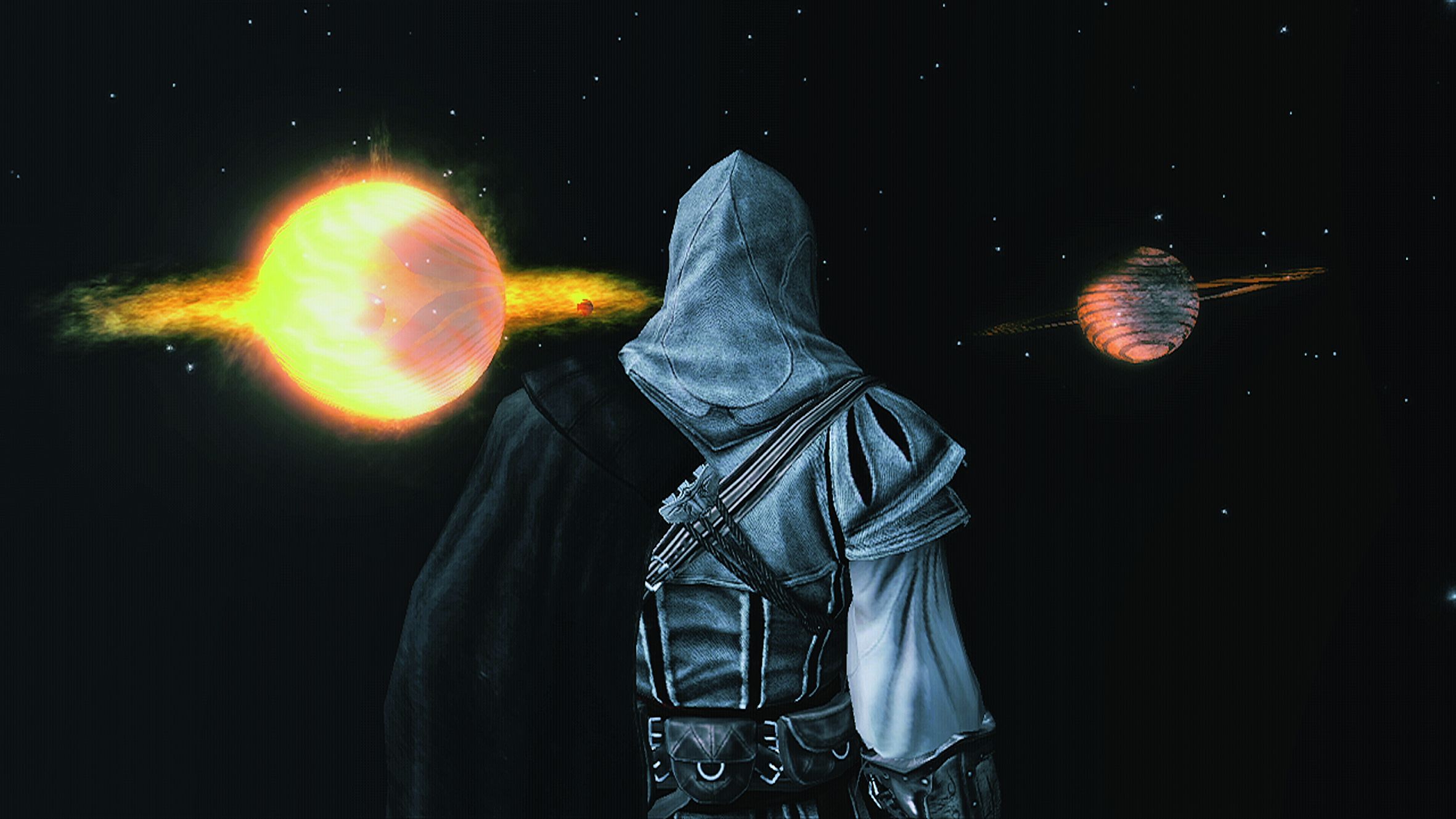
Though Lucy and the team discuss different possibilities, Desmond's understanding of the Catastrophe is of a solar flare or Coronal Mass Ejection that scorched the Earth with life-threatening radiation. Fitting the cyclical nature of the event as described by Minerva, solar flares multiply in power and range as sun spot activity increases. Proton storms created by solar flares can exert chaotic effects on biochemistry and living organisms, while the electromagnetic energy of even a moderate flare could disable power grids, telecommunications and computer networks. NASA already monitors solar flare activity, not just to warn astronauts working outside the protective mantle of the atmosphere, but in anticipation of such a disaster on Earth.
Adam and Eve

The evidence that Subject 16 delivers with "The Truth" seems to find a grain of veracity in the tale recounted by Genesis, chapters 1-3, though in a markedly different context. Still, the parallels with the biblical account are undeniable.
The video shows Adam and Eve rebelling against their godlike masters by daring to steal a Piece of Eden, the artifact that limits or controls human behavior. In this instance, Eden is a First Civilization stronghold in which human slaves are glimpsed to be at work. Appearing almost naked in silvery translucent clothing, Eve produces the Apple and tells Adam that she has it.
It is noteworthy that Adam and Eve use a recognizable free-running technique to ascend the towers of Eden. With the "Bloodlines" Glyph also endorsing that humans interbred with the First Civilization, it introduces hybrid offspring and grants a genetic explanation for the extraordinary capacities of Assassins, including Eagle Vision. Perhaps this act of defiance was the very first defense of free will committed by the Assassin line, whether or not it instigated the war that was to follow.
Juno adds detail to Minerva's account by confirming that the hybridization was a project of their time. At war with their slaves and unable to resist the cataclysm, the First Civilization deliberately spliced their DNA into chosen humans as a way of preserving their stock after defeat. Devices were planted to monitor events and wait for the chosen time when those genes could be revived, granting new life to an extinct race.
Desmond is a distant son of Adam, half human and half god-race. If Subject 16's predictions are true then Eve has the other half of their DNA, the genetic key that will enable the First Civilization to revive their race and remove the human taint that has secretly carried them for so long.
Prophet & Prophecy
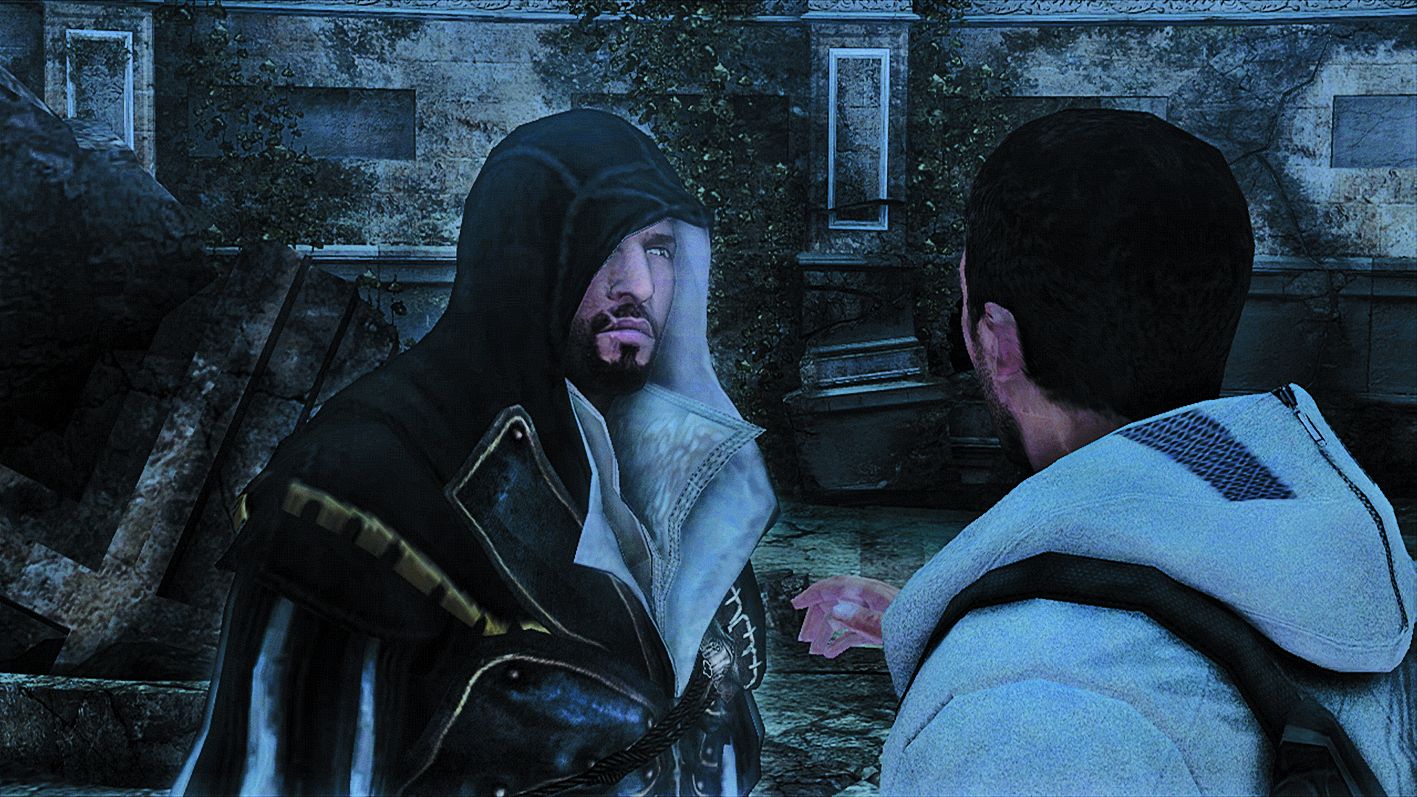
For all of its revelations and blueprints, the true message of the Codex is one of a Prophecy. It tells of a Prophet who will use two Pieces of Eden to open a Vault. Rearranging the pages of the Codex into a map then shows the location of that Vault.
The traditional role of a Prophet is to deliver a message from the gods. And that's what Ezio does, capturing a speech from Minerva and passing it on to Desmond via genetic memory. That Ezio has trouble comprehending it is almost unimportant, no more than a parchment needs to understand the words left by a quill. The message is not even intended for Ezio, as Minerva addresses Desmond directly in revealing the fate of her race, and the need for urgent action to save his own.
The events of Juno's Temple reveal more. Desmond is also part of the Prophecy, and intended to be just as much a tool in the service of the elder race as his predecessors. While Ezio's role as Prophet was to deliver geographic and historical information that would activate dormant technologies, Desmond's role is to deliver his hybrid DNA to Eden so that the First Civilization may return from the past, to be reborn in the future.
Symbols
From Subject 16's Glyph revelations to the icons found on Abstergo literature, the extent to which the conspiracies of Assassin's Creed have spanned the ages is reflected in the recurrence of powerful symbols.
Assassin's Creed Brotherhood features its share of symbols too: for example with the number 72, whose relevance and coincidence is greater than Shaun reveals when solving the Tetragrammaton riddle of the code. In Hebrew, the three verses of Exodus (14:19, 14:20, 14:21) each contain 72 letters. They combine to form a 216-letter name of God, collectively and deferentially abbreviated as the Shemhamphorasch, from which the names of 72 angels can be derived. But medieval mystics of the Kabbalah are not the only ones for whom 72 holds special significance. The Shemhamphorasch can be seen in the Sistine Chapel: Michelangelo's paintings depicting a total of 72 cherubs on its columns. Numerology, demonology and the Tarot find magical importance in the number. King Solomon is said to have captured 72 demons in a spherical bronze vessel – sound familiar? – and compelled them to construct his Temple.
The closing scenes in Juno's Vault also reveal two symbols in answer to Desmond's question. The Apple's projection of the Masonic Eye is a case in point. A historically recurring signifier of the all-seeing eye of God, the pyramidal form appears on the American dollar bill and was adopted as an emblem of the Freemasons. As for the Phrygian Cap, it is also known as a liberty cap, having come to symbolize freedom and the pursuit of liberty. Shaun would know that the two come together in the Declaration of the Rights of Man and the Citizen , a defining radical document of the French Revolution. Is the Apple pointing the way to 18th Century France?