
Assassin's Creed: Brotherhood Guide Essentials Extras (Spoiler Alert)
Behind the Scenes
In this section, key members of the Ubisoft development teams talk freely on a variety of topics. Their contributions, illustrated by concept art, offer illuminating insights into the creative processes behind Assassin's Creed Brotherhood.
Recreating Rome
Christopher Weiler, Level Design Director: It was decided very early on that we would divide Rome into three districts. Knowing that the Assassin's Creed series is based on three major gameplay principles, we chose to have a district focused on each one: social stealth for Centro, combat for Campagna and free running for Antico. This, in turn, had an impact on the art for each district: we needed an urban feel for social stealth, more open spaces for fighting, and a wealth of ruins and columns for free-running.
Mohamed Gambouz, Art Director:
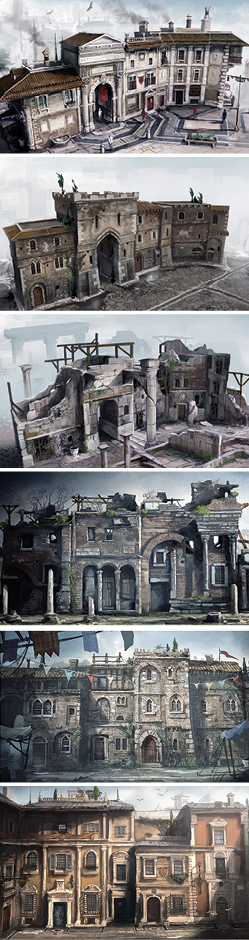
For artistic inspiration, we used architectural styles that correspond to the main periods from Roman history: ancient Roman architecture for Antico, medieval Gothic for Campagna, and Renaissance Baroque for Centro.
With a sprawling city constructed from recurrent building blocks, the secret of infusing the environment with character and flavor rests in the arrangement of these elements. It's all down to how the layout is composed, or how the different pieces fit together. Creating a varied range of architectural styles, including street furniture and props, provides our artists with a strong sense of real-world inspiration. Players should always feel they're in a living world that's been purposely built, not randomly generated.
CHRISTOPHER WEILER:
One of the ways we tried to keep the city interesting was to play around with the topology. In the Centro district, you have an environment design that is similar to previous ACs, with mazes of streets and rooftops. In Campagna, we went with the flowing hills of Tuscany. In Antico you have more cliffs and plateaus that create natural choke points. There are also thematic layers, such as commercial zones, that affected the way we built each city district. As an example: if you look at a commercial area of Centro and compare it with an equivalent collection of shops in Campagna, the results are very different – even though the same props and recurring objects are used for both.
We build worlds in a very methodical way. We use a philosophy called TGD –Technical Graphic Design – which has rules defining how every object should be created and placed, so that it remains consistent with the rest of the world. Given the size of the sandbox, it's critical that these rules are respected to avoid bugs at a later stage.
Gaelec Simard, Mission Director:
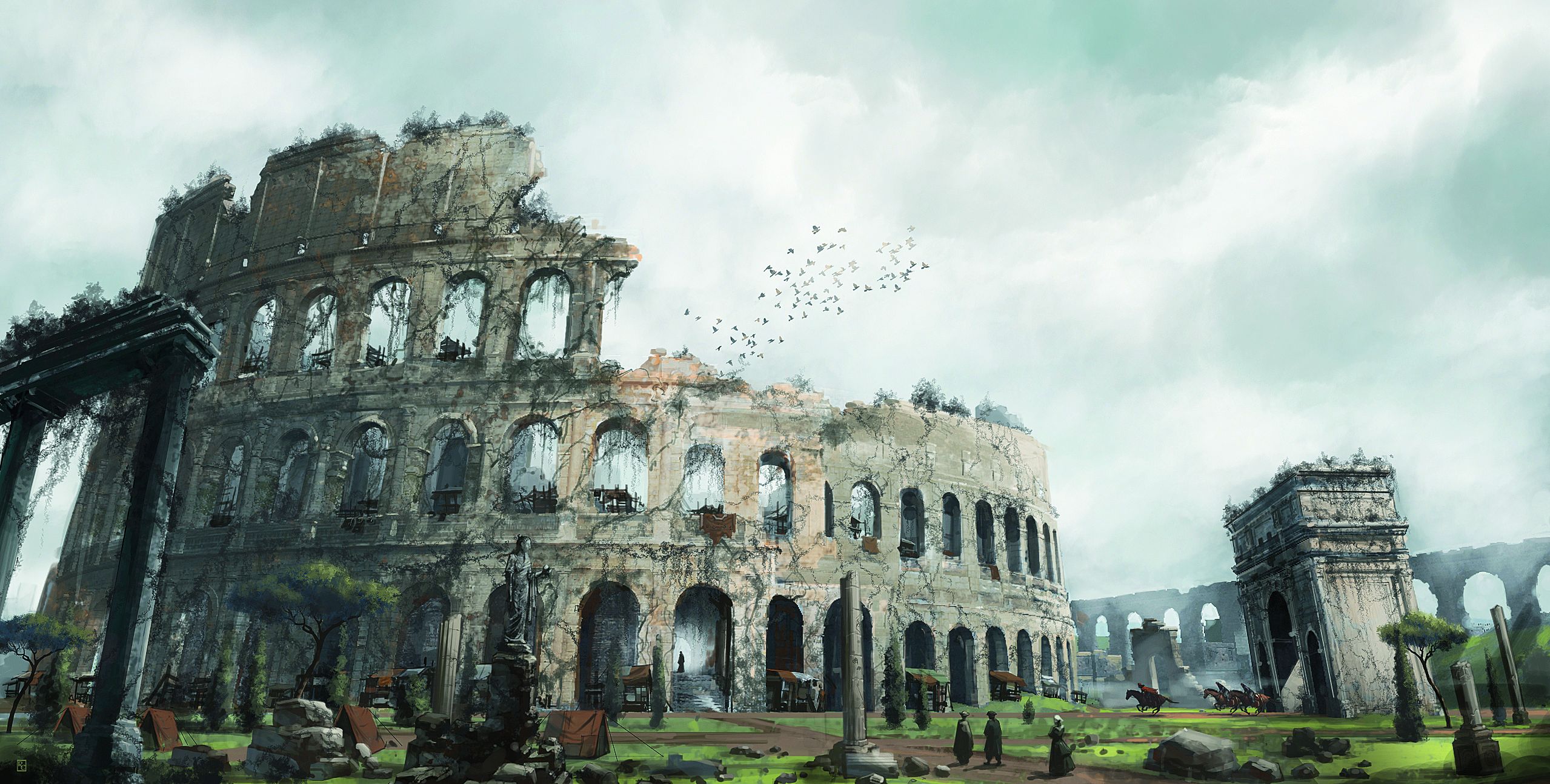
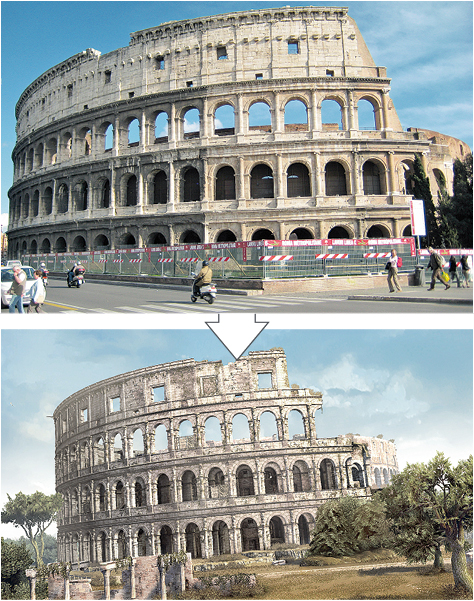
When creating a city like Rome, a need for historical accuracy prevents us from making significant changes to real-world landmarks, such as the Colosseum and the Pantheon. A designer can't go to an artist and say: "Sorry, the Colosseum needs to be two floors taller!"
Christopher Weiler:
The Colosseum is a very important landmark in Rome, so getting the right feel for its size was critical. An iconic building like this has to be broadly identical to how it looks in the real world. That said, our cities are often a quarter of their real size in area, so the level designers have a lot of interpreting to do. They need to figure out the most important elements to keep in order for the city to remain faithful, and which details they can remove for the sake of the project.
There's a lot of creative license, of course. Many details were adapted to create more interesting missions, even on famous landmarks. An example of this is the addition of hand-holds on the Colosseum to create climbing routes.
Jean-François Boivin, Associate Producer:
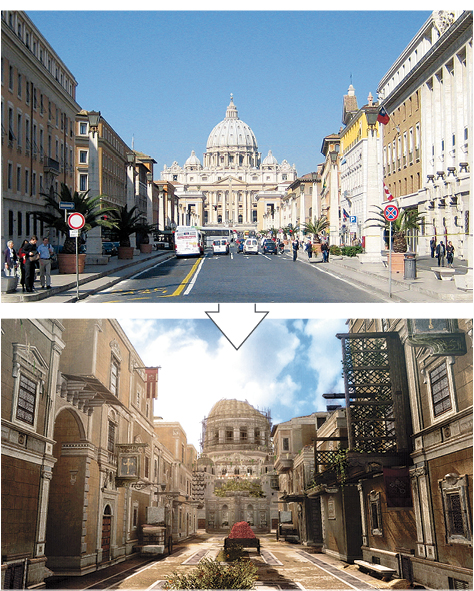
We were fortunate to have real maps of Renaissance Rome during the production period, and this inspired us greatly while designing the city. We couldn't do a one-for-one replica, of course, because it just wasn't compatible with the technical and design constraints of our game, but we insisted on many features that allowed us to be as true to history as possible. Famous landmarks such as the Colosseum and the Vatican were kept in their relative positions on the map, so our recreation of Rome makes sense on a geographical level.
Rewriting History
Gaelec Simard:
Ever since the first AC, we've built our games on historical facts and settings. Characters like the Borgia, Machiavelli and Leonardo da Vinci are all part of the fun. Whenever the game deals with a historical fact that could be questioned by anyone with 30 seconds to spare for an internet search, we have a golden rule: the game must present that fact accurately. If a historical element doesn't fit our needs, though, we prefer to drop it rather than distort it.
Jeffrey Yohalem, Scriptwriter:
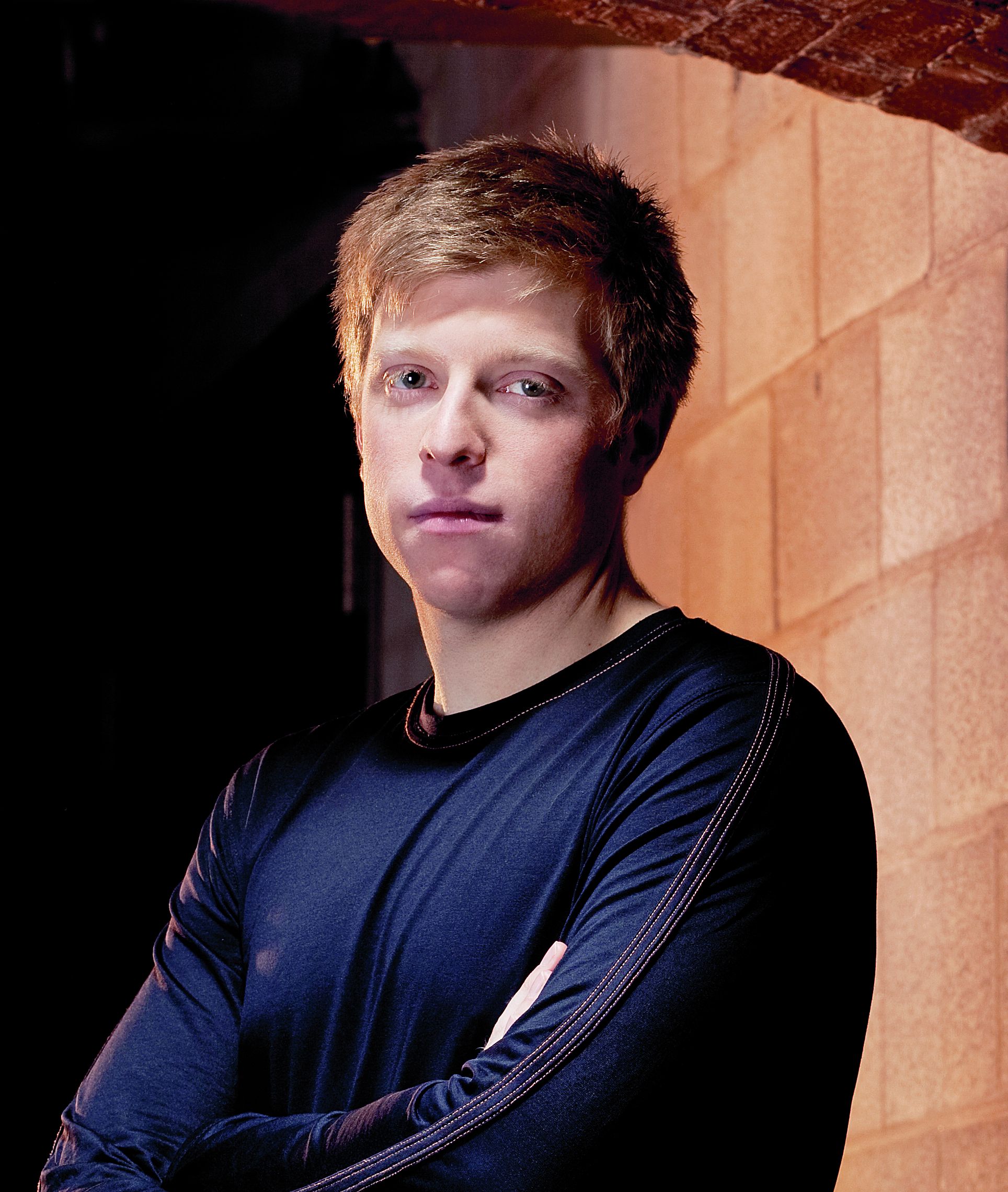
Assassin's Creed wouldn't be Assassin's Creed without strong historical characters and situations. We present "what if" scenarios amongst the cracks of history, and prompt players to rethink the world they live in. We are all history buffs on the AC team, and nothing is added to the game unless it has its basis in historical fact. I believe that this is very important to us – and to our players too. Everything in our scripts is carefully researched, then checked and rechecked for historical accuracy. We went to great pains to explore characters like Lucrezia Borgia, for example, before attempting to write about them. It is always difficult to reconcile the gap that has naturally occurred between historical and modern contexts, to understand the motivations and desires of people who died hundreds of years ago. Working on AC2 definitely facilitated the experience, since we were in the Renaissance mindset from the start.
Research is very important to the process of writing anything factual. This is especially true for the Assassin's Creed series because, in addition to the complex main storyline, there are many hidden or subtle elements just off the beaten track. Everything on the side contributes to the main storyline, so we have to pay attention to every single detail.
Character & Story Design
Jeffrey Yohalem:
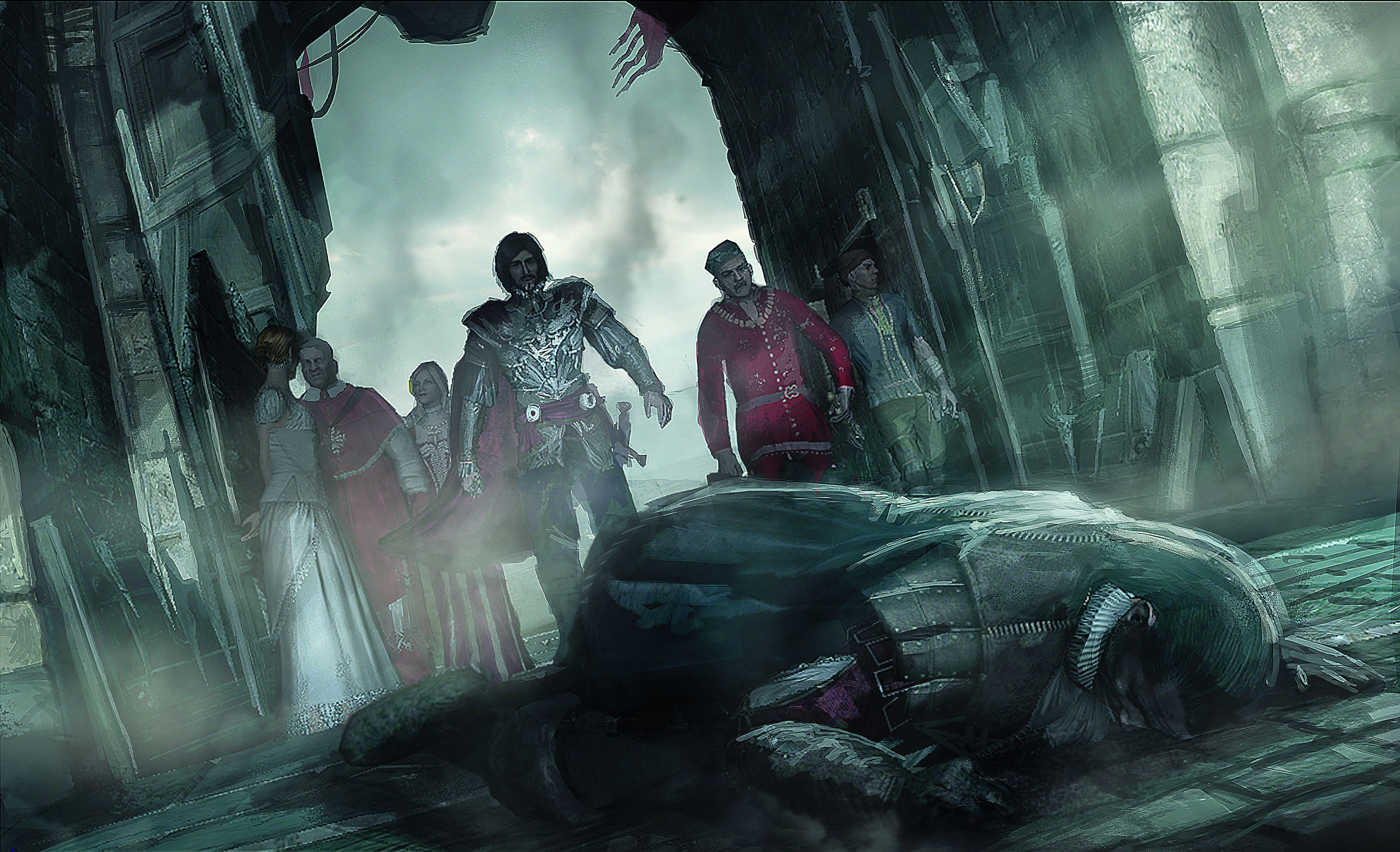
It may not be immediately obvious, but the entire story structure to Assassin's Creed Brotherhood is based on Machiavelli's "The Prince". Ezio's words and actions fit those of the ideal leader that Machiavelli portrays in his book, while each villain represents a different type of ineffectual leader. The conflicts that Ezio overcomes on his difficult journey to the top of the Assassin Order present the challenges faced on the path to leadership.

Julien Laferrière, Mission Production Manager :
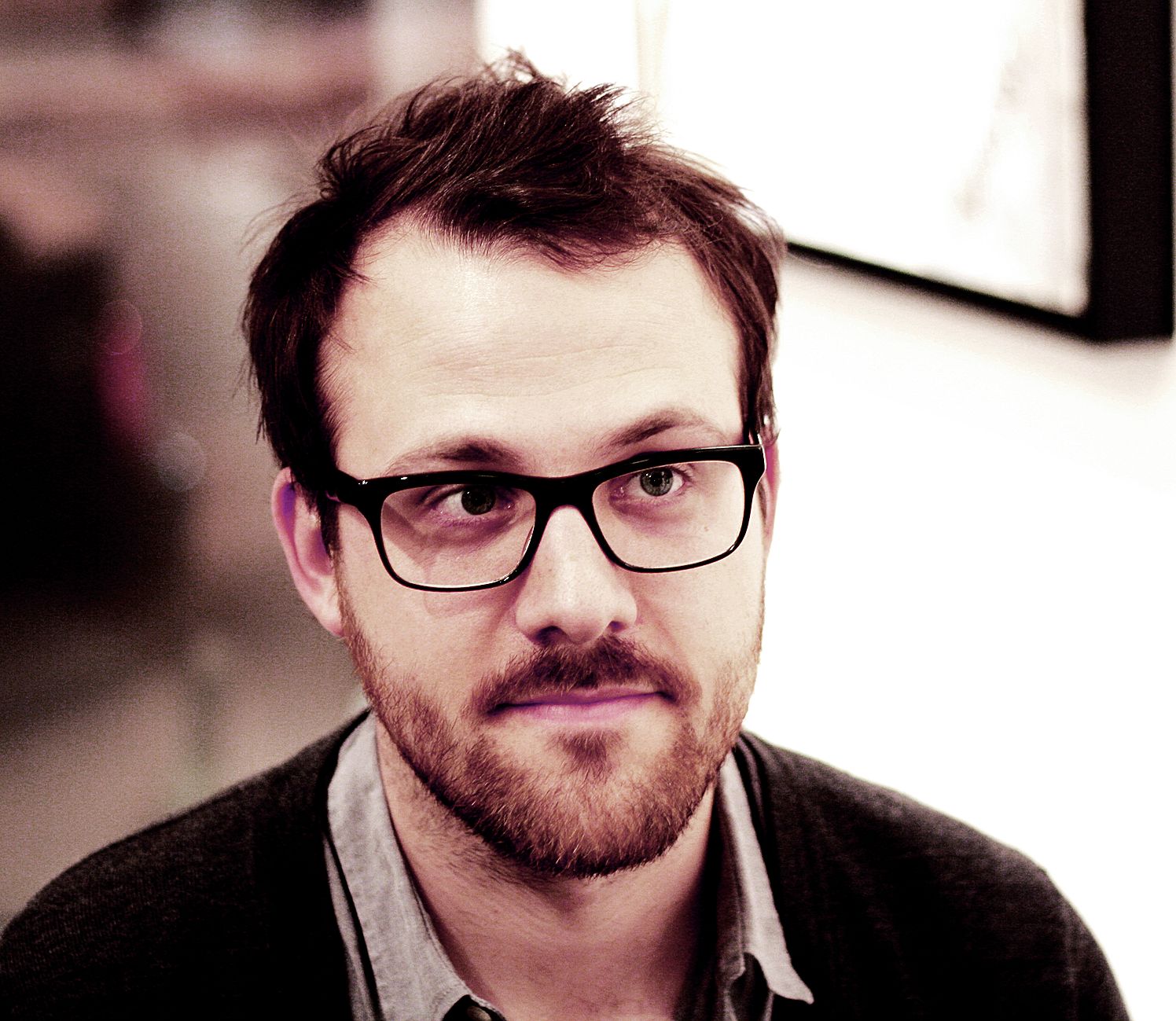
In addition to game design considerations, we knew at a more emotional level that Ezio needed to lose all of his abilities and prestige at the start of Brotherhood. This helps the player understand how Ezio must have felt: we, like him, will also have to fight to regain everything lost from AC2 over the course of this game.
As we're actually telling two stories in one, present day and past, the progression of our heroes is also an opportunity to link the narratives. I think it's fascinating to see Desmond improving as an Assassin as he learns the abilities of his ancestors. For me, the Leap of Faith he makes in the present day is a key moment. The story of Desmond is also a very good way to ensure we keep our games consistent: he's the connecting thread between AC1, AC2 and ACB. It's a bit like a cult TV show: players want to know what will happen to him next.
Patrick Plourde, Game Director:
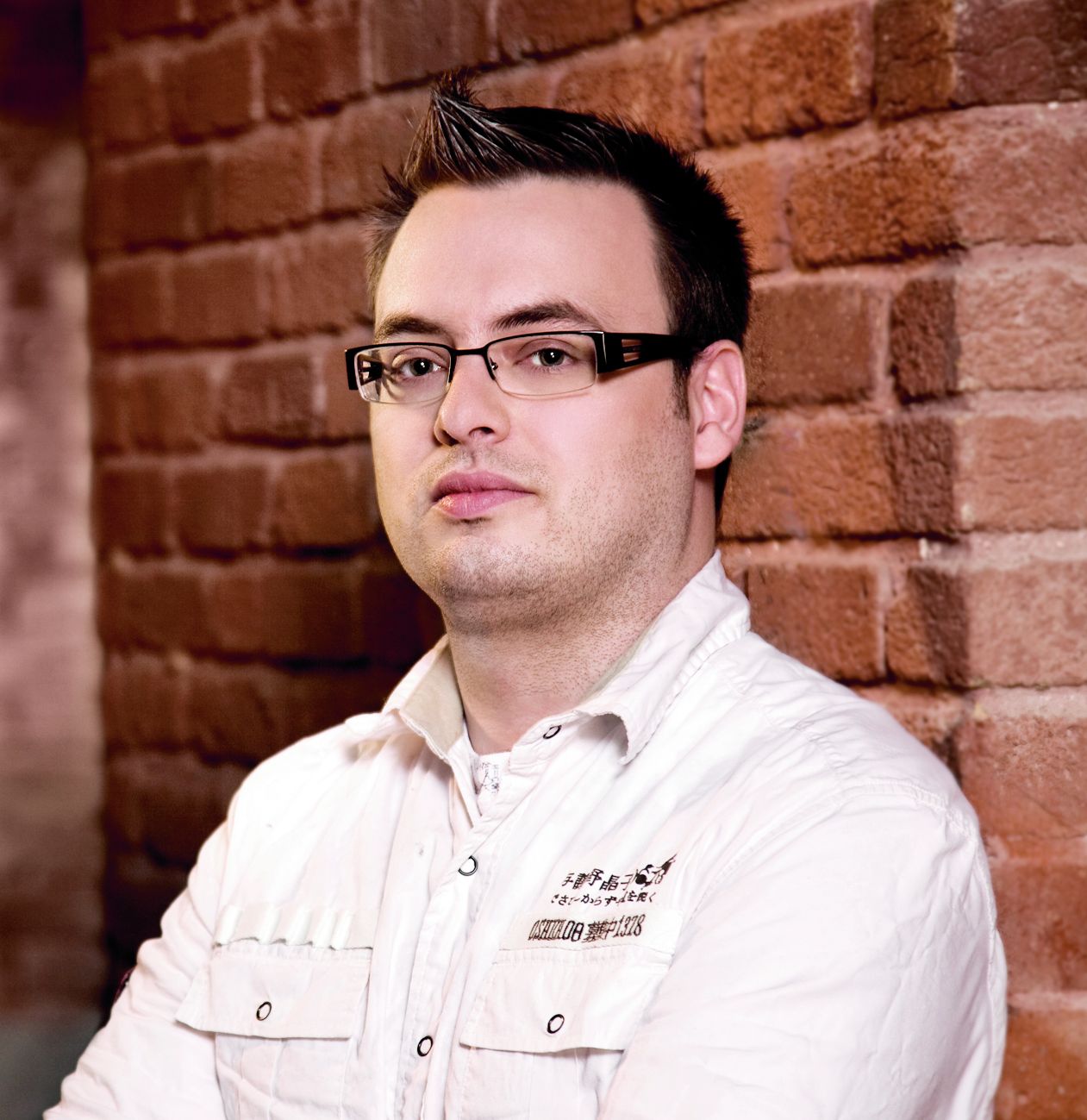
In terms of characterization, the personalities of many famous Renaissance figures – especially the Borgia – were definitely a limitless source of inspiration to us. The time period was extremely rich with remarkable and notorious men and women. We didn't want to fall into clichés, though, so it was important to give depth to each NPC. We certainly wouldn't want to have somebody be "evil" simply for the sake of it. Lucrezia Borgia is a good example. She plays the role of a villain, but gradually reveals herself to be a very complex person – even touching at times. Ultimately, you see that she is a victim of the many harsh realities of her life and times.
Sylvain Bernard, Cinematic Director:
Nobody knows exactly how Renaissance characters looked or expressed themselves. We do have stories or descriptions that we can use as references, as a foundation, but then we rely on our imagination and creativity to develop personalities and fill the gaps. We start with a solid historical base, and then add our twist to their personalities and mannerisms. It's amazing to see them come to life at each stage of development once the writer, the actors, the modeling team, the rigging team and the animators have each made their contributions. It gets to a point where we start to believe that we have a true character from history in front of our eyes.
Jeffrey Yohalem:
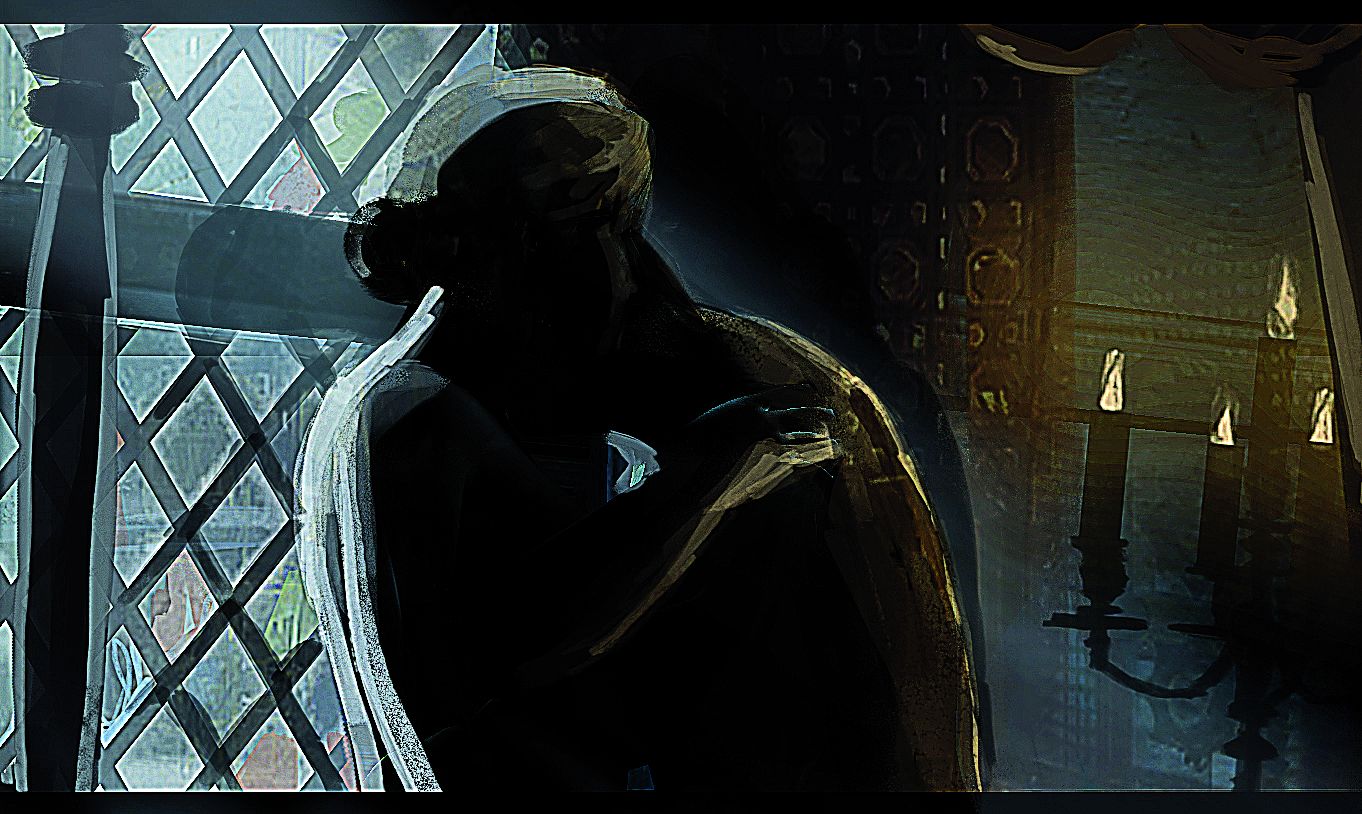
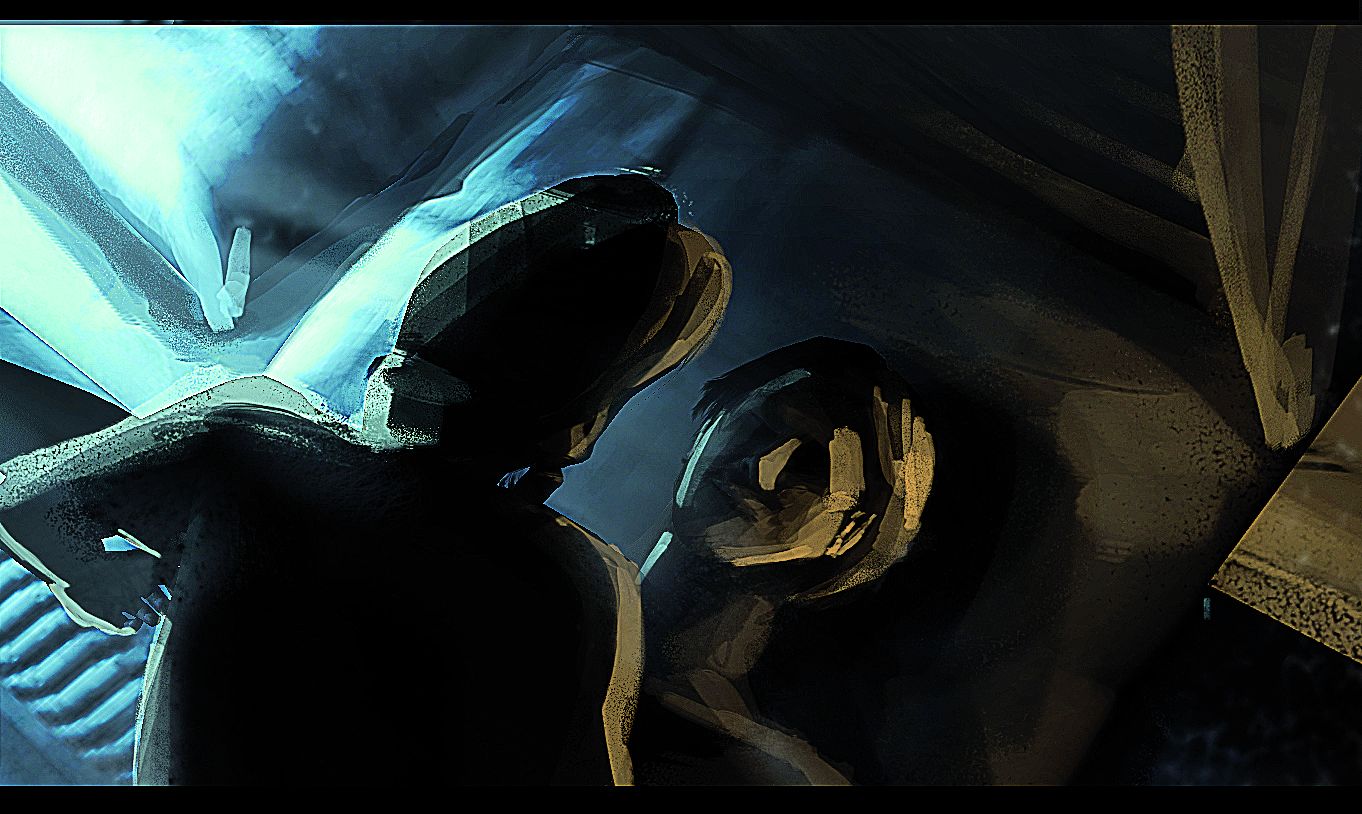
I'm especially pleased with the depiction of Ezio's relationship with Caterina Sforza. Although Ezio is a ladies' man, he allows himself to open up to her, maybe even thinking she's a serious love interest. However, it turns out she was playing him and, although he never admits it, the truth really hurts Ezio. So, in our game, the princess in her castle says "no" to the hero. I love that.
Gaelec Simard:
With ACB we wanted to push the boundaries on how we presented their relationship – among other things, we have nude and love scenes – and yet the game is moderated by a desire not to offend. However, we feel this self-censorship doesn't detract from an unforgettable experience.
Patrick Plourde: We don't aim to be controversial. As our game is popular throughout the world, there will be issues that may be more sensitive in some areas and less in others. Certain adjustments had to be made, but the spirit of the story remains intact.
Designing & Playtesting
Christopher Weiler:
If we want our fans to keep playing our games, we need to give them new challenges. While we could have created a clone of AC2, we knew players expected a brand new game with a vast number of novel features. Many of these were drawn from fresh ideas, but some of them have actually been on the design table since the very first Assassin's Creed.
For example we have always wanted to include a "hard mode" – a kind of "the way an Assassin would really do it" mode – that would force players to use more of the tools and abilities at their disposal. We just didn't have time to balance this in previous installments, but it's something that we've managed to add to ACB through the Full Synch conditions. These make missions much more challenging. Similarly, we wanted to see NPCs on horseback, as it always felt odd to us that the Assassin was the only character who could ride.
Another example concerns guards. In previous games, you sometimes got the impression that they didn't really have an authentic purpose in the city. With the introduction of Borgia Towers, guards really do have a distinct role, It's also clear that these "Restricted Areas" are heavily militarized for a very particular reason. The inclusion of the Borgia Towers now means that certain missions can be much more difficult if a player does not liberate the area in advance. For me, such choices are essential elements in a sandbox game.
Rebuilding Rome metagame
Gaelec Simard:
We take all player and game reviewer feedback very seriously, and it's something we bear in mind when designing an AC game. As our goal is to create the most polished experience possible the input we can gather from these sources can also contribute to that objective.
Two examples spring to mind. The feedback we received regarding combat told us that players expected more variety, so we've totally revamped the system. We decided to make fights more dynamic. You can still perform Counter Kills, but you'll dispatch enemies way faster if you strike first and strike fast, especially with the new Execution Streak ability. Even our guard archetypes have been reworked to offer new challenges.
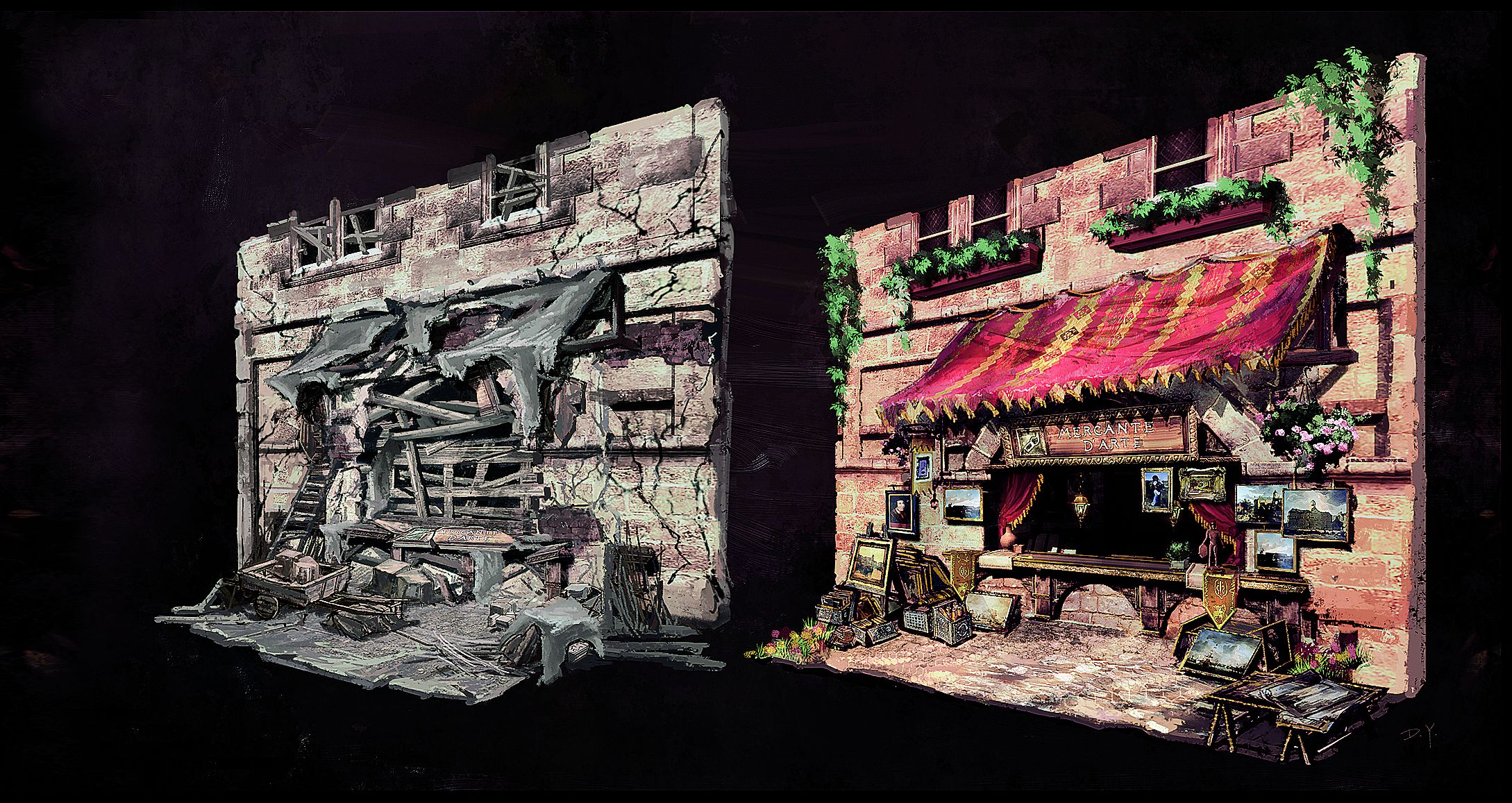
Conversely, AC2's Monteriggioni management game was greatly enjoyed by most players – so we've kept it, and now expanded it across the entire city of Rome, adding many new elements to enrich the system. This is not to say that there aren't more features that we could improve. The beauty with gameplay is that there is always room for innovation.
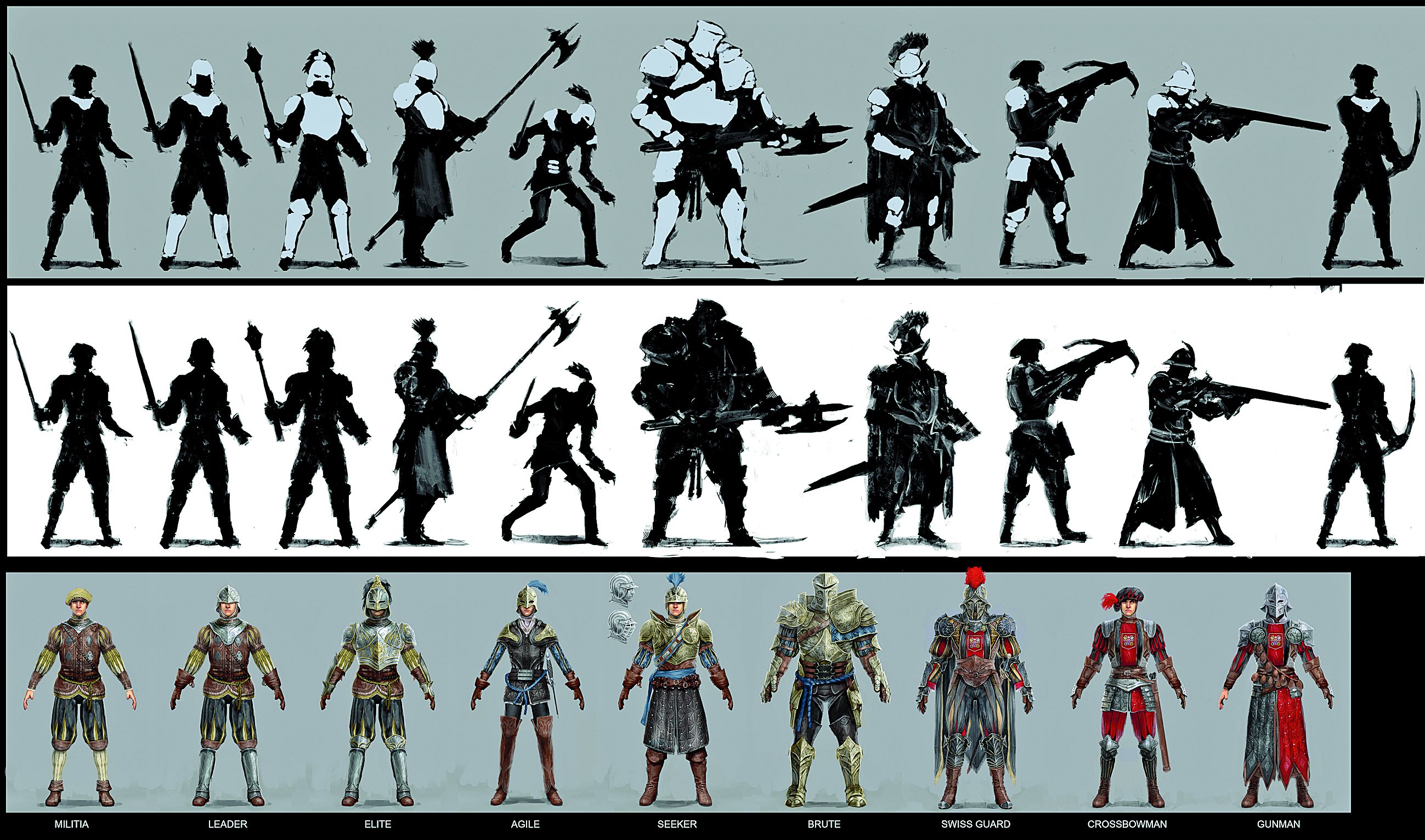
Enemy archetypes
Brian Lee, Lead Programmer (Combat):
There is always room for improvement, and we constantly have ideas for new features. As game developers, however, we have to balance what's cool against what we can deliver on time and in a polished state. At the end of the day, we always choose what will be most fun for the player. In fact, that is exactly what we did with the combat system.
We had to define the new combat system direction at a very early stage in the project. We were clear on our overall goals, and had a plan to achieve them, but we also had to lock down plenty of features without knowing exactly how well they would combine. Our motto for combat was "Strike First, Strike Fast." This meant giving control of combat to the player, and the freedom to develop their own fighting style. To do this, we've taken the existing mechanics from AC2 and added new ones such as Executions. Putting all of these mechanics together in a fluid system allows the player to establish a rhythm of attack and defense. By performing various moves in sequence, the player can dispatch many enemies efficiently and with style.
We always wanted the combat mechanics to be accessible to novice players. At the same time, we needed the system to be challenging for expert gamers. To find the right balance we went for a layered approach, so that players can start with the fundamentals and progress to more advanced techniques at their own pace. For example, they will first learn how to perform an Execution, then how to chain multiple Executions back-to-back, before mastering how to counter an incoming enemy attack while performing an Execution Streak.
As with other parts of the game, playtesting was essential to nailing the fun factor. We designed and implemented each new feature, then revised it until we had something that we thought was fun to play. I should add that our playtest lab and player feedback gave us invaluable real-world input.
Producing the Game
Jeffrey Yohalem:
On previous installments, the story was written prior to the missions – and the mission designers clearly didn't enjoy that approach. They believed it restricted their creativity too much. ACB's mission designers were given more freedom to develop ideas before a detailed story bound them. Given a rough story outline, they brainstormed and came up with fun gameplay situations to fit that framework, fleshing out details in the process. We then wrote the script based on their mission ideas, and ended up requesting several additional missions to help complete the story structure. So it was much more collaborative, and I think a strong story emerged from that teamwork.
Julien Laferrière:
Each mission designer was put in charge of a Sequence and had full responsibility to make it fun and entertaining. As a rule, we tried to address the risky Sequences first: those that seemed to be good ideas on paper, but whose viability needed to be confirmed. On ACB, we wanted to establish the full scope of the game at a very early point in the development process. We worked hard to ensure that we had all our missions ready as early as possible, even though some parts still lacked polish. It gave us a very good impression of what ACB would feel like.
Christopher Weiler:
The game engine we've been using – Anvil – was created in 2007. Anvil saw many improvements from AC1 to AC2, evolving with features such as the day/night cycle. For ACB, we improved our ability to manage memory and make better use of our assets. This was essential in creating a city as large and detailed as Rome. We took advantage of what we had learned in many ways, improving the rendering speed on console versions and enhancing our navigation mesh: the map used by the pathfinding AI to get each NPC from A to B.
Gaelec Simard:
It's so much easier to work with known tech and squeeze more out of it. This is partly why we were able to do so much and add so many new features in so little time. Anvil is an incredible engine and we've really pushed it to the limit with Rome, the biggest city we've ever built.
In the end, we were somewhat surprised by ACB's size. I guess every department wanted to add just one thing more. As a consequence, it's a huge game, with significantly more optional challenges than the previous episodes.
Patrick Plourde:
Giving more freedom to players is always a good thing in a sandbox game. From a design perspective, we have become more at ease with letting the underlying systems run the show. My previous experiences with game design taught me to limit the influence of the "designer's way" on our game systems, avoiding the use of little rules that constrain AI or individual interactions. I guess you could say that we let the game find its own identity.
Gaelec Simard:
The desire to offer the player freedom was a big reason behind the decision to have Ezio begin ACB by losing most of what he had gained in AC2. The process of starting from a low-level character and guiding him to become the ultimate Assassin is not, strictly speaking, essential to the balance of an AC title. That said, there's a real satisfaction in seeing your character progress, acquiring new skills and customizing him to fit your tastes.
Naturally, new features and freedoms need to be carefully balanced. For example, Ezio can now summon aid from trained recruits. Allowing him to call reinforcements or even kill targets without intervening himself is a very powerful ability. In this case, we had to carefully consider the number of available Assassin Signals, their recharge time, how easily the recruits would level up – or die trying – and so forth. In short, we have to ensure that each feature, no matter how powerful, doesn't break the game's balance in the end.
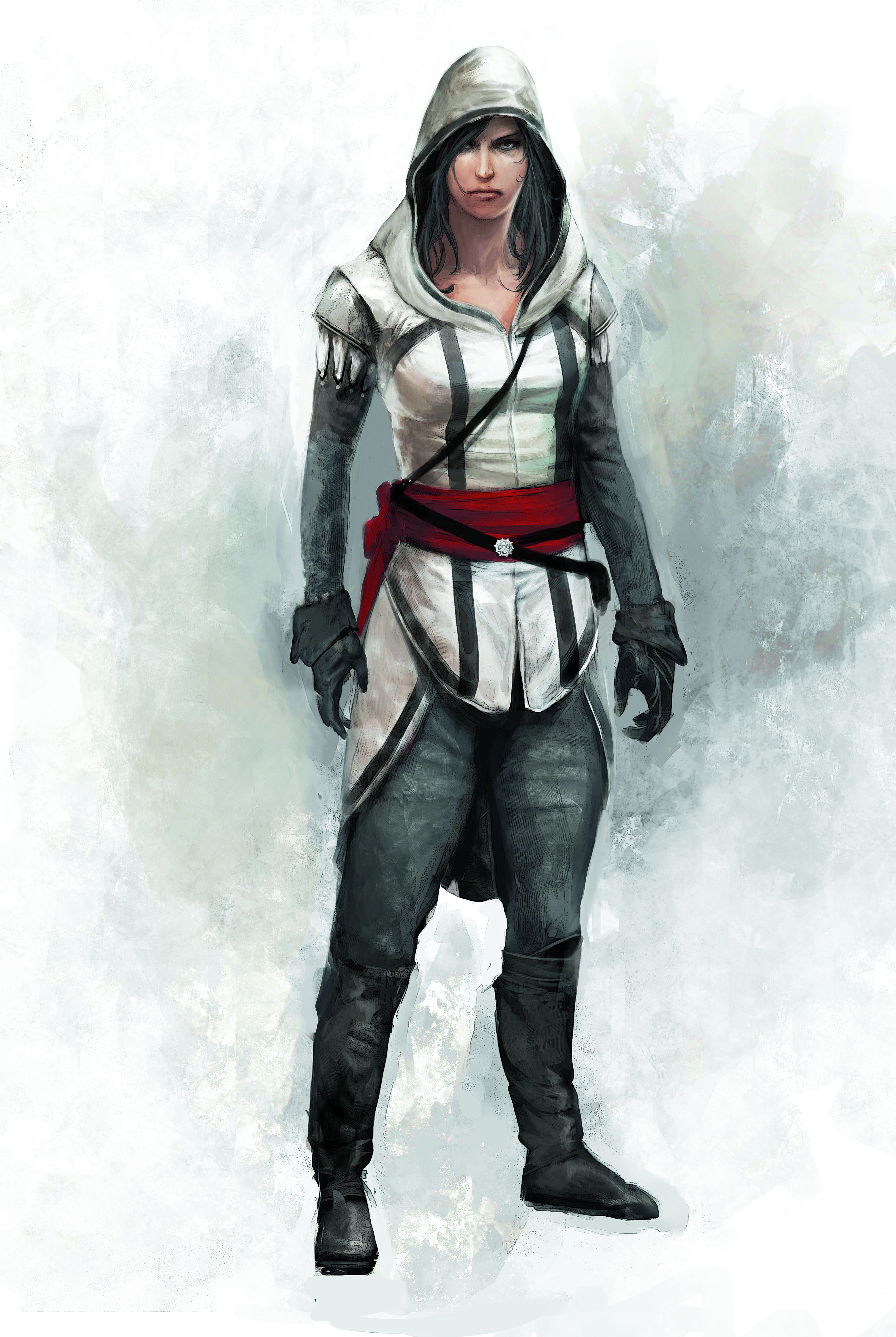
Assassins Guild members
Patrick Plourde:
The fact that we decided to reward a more direct and aggressive approach to combat through Execution Streaks had obvious repercussions. To offset this, we used the various enemy archetypes to encourage players to adapt their strategies to each fight. As we also increased the numbers of guards in the game from AC2 to ACB, we fine-tuned the overall balance by adding systems like the Assassin Signals – but this in turn had to be counterbalanced, so as to not hinder the game's difficulty.
All of these systems allow the player to experiment, choose the techniques that appeal most, and therefore establish a bond with them. For example, if you level several assassins up to the maximum level, you might then feel proud when they perform impressive feats when called to assist you.
Bringing Multiplayer to Assassin's Creed
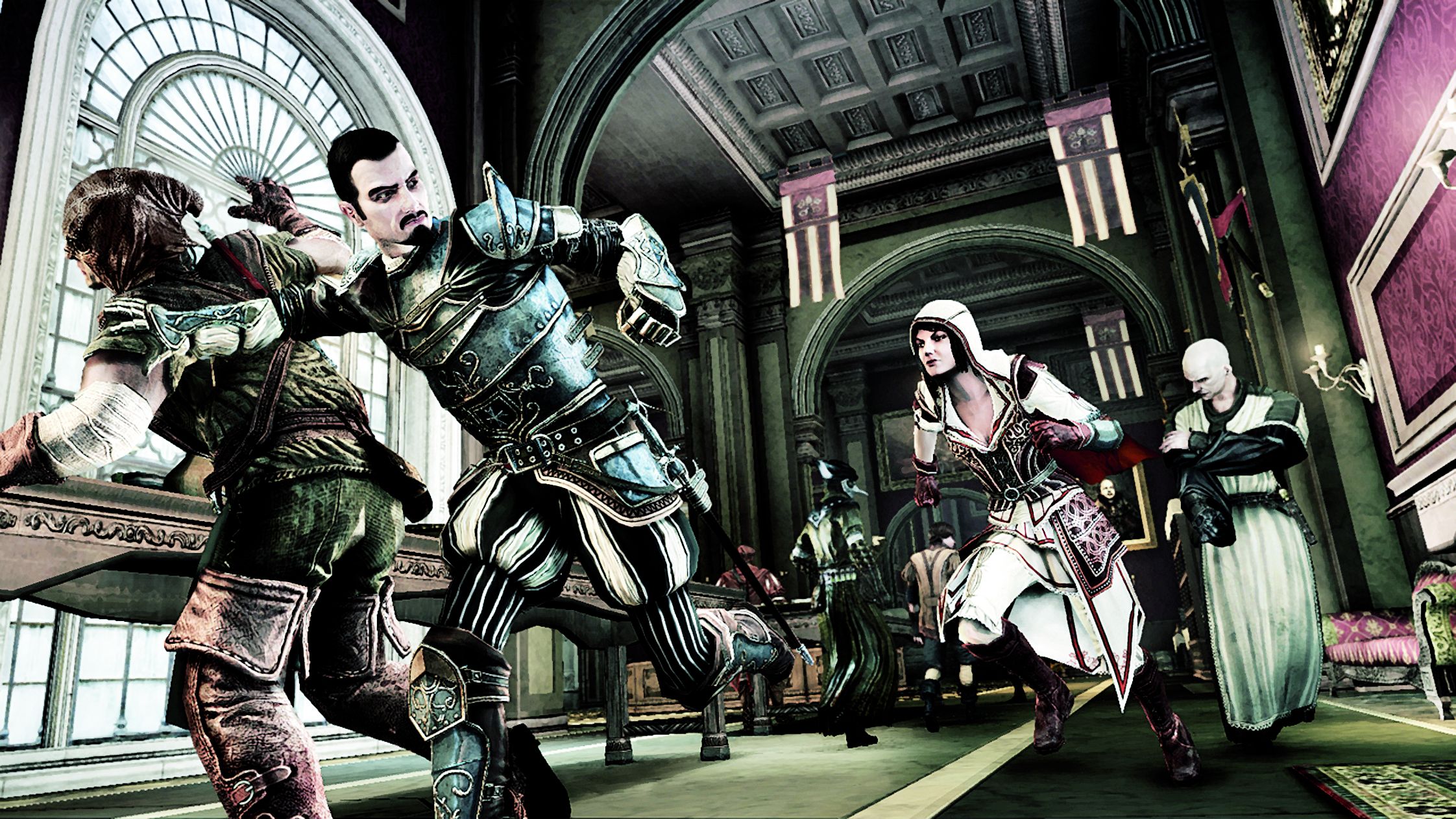
Stéphane Baudet, Creative Director (Multiplayer):
We've always wanted to develop the Templar side of the story in order to build up to a climax in the struggle between the Assassins and the Templars. Being a new addition to the AC brand, the multiplayer mode was a perfect opportunity to develop this story thread: it gave us freedom to add new characters, locations and gameplay elements. But as the MP mode remains part of the AC world, we had to be consistent with Desmond's story. We achieved this by giving a new sense to things seen in previous episodes. For example, the multiple Animus machines observed during the Abstergo escape in AC2 are explained through the MP mode.
From a game design perspective, the initial concept of the multiplayer mode was inspired by a live RPG called Killer and the movie Highlander. Every character in the loop has to assassinate a designated rival, while being the target of another. We had the luxury of a full year to build various experimental prototypes. Our objective was very clear: the multiplayer experience had to be innovative, fun and respectful of the AC universe. If one of those goals was not met, multiplayer would never see the light of day.
The real challenge for us was to reconcile the features of the AC series with the capricious human element: players are unpredictable and sometimes downright contrary when it comes to doing what is expected of them. Designing a solo game and a multiplayer mode are two completely different things. In MP, the players create their own game experience. We can't use scripted events to force them to play the way you think they should. What we do have, though, are mechanics such as game rules, score and real-time feedback systems that can be used to encourage players to behave in a certain manner – the way, in short, that will lead them to win.
In order to make the game fun to play, we observed and recorded statistics during playtest sessions. Using data from players of all levels, we adjusted the rules to remove the frustrating elements and increase the fun factor. It's a bit like cooking: you taste the result and then adjust the ingredients to get the best possible recipe.
In the end, the biggest accomplishment for the multiplayer team was to have convinced everyone that a multiplayer mode did belong in the AC universe. I hope that the AC fan community will also embrace this new addition to the franchise, and that multiplayer will become an important part of future AC titles.
Managing the Franchise
Gaelec Simard:
Most elements of the AC main plot and mythos are based on interpretations of real facts. The Garden of Eden, Greek and Roman polytheism, famous historical figures: all of these take on a new sense in the game. I think it's also, partly, the excitement of reliving historical events that makes the game so successful.
Consistency is a priority for us at franchise level. The AC series has spread in many different directions, from portable gaming platforms to novelizations, but we have a dedicated team that takes care of managing the brand. They bring a creative insight and keep the universe devoid of logic holes – and that's especially important when you consider the complexity of our universe.
Jeffrey Yohalem:
Although we know where the games are going, the journey always reveals new twists and turns. The Subject 16 puzzles were a surprising new addition to the Assassin's Creed franchise that we've been very happy with. In ACB, these allow us to flesh out several aspects of the storyline that we don't have the space to convey in 2012 Monteriggioni. Additionally, we can partially incorporate the storyline from 2012 in the world of the past through the Subject 16 puzzles, enabling a more intricate interchange between past and present without sacrificing either. If you follow the leads inside by researching the events discussed in these puzzles, you will find that we have used them to set up new developments that will feature later in the series.
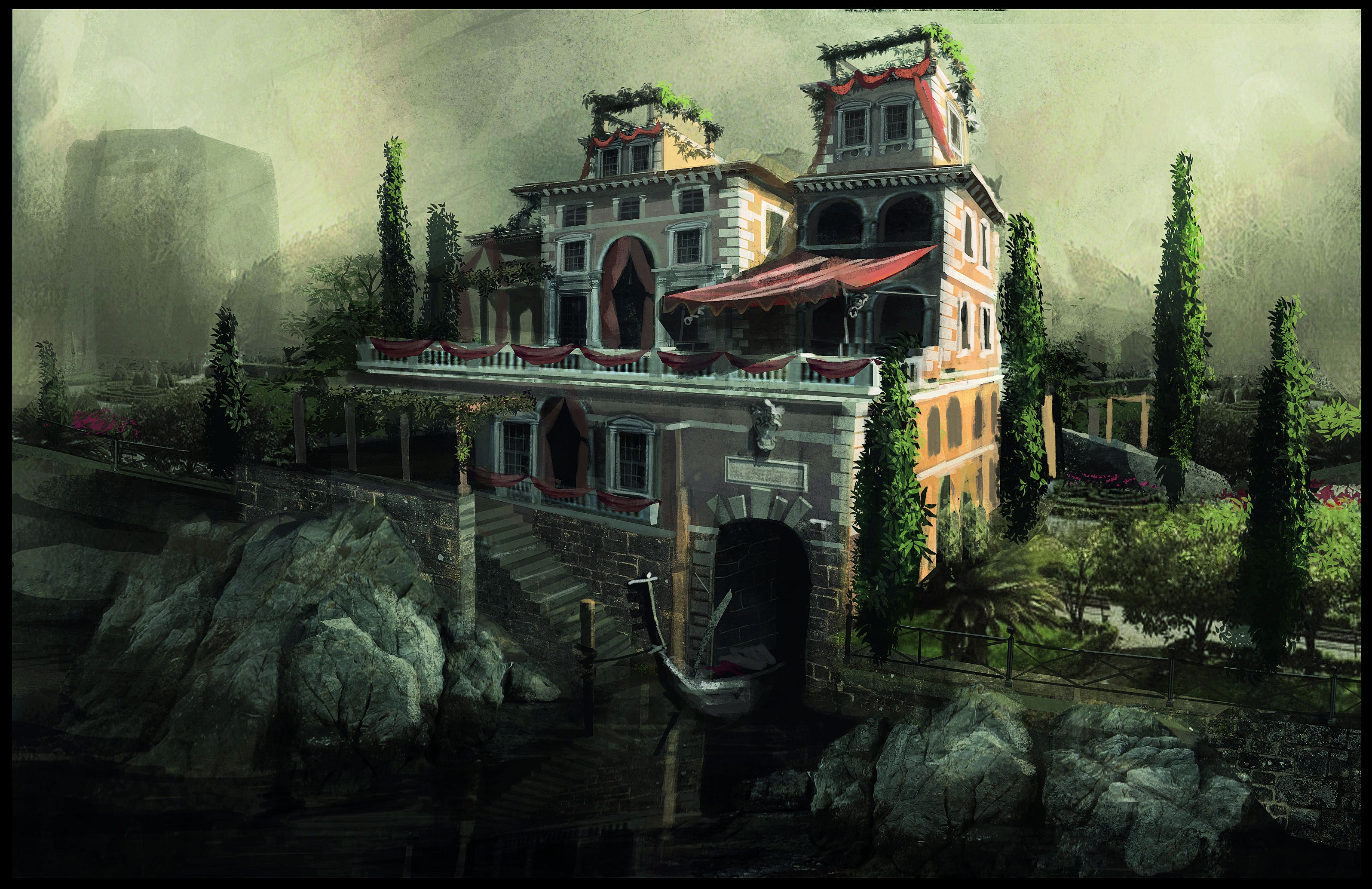
Courtesans Guild
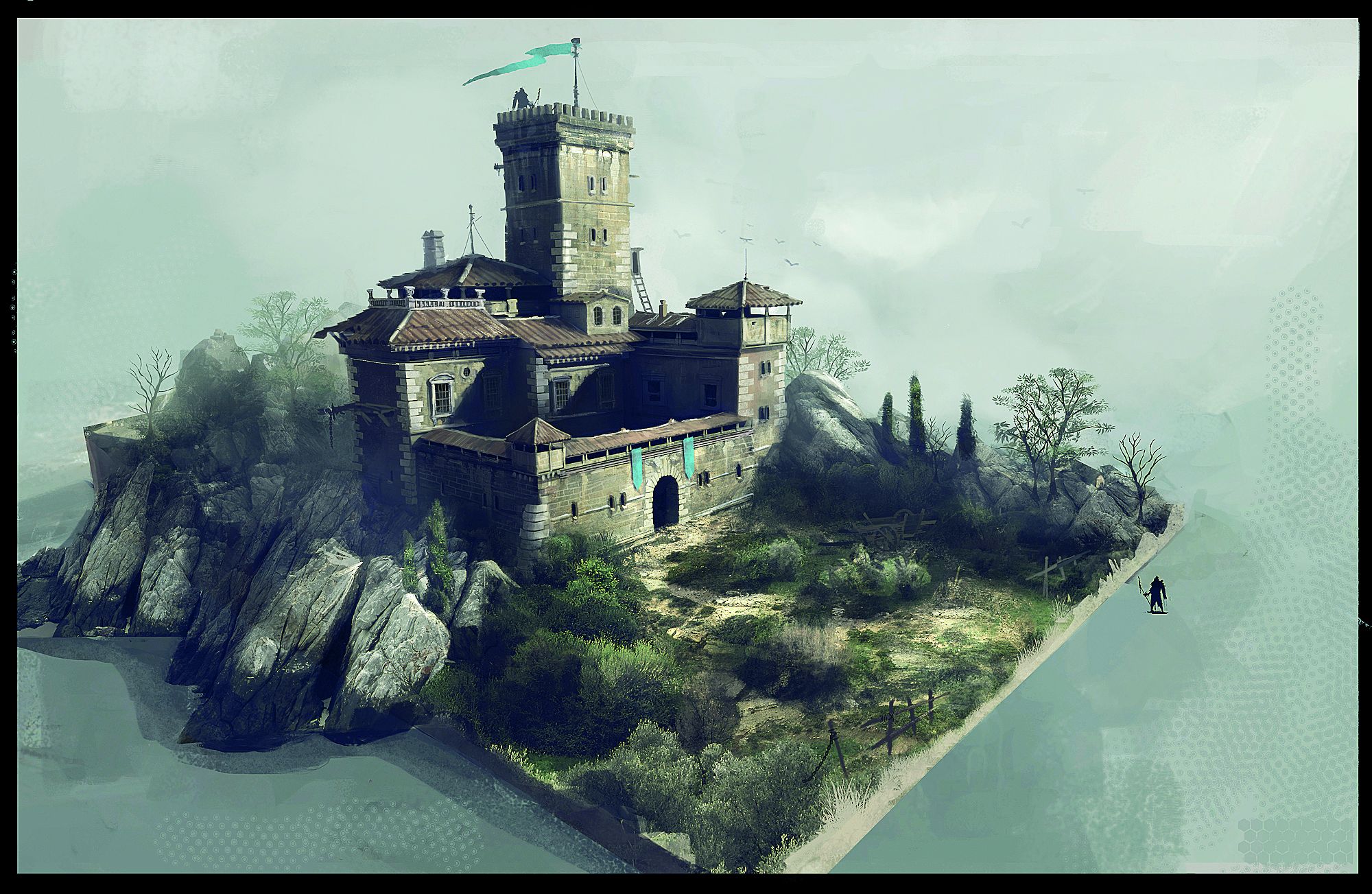
Mercenaries Guild
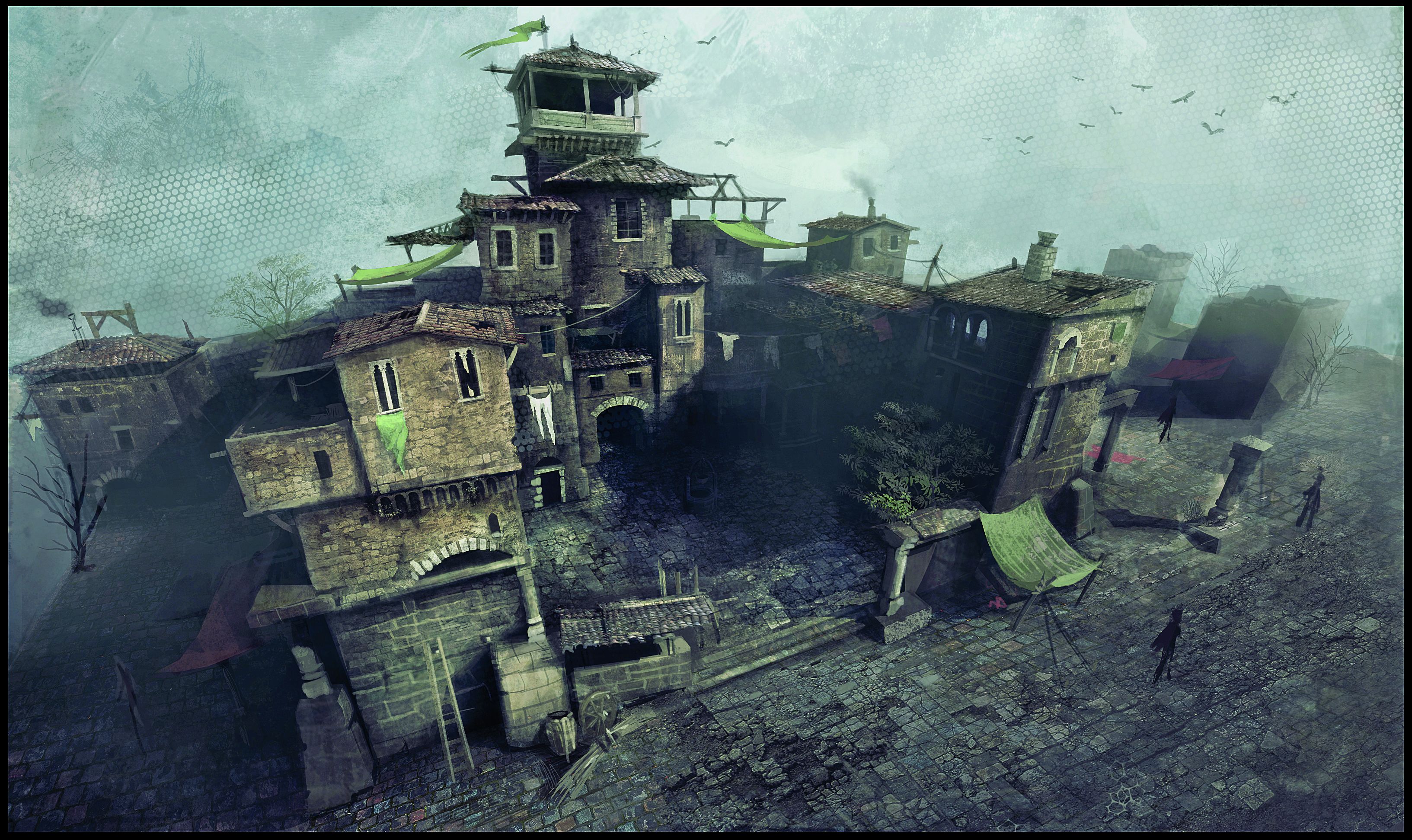
Thieves Guild
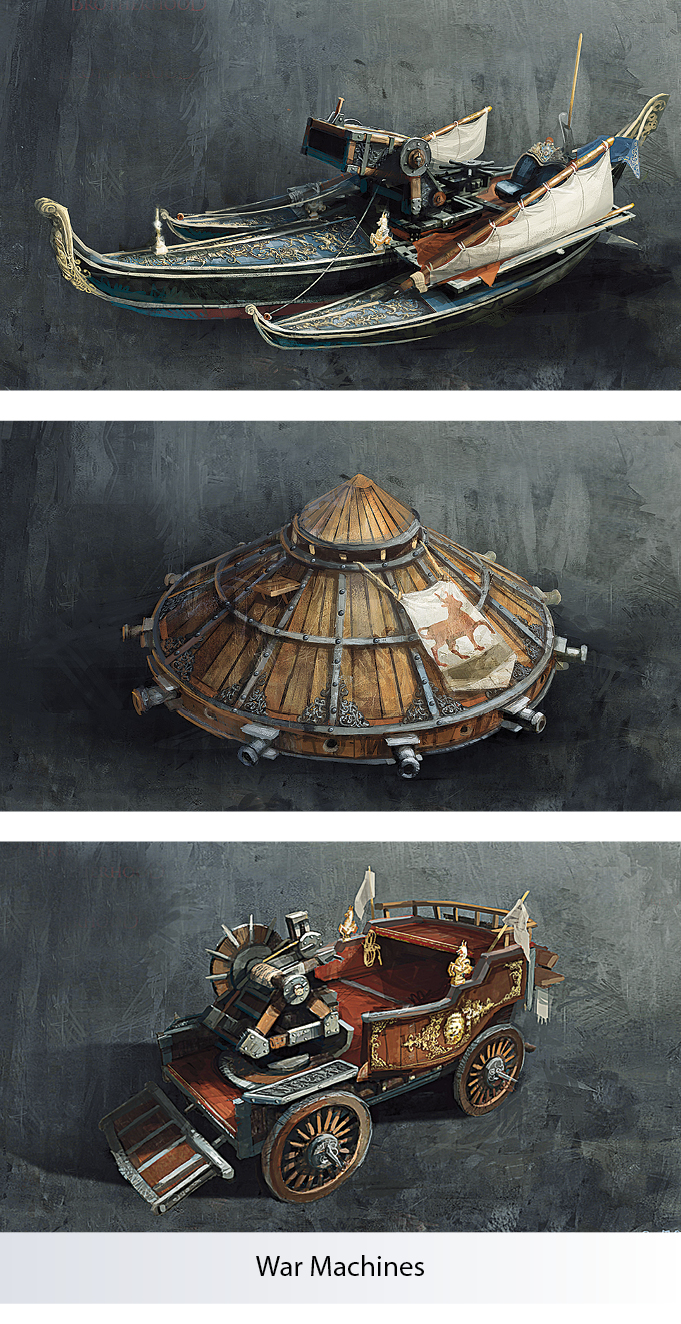
War Machines
Jean-François Boivin: We want to keep players guessing as to where the story will go next and we have planted hints on this. These are subtle, so we do hope that the most perceptive players will spot the clues, do the research, and then speculate with others as to what might happen in the next episode. It's great fun for us developers to read the forums and see what people think. The fact that they spend time discussing and debating the story at length is a testament to how much people like the universe we have created – and that's the very reason we love making games.