
Tropico 4 Guide Essentials Buildings
Food and Resources
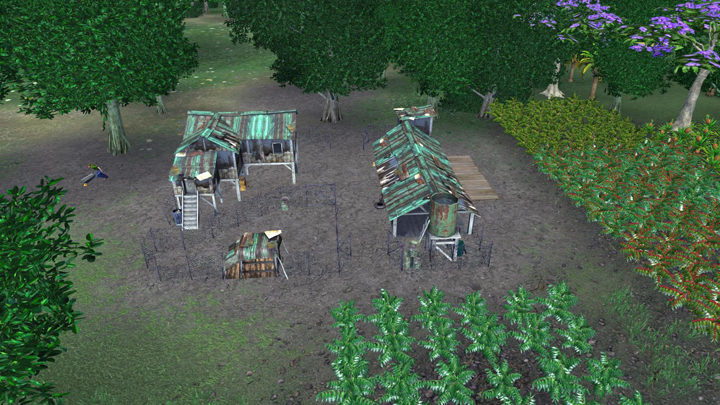
Farm
Base Construction Cost:
$1,500
Upkeep:
$4
Additional Costs:
None
Work Modes:
Corn (a food crop that thrives in most conditions); Banana (a food crop that thrives in elevated areas); Papaya (a food crop that thrives in humid conditions); Pineapple (a food crop that thrives in humid, elevated areas); Coffee (a cash crop that thrives in elevated areas); Tobacco (a cash crop that thrives in elevated areas); Sugar (a cash crop that thrives in humid, low altitude areas)
Worker Requirements:
Uneducated
Maximum Workers:
6 Farmers
Available Upgrades:
None
The Farm is the simplest way to provide food to your citizens, but it can also be used to produce profitable exports. Farms require a good deal of space to grow their crops, so careful planning is required to ensure successful harvests.
When you select a Farm from the build menu, select the intended crop to display the pertinent overlay. Place each Farm in an appropriate location, but remember that crop conditions will change over time.
As the soil is depleted of nutrients, the production of each Farm drops off. Relocate struggling Farms, or select a new work mode to produce a crop more suited to changing conditions.
Most missions begin with a few established Farms, but you’ll generally need to build several more to keep pace with a growing population.
Farms take several months to yield viable crops, so try to build several of them at the start of each mission.
Mine
Base Construction Cost:
$3,000
Upkeep:
$10
Additional Costs:
None
Work Modes:
All Resources (harvests all nearby metals); Iron (harvests nearby iron deposits); Bauxite (harvests all nearby bauxite deposits); Gold (harvests all nearby gold deposits)
Worker Requirements:
Male, uneducated
Maximum Workers:
5 Miners
Available Upgrades:
Crusher ($1,500, 5MW) increases bauxite production by 15 percent and iron production by 30 percent; Separator ($5,000, 10MW) increases iron production by 40 percent; Screener ($3,000, 10MW) increases gold production by 20 percent and bauxite and iron production by 10 percent
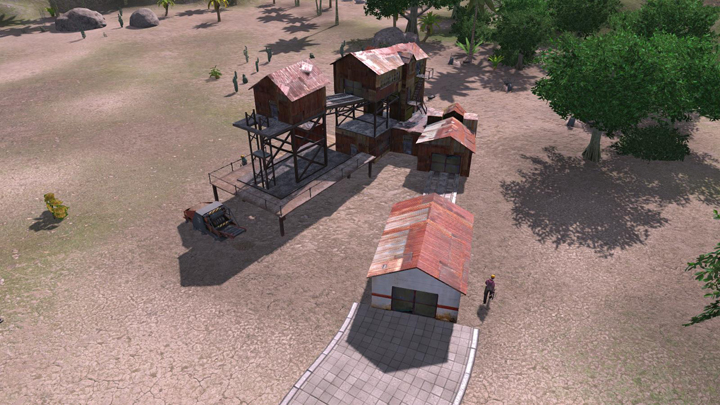
The Mine is one of the most profitable investments available to an underdeveloped nation. When an island has untapped metal deposits, construct a few mines to turn available resources into essential capital.
In the early stages of a mission, use Mines to gather resources for export. As your economy develops, your Mines can feed raw materials to various factories.
When you select a Mine from the build menu, use the respective overlays to find the desired metals. Deposits deplete over time, so consider upgrading each Mine to make the most of your island’s resources.
Environmentalists will demand you shut them down, but you may find Mines to be your best option in a struggling economy.
Ranch
Base Construction Cost:
$750
Upkeep:
$2
Additional Costs:
None
Work Modes:
Cattle (produces profitable beef); Goats (uses more adaptable goats to produce less profitable goat cheese); Llamas (uses quickly maturing llamas to produce low-profit llama wool)
Worker Requirements:
Uneducated
Maximum Workers:
2 Farmers
Available Upgrades:
Smoke House ($2,000) produces more profitable smoked beef
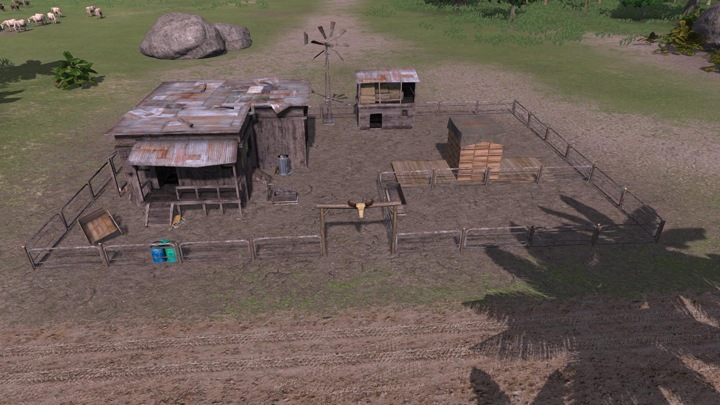
Construct Ranches to add variety to your food supplies or to exploit global demand for specialty products. Like Farms, Ranches require undeveloped land to support their production.
When you select the Ranch from the build menu, use the respective overlays to find appropriate locations for the desired production, but try to place them away from populated areas.
The Ranch is fairly inexpensive, but it requires a great deal of land to maintain sufficient production.
Salt Mine
Base Construction Cost:
$3,000
Upkeep:
$8
Additional Costs:
None
Work Modes:
None
Worker Requirements:
Male, uneducated
Maximum Workers:
4 Miners
Available Upgrades:
None
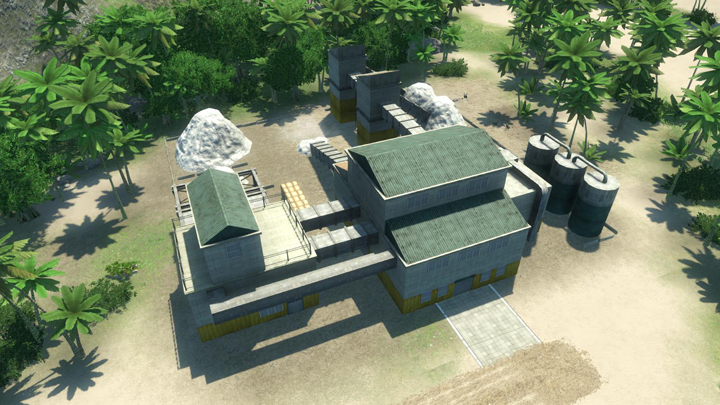
The Salt Mine allows you to take advantage of another common resource. When you select the Salt Mine from the build menu, the salt overlay automatically appears.
Place the Salt Mine on a marked deposit to begin harvesting this potentially profitable commodity.
Fisherman’s Wharf
Base Construction Cost:
$3,000
Upkeep:
$10
Additional Costs:
None
Work Modes:
Clean Waste Disposal (minimizes pollution); Back to the Sea (reduces upkeep by 50 percent, increases upkeep by 50 percent)
Worker Requirements:
Male, uneducated
Maximum Workers:
4 Fisherman
Available Upgrades:
None
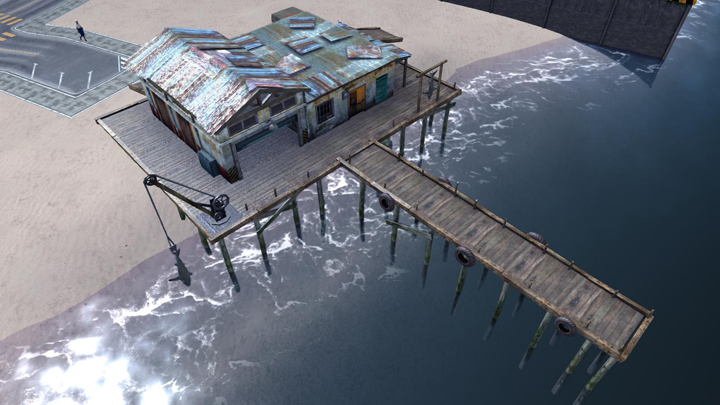
Use the Fisherman’s Wharf to supplement your island’s food production. When you select the Fisherman’s Wharf from the build menu, the fishing overlay automatically appears.
Place the building near rich fishing grounds to help feed your citizens, or to export gathered fish to foreign countries. Fishing yields a usable product almost immediately.
If an island has suitable waters, consider building at least one Fisherman’s Wharf when the mission starts. Fishing quality changes over time, so you may need to relocate your fishing operations as you progress through a mission.
Remember that the wharf does not actually connect to any roads, so for fish to get to market quicker, you will want a teamster’s close by.
Logging Camp
Base Construction Cost:
$1,500
Upkeep:
$5
Additional Costs:
None
Work Modes:
Clear Cut (harvests all nearby trees, reduces the beauty of the area); Selective Harvest (harvests half of the nearby trees to preserve the beauty of the area)
Worker Requirements:
Male, uneducated
Maximum Workers:
8 Lumberjacks
Available Upgrades:
Tool Shop ($3,000) trees are cut 60 percent faster; Horticulture Station ($1,500) trees regrow twice as fast
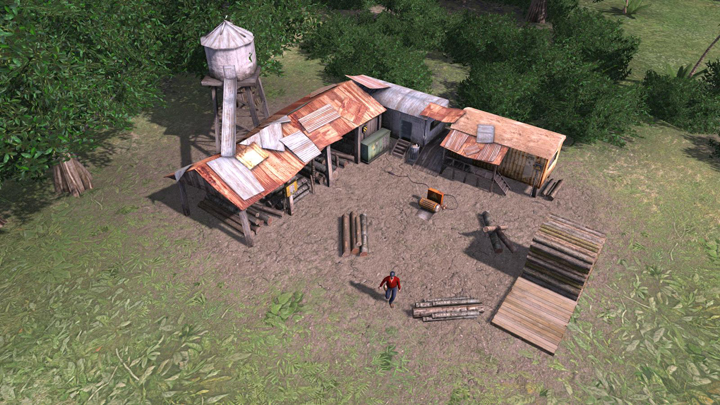
The Logging Camp can be an extremely profitable early investment. Undeveloped islands typically have ample forests, so you should be able to find any number of suitable locations for a logging operation.
When you select the Logging Camp from the build menu, the logging overlay automatically appears on your screen.
Select a forested area to establish your Logging Camp for a generally reliable source of income. With careful planning and some prudent upgrades, you can re-forest depleted areas for prolonged logging operations.
Marketplace
Base Construction Cost:
$500
Upkeep:
$1
Additional Costs:
None
Work Modes:
None
Worker Requirements:
Female, uneducated
Maximum Workers:
1 Shopkeeper
Available Upgrades:
None
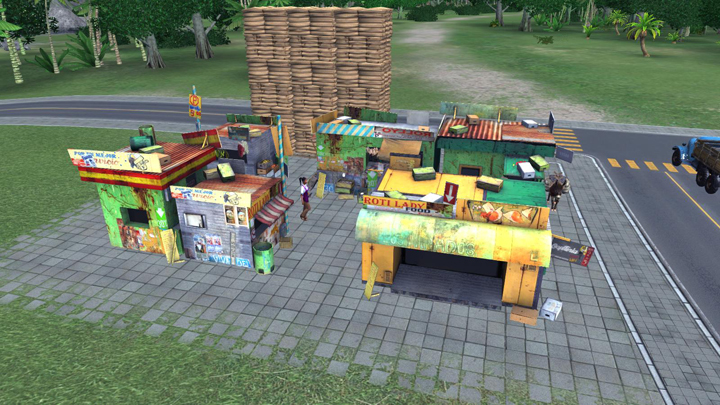
The Marketplace allows you to effectively distribute food throughout your island. Citizens who live near food production can collect their meals directly from the source, but Marketplaces ensure that all Tropicans have access to this essential service.
You must build Marketplaces near any residencies that lack an adequate food supply. Droughts, worker strikes, and population booms can all lead to food shortages, but properly located Marketplaces can minimize the impact of unexpected supply problems.
If you can’t meet the food demands of your people, allow your Marketplaces to import emergency provisions until you manage to increase production to appropriate levels.
Oil Well
Base Construction Cost:
$8,000
Upkeep:
$18
Additional Costs:
None
Work Modes:
None
Worker Requirements:
Female, College
Maximum Workers:
2 Engineers
Available Upgrades:
None
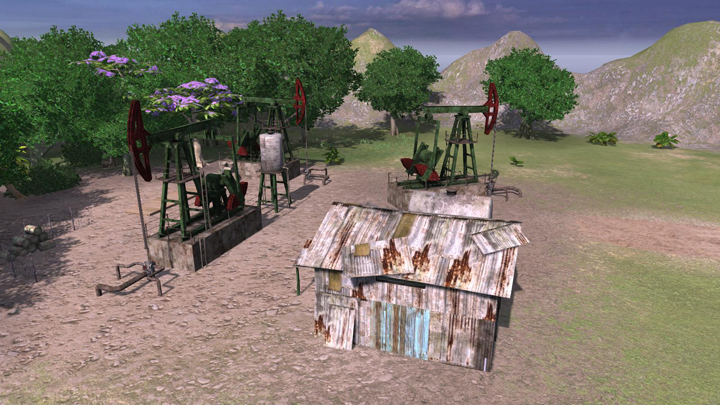
Oil Wells allow you to harvest any oil deposits that might be available on your island. Depending on the global market, crude oil can be very profitable.
However, Oil Wells require educated workers, so oil production may not be an option in the early stages of a mission. If you choose to export crude oil, it can damage your relations with the Middle East.
Still, Oil Wells can be a valuable tool in maintaining a strong economy.
Horticulture Station
Base Construction Cost:
$3,000
Upkeep:
$30
Additional Costs:
Blueprint ($1,000)
Work Modes:
Reforestation (planted trees grow faster), Organic Agriculture (increases the export price of papaya, pineapple, and banana), GMC (corn yields double if the island has an Academy of Science)
Worker Requirements:
Male, College
Maximum Workers:
4 Professors
Available Upgrades:
None
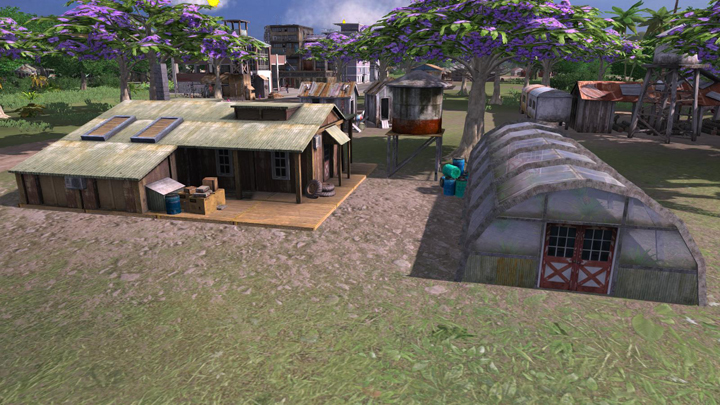
The Horticulture Station is a useful building for almost any economy. On its own, the Horticulture Station can help reforest depleted areas or boost the export prices of cultivated fruits.
When combined with an Academy of Science, the Horticulture Station can be used to double the amount of corn harvested from existing Farms.
This facility requires significant up-keep and an educated workforce, but the potential profits make it a useful addition to several production chains.