
The Sims 3 Generations Guide Essentials Day Care
Day Care Profession
With the expansion of family life in Generations comes an all-new active profession: Day Care Specialist.
Now, Sims can run a day care out of their own homes, taking care of toddlers for other families.
Not only is this a good source of income, but it also gives Sims a chance to experience taking care of children without having their own.
Active professions were introduced in the Ambitions expansion. If professions are new to you, here’s how they work:
Before, when your Sims went to work, they slipped into a venue and did not come out until the shift had ended.
You had a degree of control over work behavior through the use of “tones,” but the progression of a career was more about managing tones, skill development, co-worker relationships, and a handful of activities, such as writing articles or rummaging through trash.
In the original careers, promotions were doled out based on a number of different metrics, such as co-worker relationships and the development of related skills.
Professions have different metrics: responsibilities and experience. Each career has three responsibilities that you must stay on top of.
These responsibilities are constant and do not change per promotion.
The more of your responsibilities that you fulfill, the more experience you amass. Experience points (XP) are the hard measurements for promotions.
There is no guesswork. Once you reach a certain XP threshold, your Sim gets a promotion and all of the benefits that come with it.
The Day Care guide in this chapter details the responsibilities and how to best collect XP so you can rocket up the career ladder as fast as possible.
Day Care Specialist
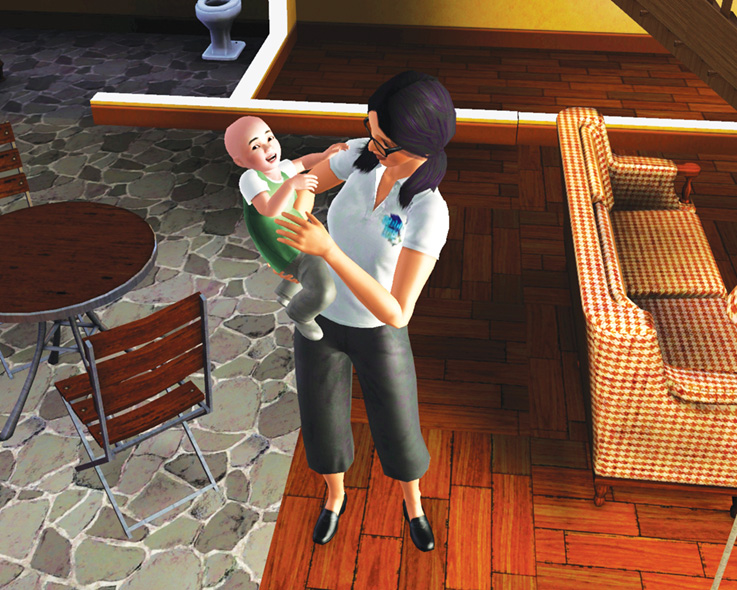
Unlike the professions of Ambitions (such as Firefighter or Ghost Hunter), the Day Care Specialist stays home and takes care of toddlers. Don’t assume for a second that this is any less hectic than chasing spirits.
Toddlers can cause plenty of trouble, and require constant attention. But there are rewards for doing a great job beyond Simoleons.
There’s the pleasure of taking part in the development of Sims at an impressionable stage, and hopefully helping them become better people.
Work Location:
Sim’s lot
How Hired:
Computer, newspaper ad
Work Week:
Four days a week with long hours, possibility of weekend shifts as needed
Salary Progression:
Day Care pays okay, but there are nice rewards for doing a good job and the salary bumps are reasonable.
Responsibilities:
General Day Care:
Take care of Hunger, Hygiene, and Social needs.
Friendship with Kids:
Treat the kids as your own and develop relationships with them.
Emergencies:
Handle any emergencies that pop up.
Daycare Shedule
| Level | Title | Base Pay | Min. # of Kids in Day Care | XP Needed for Promotion | Work Days | Start Time | # of Work Hours | Rewards |
|---|---|---|---|---|---|---|---|---|
| 1 | Amateur Babysitter | 100 | 2 | 1,250 | M, Tu, W, Th | 9 | 10 | Nanny outfit |
| 2 | Cool Care-Giver | 200 | 3 | 2,900 | M, Tu, W, Th | 9 | 10 | n/a |
| 3 | Daycare Dynamo | 300 | 4 | 4,500 | M, Tu, W, Th | 9 | 10 | Occasional gift from parents |
| 4 | Good Governess | 400 | 5 | 7,000 | M, Tu, W, Th | 9 | 10 | Butler and Governess outfits |
| 5 | Super Nanny | 500 | 6 | M, Tu, W, Th | 9 | 10 | Day care van |
Career Development
Start of Day
When day care begins, Sims only have two toddlers to manage over the course of the day. As the Specialist levels up, more toddlers join the day care.
(And whenever a toddler “ages up,” they are moved out of day care and a new customer potentially rotates into the schedule.)
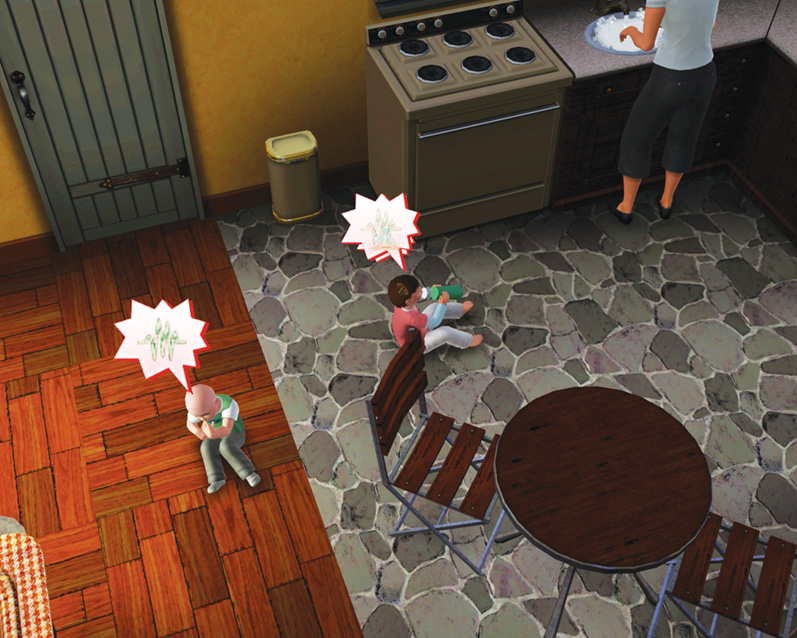
The day starts with customers dropping their toddlers off at the house. There is a staggered drop-off period so the house isn’t suddenly filled with adults and toddlers.
If the Specialist is not home when the shift begins, the adults point out the empty house and say they are not leaving their kids at the designated lot.
However, they will wait for a few minutes before bailing.
If the Specialist gets back home within that brief time, the parent will then agree to leave the toddler. If the Specialist cannot make it back within a reasonable period, the parent leaves and the Specialist is hit with the negative Missing Appointment moodlet.
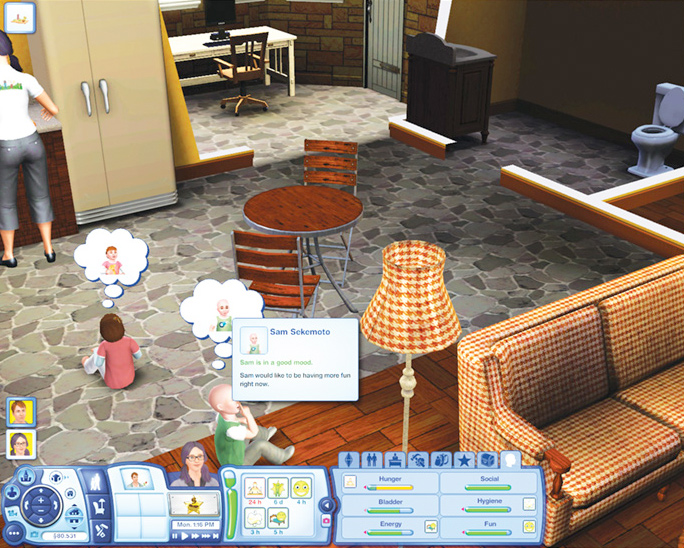
When toddlers are dropped off, you should mouse over them to get a good idea of their starting condition. The toddler is likely to be hungry, in need of a diaper change, or desiring some attention.
There are five levels of the toddlers’ mood: great, good, okay, bad, and terrible.
The current need is also mentioned in the window that appears when you mouse over the toddler and a descriptor will tell you how serious the need is at that given moment.
Daily Duties
Your priority is to keep these toddlers happy, healthy, and safe. The two most common tasks are feeding and changing. These options appear when you left-click on a toddler.
Toddlers also require attention and fun. These can be satisfied by using these interactions:
Attack with the Claw
Toss in Air
Tickle
Snuggle
Pick Up
Performing social actions on toddlers is always accepted—kids do not reject the attention. Stuff like Tickling or Attacking with the Claw replenishes Fun. Snuggling and Pick Up satisfies a Social need.

Kids love the claw!
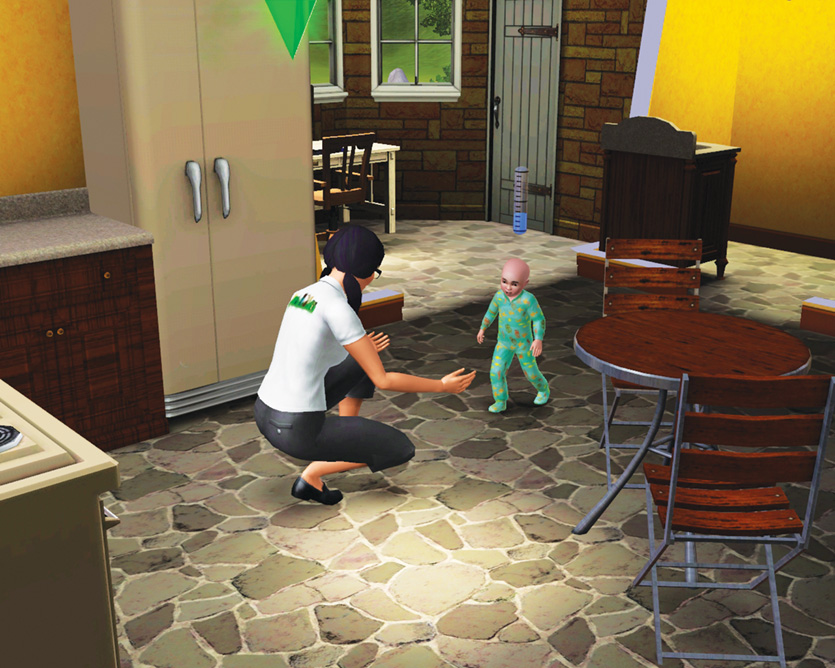
In addition to playing and feeding, the Specialists can teach toddlers to speak, walk, and use the potty.
These not only help the toddler, but they also increase the relationship between the toddler and the Specialist.
Parents also appreciate these lessons and sometimes reward the Specialist with bonuses.
The one catch: teaching takes time. The more kids you have in a day care session, the harder it is to divide your attention and give a worthwhile lesson.
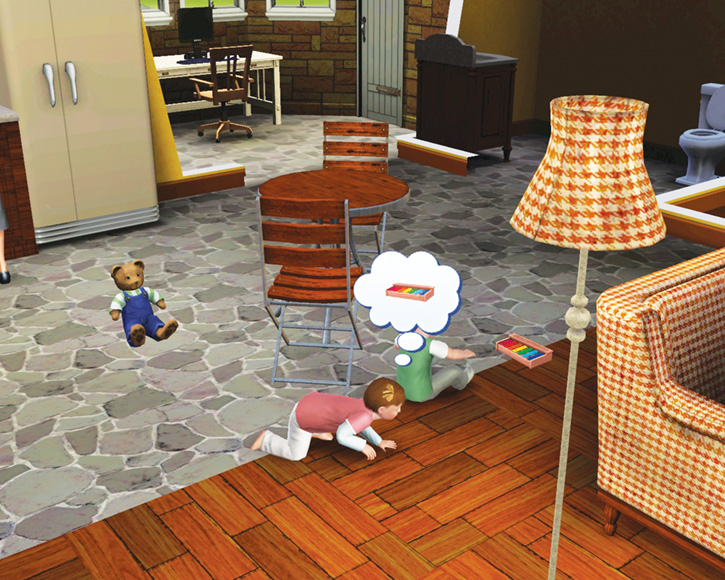
Place toys around the area where you watch kids. Kids will amuse themselves with toys like the xylophone.
End of Day and Scoring
When the day ends, parents show up to collect their toddlers. They don’t rush the house at the same time, but instead come in waves to pick up the kids.
When a parent arrives, they give the Specialist a rating and a potential bonus payout. The rating appears in a small window on-screen, not via a Sim-to-Sim conversation.
There is a chance some parents might be late to pick up their toddler. Late parents telegraph this via a message. Lateness usually lasts between one to three hours.
This may inconvenience the Specialist’s household, but the extra time results in a tidy pay out in the event the toddler was well looked after.
The nice thing here is that the extra time with just one toddler means you have plenty of undivided attention.
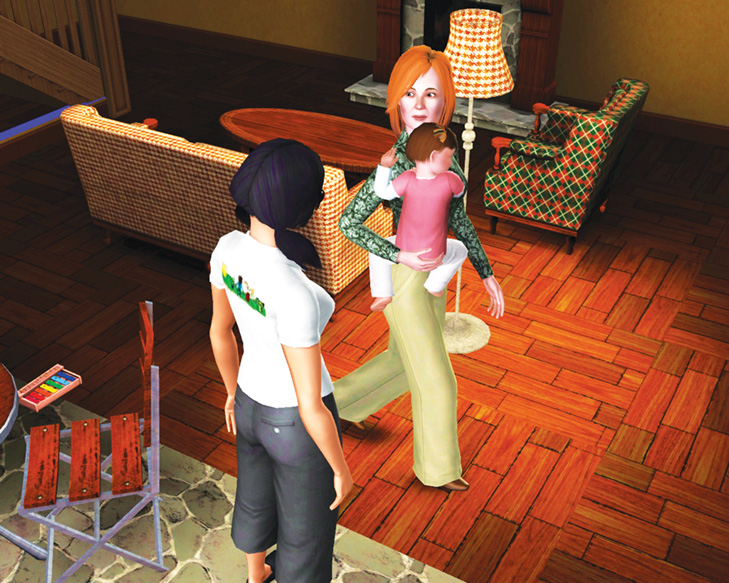
When toddlers are picked up, the Specialist receives a ranking per child: terrible, bad, neutral, good, and great. This ranking affects the XP and Simoleon pay out for the day.
Naturally, the happier the parents are with the condition of the kids, the more XP and Simoleons the Specialist banks.
A small window lists the condition of the toddlers by name.
Day Care Scores
| End of Day Rating | XP | Bonus Pay |
|---|---|---|
| Terrible | -25 | §25 |
| Bad | 0 | §60 |
| Neutral | 100 | §80 |
| Good | 200 | §90 |
| Great | 300 | §120 |
Now, these scores are fluid but not forgotten. Parents remember the last four daily rankings. If you get two bad or terrible scores in a row, the parent may take the toddler out of day care.
The child does not return and the slot remains empty for a few days, which results in a loss of XP and cash potential.
If conditions get so bad that you lose all of the toddlers in this fashion, you are punished.
See the Doing Badly section to learn more about an under-performing Day Care Specialist.
Doing Badly
Okay, so your day care has been abandoned by the neighborhood because you either left kids alone too long or you didn’t take good care of the toddlers in your house.
Guess what—the social worker is on her way to your lot and is about to scold you. Severely.
At least a Day Care Specialist who failed at work gets to keep their own kids.
The social worker suspends your business. No parents will show up for as long as the day care is under suspension.
To reverse the suspension, you must attend a Penalty Class at City Hall (§500).
Click on the City Hall, choose the class, and attend for several hours (just like a skill class). Once the class is complete, the day care returns to operation.
However, you cannot keep botching day care and expect to stay in business. After two suspensions, the city takes away your day care license and your Sim is considered unemployed.
You cannot restart a day care right away.
You receive a message that you have lost the town’s trust. It takes well over a week before you can even think of clicking on the computer and starting the Day Care Specialist profession again.
Extra Day Care Sessions
As a reward for doing a good job with your day care, you are offered more work. You may sometimes receive offers to take care of kids on the weekend or after school.
Weekend
Sometimes, on a Friday or Saturday evening, parents will call to ask if the Specialist can watch their kids for the weekend. This is not like baby-sitting for a few hours—it lasts two days.
If you accept the offer, you gain LTR with the parent. If you refuse, there is a slight LTR hit (but not substantial enough to spoil a relationship).
Taking care of children over the weekend unfolds just like a normal day care shift. All of the duties, such as feeding and providing fun, now extend beyond the several-hour period.
Use your typical day care skills to manage the child (and any other emergency drop-offs that occur—word apparently goes out that you’re open for the weekend).
At the end of the weekend, the same ranking system occurs. However, you get a nice little Simoleon bonus depending on the toddlers’ condition.
A Great kid earns twice the cash while Neutral still pays out 1.25 times usual. That’s not bad for giving up some weekend freedom.
After School
Day Care Specialists may also be asked to look after children after school as well as the regular toddlers they mind during the normal day care shift.
Unlike a weekend job, this is not optional.
You just receive a message from a parent that they are directing their child to go to your house after school.
When school hours end, the child comes straight over and stays on the lot—almost as if they lived there.
Fortunately, children can take better care of themselves and are largely autonomous while on the lot.
Still, you need to monitor their needs and make sure they have food available to satisfy Hunger and entertainment if their Fun suffers.
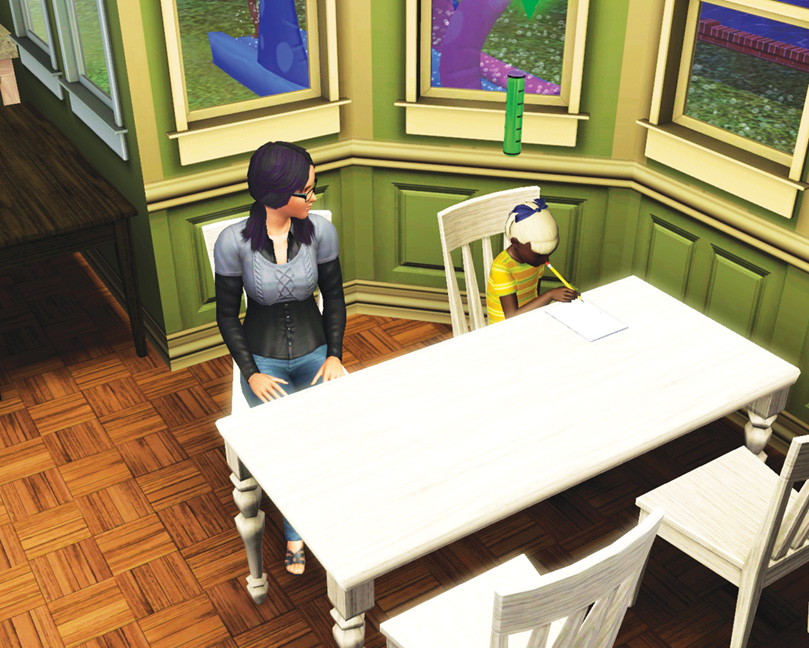
Children, though, have one need toddlers lack: homework. Children come to your lot with unfinished homework.
You should direct the child to do the homework and, if possible, help with it.
That not only gets homework done faster, but boosts LTR with the child and their parents.
Problem Child
When you reach level 5 of this profession, a new wrinkle is added to the daily routine: the Problem Child. The Problem Child is a lovable kid with just a few exceptions, such as the desire to fight with the Specialist and harass the other clients’ kids.
However, this is no reason to just throw up your hands. Dealing with a Problem Child can prove extra-rewarding, especially if you provide the child with a safe place to act out but then settle down.
Receiving a Problem Child is always telegraphed in advance. You receive a message from a parent letting you know that the troubled kid is on his/her way over to your day care.
The parent expresses hope that you can help out.
Things to watch out for from Problem Children:
Their Fun need decays much faster than other children.
When their mood drops, they become Mean and Insulting to other kids. They also are inclined to pull more pranks,
They do not like doing homework. If left alone, they will quit out of doing homework, so you have to stay with them.
If a Problem Child’s mood drops really low, they may break nearby objects.
These are all serious things that must be managed. But there are ways to deal with the Problem Child in a beneficial manner. Over time, taking good care of a Problem Child can reform them.
Just watch the condition of the child. Do nice things for them, like feeding them nourishing food, complimenting them, and doing fun things. Every little bit helps boost that condition.
There is a new social to use on a Problem Child: Talk about Problems. This social lets a child vent.
Venting not only increases the LTR between the child and Specialist, but it also restores some of the child’s mood.
If you manage to boost the Problem Child’s condition, they are no longer any real trouble. They start behaving like a normal kid.
Their parents are grateful for your hard work and pay a little extra for watching their child.
The child will stay in your day care until they age up or get rotated out. While the reformed Problem Child is in your care, you will not receive another Problem Child.