
Dark Souls III Starter Guide Gameplay
On Death, Souls, and Leveling
Death is a constant threat in Dark Souls III. Dangerous falls, poison, monster attacks, and traps are around every corner. Bosses are the worst threats of all, but it’s entirely possible to die (often) when fighting against even the regular inhabitants of the world. This is especially true when you’re new to the game, because it does not play like most action RPGs.
When your character dies, you drop your carried Souls, and respawn at the last Bonfire you touched.
This has two major consequences. First, the loss of time as you retrace your steps—slogging through all of the respawned enemies that you previously defeated. Second, you lose all of your dropped Souls forever if you die a second time before you recover them!
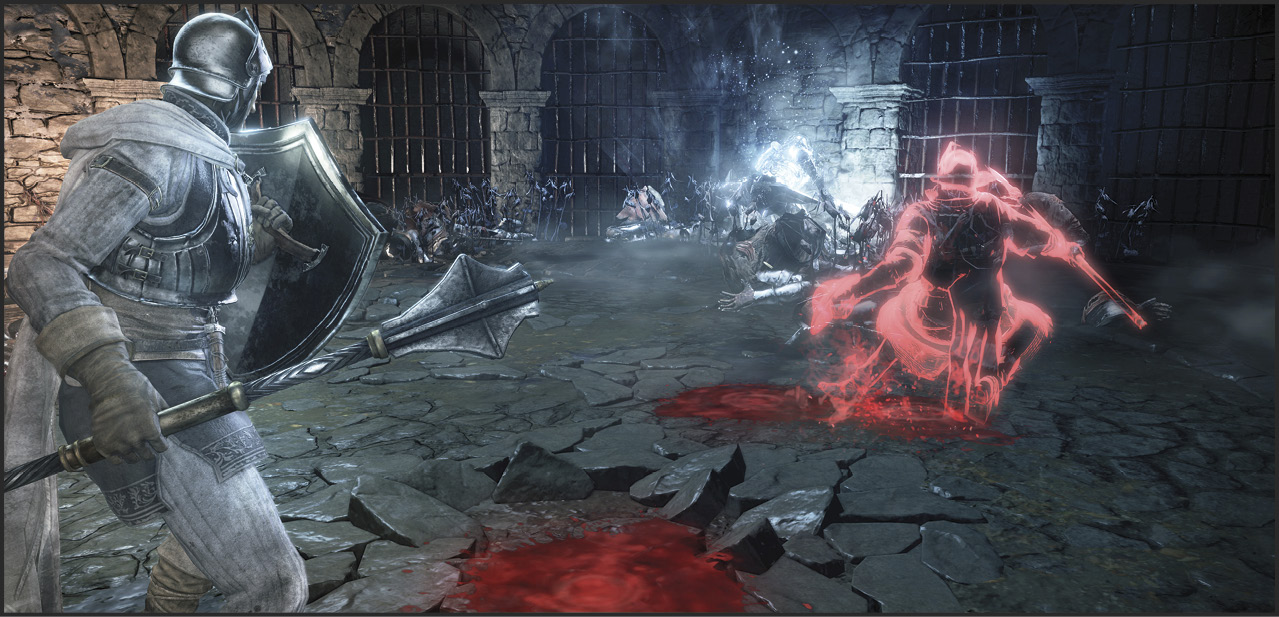
Respawning
When you respawn at a Bonfire, your Estus Flasks are restored. This means that you can heal yourself again and are brought back to almost your maximum health. Fallen characters lose some of the spark that makes them human. Because of this, your maximum health diminishes each time you die, making survival even harder in the future! This sounds scary, and it is a major problem, but there is a way to combat it.
Embers are items that you find from time to time, and these allow you to restore yourself to your maximum health total. You don’t need to use these each time you die. Instead, it’s best to wait until you’re at a very difficult boss area before using an Ember.
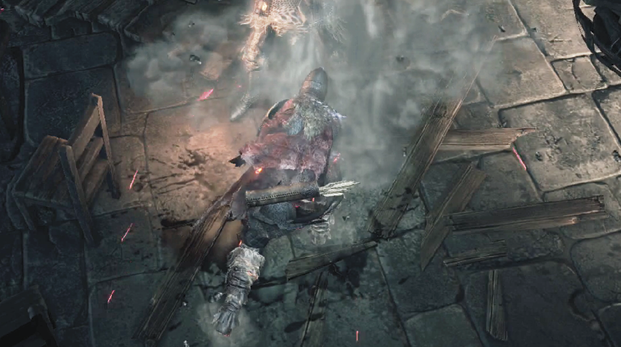
Explore each new region, and once you locate the closest boss to your current Bonfire, engage them a few times to learn their behaviors. Once you feel confident enough, use an Ember and tackle the fight at full strength. And of course, you may win during your ”practice” runs!
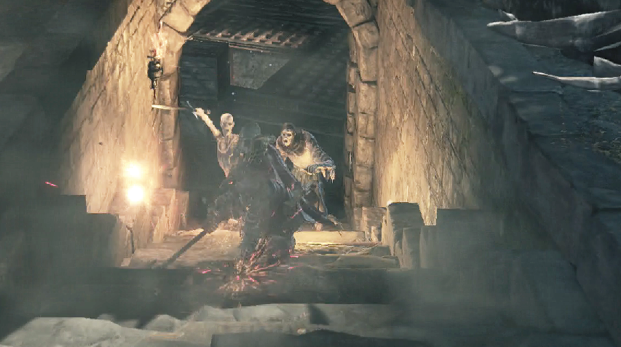
Another aspect of respawning is that all of the normal monsters in the area return as well. Special NPCs or bosses that are slain remain dead, but everything else returns to face you again. This lets you slay regular monsters for extra Souls. It also forces you to learn efficient routes through most areas, so you don’t waste resources if you’re trying to pass by or get to a boss. Opening shortcuts and learning efficient routes saves your Estus Flask charges for when you really need them.
Keep in mind that the shortcuts you unlock remain open even if you die, so exploring and accessing new shortcuts is very important.
Retrieving Your Souls
When you die and drop your Souls, they are left in the world as a bloodstain. If you can reach this bloodstain and "use" it, you recover all of your dropped Souls. However, should you perish a second time, your first bloodstain (and its Souls) are lost, and a new bloodstain is created where you died most recently.
The best insurance against losing Souls is to spend them on permanent upgrades: attributes, equipment, and gear improvement. When you go out into a new area, expect that you will die, and accept it as part of the price of learning the new terrain.
On the other hand, in an area you have already explored, you can intentionally go on Soul harvesting runs to build up a stash and then go to spend them. This is much safer than exploring a new area while stressing about losing Souls!
Should you perish in a boss room, you can still retrieve your bloodstain, but you must enter the room to do so, which means only by defeating the boss or using a special item to teleport out can you recover them permanently.
Don’t worry too much about losing Souls, you can always get more!
Gaining Levels
Levels are not the end-all, be-all in Dark Souls games. Sure, it’s always nice to have more HP, stats for better damage, and so forth. But, sloppy techniques get you killed even with superior leveling. Tight, well-executed play allows you to survive fights even with mediocre gear and low levels.
When you do improve your attributes (and your level as a consequence), focus on your most important attribute and then make sure that you have enough in your secondary attributes to continue exploring.
Because death in Dark Souls can rob you of hard won Souls, and because levels are tied directly to spending those Souls on attributes, it can be easy to fall into the trap of thinking you have suffered a major blow from dying.
Don’t think this way! Souls can always be earned, and as you progress through the game, faster and easier methods of acquiring them become available.
Don’t worry about "ruining" your character! While attribute improvements are permanent, you can always earn more. The longer you play, the more you personally improve. As your own skill increases, you need less raw attributes to tackle the same challenges. This sense of accomplishment is the feedback that you get from overcoming great gameplay challenges. This is the core of the Dark Souls experience!