
Star Wars Zero Company Preview: Please, Tell Me the Odds
95% chance to hit.


I had a chance to play a good chunk of Star Wars Zero Company ahead of its release later this month and came away impressed with my time with the upcoming tactics title.
After spending dozens of hours learning from my mistakes and dealing with the consequences of my actions, Zero Company shot way up on my wishlist. Here are my thoughts on the preview build.
Authentic In Every Sense of the Word
Something that became almost immediately obvious in the first few minutes of Star Wars Zero Company is how authentic it feels. This isn’t a Star Wars mod slapped onto XCOM; it truly feels like a Star Wars experience first and a tactics title second. The world, production values, architecture, iconic sound effects and score, rich dialogue, unique ambiance, constant political turmoil, and ragtag group all feel as much a part of the universe as cantinas, blasters, and questionable odds.
The talented developers at Bit Reactor, many of whom have worked on XCOM or other Star Wars titles, understood the assignment, and Zero Company does not feel like an imitation but rather a love letter to the universe. They also chose one of my favorite time periods in the universe: the Clone Wars, which has no shortage of warring factions, messy alliances, and groups carving out their own path while the Jedi and Sith duke it out.
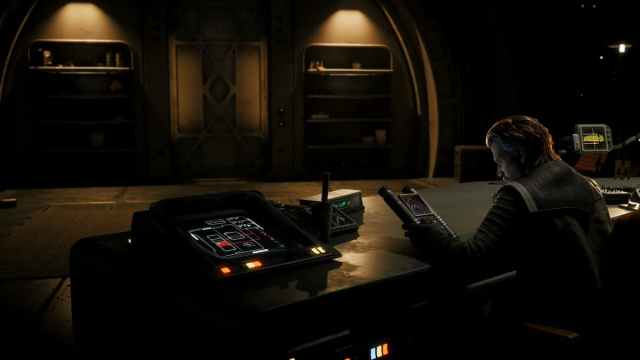
Zero Company, led by ex-Republic officer Hawks, is one such group trying to make ends meet through contracts while paying off a debt to the Hutts, in true Star Wars fashion. You play as Hawks, a fully customizable and voiced protagonist who is cautious, level-headed, and actually concerned about the people under his command. He’s instantly likable, and his willingness to think before acting, while still putting himself on the line for his crew, establishes him as a capable leader from the get-go.
Eventually, you get recruited for a job that’s hard to turn down thanks to the previously mentioned debt, and it involves taking down a new cult faction called the Infinite Coil, which has supernatural abilities and is looking to spread a plague on an unprecedented scale.
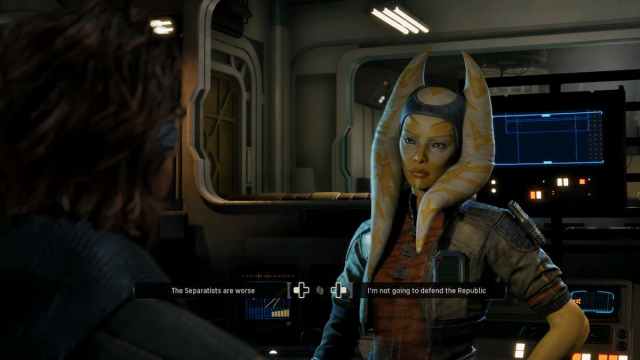
That’s the general premise of Zero Company and its main threat, but like any good tactics title, you have plenty of freedom to decide which jobs you want to take on. Most of your pre-mission decision-making takes place in The Den, a hub where you can talk to your squad, manage your roster, their weapons, utilities, talents, and skills, and hire new operators. I’m reminded a bit of the Abbey from Midnight Suns, but thankfully, the team has shown restraint in how they’ve handled these interactions.
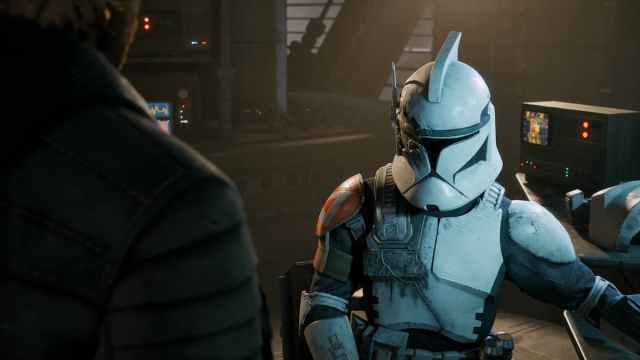
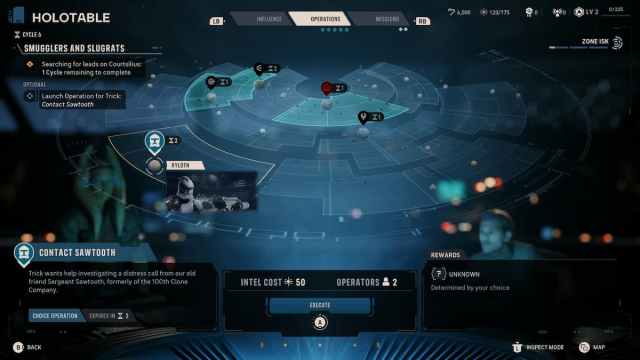
You explore The Den in third person, but most of your interactions are immediate and don’t send you on unnecessary side quests within the area. It’s an elaborate but focused place that perfectly suits this type of game. Some missions called “Operations” are handled directly at the holotable and don’t involve any combat, but they reward you with bonuses and often lead to negative outcomes depending on your decisions as you take on active tactical missions.
That cinematic flair and exploration aspect isn’t just limited to the hub area, mind you. Certain missions allow you to explore a bit in third person before you start an encounter, and it’s really high quality for what it is. Sure, it’s not some elaborate open world and is largely a corridor, but it raises the stakes, adds a personal narrative touch to the operation, and gives you a chance to explore more handcrafted Star Wars locations. Since it’s set during the Clone Wars, you can expect all manner of droids and their memorable antics in and out of battle.
Live to Fight Another Day
Enough Star Wars talk. Let’s talk turkey, or combat, in gamer terms. This is a tactics game, a serious, no-nonsense one with all the elements you’d expect: an emphasis on positioning, careful management of AP, anticipating enemy behavior, maximizing your squad’s utility, keeping an eye on your operators’ health, and capitalizing on synergies between them.
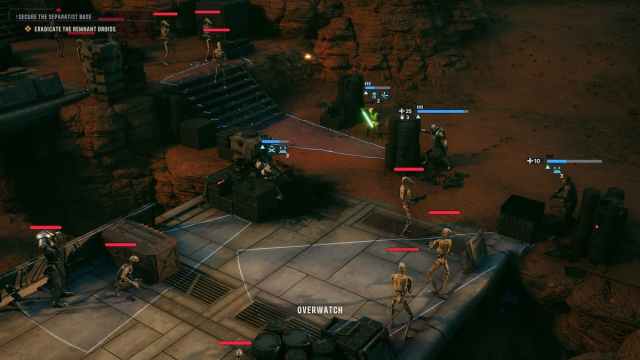
It also means there’s a great sense of clarity in your actions and what enemies are capable of as you progress through an encounter. Operators gain an advantage as they perform actions, which eventually gives them access to additional abilities. Trick, for example, can pull out a rocket launcher for some heavy area-of-effect damage.
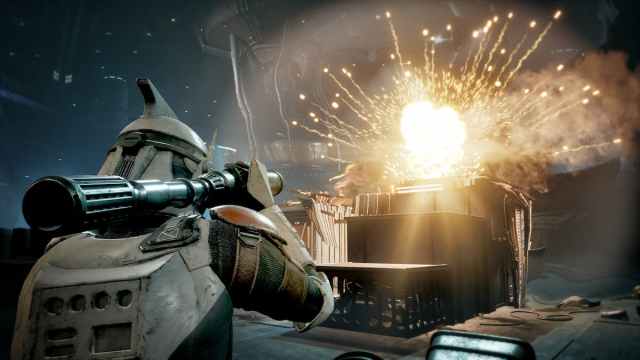
Certain authored heroes have specific talents unique to them beyond their specializations, which are very useful in combat, but if you recruit random operators, you’ll be given more freedom in how you respec them. During combat, you can also set up “overwatch,” which allows the selected operator to automatically attack in a specified zone if an enemy performs an action there. Just like you, enemies have similar abilities, and knowing that a wrong move can lead to terrible consequences is part of the fun. Cover is insanely important, and leaving an operator exposed means they’ll absolutely lose health or even die.
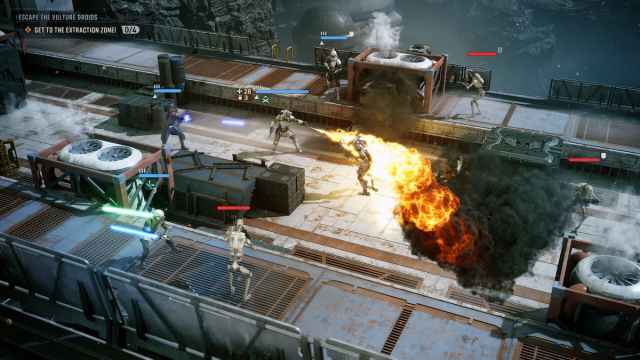
Yes, permadeath is a default feature, and I highly recommend not turning it off. It’s a core part of what makes these games special, and while losing a valuable operator can be devastating, it’s part of the experience. Not every mission requires you to take out enemies, either. Some require gathering loot, triggering a mechanism, or simply surviving until an objective is complete while waves of enemies disrupt your efforts. Knowing you can’t take on the inevitable storm of enemies approaching your destination raises the stakes beyond a traditional “kill everything in sight” mission.
The interface is readable, the controls are smooth, and the camera never gets in the way of visibility. You always have a clear understanding of the battle formation and layout. Just about everything in the core combat feels fleshed out, deep, and consequential. For veterans of the genre, the default settings might be a bit easy, but you can always adjust the difficulty for a more brutal experience.
The Odds Are Looking Very Good
After spending so much time with Star Wars Zero Company, I’m genuinely surprised by just how quickly it climbed my list of games I’m looking forward to. Bit Reactor has managed to capture what makes Star Wars special while building a tactics system that feels substantial enough to stand entirely on its own.
There’s still plenty I haven’t seen, and the final game will ultimately have to deliver on everything the preview build promises. But based on what I’ve played, I’m having a very hard time finding reasons not to be excited. The combination of authentic Star Wars presentation, satisfying tactical combat, meaningful consequences, and a genuinely compelling setting has already made Zero Company one of my most anticipated games of the year.
Star Wars Zero Company doesn’t feel like a tactics game wearing a Star Wars costume. It feels like Star Wars through and through, with a fantastic tactics game underneath. If the rest of the campaign can maintain this level of quality, we’re looking at something special.
For now, the odds are looking very good.


