
Nioh 3 Review – Refining an Already Exceptional Formula
This game has jump-cancelling, I'm not kidding.

If there is one “Soulslike” series that doesn’t just copy FromSoftware’s seminal work, it’s Team Ninja’s Nioh. Sure, it’s influenced by it and shares some surface-level similarities, but calling Nioh just another Soulslike does it a disservice.
Nioh 3 proves this, as Team Ninja refines the formula with quality-of-life improvements that cut down on tedium, experiments with fresh combat ideas, and tackles a larger scope in a bold, engaging way.
Your Samurai, My Shinobi
Opting for an open world, or open field as the developers call it, might seem like the main draw here, but the ability to swap between Shinobi and Samurai forms is the real meat and potatoes of Nioh 3. Like Nioh 2 before it, the series has been gradually leaning toward the character-action side of the action game spectrum when it comes to combat, which feels like a natural progression as it aims to further elevate the potential of an already superb system.
In Samurai form, you can now deflect, and it’s no longer tied to a specific weapon. This proper deflect mechanic has a fairly generous window and can be performed in succession, significantly changing the dynamic of encounters in this form. It’s balanced by more aggressive enemies and bosses, but returning players won’t take long to get accustomed to this addition.
Ninja form, meanwhile, offers multiple dodges, an enemy step (yes, really) called Footstool Jump, and is the preferred form for traversal. Burst Counter from Nioh 2 has been replaced with the Burst Break, which triggers style shifting. Shifting between forms mid-combat feels smooth, natural, and intuitive. Since each form now retains certain weapons, it almost functions like a Weapon Switch you would see in action games such as Devil May Cry. Switching between styles and thus weapons lets you dish out offense while retaining the ability to go on the defensive whenever you choose.
Both forms feel genuinely useful, and with your character now able to jump, mastering air combat, especially combined with the footstool jump, is highly satisfying. The only drawback of Ninja form is losing the stances for its weapons, so if you had a favorite in Nioh 2, it takes a bit to adjust to a single stance while in Ninja form.
Combat now feels more acrobatic and flashy, leaning into the action side, but at its core, it remains deliberate, complex, and deeply rewarding to master. It’s a challenging game that demands your attention but also gives you the tools to overcome it in a manner you see fit. It isn’t drastically different from the previous titles, and the new additions are well thought out and elevate the experience. Perhaps I’ll have more to say after putting in 300 hours or so, but based on everything I’ve played, I’ll certainly have a hard time going back to Nioh 2.
Open-Field and Customization
Compared to the mission-based levels of Nioh 1 and 2, Nioh 3 features an open world. As someone who is not a fan of most open-world titles, I was a bit worried that Team Ninja’s decision to move away from the quick, menu-based mission select structure would hurt the pacing and add unnecessary filler content. Thankfully, that is not the case for the most part.
Some events do feel more dynamic, and there is a greater emphasis on exploration, which can be rewarding. The way you discover side quests and optional content feels more natural now, and you can approach activities in a way that makes sense to you. A field boss might be better tackled once you have stronger gear, are better leveled, or have unlocked a useful skill. I am not opposed to this approach, but at the same time, the open world does not do anything exciting enough that could not have been implemented within the more linear, but open-style missions the series has used before.
Let’s just say, it’s not the jump we saw from Dark Souls to Elden Ring. Think of it as a remixed version of an existing structure with more freedom in how you approach it.
What I really appreciate is how much customization has been added, not in terms of weapons or armor sets, but in how much control you have over the user experience. Do not want to level up manually? Let the game handle it for you. Do not want to spend time deciding which gear is best? The game can take care of that, too. Do not want to manually pick up items you were going to collect anyway? Just flip a switch in the settings, and your character will automatically grab anything they walk over. There are so many options that strip away the tedium associated with the other side of the Nioh series, namely its heavy emphasis on loot.
Visuals and PC Side
Team Ninja, alongside FromSoftware and RGG Studio, ranks among the best when it comes to reusing assets to create genuinely new experiences. Yes, Nioh 3 reuses a significant number of enemies, bosses, and environmental assets, but it rarely feels like a drawback. These elements are repurposed in ways that create fresh scenarios where their inclusion makes sense. Seeing familiar Yokai return is not surprising and instead adds a welcome sense of familiarity for longtime players.
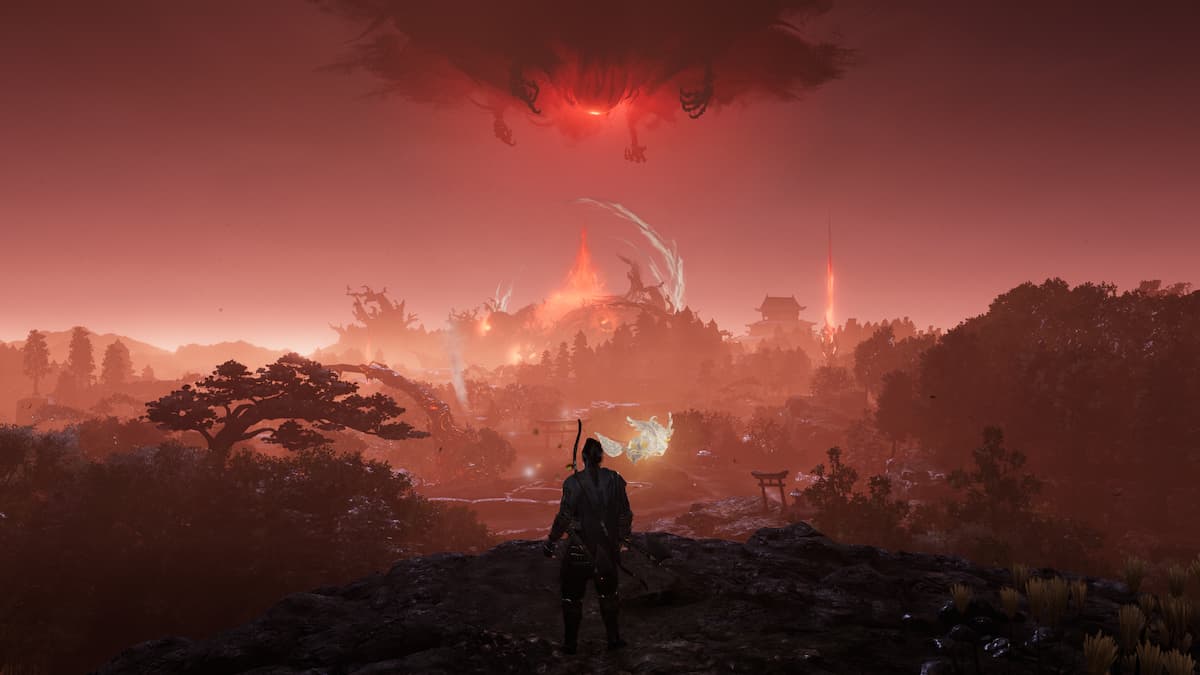
While Nioh 3 is not a major visual leap over its predecessor, character models and animation work have seen noticeable improvements. As expected, the sheer amount of content is staggering, and the variety is equally impressive. New bosses, enemies, NPCs, and locations are scattered throughout the open world. Taken as a whole, the game looks great and benefits from strong, cohesive art direction.
That said, I do find a few visual decisions questionable. Lighting can change dramatically from one scene to the next, and some areas feel unusually dark even when they should not. This occasionally results in an uneven presentation, with certain scenes appearing overly saturated and a general sense that the contrast is not as well-balanced as it could be.
On PC, things are much better than in Rise of the Ronin and Wo Long: Fallen Dynasty. The game runs well, offers plenty of settings to tweak, and supports modern upscaling technologies like DLSS and FSR. However, it currently suffers from camera stutter if you are not playing at a locked 60 or 120 FPS. If the frame rate dips below or rises above these values, visible stutters appear and negatively impact the overall smoothness of the presentation.
Verdict
Nioh 3 is yet another incredible action title from Team Ninja that further refines the series’ formula with thoughtful additions to its combat, most notably the Style Shift system and the Ninja and Samurai forms that come with it. The open field structure is a largely positive change thanks to the added freedom and emphasis on exploration, but it does not feel entirely necessary, coming across more as a remix than a true genre shift. It is packed with content that can easily last hundreds of hours, and the depth of its combat and build systems never stops impressing.

Nioh 3
Nioh 3 is an exceptional action title that continues to refine the series and elevates the combat. The open-world is a largely positive addition and it's yet another Team Ninja action RPG to spend hundreds of hours in.
Pros
- Superb combat mechanics further elevated by style switching, deflection, the footstool jump, and a wide range of skills.
- An endless amount of meaningful content that rarely feels repetitive.
- Excellent build variety that complements both forms.
- A largely positive open world that offers greater freedom to explore and engage.
- A wealth of customization options that cut out much of the tedium.
Cons
- Presentation can be a bit uneven.
- PC version has camera stutter at variable frame rate.
A copy of this game was provided by the publisher for review. Reviewed on PC.


