
Clive Barker’s Hellraiser: Revival Review: A Great World Held Back by Repetitive Gameplay
A Good Story Infected By Mid Gameplay


As someone who had never watched the original Hellraiser movies or read Clive Barker’s novella, The Hellbound Heart, Hellraiser: Revival was uncharted territory for me. And boy, did it surprise me. The game tackles extreme themes of lust, desire, and suffering, and anyone jumping in blind should know that it features plenty of nudity and graphic imagery. While I’ve played my fair share of survival horror games, Hellraiser: Revival falls short when it comes to gameplay. However, it takes you through an adventure that’s unlike anything I’ve experienced in the genre.
Here are my thoughts after completing the game and surviving the unsettling world of the Cenobites.
The Story Surprised Me
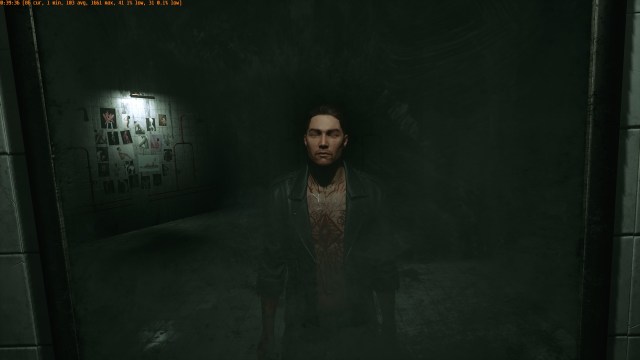
Hellraiser: Revival draws inspiration from Clive Barker’s Hellraiser universe, including the original 1987 film and its sequel, Hellbound: Hellraiser II. Rather than simply retelling those stories, it takes players on a new adventure featuring the franchise’s signature blend of desire, pain, and otherworldly horror.
You play as Aidan Lynch, a man obsessed with his girlfriend, Sunny. The two share an interest in some pretty freaky stuff, which eventually leads them to a strange puzzle box known as the Genesis Configuration. They mess around with it, things go horribly wrong, and the Cenobites, otherworldly beings from the Labyrinth, take Sunny away.
From there, you’re thrown into an adventure to rescue your girlfriend. That means navigating a sadomasochistic cult, exploring a disturbing world, and negotiating with the Cenobites in the hope of getting Sunny back.
While the game is rough around the edges, it tells a surprisingly compelling story. As you progress through Aidan’s memories, you begin to understand what his relationship with Sunny means to him. You also get glimpses of him questioning whether everything he’s going through is worth it. As the situation becomes increasingly messed up, that uncertainty becomes more apparent.
I enjoyed how the story gradually revealed more about Aidan and his relationship rather than simply treating the whole thing as a straightforward rescue mission. There’s an interesting layer of obsession running through the narrative, and it kept me invested in what would happen next.
The story was one of the biggest surprises for me. I went in without any real knowledge of the franchise, yet I found myself wanting to see how everything would unfold. That’s something the game deserves credit for.
Great World Design, but Linearity and Repetitiveness Are a Big Letdown
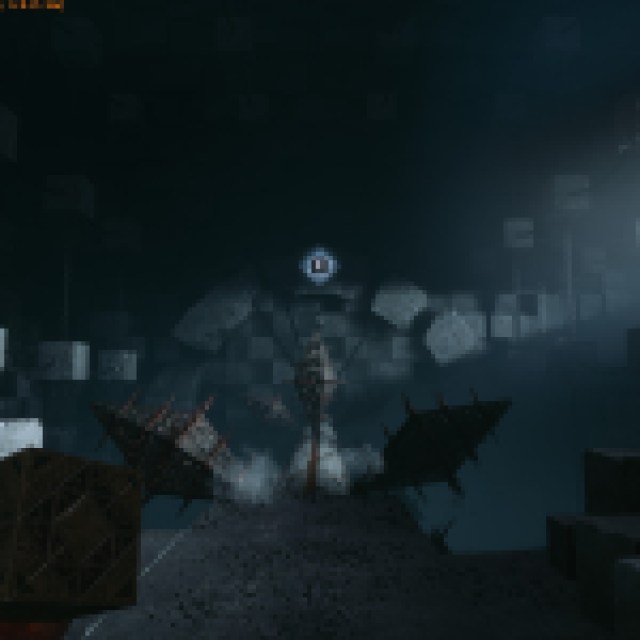


Saber Interactive has done a wonderful job bringing Clive Barker’s imagined world to life. Whether it’s the Labyrinth, the Scarlet Church, or the various hallways and rooms you navigate, the environments look great. Of course, they’re also filled with plenty of gore, disturbing imagery, and obscenity, so this isn’t exactly a pleasant place to visit.
The Scarlet Church is one of the game’s more interesting locations, with several distinct areas to explore. You have the underground cult, filled with people obsessed with torture, before moving up into the church’s sex cult area. Outside, you’ll find an eerie, seemingly abandoned graveyard, with Marlowe’s mansion nearby. The mansion is beautifully designed in its own right, giving the area another distinct setting to explore.
The Labyrinth, however, was by far the best-designed part of the game. While much of your time there is spent navigating narrow pathways, there are moments when the geometry shifts around you, plenty of parkour puzzles to solve, and larger, fog-filled areas that give the environment a much greater sense of scale. The Genesis Configuration also plays a bigger role in exploration here, allowing you to move massive boxes to solve puzzles and open up new areas. These sections show just how interesting the game’s level design can be when it makes full use of its setting and mechanics.
One of my favorite aspects of the game was how often it shifted between the real world and the Labyrinth. You could open a door expecting to find an ordinary room, only to end up somewhere that felt completely alien. These transitions made exploring the world genuinely interesting, and I wish the game had done more with them.
Unfortunately, that’s also where one of my biggest complaints comes in. For a place called the Labyrinth, there isn’t much of a maze to navigate. You’re often running through narrow pathways until you eventually find your way out. The environments look like they’re hiding something far more complex, but the level design rarely takes advantage of that potential.
It’s a shame because the game has the visual design and atmosphere to make these sequences something special. Imagine having to navigate a genuinely disorienting maze where the layout constantly changes, forcing you to figure out your surroundings rather than simply follow a path. Instead, most of these sections feel like another corridor between two encounters.
Linearity alone isn’t necessarily a problem if the rest of the experience is strong enough. The story certainly does its part, but the repetitive content makes it difficult to overlook the game’s shortcomings.
You encounter a relatively small variety of enemies, solve similar types of puzzles, and repeatedly move between the real world and the Labyrinth. What initially feels unsettling eventually becomes routine. Rather than wondering what strange thing you’ll encounter next, you often find yourself just trying to get through another section so you can reach the next part of the story.
Then there’s Aidan’s inability to jump. I understand why developers might restrict movement to make level design easier to control, but it became increasingly frustrating as I progressed. There are moments when an area looks like you could easily reach it by jumping through a window or climbing over an obstacle, only for the game to send you on a lengthy detour to find a key or solve a puzzle.
These moments make the world feel more restrictive than it needs to be. With environments this interesting, I wanted more opportunities to explore them freely. Instead, the game frequently funnels you down a predetermined path.
Fun Combat, Little Variety
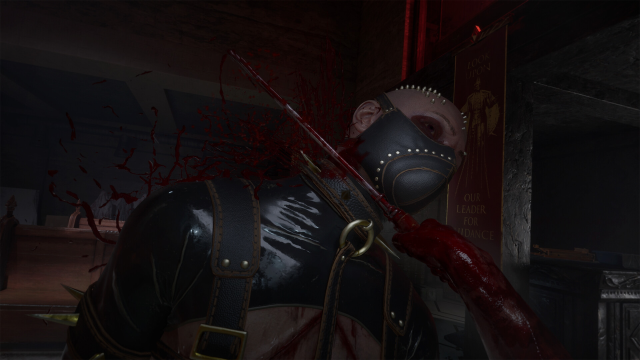
Hellraiser: Revival is a first-person action survival horror game with stealth mechanics, weapon upgrades, and plenty of combat. If you’ve played games like Resident Evil 4, much of the gameplay will feel familiar.
The stealth mechanics, in particular, are pretty basic. You sneak up on enemies and perform takedowns, but there isn’t much depth beyond that. There were times when I could practically walk right in front of an enemy without being noticed, making stealth feel less like a genuine challenge and more like a convenient way to get past encounters.
Some stages also have conveniently placed objects that practically point you toward your next objective. I appreciate a game that doesn’t make every encounter unnecessarily difficult, but there were moments when it felt like Revival was holding my hand. I tried taking the stealthy approach at first, but going in guns blazing was simply more fun.
Speaking of weapons, the game gives you a decent selection of melee and ranged options. You’ll find bats, cleavers, clubs, and other weapons as you progress, and you can upgrade your arsenal along the way. None of this is particularly revolutionary for the genre, but the weapons are satisfying enough to use.
The real highlight is the Genesis Configuration. Beyond its role in the story, the puzzle box gives Aidan supernatural abilities that let him manipulate sharp objects, such as nails and saw blades, and hurl them at enemies. Later, you unlock the ability to draw fire from nearby sources and throw it at your opponents.
These abilities are easily the most interesting part of the combat system. There’s something satisfying about turning the environment into a weapon, especially when you’re using the Genesis Configuration to dispatch enemies in creative ways. The abilities also consume a resource called Suffering, which you replenish by damaging and killing enemies. This gives you a reason to engage in combat rather than simply save your abilities indefinitely.
Unfortunately, the game doesn’t do enough with these mechanics. The weapons and supernatural abilities are fun, but the limited enemy variety means you’re often using them against the same types of opponents. Boss fights aren’t much better. Many of them boil down to running around in circles or strafing to avoid attacks while dealing damage whenever you get an opening.
It’s disappointing because the Genesis Configuration gives the developers an interesting foundation to build on. More varied enemies and boss encounters that required creative use of its abilities could have made the combat far more engaging. Instead, the game rarely pushes its mechanics beyond their most basic applications.
To put it simply, there’s just not enough meat on the bone. Apart from the Genesis Configuration, the combat and movement systems feel fairly generic. The game has some fun ideas, but its repetitive encounters prevent them from reaching their full potential.
The Little Things
Despite my complaints, there are plenty of smaller details I appreciated about Hellraiser: Revival.
One of them is the optional lockers scattered throughout the game. You unlock these using codes that you discover by examining paintings and other objects in the environment. It’s a simple mechanic, but it encouraged me to pay attention to details I might otherwise have ignored.
You’ll also come across recordings and letters that provide additional context for the story and the world. These collectibles help make the environments feel more lived-in, giving you reasons to look around instead of simply rushing toward the next objective.
Then there’s Zora Becket, my favorite character in the game.
Zora fills the familiar merchant role, appearing at checkpoints and save points between sections of the adventure. However, what makes her stand out is her personality. The banter between her and Aidan is entertaining, and she has an unhinged quality that fits surprisingly well with the game’s chaotic world.
She also has a habit of appearing in places where even Aidan seems uncomfortable, which makes her presence all the more amusing. I found myself looking forward to these encounters because they provided a welcome change of pace from the constant violence and repetition.
These smaller details might not fix the game’s larger problems, but they help give it some personality. The optional exploration rewards your curiosity, and characters like Zora make the journey more memorable.
Verdict
Clive Barker’s Hellraiser: Revival has its fair share of flaws, but it also managed to do something I didn’t expect: it made me interested in the Hellraiser franchise.
After completing the game, I wanted to watch the original two movies and read The Hellbound Heart. The story, characters, and world were compelling enough to leave me wanting more, even though I wasn’t particularly impressed by the gameplay.
That’s ultimately what I took away from my time with Revival. It has a fascinating world, a surprisingly engaging story, and some interesting ideas in the Genesis Configuration. Unfortunately, repetitive encounters, limited enemy variety, and overly linear level design hold it back from being a truly great survival horror game.
If you’re looking for a fresh take on action survival horror, Revival probably won’t surprise you much. Its combat and progression systems are fairly conventional, and the repetition becomes difficult to ignore as the hours go by. But if you’re interested in the Hellraiser universe, or you’re a longtime fan who wants to experience more of its disturbing mythology in an interactive format, there’s plenty here to appreciate.
As someone who entered this world without any prior knowledge of the franchise, I came away wanting to explore it further. That’s a pretty good achievement in itself.
I just wish the game had given me better gameplay to go along with its excellent world and compelling story.

Clive Barker's Hellraiser: Revival
Hellraiser: Revival is a great introduction to Clive Barker’s horror universe, but its linear exploration and repetitive gameplay leave a lot to be desired.
Pros
- The game perfectly recreates Clive Barker's aesthetically, but locks you in from exploring much
- The Genesis Configuration is a fun gadget that gives the game it's own identity in a saturated genre
Cons
- Pretty much everything great about the game is repeated multiple times to the point it loses it's novelty.
A copy of this game was provided by the publisher for review. Reviewed on PC


