
Starfield Was Too Ambitious for Bethesda to Actually Pull Off, Former Dev Admits
Former Starfield systems designer believes a sequel could have finally delivered on Bethesda’s “ultimate game” vision

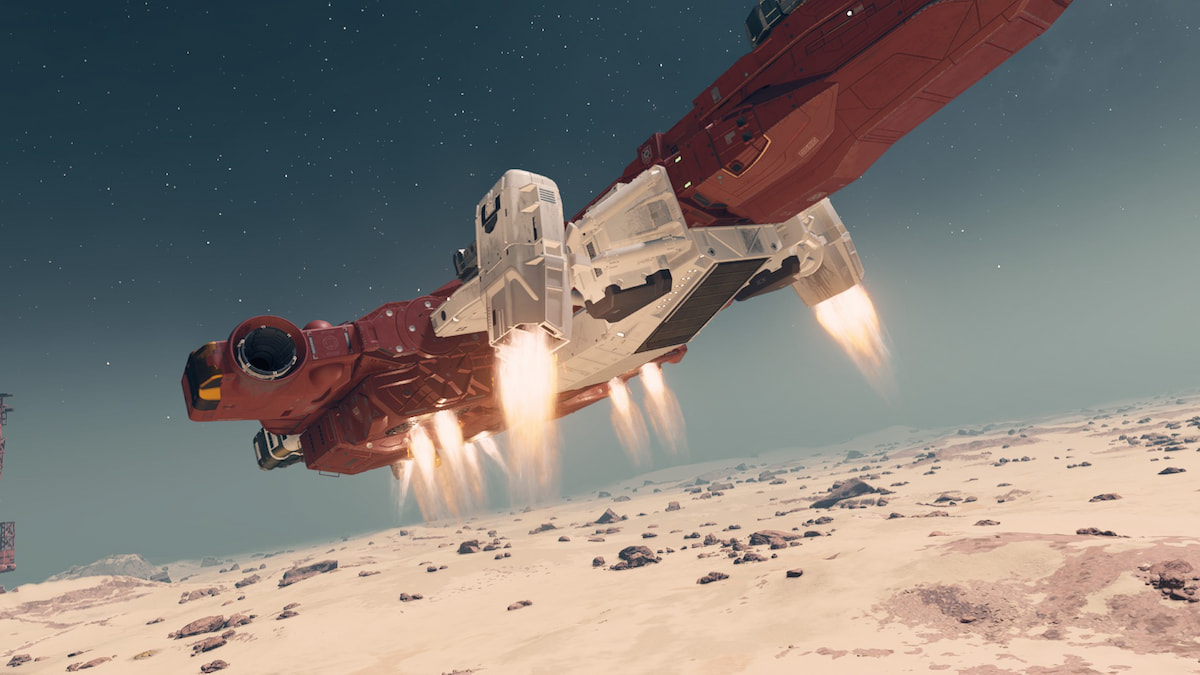
Former lead systems designer Kurt Kuhlmann, who worked on Starfield before leaving Bethesda after the game’s launch, believes a sequel is unlikely to happen. However, he also says a second entry could become the game Bethesda originally imagined.
“I would be very surprised [if there was a sequel],” Kuhlmann said in an interview with FRVR. “I don’t think Starfield was anywhere near successful enough to do a Starfield 2.”
While Bethesda continues supporting Starfield with updates and additional content, the studio’s primary focus is currently on The Elder Scrolls 6. For Kuhlmann, that makes a direct sequel to the space RPG seem unlikely, despite the potential he believes still exists within the concept.
“It’s, in a way, too bad, because I think with the lessons learned on Starfield, a Starfield 2 could have been much closer to the game that Todd had in mind,” he explained.
According to the former developer, Starfield’s biggest challenge was not a lack of ideas, but the sheer number of ambitious systems Bethesda attempted to combine into one game.
“You can travel around all these planets, you can land anywhere you want, you have total freedom,” Kuhlmann said. “Plus, there’s this really cool story and all these cool characters… and modular spaceships. Why not? Let’s put that in there.”
The challenge, he says, was making all of those features feel connected with one another organically. Kuhlmann gave examples like the game’s base building system. While players can create bases across hundreds of planets, the system is largely disconnected from the game’s narrative and characters.
“For what it is, as a standalone system, it’s cool, but it’s not nearly as integrated with the rest of the game,” he said.
He compared this to Fallout 4’s settlement system, which was introduced through the story and tied into the story and gameplay organically. In Starfield, outposts are primarily an optional feature that feels standalone rather than something purposefully integrated into the game’s core systems.
“It’s just this system sitting over there with a massive amount of work involved,” Kuhlmann explained.
He also previously suggested that Starfield required a much larger development team to properly deliver on its original vision. The game attempted to combine exploration, procedural generation, crafting, ship customization, base building, and Bethesda’s traditional RPG systems all at a scale much larger than the studio had ever done before.
“Even with the size of the team that we had for Starfield, it wasn’t big enough to create the amount of content that the grand idea of the game really required,” Kuhlmann said.
Despite his criticism, Kuhlmann still views Starfield as a project defined by ambition. The game’s scope created challenges, but it also represented Bethesda attempting something far beyond its previous open-world RPGs.


