
From Marvel’s Wolverine to Demon Slayer – an interview with Jonathan Tanigaki
The atomic knight, unleashed!

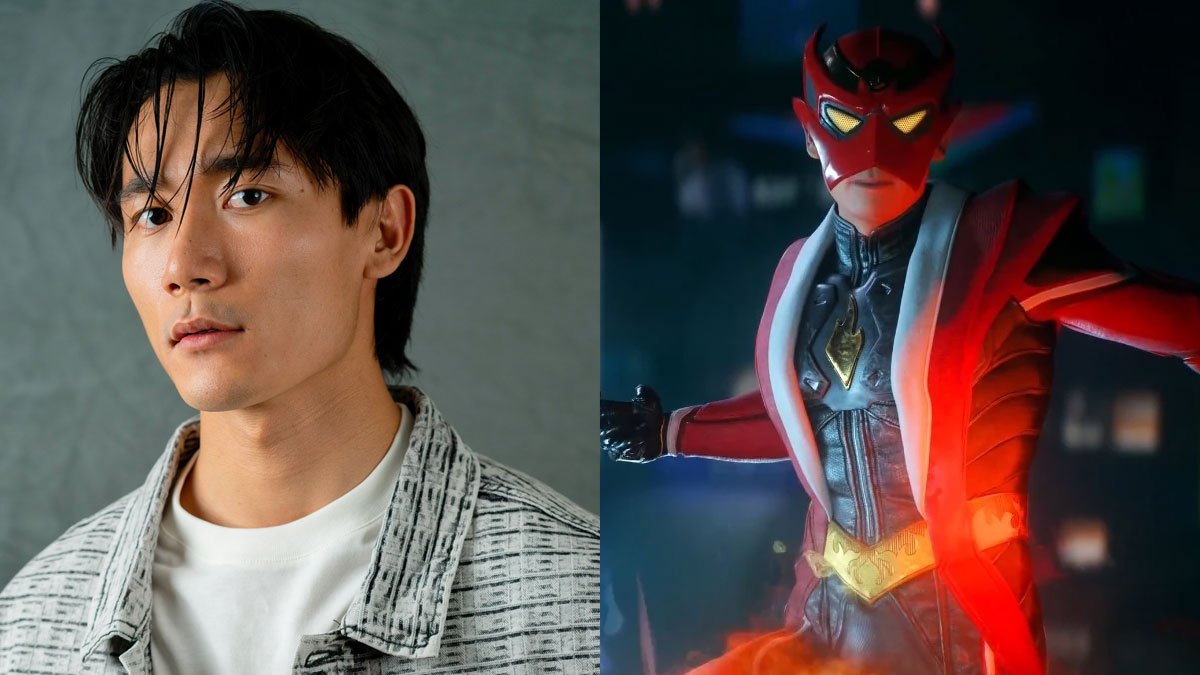
The recent release of Marvel’s Wolverine on PlayStation 5 came with a stacked cast of voice talent, including a familiar name for fans of great anime. Banana Fish alum Jonathan Tanigaki, who played Eiji Okumura in the excellent anime adaptation of Akimi Yoshida’s wonderful manga series, appears as Sunfire.
Jonathan was kind enough to answer some questions for us about what it was like to take part in such a project, the process of bringing characters to life, and even a little bit about an upcoming Demon Slayer fan-film that he’ll be part of.
You played Shiro Yoshida (Sunfire) in Marvel’s Wolverine through full performance capture. What was the experience like, and was there anything about working on a game of this scale that caught you off guard?
JT: “It was an unexpected and humbling experience to play Shiro in Marvel’s Wolverine. To this day, I’m still processing the fact that I can say I play a Marvel superhero. That wasn’t even on my acting bucket list because, prior to booking the role, I didn’t know there was a superhero in the Marvel universe who matched me so well.
What caught me most off guard was booking the role and discovering who I was actually playing. I thought I was auditioning for a pretentious son of a Yakuza boss whom Logan (or whoever I thought it was at the time) saves. It wasn’t until about a year after I signed the papers that I found out just how involved my character was in the story.”
Sunfire is a pretty physical character, and you have a background in martial arts. Did that experience come in handy when playing him? Were there any particular challenges you had to work through?
JT: “I had the pleasure of taking ownership of many of the creative liberties when it came to the character’s movement and presence. I remember bouncing around ideas, like how I wanted to throw fireballs using the same movements I would use for punches in my Karate kata forms, rather than a typical, generic throwing motion. The team was very receptive to the idea and incorporated that aspect into the scenes.
I think the biggest challenges came from the smaller actions rather than the fights themselves. There are certain things we do in everyday life without thinking, but in motion capture, we have to be much more conscious of those movements. For example, when drinking, we have to lift the cup to the side of our face rather than directly in front of it, because the cup would otherwise block the head-mounted camera. It feels very unnatural in the moment, but there’s a necessary logic behind it.”
You’ve worked across video games, anime like Banana Fish, and live-action shows. How does your approach to acting change between these mediums, especially when it comes to direction and performance?
JT: “The fundamentals of acting apply across all mediums. When it comes to research, character analysis, and scene breakdowns, I generally take the same approach. The difference lies in how I adjust certain aspects of my performance to suit each medium.
In voice-over, I still try to incorporate as much of the physical and emotional stakes as the narrative requires, but I channel that state of being through my voice more than I would in live action.
In live action, I try to stay present and give and receive with my scene partner, environment, and circumstances, allowing for the organic connections that happen on camera.
With video games, that connection still applies, but I also make a point of honoring the physical actions and changes in the beats more fully and clearly so that motion capture can capture as much data as possible.”
Sunfire has a long history in Marvel comics. How familiar were you with the character before taking on the role, and did that influence how you approached him?
JT: “I didn’t know anything about the character at all! I had heard about him on the Bad Friends podcast once and thought, “Oh, what? That’s cool. It’d be sick if someone did something with that character.”
The moment I found out who I was playing, I gathered as much information as I could, which turned out to be less than what’s usually available for other Marvel characters. I went to San Diego Comic-Con and bought as many comics featuring Sunfire as I could find, including his first appearance in X-Men #64.
I recently spoke with Brett, who plays Sabretooth, and we shared our experiences, discussing the pros and cons of having a wealth of source material versus having fewer resources for our respective characters. For me, there was less pressure because of the lack of previous portrayals, but there was also a greater responsibility to reinvent an iconic hero for a modern audience.”
What was it like working alongside Liam McIntyre and Krizia Bajos on Marvel’s Wolverine? Did you get to collaborate much during production?
JT: “Absolutely! Both Liam and Krizia were incredible to work with, and their performances speak for themselves. I also joined the project later than the rest of the team, so my first day felt like being the new kid transferring in halfway through the school year.
Thanks to Liam and Krizia, I was able to shake off those first-day jitters and dive headfirst into the story. It felt like we had known each other for years, and that sense of camaraderie and trust helped us build the tense history between Logan and Shiro.
We constantly discussed and bounced ideas off one another about the characters’ dynamics and relationships, developing an exciting synergy between the three of us that carried through every scene.”
What do you play when you’re not working? Any games you’ve been hooked on lately, or franchises you keep coming back to?
JT: “Okay, I gotta admit, I’m not the biggest gamer in the world. But I have to say, I’ve always been obsessed with Pokémon. It’s just been a part of my life for as long as I can remember. Pokémon TCG Pocket all the way, babbbbyyyy!
I still collect the cards and play Pokémon Pokopia to relax, too. I’m a card game enthusiast, so Inscryption and Balatro are two games I love playing.
But I recently played a bit of Marvel’s Wolverine, and I think I’ve got that itch now. The itch to hack and slash with some visceral satisfaction, even more than beating up your homies in Super Smash Bros. It’s so satisfying. And even though it’s not a game, I’ve also been tinkering around in Tinkercad and 3D-printing my own models! That’s been a lot of fun.”
Has working on games like Marvel’s Wolverine and Call of Duty changed how you experience games as a player? Do you find yourself noticing things you might not have paid attention to before?
JT: “Something I am always fascinated by is the immersive quality of a medium. If something can suck me into its world, I’m totally down for it.
Working on these games behind the scenes has given me a greater appreciation and respect for the extensive detail and craftsmanship required to draw players into a game. I find myself admiring the scenery and mechanics of a game more than I did before. I take my time to fully immerse myself in the experience because I know there are Easter eggs hidden all over the place that I want to discover.”
Is there a game franchise you’d love to work on next, or a particular character you’d love the chance to play?
JT: “Oh, you are opening up Pandora’s box with that one! Can I give you a list? Off the top of my head, as previously mentioned, Pokémon is an obvious one. I’d love to play as Red or be a young Professor Oak documenting all the Pokémon in the world. I’d also love to be part of Persona 5, Kingdom Hearts, Fear & Hunger, Terraria, or Tekken, or any anime IP that gets turned into a game.”
For actors looking to break into game performance, what’s one thing you think they should know about the job?
JT: “Learn movement well, take acting class, and support the community you want to be a part of. You’ll pick up what you need to know with working pros as your references, and if you’re a kind, hardworking person, the work will find you.”
What was it about the Demon Slayer: Akaza vs. Rengoku fan-film that drew you to the project?
JT: “Demon Slayer is a show that I watched growing up. The vivid colors and animation, as well as the heart-wrenching story, drew me in from the start. Something that always stood out too was that every villain had a tragic yet beautiful backstory that made them the way they are. So when I learned that I was playing Akaza, I was so excited. At this point in the story, he is a terrifying brute force of a warrior with the innocence of a child wanting to play. It’s an exhilarating battle that I hope everyone will enjoy in live action form.”
What was the most challenging aspect of the production?
JT: “What wasn’t challenging! By far the hardest thing was keeping on those painful contacts. It has to wrap around your entire eye, and I was pretty much blind every time I wore them. This includes the fight where Rengoku is swinging a sword at me. I was blind, in the heat with my makeup melting, barefoot on wood chips, and had a guy swinging a sword at me. It was pretty physically demanding, but despite all that, there’s nothing else I would rather be doing.”
What would be his dream anime to live-action project?
JT: “This is my favorite question. I’m manifesting to be Saitama from One Punch Man. Bald head and all! The show One Punch Man has a crazy fun sense of humor that I relate to, and Saitama as a character is someone I would have a blast embodying. Other shows I would love to be in are Persona 5, Shangri-La Frontier, and of course Naruto. Maybe go for Itachi or something.”
Demon Slayer: Akaza vs. Rengoku premieres Thursday, December 3 at 6:00 am PT on RE:ANIME.


