
Pragmata Review – Fresh, Fun, and Charming
I can't believe they made hacking fun.

Over the last few years, Capcom has had tremendous success with its existing IPs, whether through new entries, remakes, remasters, or game collections. While that’s been great for existing fans, I’ve been wanting the company to take more risks with new ideas.
2024’s Kunitsu-Gami: Path of the Goddess was a huge step in that direction, and now with Pragmata, it seems like Capcom has another winner on its hands.
Hugh and Diana
Pragmata follows Hugh, an engineer who, along with his team, is sent to a massive lunar base to investigate a communication blackout. It’s a tried and tested sci-fi premise, and things quickly go wrong for the crew, leaving Hugh to survive on his own, uncover what happened on the base, and find a way back. He’s quickly joined by Diana, an AI humanoid companion who is far more advanced than anything else on the base, with a genuine childlike sense of wonder and an unflinching desire to help him on his mission.
It’s easy to assume this sets up yet another “sad dad” adventure, but it really isn’t. Hugh is a charming, likeable, and kind character from the get-go, and that comes through clearly in how he interacts with Diana. He answers her questions about life on Earth with real earnest, often drawing from his own experiences, and never treats her like a nuisance. Instead of the usual emotionally distant protagonist, he feels like the complete opposite, someone already grounded and compassionate.

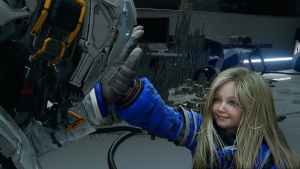
That dynamic carries the entire story. Hugh supports Diana throughout their journey, and their bond develops naturally through shared survival. He protects her in combat, appreciates her help, and never lashes out when things go wrong. Despite knowing she isn’t human, he treats her with warmth and respect, even if her hacking abilities often make her more capable than him. The story itself is fairly straightforward, but their relationship gives it weight and makes them easy to root for.
Everything else in Pragmata is secondary. The rogue AI narrative is engaging, especially with its clear critique of generative AI and the importance of human input in creative and technical fields, but it’s ultimately the connection between Hugh and Diana that defines the experience.
But it’s in combat where Pragmata really defines itself.
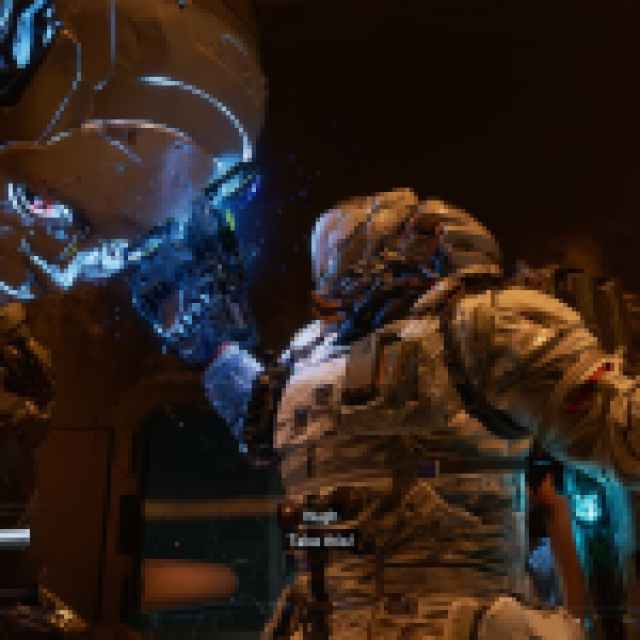
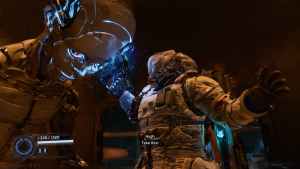
I’m sure most people were confused by its unique combat when it was first revealed, and putting out a demo to showcase it really did the game a favor. It’s the kind of system you need to play to fully understand, and it’s hard to communicate in videos alone. Enemies are heavily armored and can’t be damaged directly. Instead, you rely on Diana to hack them, exposing weak points. Aiming at an enemy brings up a grid that you navigate using the face buttons, maximizing damage by passing through special nodes before attacking.
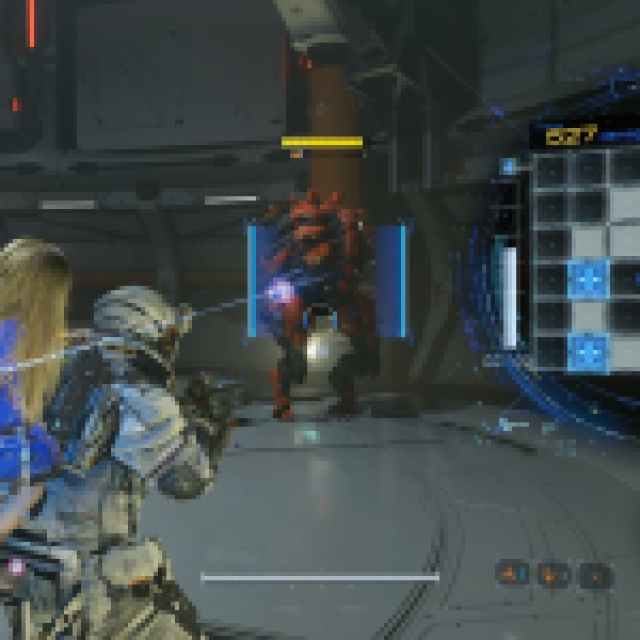
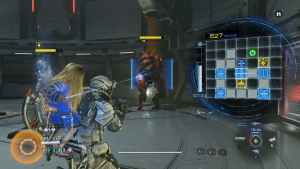
This system, where you’re juggling two different gameplay styles at once, is what makes Pragmata so original. It’s a combat puzzle system that’s so intuitively designed you can effortlessly move, shoot, hack, dodge, and hover at the same time without friction. Each enemy presents a different kind of challenge, and with some practice, dealing with them becomes second nature thanks to how responsive Hugh feels. His suit allows him to dash around quickly, and you’re never restricted from aiming or hacking, whether in the air, mid dash, or on the ground. It really shines when you’re boxed in with multiple enemy types that demand different approaches.
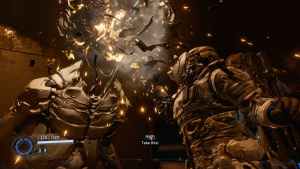
It’s the kind of action game you naturally want to get better at, and the steady progression system keeps things fresh with new abilities, upgrades, and a constant stream of new enemy types. Just when you feel like you’ve figured it all out, the game introduces something new to deal with or incorporate into your kit. Enemy variety is a real highlight. Some attack from a distance, some stun, some move quickly and chain combos, and others fire missiles that you can hack and send back. They’re all distinct in both function and design, with in-game context explaining why they look the way they do.
My only real annoyance is the sheer number of mod chips that accumulate over time. With limited slots and fairly minor benefits, they end up feeling like an unnecessary system to manage. It’s an RPG-lite trend I’ve seen in a lot of modern action games, similar to the charms in recent Resident Evil 4 titles, and it feels a bit tacked on here as well. Outside of that, the game is generous with upgrade materials while keeping its currency system simple. If you find a weapon you like, you can stick with it, upgrade it, and build around it without friction.
Lunar Goodness
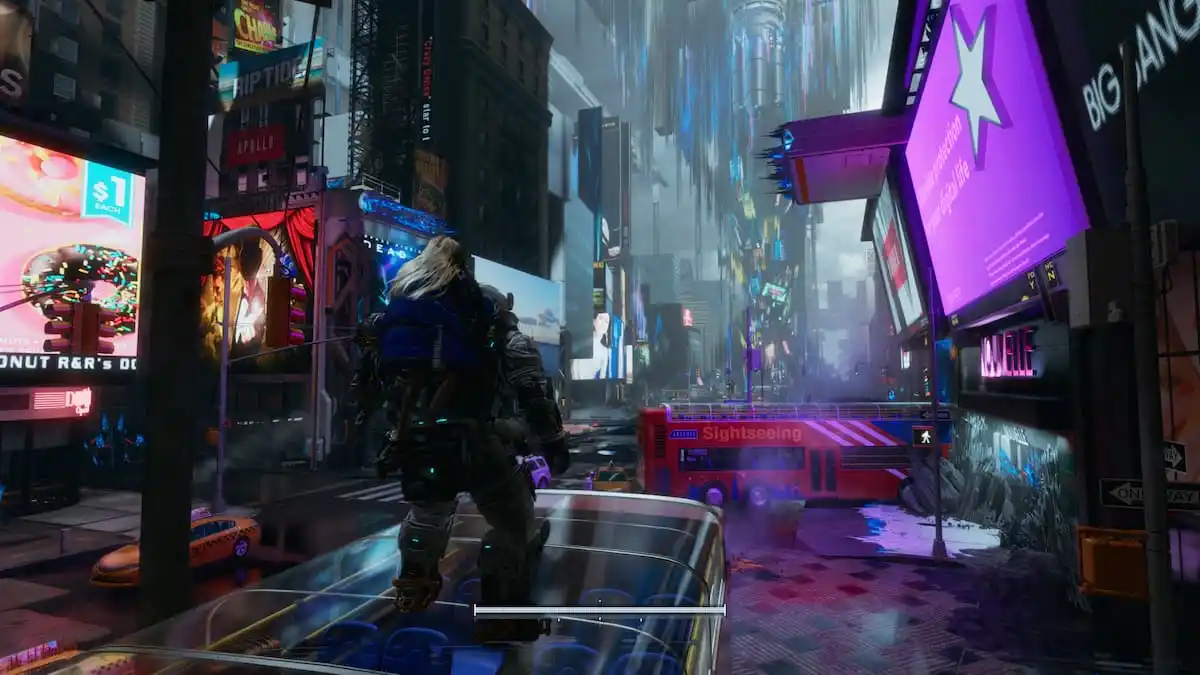
The Lunar Research Station in Pragmata is a gorgeous base that you gradually explore by unlocking new sectors as the story progresses. While the space station aesthetic remains consistent at its core, each area introduces Earth-like elements depending on what is being researched there. One sector resembles a computer-generated version of Manhattan, while another features forest-like environments filled with lush greenery. It’s consistently surprising in a good way.
There’s also a strong sense of verticality that makes exploration more engaging and rewarding, especially when you stray from the main path, even briefly. At checkpoints, you can visit a safe area called the Shelter, where you can recover, check in on your findings, decorate the space, complete training missions, upgrade your character, and buy attachments.
Getting to the Shelter is essentially just a loading screen, and instead of navigating a maze of menus, this dedicated space with clearly defined areas for each function provides exactly the kind of pacing break you need after completing a section.
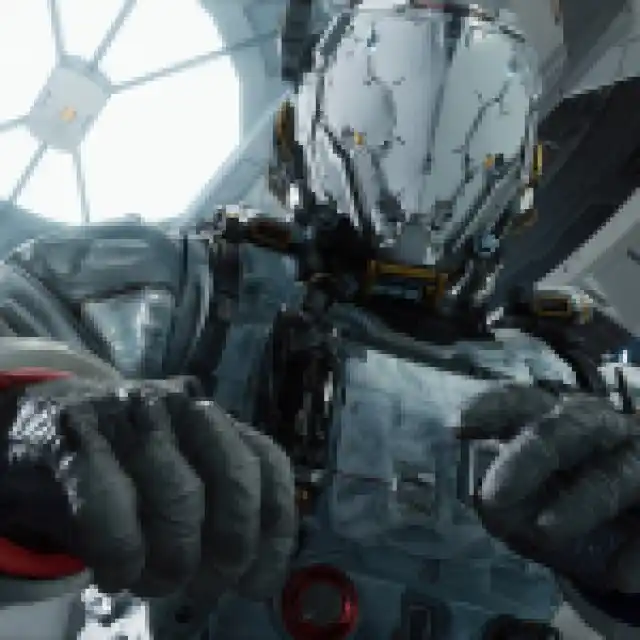
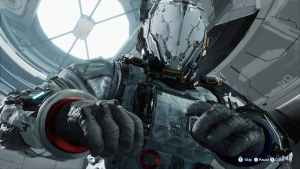
On the technical side, this is one of the most impressive RE Engine titles to date, and it runs exceptionally well on PC. With barely any stutters, aside from a few in more open environments, Pragmata runs like a dream and looks the part, too. On an RTX 4070 Super, I was comfortably in the 100+ FPS range at 1440p with ray tracing enabled and DLSS set to Quality.
Verdict
Pragmata is a confidently designed action game that elegantly blends shooting and hacking into a fast, reactive puzzle-style combat system that turns every encounter into something far more engaging than a standard firefight. You constantly shift between aiming, hacking, dodging, and repositioning, creating a seamless loop that never feels cumbersome or disconnected. Backed by two genuinely likeable leads in Hugh and Diana, whose relationship gives the experience its emotional core without unnecessary melodrama.

Pragmata
A confidently designed action game that blends shooting and hacking into an elegant, puzzle-like combat system driven by likeable characters and constant momentum.
Pros
- Fun blend of shooting and hacking that creates a fast, puzzle-like combat flow
- Intuitive systems that feel smooth and never clunky
- Great enemy variety that keeps encounters fresh
- Likeable leads in Hugh and Diana with a grounded, engaging dynamic
- Excellent pacing with steady introduction of new mechanics and challenges
- Impressive technical performance
Cons
- Mod chip system feels unnecessary and cluttered
- Some RPG-lite systems feel tacked on rather than meaningful
A copy of this game was provided by the publisher for review. Reviewed on PC.


